ASK Musings

No matter where you go, there you are.

Author Archive

Friday

14

July 2017

0

COMMENTS

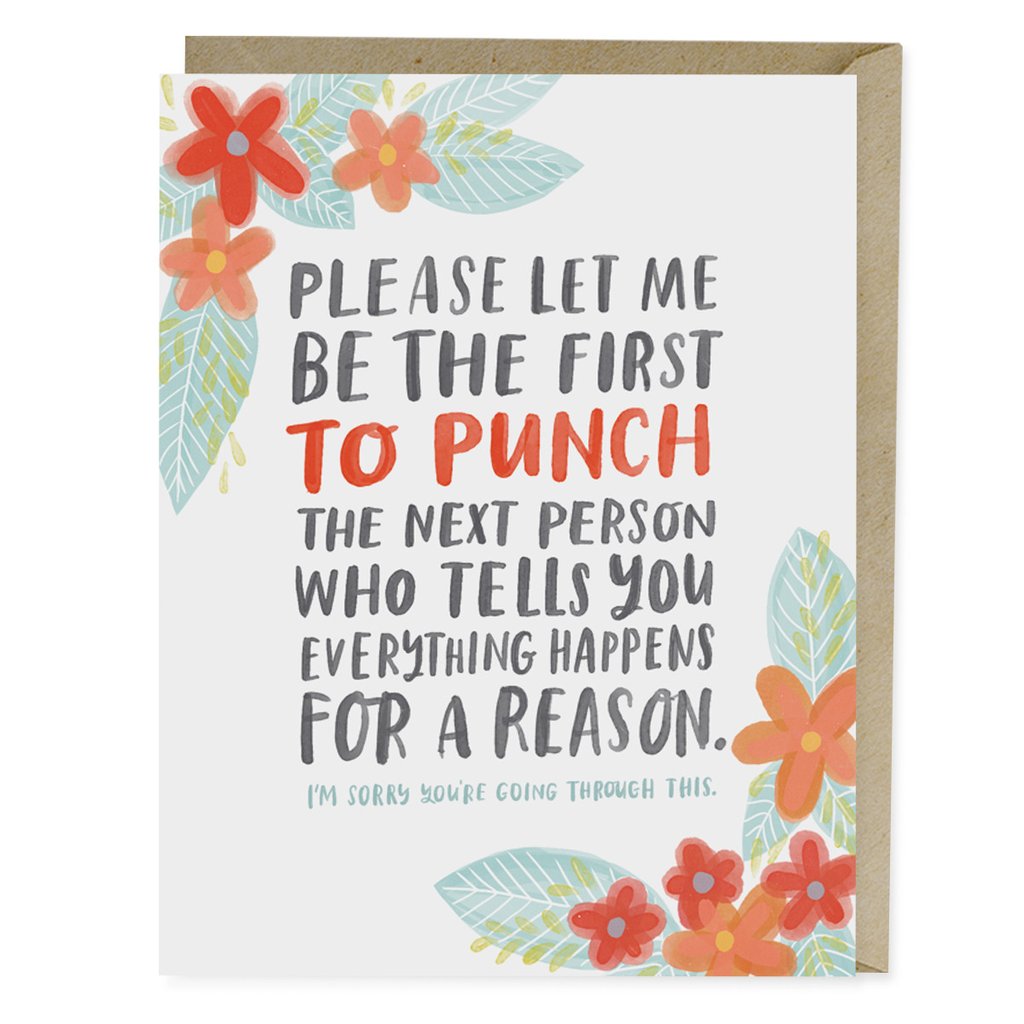
There Is No Good Card For This by Kelsey Crowe and Emily McDowell

Written by , Posted in Reviews

Four Stars

Best for: Those who have friends or family going through a rough time, or who someday will have friends or family going through a rough time (so, all of us).

In a nutshell: Dr. Crowe and Ms. McDowell provide practical ways to be there for the people you care about when they are experiencing the worst.

Line that sticks with me: “Just because you have experienced the same thing as someone else does not mean you know how they feel.”

Why I chose it: Two reasons: I write my own modern etiquette blog, and I get a lot of questions on this topic; and I’ve had a lot of friends go through some really rough times lately and want to get better at being there for them.

Review: What a great idea for a book! It’s easy to read, full of practical advice, reassuring stories, and serious examples that show how you can go wrong and how you can do better.

But it isn’t about shaming your efforts or instilling the fear that you’ll say the wrong thing. In fact, from the very beginning, the authors are clear that while yes, it is possible that you’ll screw up (and they go into detail in the last section, with example and language to avoid), you really need to set that fear aside and just do what you can.

I think probably the most helpful bit is the “Empathy Menu.” It’s basically four pages of different roles you can take on to be supportive. I appreciate it because the point is to focus on what you’re good at being able to offer, as opposed to trying to do something that ultimately won’t work. Don’t offer to cook if you can’t or don’t have time. It’s okay to be the person who can provide child care but not the person who can put together a great playlist for them to listen to while undergoing a medical procedure.

It is inevitable that people we love (as well as ourselves) will experience something awful at some point in their lives. I suggest taking a day or two to read this so you’re prepared, and then keep it on the shelf so you can refer to it when you just aren’t sure what you can do for your friend or family member.

Thursday

13

July 2017

0

COMMENTS

Written by , Posted in Reviews

Five Stars

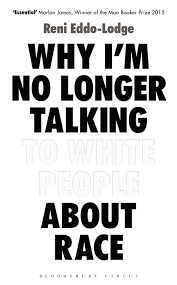
Best for: People interested in great writing on race, especially writing that gives perspective on race that isn’t US-centric.

In a nutshell: Ms. Eddo-Lodge explores the history of racism in Britain and looks at ways to address it today.

Line that sticks with me: “Being in a position where their lives are so comfortable that they don’t really have anything material to oppose, faux ‘free speech’ defenders spend all their spare time railing against ‘offense culture.’” (p133)

Why I chose it: I follow Ms. Eddo-Lodge on Twitter and find her work to be insightful and interesting.

Review: This book was released last month in the UK; I ordered it on Amazon to be able to read it before its official US release in December. And I’m so glad I did, because it is a fantastic book that I think US readers can really learn from. Ms Eddo-Lodge weaves her own experiences in with a thoughtful analysis of the difference aspects of racism, including strong chapters devoted to the intersections of racism and sexism as well as racism and class.

The book is broken down into seven chapters, each of which could stand alone as its own but also fits in and builds upon the others. The first chapter focuses on the history of race and racism in Britain. Those of us familiar with Brexit and the rise of white nationalism in the UK (not to mention its imperialist history) will not be surprised by some of this. At the same time as someone raised in the US it was interesting to read the perspective of a British person. Specifically, the idea that the US tends to take up so much of the discussion world-wide about racism, which can leave other countries thinking that they don’t necessarily have it within their own borders.

I found two chapters to be especially resonant. “Fear of the Black Planet” talks about the deeply held fear of white nationalists that they are losing ‘their’ country to people of color, and that they need to fight this. Because of libel laws in the UK, Ms. Eddo-Lodge had to offer Nick Griffin, a white nationalist, a chance to respond to some comments, so part of this section is a transcript of their interview. It is fascinating in that Mr. Griffin digs his own hole, as it were. Not to him I’m sure, but I think that anyone just reading his responses to Ms. Eddo-Lodge’s thoughtful questions will recognize how utterly wrong he is about race and what makes a country and its people.

The other chapter is the one on feminism, where she delves into the concept of white feminism. I think we’ve seen a lot of that in the US lately as well, and she offers up a strong and straightforward way of explaining it: “It’s not about women, who are feminists, who are white. It’s about women espousing feminist politics as they buy into the politics of whiteness, which at its core are exclusionary, discriminatory and structurally racist.”

If you are in the UK, Australia or New Zealand, I strongly recommend you go buy this at your local bookstore. If you are in another country, you might be able to order it online through Amazon. If you have a tall to-be-read pile at home, please place a request with your local library and bookstores that they be sure to carry this when it is released in December.

Monday

10

July 2017

0

COMMENTS

The Little Book of Talent by Daniel Coyle

Written by , Posted in Reviews

Two Stars

Best for: People looking for a quick read and a couple of helpful tips.

In a nutshell: Mr. Coyle provides 52 tips to help you get better at something. Anything.

Line that sticks with me: “But in the talent hotbeds I visited, practice was the big game, the center of their world, the main focus of their daily lives.” (p 39)

Why I chose it: As part of that whole summer reading BINGO thing our public library is doing, one square is ‘recommended by an independent bookseller.’ Also, I like to learn things.

Review: Hmm. There are 52 tips, which I suppose is meant to correlate to weeks in the year, but the book isn’t laid out like that. Instead, each tip ranges from a paragraph to a few pages, grouped by getting started, getting better, and keeping it up.

Some of the tips were helpful and familiar. The one I mention above, about practice, reminds me of the book by Commander Hayden (astronaut). Since they might never go to space, they have to treat preparation as the real thing. That’s what matters.

Other tips run contrary to ones I’ve learned before, especially about writing. One is to “never mistake activity for accomplishment.” Which, yikes. Like, the fact that I write every single day — haven’t missed a day since March (that includes when I had food poisoning), when I started that — is a fucking accomplishment. That activity is making me a better writer.

The tips are meant to be universal but, as mentioned above, I don’t think they are always applicable. And while the title is certainly true — this is a little book — I think it could have been a series of blog posts, or perhaps included in some sort of habit app. Not sure it warranted this fancy binding and shiny cover.

Monday

10

July 2017

0

COMMENTS

What If You’ve Been Laid Off And Friends and Family Are Pressuring You

Written by , Posted in Etiquette

A job loss — even if you get some compensation, and even if you didn’t particularly love the job — is still a loss, and requires some grieving time if possible. And if you loved the job, that’s even worse.

Thankfully you and your partner are lucky enough to be in a position where you aren’t overly concerned, but I want to acknowledge this isn’t the case for many people who are let go. In fact, half of U.S. families live paycheck to paycheck, so the unwarranted advice may be even more stressful for them, as they are quite aware of their precarious state. Constantly being asked ‘did you find a job yet’ doesn’t help.

That said, I’m willing to bet that your friends and family do have genuinely good intentions. They care about you and want you to be alright. Of course, considering you’re still likely under some stress (even if your finances are all in order), it’s a bit unfair of them to project their concerns onto you and essentially force you to do the emotional labor of making sure they know you’re okay, even as you’ve repeatedly tried to do so.

My response below is split, as I think that your approach to friends and to family might need to vary some.

Friends
If they live near you and/or work in the same field as you, friends may be your best connection to a new position. The number varies (as does the quality of the survey methodology), but some suggest that between 70% and 85% of jobs are filled via networking connections. So while it may be annoying at times — especially if you’ve just been let go and are still processing what it means — if your friends are offering connections in addition to their concern, it might be good to at least hear them out.

Of course, if you’re not interested in their assistance, or if they position they want to connect you with is not what you’re looking for, it’s fine to say something along the lines of “Thank you! That doesn’t sound like a good fit, but I really appreciate you thinking of me.” If they keep sharing jobs opportunities that aren’t great, just keep responding in a similar manner. At some point they’ll stop offering.

If they aren’t offering any positions but offer up advice unsolicited, it’s fine to say “thank you” and then shift the conversation. One idea is to say “Thank you. I’m working on it. How’s your job? Weren’t you starting a big project?” People like to talk about themselves, so hopefully this will give you a break. However, I only suggest using this with friends you aren’t close with, because you don’t need to get into it with them.

If these are your very close friends, I think it’s a good idea to share your feelings. Something like “I appreciate you asking – it’s a weird / hard / interesting time right now, but I spend all day looking for work and applying to jobs, so when we hang out I’d love it if, at least for now, we could not talk about it.”

This should go for any topic, like a break-up, or fertility issues, or family troubles. Sure, you might be interested in a quality venting session, and it’s a bit silly to think that your friends won’t be interested in helping out when you’re going through a major life event. But they should also recognize that you might just be looking for an evening out with the girls where you just talk about how amazing Wonder Woman was.

These close friends will still likely ask you how its going when you see them, but hopefully will now understand that you’re usually looking for a break from talking about it, and they shouldn’t take offense to that.

Family
This can be a bit harder, because usually family knows just how to get on our nerves. I don’t know what it is, but the same exact question asked by a close relative might elicit a totally different response than if a friend asked me. Plus, family (well, close family) likely feel some sense of responsibility for your well-being. Especially they type of parents who have been actively involved in your life thus far.

If you see your family regularly and they live near by, they might offer up advice similar to what your friends offer, although their leads might be wildly inappropriate. Thanking them for their offer but telling them that you’re working on other leads at the moment should be sufficient.

Questions from family might be more likely to be invasive as well. Parents might want details about your finances, or try to suggest that you’re stressing out your partner. They may have decades of experience in cutting right to what will bother you the most. In those instances especially it can be very hard to keep cool.

However, as you probably don’t want to add ‘fight with mother’ to your list of stressors just now, I suggest repetition and reassurance.

Repetition: Whenever they ask how things are going, say “I’m working on some leads, thanks for asking, but I’m a bit tired of thinking about it just now. How are you?” If they won’t let it go, try “I spend so much time applying for and interviewing for jobs these days, it’s great to have a break to catch up with you.” If they pull the “I’m just concerned” manipulation in an attempt for more details, I suggest “I appreciate that, but there is not cause for you to be concerned right now.”

Reassurance: Whenever possible, remind them that you will let them know if there is any news, and that you know they care, so they don’t need to ask about it repeatedly. Something like “If I have an offer, or if my circumstances change, I will definitely let you know.” And then do that. Share when you get a job. If you’ve talked about an interview that’s coming up, let them know the outcome. Then you’re providing information you want to share, and keeping them informed on your terms.

Last Thoughts

Recognize that while your friends and family are (hopefully) coming from a good place, not everyone has a good relationship with money and so can’t imagine having any time without work. This could be because of luck (good or bad), or perhaps they didn’t handle finances well and are concerned you’ll be in the same position. This push to get you to find a new job right this second may not be about you, but about how they think they’d feel if they were in your position. And that’s not something you can change, so try not let it get to you.

Sunday

9

July 2017

0

COMMENTS

What I’m Reading – July 9, 2017

Written by , Posted in What I'm Reading

Racism

“Last week, Variety reported that Kim and his co-star Grace Park would be departing the CBS procedural ahead of its eighth season, due to a dispute with CBS Television Studios to reach pay equality with co-stars Alex O’Loughlin and Scott Caan. Insiders said Kim and Park’s final offer from the studio was 10-15% less than O’Loughlin and Caan, who each also each have lucrative back end deals on the show. Since the announcement of the duo’s departure, fans have been critical of CBS’s failure to reach parity with the series’ two Asian actors, while keeping two Caucasian stars on the show. The social media chatter comes after critics have targeted CBS for its lack of diverse leading roles for women and actors of color, in comparison to the other broadcast networks.” Daniel Dae Kim Breaks Silence After ‘Hawaii Five-0’ Pay Dispute: ‘The Path to Equality Is Rarely Easy’ (by Elizabeth Wagmeister for Variety)

Misogyny

“However, it soon became apparent that this promising start would not last for long. For my first few pull requests, I was getting feedback from literally dozens of engineers (all of whom were male) on other teams, nitpicking the code I had written. One PR actually had over 200 comments from 24 different individuals. It got to the point where the VP of engineering had to intervene to get people to back off. I thought that maybe because I was a well-known Rubyist, other engineers were particularly interested in seeing the kind of code I was writing. So I asked Aaron Patterson, another famous Rubyist who had started at GitHub at the same time as I did, if he was experiencing a lot of scrutiny too. He said he was not.” Antisocial Coding: My Year At GitHub (by Coraline Ada Ehmke)

Responsibility

“As a writer and a member of the founding team of a publisher—the one where you’re reading these words—committed not only to good, honest writing and journalism, but also committed to celebrating and amplifying the voices of marginalized communities, the responsibility for what we publish is something I take very seriously.” When Your Words Are Weapons (by Ijeoma Olua for The Establishment)

Local Politics

“Though she envisioned her political career playing a role to help elect others, Oliver soon found herself as the candidate. In November 2016, she was part of a group of friends and clergy who travelled to Standing Rock. On the return trip, a friend died in a car accident. Oliver and a group of community organizers in central and south Seattle found themselves grieving, grappling with the election of Trump and reflecting on the injustices they’d just witnessed at Standing Rock. It was so glaringly apparent that the law and justice are not the same thing as you watched law enforcement openly protect corporations that were drilling on land that at that time, they had absolutely no permits to drill on,” she explained to Jezebel in May.” A Conversation With Nikkita Oliver, the Seattle Mayoral Candidate Whose Activism Spawned a Movement (by Kara Brown for Jezebel)

Saturday

8

July 2017

0

COMMENTS

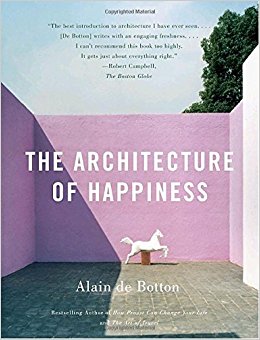
The Architecture of Happiness by Alain de Botton

Written by , Posted in Reviews

Four Stars

Best for: People not that familiar with architecture who are interested in learning about it in a philosophical way.

In a nutshell: Author de Botton takes the reader through a lovely journey exploring how the buildings we inhabit can help fill missing pieces in our lives, and impact how we feel.

Line that sticks with me: “The buildings we admire are ultimately those which, in a variety of ways, extol values we think worthwhile.” (p 98)

Why I chose it: I bought this long ago. It’s survived multiple book purges and moves, but I finally opened it up because I’m participating in a book challenge this summer, and one of the categories is a book about art or an artist. To avoid spending all the money, I’m checking my to read pile first, and came across this gem.

Review: I don’t know much (anything?) about architecture. I know that craftsman homes are popular in my current city, and that ranch-style homes were popular where I grew up. I’ve been learning a bit reading the amazing blog McMansion Hell (which I only came across recently thanks to Zillow going after the writer, then having to back off), but I’ve not been able to put my finger on why certain styles depress the hell of me (most one-story homes; any office park a la Office Space), while others bring me joy (pretty much anything in Paris).

This book has helped me to understand a bit better where my tastes lay and why. I am certain that there are architects who would disagree, but much of Mr. de Botton’s premise is that not only does style reflect the available resources and the elements that must be kept out (a house in Phoenix is probably going to look different from a house in Finland), but also the lives we are living. The greatest example of this is when he argues that people who seek out modernist homes are looking for some order in a chaotic life outside the home, whereas those dramatic palaces built in the 1600s weren’t just a fancy show of money, but also an attempt to create beauty in a time that was pretty dangerous (I mean, think about the diseases running rampant through cities).

I feel that I learned about architecture and beauty, but I also got to enjoy some gorgeous writing. The language Mr. de Botton uses throughout is lovely, a perfect accompaniment to the many examples of different styles of home and building. It can be a bit dense at time, but I think it is worth it, especially for those interested in a more philosophical examination of our built environment.

The only reason this is a 4-star book for me is because there are so many lovely pictures in this edition but they are all in black and white, which really takes away from my ability to see the detail and understand more of why they might be examples of architecture that elevates or depresses us. If not for that, this would be a 5-star read.

Tuesday

4

July 2017

0

COMMENTS

Becoming a Citizen Activist by Nick Licata

Written by , Posted in Reviews

Three Stars

Best for: People who have literally never thought about how to be an activist. As in, have never heard of petitions, don’t know about public forums, have never seen a protest.

In a nutshell: Former Seattle City Council member Nick Licata shares his tips for making change in the world, as illustrated by many, many, many Seattle-based anecdotes.

Line that sticks with me: N/A

Why I chose it: Mr. Licata is a local politician and this book looked like it could be interesting.

Review: This review could go two ways: brutal but fair, or kind but fair. I’ll go with the latter, because, for the most part, this book is the vanilla of ice creams. Not vanilla bean, not French vanilla, not ‘premium’ vanilla; just plain vanilla. Which can serve as a fine base for a more flavorful sundae or as a great side to a delicious piece of cake or pie, but on its own, doesn’t do a whole lot.

The book is well organized, building upon different component of activism and discussing how they are interrelated. This is a strength of the book, because Mr. Licata seems to recognize that there is space for many different types of activism, although he clearly prefers the much less radical, much more incremental version. And in that respect I think he and Justice Ginsberg are similar — they both want change, but seem to think the best way is slowly, over time. I know a lot of folks who might disagree with that sentiment.

At the same time, this book came out just last year (2016) but already feels a bit dated. I don’t think Black Lives Matter is mentioned more than in passing which, considering how much activism sprung up related to that, is an odd omission. The sections that talk about social media seem more like they were written in 2010; while Mr. Licata recognizes that Facebook and especially Twitter are helpful, he seems to not realize how useful they can be in individuals getting connected to each other (as opposed to politicians connecting with individuals).

I live in Seattle, and have for seven years this go round (ten if you count my college days), and even I found the anecdotes provided to be too Seattle focused. I don’t think Seattle is necessarily the best example to hold up to other cities to say “this is how you get shit done.” But even if it is, there have to be more examples from other cities and smaller towns. I think that Mr. Licata wasn’t super interested in doing research, and perhaps was more interested in writing a memoir. Instead of a really strong activism how-to, or a really interesting autobiography, we ended up with a lesser quality version of the two.

With all of that said, however, I can see value in this book, if it were paired with, say, a more radical discussion of types of activism. Maybe in a politics 101 course at a university, or in a civics class offered to seniors in high school. It’s not bad, and I certainly learned some tips that I think will be useful in my life as an activist, it’s just more basic than I was hoping it would be.

Sunday

2

July 2017

0

COMMENTS

What I’m Reading – July 2, 2017

Written by , Posted in Feminism, Politics, What I'm Reading

Horrific Executive, Legislative, and Judiciary Action

“Nevertheless, the Texas Supreme Court held on Friday that the benefits of marriage may not need to be granted to same-sex couples on the same terms and conditions as opposite-sex couples. And the Texas court reached this frivolous conclusion in an unanimous opinion.” The Texas Supreme Court just gave a big, fat middle finger to same-sex couples (by Ian Millhiser for Think Progress)

“The all-girl team representing Afghanistan hails from Herat, a city of half a million people in the western part of the country. To interview for their visas, the girls risked a 500 mile trek cross-country to the American embassy in Kabul – the site of several recent suicide attacks and one deadly truck bomb in early June that killed at least 90 people. Despite the recent violence, the teenagers braved the trip to the country’s capital not once, but twice, hoping a second round of interviews might help secure their 7-day visas after the team was rejected on its first try. But no luck.” Denied: Afghanistan’s All-Girl Robotics Team Can’t Get Visas To The US (by Hilary Brueck for Forbes)

Speech

“The law does not share that interpretation. “The First Amendment only regulates the government,” explained Rebecca Tushnet, a professor of First Amendment law at Harvard. Does she think there is any merit in telling a person that her critique of your art is infringing on your free speech? “No.” It’s been a surprisingly effective rhetorical strategy nonetheless. Americans are fiercely proud of our culture of (nearly) unfettered expression, though often not so clear on the actual parameters of the First Amendment. To defend speech is to plant a flag on the right side of history; to defend unpopular speech is to be a real rogue, a sophisticate, the kind of guy who gets it. “Freedom of speech is such a buzzword that people can rally around,” Ms. Sarkeesian said, “and that works really well in their favor. They’re weaponizing free speech to maintain their cultural dominance.”” Save Free Speech From Trolls (by Lindy West for The New York Times)

Misogyny

“The event, called Gaming Ladies, was intended to create a safe space for female game developers, a demographic that’s woefully underrepresented in the gaming world. In response, a small, vitriolic group plotted on the forum ForoCoches (an invite-only car forum that’s basically a Spanish-language 4chan) to pretend to be transgender women in order to gain access to the conference and disrupt it.” King’s Gaming Ladies event canceled following targeted online harassment campaign (by Tim Mulkerin for Mic)

“Their presence was plainly not, as one of them later said in an “apology” video he posted to Twitter, to “give us the chance we never gave them” and to “hear us out,” but was instead to intimidate me and put me on edge. They will no doubt plead innocent and act shocked at what they characterize as the outrageousness of such allegations. This, too, is part of their strategy: gaslighting, acting in a way intended to encourage me and their other targets to doubt ourselves and to wonder if all of this isn’t just in our heads. But to anyone who examines their patterns of behavior with clear eyes, the intentions of their actions are undeniably apparent.” On VidCon, Harassment & Garbage Humans (by Anita Sarkeesian for Feminist Frequency)

Racism

“A longtime symphony fan, Ahmad knows the orchestra doesn’t permit flash photography during its performances, so she turned her flash off to snap a shot before the show started. “I was shocked,” she said. “I just very calmly said to him, ‘You cannot hit me. That’s assault. If you hit me again, I will charge you.’ At that point he called me a child and an expletive, and it was just very stunning. I won’t repeat the word.”” Professor says she was assaulted twice at the Toronto symphony and nobody stood up for her (by the CBC)

Criminal Punishment System

“Violence against People of Color (POC), gender and sexual violence against Womxn of Color (WOC) and Queer Trans People of Color (QTPOC), is endemic and systemic. It is colonial, centuries-old, poured into the very foundation of this nation. It keeps the status quo intact; upholding cis male patriarchy and white supremacy by brutalizing the marginalized into submission. Violence is the norm and it has been happening for a long time. If you’re surprised by recent tragic events–then you’re not paying attention but, more importantly, you have the privilege to not pay attention. Ask yourself, why did I not see? What in the world around allows me to not see? What in myself allows me to not see?” 9 Ways Non-Black Folks Can Show Up For Charleena Lyles (by Sharon H. Change for South Sound Emerald)

Fatphobia

“When we returned for our sophomore year, she told me the pressure had become too much. She feared for her partners’ shame, feared for more bullying from her tough love parents, feared for the jeering her thinner friends had to endure when they spent time with her. So she got weight loss surgery. I told her I was happy for her, and I was. She’d made a decision about how to engage with her own body. We’d often talked about how often our bodies were taken from us — from unsolicited diet advice to fatcalling, unwelcome comments about our orders at restaurants to bullying in the name of “concern.” Thinness was the only way she could truly end all of that.” On Weight Loss Surgery And The Unbearable Thinness Of Being (by Your Fat Friend for The Establishment)

Sexism

“However, Gail Simone, whose Wonder Woman comics from 2008 to 2010 inspired several facets of the film, noted on Twitter that her name did not appear among other thanked creators in the credits. That list was, in fact, entirely male, leaving out other influential creators, such as series editor Karen Berger. And while “The Marston Family” is listed, William Moulton Marston’s partners Elizabeth Marston and Olive Byrne—two women who played integral roles in the character’s inception—are not named, nor is Marston’s assistant and longtime Wonder Woman ghostwriter Joye Hummel Murchison. This isn’t to say men weren’t snubbed too (H.G. Peter, another of Marston’s co-creators, remains uncredited), but it’s hard not raise an eyebrow when two men who created a sword are given credit instead of any woman who worked on the world’s most famous female superhero.” ‘Wonder Woman’s’ Credits Reveal the Sexist Mistreatment of Women in Comics (by Sam Riedel for Bitch)

Something Awesome to End The Week

Sunday

2

July 2017

0

COMMENTS

Kindred by Octavia E. Butler

Written by , Posted in Reviews

Four Stars

CN for entire review: Racism, Rape, Slavery

Best for: Really anyone. I don’t think you need to be into graphic novels or science fiction to enjoy this work.

In a nutshell: Somehow Dana — a young Black woman living with her white husband in 1976 — ends up being transported back to the mid-1800s when a young son of a slave master fears death. Without warning, she is then transported back to 1776. This cycle continues, and times including her husband.

Line that sticks with me: “I never realized how easily people could be trained to accept slavery.” (p 89)

Why I chose it: My husband received this as a gift this year and thought I would also enjoy it.

Review: This was an intense read, possibly made more intense by the portrayal of the images associated with the it. In a traditional novel, we imagine the scenes. And its possible what we imagine is more dramatic than, say, what might end up in a film adaptation. But with this graphic novel format, the images showing the whippings, the attempted rapes, the horror, are all quite real.

Below are spoilers, as they were hard to avoid in the areas I’m most interested in exploring.

Dana’s relationship with Rufus — the boy, then teen, then man who she is connected to — is complicated. Saving his life often means saving her own, but keeping him alive may mean other things, like the continued mistreatment of other humans. Yet if she kills him before he issues free papers for the slaves, all she does is risk those slaves being sold to yet another white person. Dana has some sympathy for Rufus at time, and the reader can sometimes see that perhaps there is a grain of humanity in him, but then he refuses to embrace that grain and continues along the path his dead slave-owning father led him down.

Her relationship to the slaves on the plantation is also complicated. She doesn’t speak like them, she can read and write, and she gets some preferential treatment that keeps her from the harder labor in the fields. But she still gets whipped, and has her life threated. She has to ‘remember her place’ and try to figure out how to help the slaves without putting their lives — or her own — at risk.

I’ve don’t believe I’ve finished any of Ms. Butler’s books before. I believe I started one for a book club but didn’t connect. This one, however, I couldn’t put down. The science fiction is there for sure, but it isn’t the main focus. Yes, it’s about woman who gets pulled into the past without control, and then returned seemingly beyond her control. Time passes in the past but when she returns, minutes or hours have passed in the present day. We don’t know how the mechanic works, and we never find out (we do learn the why, sort of). And yes, there is a level of tension in terms of when will she get pulled back next, and can she return before she is hurt badly. But it isn’t the main point.

The main point is, as I see it, survival. How does one survive in this time and place — Maryland, during the slavery era of the U.S. — when one has no experience of it? And how does one survive when one does? Is there any complexity to slaveholders, or are they all 100% evil? Does “product of their time” mean anything? Is it an excuse, or simply an explanation? How does a slave survive? How does a free Black person survive? How does anyone thrive?

I do think we probably lose a few things in the adaptation to graphic novel, which is what kept me from giving this four stars. Regardless, I’m definitely glad that I read this, and I’ll be thinking on it for awhile.

Also — Cannonball!

Saturday

1

July 2017

0

COMMENTS

The Only Street in Paris by Elaine Sciolino

Written by , Posted in Reviews

Three Stars

Best for: Those who love Paris and enjoy learning more about specific neighborhoods (or in this case, a single street).

In a nutshell: U.S. ex-pat and journalist Ms. Sciolino provides a look at the individuals who live and work on the Rue des Martyrs, providing current information and a look at the history of the street.

Line that sticks with me: “A hardware store has been at No. 1 since 1865.” (p 56)

Why I chose it: On our whirlwind visit to 19 independent books stores on Seattle Bookstore Day, we stopped at a travel bookstore and saw this. I love Paris, and liked the idea of learning the stories of a few people from one neighborhood.

Review: This book has some really lovely moments, and a few questionable editorial choices. Ms. Sciolino moved to Paris in 2002, and to the Rue des Martyrs a few years later. After her editor suggested she write an article on the closing of a fish shop on the street, she decided to explore the area more, focusing just on the people and shops of this single strip in Paris, stretching from the 9th to the 18th arrondissements.

Some of the stories are lovely and sweet, providing a look at the lives of current business owners who carry on traditions for years. Some locations have had the same type of business in it for literally decades if not longer. The stories also often have a bit of history in them, especially the recurrent theme of the origin story of Saint Denis (and Catholicism in general). I could picture some of the locations, having been to Paris and walked down this street before; mostly it just made me want to return.

As I said up front, there were a couple of decisions that I found somewhat questionable. The first was the repeated use of the term ‘transsexual’ when describing a cabaret that feature drag shows (http://www.michou.com/fr/un-spectacle-innoubliable/). I appreciate that I may be lacking in knowledge in this area, but my understanding has been that this term is, if not insulting, as least displays ignorance. But again, I’ve been wrong in the past. Regardless, it was jarring to read repeatedly.

The second is her picking and choosing which religious beliefs to spend time on. There is a chapter that is (mostly) well done that focuses on Jewish life on the Rue; in it Ms. Sciolino discusses the Jewish schoolgirls who were killed after France did not protect them during WWII, the Nazi occupation, and explores the Jewish heritage of this street. She also spends considerable time — and a few chapters — discussing the Catholic history of the street. Is there no Muslim history she could have explored? Are any of the shopkeepers she interviewed Muslim, and have they found challenges with the rise in French anti-Muslim sentiments? This perspective would have been nice to learn about.

Finally, she’s clearly an upper-middle-class woman who may truly be friends with some of the shopkeepers, but others she interviewed may have just been humoring her inquiries as they did not wish to lose her business.

That aside, this is still a book I would probably recommend to someone about to visit Paris and stay in the 9th or 18th arrondissement.