ASK Musings

No matter where you go, there you are.

Author Archive

Wednesday

4

March 2015

0

COMMENTS

Unspeakable Things by Laurie Penny

Written by , Posted in Feminism, Politics, Reviews

Four Stars

I ended up following Laurie Penny (@pennyred) on Twitter at some point. She’s a UK-born-and-bred white journalist who writes about feminism, class, geek culture, and all that lies in between. She covered the Occupy movement, and many other uprisings stemming from young people recognizing that they are currently getting the shit end of the stick. If any of you are familiar with Anita Sarkeesian and Feminist Frequency, you might have come across the above video, as it was the second part of a conference talk in which Ms. Sarkeesian participated.

I enjoyed this book. I thought she shared interesting ideas in a way that I hadn’t been exposed to. This book is as far away from the Sheryl Sandburg-style b.s. lean in feminism as I think you can get if you are a white woman (which I think necessarily limits one’s ability to fully understand and discuss the intersection between gender and race that black women and other women of color experience). While nearly 250 pages long, the book only has five chapters, and I think that’s a good thing. It allows Ms. Penny to focus on creating mostly well-crafted and interesting essays on topics that, if you’ve read about, you’ve probably not read about in quite this way.

I enjoyed in particular her take in “Lost Boys,” which looks at the ways in which men are angry because they aren’t getting what they think has been promised them. She discusses the real ways that the patriarchy (oh, yeah, I said it) doesn’t just fuck over women, but it fucks over the majority of men as well. “People are realizing how they have been cheated of social, financial and personal power … but young men still learn that their identity and virility depends on being powerful. What I hear most from the men and boys who contact me is that they feel less powerful than they had hoped to be, and they don’t know who to blame.”

But lest you worry that this is a book about feminism that just focuses on men, the other chapters are full of somewhat new and definitely interesting ways of looking at gender and sexuality from the perspective of those who are freshly out of high school or college, or making their way into their late 20s. I just barely avoided joining the Millennial generation (I’m about a year too early, and thus a Gen X-er), but they have grown up in a world that is drastically different from the one I grew up in, and it shows in many ways, including how gender and class intersect.

She talks elegantly about rape culture, including sharing her own experience confronting her rapist years after the fact. She talks about the ways in which society puts the onus and blame on women to protect themselves, as opposed to on the men to, you know, not rape. And she rightfully points out that rape culture isn’t just about men raping women, but that it’s about the culture around how women are treated, from the work they might engage in (including sex work) to the clothes they wear to the choices they make around employment (if they even have choices).

I think this is a good book to add to the list of those who value feminism and who have some understanding of its background and history. It’s not as accessible a book to use to introduce a skeptic to feminism as, say, Full Frontal Feminism by Jessica Valenti, but not every book needs to – or should – be that.

Sunday

1

March 2015

0

COMMENTS

I Must Say by Martin Short

Written by , Posted in Reviews


Four Starsmaxresdefault

I love the movies Pure Luck and Innerspace. They are ridiculous, and probably do not hold up, but I love them. I also hold a special place in my heart for The Three Amigos. The one thing they have in common? Martin Short.

This is a very sweet book, which makes sense, because Mr. Short is, by all reports, a very sweet guy. He seems kind, generous, and funny in a dorky way that works for some people but not everyone. And if written by anyone else, I think this book would rub me the wrong way. It’s basically a few chapters about his early life, followed by a whole lot of name dropping. But the thing is, he’s not actually dropping names. These are just his friends, and they of course feature prominently in his memoir.

Mr. Short faced some rough stuff in his life. He lost his older brother when he was in his early teens; by the time he was 20 he was an orphan. His wife died in 2010, after 30 years of marriage. He’s experienced a lot of loss, but he’s also experienced a lot of joy. He’s had an extraordinarily successful career without necessarily being everywhere all the time. I don’t know if most people think of him as a big name of comedy, but I think comedians think of him as a big name in comedy, and they would know. I also have some issues with some of his choices – especially using a fat suit as Jiminy Glick – but I do genuinely believe it does not ever come from a place of hate.

One thing I really took away from this book is the Nine Categories. It sounds like a cult, but it’s kind of amazing, and I think I’m actually going to try it. Basically, as he faced some challenging times in his career, he wanted to keep things in perspective, and make sure he was devoting time to the things in his life that matter. So, to quote him:

“I decided to systematically compare my performance in that one specific category of my life – work – with my performance in the other important life categories, and to give them all equal importance.” (emphasis mine).

Man, that is a refreshing outlook. It doesn’t put work at the center of everything. In case you’re interested, the categories are:
– Self
– Immediate Family
– Original Family
– Friends
– Money
– Career
– Creativity
– Discipline
– Lifestyle (this is meant to include both having fun and making a difference in the world)

I love it.

I read the book, but I believe he read the audio version, and I’m betting that would be fantastic.

Sunday

1

March 2015

0

COMMENTS

What I’m Reading – March 1, 2015

Written by , Posted in What I'm Reading

That Dress

– “Conformity is now hand-picked. You can find the people who support your version of reality, and use them to battle the people who don’t. You don’t have to wonder whether you are right or wrong; you just have to find the people or the evidence that agrees with you.” Why The Dress Matters (h/t @ChiefElk)

Classism

-“Why do people think they’re entitled to decide how food stamps, in particular, are used? Not all government benefits elicit such feelings. When we give people assistance through the home-mortgage interest deduction, we don’t feel entitled to tell them what house to buy or what neighborhood to live in; when we subsidize a college education through student loans, we don’t tell students what school to go to or what to major in.” Why Do Americans Feel Entitled to Tell Poor People What to Eat? (h/t @deray)

Sex Work and Feminism

– “Both the abolitionist movement and the anti-choice movement cast women as victims, often unwitting victims who think they’ve independently chosen to do sex work or have an abortion, but are actually seriously deluded or naïve—they don’t realize they’re under the coercive sway of patriarchy, capitalism, men, or the “culture of death.” Or maybe they’re just too poverty-stricken or drug-addicted to do anything but be a passive victim because they have “no choice.”” Cozy Bedfellows: Prostitution Abolitionists and Anti-Abortionists (h/t @pastachips)

White Feminism

– “And before you say “But, Blue, she said women not just white women,” let me be blunt: If you say black people need to stand up for you – that means you are asking every person in the room who is both black and a woman to choose her gender over her race in order to suit your agenda. It’s a very subtle form of feminist segregation that I’ve heard about for a few years now. And it’s complete b.s.” Dear Patricia Arquette: Blacks and gays owe white women nothing (h/t @allisonkilkenny)

– “I’m not here for kumbaya feminism. Kumbaya feminism demands that Black women take a backseat to whatever interest of the day white women deem most important. Kumbaya feminism castigates as “divisive” any Black woman who dares speak out against the White Feminist Industrial Complex. Kumbaya feminism is little more than trickle-down feminism.” The Road to Structural Erasure Is Paved With Well-Intentioned White Ladies (via @AngryBlackLady)

Worker Rights

– “Right-to-work legislation, which is aimed at gutting union membership by ending requirements that workers have to pay dues in workplaces that are organized, likely wouldn’t affect the NFLPA directly. But the statement noted that many stadium workers at Lambeau Field, the home of the Green Bay Packers that was renovated in 2003 with an all-union workforce, will feel the effect of the law.” Why The NFL Players Association Is Taking On Scott Walker (via @ThinkProgress)

Irony

– “Google is, of course, ignoring all of his 23 requests via the Digital Millennium Copyright Act (DMCA) to remove stories linking him to reports on how horrible a person he is and how sleazy his website was—before the FTC shut him down.” Revenge Porn Dude Wants His Personal Info Removed From Internet Lolol (h/t @AngryBlackLady)

Student Loans

– ““Corinthian took advantage of our dreams and targeted us to make a profit,” the so-called Corinthian 15 wrote in a letter to the Education Department. “You let it happen, and now you cash in. We paid dearly for degrees that have led to unemployment or to jobs that don’t pay a living wage. We can’t and won’t pay any longer.”” A dangerous revolt: People are refusing to pay back student loans (h/t @rustyheadedgirl)

Wednesday

25

February 2015

0

COMMENTS

Questions about Seattle PD’s New Social Media Policy

Written by , Posted in Politics

Friday afternoon (known throughout the media and PR world as the time when people dump news stories they don’t want covered), the Seattle Police Department released their new Social Media Policy. It includes much of what you’d expect when it comes to social media accounts managed as official SPD accounts. However, one component struck me as odd, and potentially extremely problematic.

5.125-POL 2 – Employee Personal Use of Social Media:
Employees may express themselves as private citizens on social media sites as long as employees do not:
– Make, share, or comment in support of any posting that includes harassment, threats of violence, or similar inappropriate conduct
– Make, share, or comment in support of any posting that ridicules, maligns, disparages, expresses bias, negative connotations, or disrespect toward any race, religion, sex, gender, sexual orientation, nationality, or any other protected class of individuals
– Make, share, or comment in support of any posting that suggests that Department personnel are engaged in behavior reasonably considered to be unlawful or reckless toward public safety
– Otherwise violate any law or SPD policy
Employees are responsible for the content of their social media accounts. Employees shall make reasonable efforts to monitor their accounts so that postings made by others on their accounts conform to this policy.

I’ve bolded the part that strikes me as unhelpful to the SPD’s own efforts to change the department culture for the better.

How is it okay to tell your officers that they aren’t allowed to comment when someone else points out that SPD officers aren’t doing their jobs well and are being reckless? What happens if someone from SPD is disciplined – or fired – for doing something utterly reckless toward public safety (like, say arresting a man for using a golf club as a cane, or pepper spraying a man walking on the sidewalk)? How can I take my police department seriously if, on their own time, its officers have to just pretend that their colleagues aren’t breaking the law?

I’m also wondering if this applies once a police officer is convicted of doing something unlawful or reckless. Are the members of SPD not allowed to say “hey, that was awful, I don’t want that in my police department” on a Facebook post? How can I be expected to start to build any trust in the police department’s claim that they will take misconduct seriously if they discipline their own officers for simply acknowledging the problems within their own department?

My guess is that they are concerned about building distrust in the ranks, or perhaps they’re afraid of litigation (“see, their own officers are saying what they are doing is wrong!”). But the fact that there isn’t even a caveat for commenting when a police officer is fired or put in prison because of misconduct seems to me that they just want their officers to pretend that they never do anything wrong.

Another interesting thing to me is that this ostensibly also applies to anyone who isn’t an officer but works for SPD, including staff in the Office of Emergency Management. Hmmmmm.

Monday

23

February 2015

0

COMMENTS

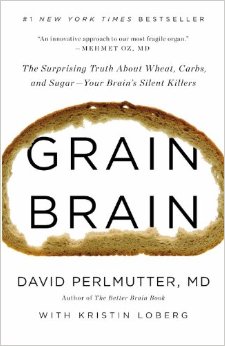
Grain Brain by David Perlmutter

Written by , Posted in Reviews

Two Stars

grain brain

I feel like I have a pretty good understanding of what makes scientific research credible, and that I generally know when to believe something (climate change) and when to not (Andrew Wakefield). And yet when it comes to health-related items, I’m kind of baffled.

Okay, not totally baffled. I know that movement is good. There doesn’t seem to be any credible research suggesting it’s better to NOT exercise at all. Cool. Got that. And, as of late, I’m finally coming to terms with the fact that sugar is probably super bad for me. Also not surprising. A bummer, but not surprising.

After that, though, I’m kind of out. Should I be a vegetarian (both for animal rights purposes, and also for my health)? Vegan? But (somehow, magically) low carbohydrate? Should I eat all the eggs but no dairy? What about carbohydrates? Only in veggie form? Whole grain? Or not at all? I thought my brain needed a minimum of 130 g carbohydrates to function – and this guy wants me to limit it to 30? After reading this book, I really don’t know what to do. I felt kind of gross reading it, as though I were experiencing the print version of one of those olde tyme snake oil salesmen. There were so many ‘guarantees,’ and a lot of anecdotes about his patients. Plus, Dr. Perlmutter has his own website where he offers up his ‘preferred’ supplements, which reads a little skeevy to me. And while he cites a lot of research, I don’t have the time to read all of the studies, so that junk I posted at the beginning of this review isn’t really applicable. Plus, when I googled “Debunking Grain Brain” I got a whole lot of hits.

But on the other hand – the man is a neurologist and a nutritionist. That gives gives him some credibility, right? And I read Good Calories, Bad Calories last year, and Sugar Nation just a few weeks ago, which made some of the same arguments. And we know that nutritionists have gotten it so wrong in the past ** cough ** margarine ** cough **. Is it possible they are still getting it wrong? And of course, when I googled “Debunking [group that debunked this book]”, I also got hits.

This book was not really helpful. But I still might try some of the suggestions, mostly because if I clean everything out of my diet, I can figure out what my body likes. I’m sure there’s some dairy I can’t process, but I eat so much of it I haven’t figured out which it is. And there are probably some other foods that I have more energy after consuming, and some that make me not feel great. Perhaps that can be a good take-away from books like this (and It Starts with Food, which is up next): nutrition is complicated, and we just have to figure out what works best for us.

Sunday

22

February 2015

0

COMMENTS

What I’m Reading – February 22, 2015

Written by , Posted in What I'm Reading

Misogynoir

– “Why is it so hard for everyone else to give her that control over her own life? Why are we hellbent on forcing people to surrender their autonomy to the fickle flow of where we want to place them in service to our own wants?” Jessica Williams Doesn’t Need Your Permission: How White Feminists Hurt Everyone By Trying To Lead Women Of Color (via @Karnythia)

Injustice

– “Reed’s defenders have long maintained that Reed was set up by Fennell for his fianceé’s murder, likely after Fennell found out about the illicit relationship. In a recent article about the case, The Intercept chronicled Fennell’s history of violence, including allegations of stalking and rape. Indeed, Fennell is currently serving a 10-year prison sentence for kidnapping and sexually assaulting a woman while on duty and in uniform.” “Oh My God, This is Way Off”: New Investigation Shows Texas Is Likely Set to Kill an Innocent Man (h/t @LilianaSegura)

– “While it appears that modern thinking about the meaning of “cruel and unusual” is focused on the actual methods of execution, the gentlest method of execution for someone who is actually innocent is the gravest form of injustice and cruelty possible.” Did you know the Supreme Court ruled 6-3 that it’s legal to execute an innocent person? (via @ShaunKing)

Reproductive Health

– “Another formerly incarcerated women said she was shackled throughout her entire childbirth experience in 2010. On a press call to announce the findings of the report on Thursday, she told reporters that she was cuffed to the bed and unable to sit up, even as her daughter was moving through the birth canal. Maria Caraballo, who has since become an advocate for women in prison, said she remained shackled while she was being stitched up post-delivery.” New York Prisons Are Illegally Shackling Inmates During Labor, Harrowing Report Finds (h/t @MsFoundation)

Policing

– “Smith said he’s repeatedly told some of his members—particularly “the ones who complain about it”—the following: “You applied here. And you have to treat people all the same. You have to serve the community. If you don’t like the politics here, then leave and go to a place that serves your worldview.” The tough talk, Smith said, usually continues with him saying something like this: “They hired you because they thought you were going to be able to work in a diverse community. And if you can’t, well then, I guess there are still places across the country that aren’t diverse, so go work there. But those won’t last forever.”” Seattle Police Union President to Cops: Get With the Times or Get Out of This City (via @strangerslog)

Capitalism

– “Mitchell said that she was skeptical that Consumers Energy cared about its elderly customers, even after it responded to her father’s death by setting aside $9 million in profits for heating assistance. “I think it might be a front,” she argued. “If you are sorry, why did you shut off the heat for a 69-year-old man? I understand that every business has to be concerned about profit, but they have to be concerned about the customers too. Maybe gas companies should take account of what people earn. That would be helpful.”” 69-Year-Old Vietnam Vet with Throat Cancer Freezes to Death After Company Shuts off His Gas (h/t @Are0h)

Environment

– “Concerns have also been raised about the potential contamination of local water-treatment facilities, after officials noted that at least one of the derailed tanker cars fell into the Kanawha River. The area is about 30 miles from the location where 10,000 gallons of a coal industry chemical called crude MCHM spilled and tainted the drinking water supply a little over one year ago.” West Virginia In State Of Emergency After Massive Oil Train Explosion (via @ThinkProgress)

Biology

– “When genetics is taken into consideration, the boundary between the sexes becomes even blurrier. Scientists have identified many of the genes involved in the main forms of DSD, and have uncovered variations in these genes that have subtle effects on a person’s anatomical or physiological sex. What’s more, new technologies in DNA sequencing and cell biology are revealing that almost everyone is, to varying degrees, a patchwork of genetically distinct cells, some with a sex that might not match that of the rest of their body.” Sex redefined (h/t @stavvers)

Wednesday

18

February 2015

0

COMMENTS

Going Clear by Lawrence Wright

Written by , Posted in Reviews

“In 1996, the church sent CDs to members to help them build their own websites, which would then link them to the Scientology site; included in the software was a filter that would block any sites containing material that vilified the church or revealed esoteric doctrines.”

This book is 450 pages long, and filled with horrifying – and fascinating – things. But it wasn’t until page 386 that I actually stopped in my tracks and dog-eared the page with the above sentence. It is just so deeply fucked up to use what should be a nice, innocent gesture (‘here, let us help you build a website’) to do something so underhanded.

I love this book. It is dense but extremely easy to read. It is laid out logically, it is exquisitely researched (his fact-checkers on the New Yorker article that preceded this book had over 900 items they verified), and it is fascinating. I took so much more away from this than just “man, that is a screwed up religion.” Because honestly, I think if we had access to any religion’s leadership within the first few years of its existence, with the investigative resources we have now, someone could write a book like this. I am pretty sure that the leadership of many (most?) organized religions have done some seriously screwed up things (e.g. covering up pedophilia, **cough** Catholicism **cough**), but I don’t think that means that the practitioners are evil, or stupid, or mentally deficient.

This book delves into so much that I could write pages and pages about it. It talks about what makes something a religion – is it spirituality, is it a belief structure, is it a group of practitioners who do similar things – as opposed to a cult. It discusses the dangers of government choosing what is and is not a religion (in the U.S., it’s basically all up to the IRS, which is just weird). It looks at whether this tax exemption designation is really fair, given the fact that it can cover up all manner of hideous human rights abuses (such as those suffered by the Sea Org members of Scientology).

Mr. Wright also looks at the responsibility those who make themselves the face of religious movements have to those who are treated horribly by the church leadership. When I mention Scientology, you all probably picture Tom Cruise first, then John Travolta. If you think on it a bit, you might picture Jenna Elfman, or Kirstie Alley. Given what Mr. Wright so carefully and deliberately lays out as the horrible actions taken by church leadership, and the mountains of evidence available about the violent nature of its current leader, should we hold these people responsible for their willful ignorance?

If that weren’t enough, the book also got me thinking about the nature of belief, and what people are willing to do when they think their life and salvation are on the line. If you are a deep believer yourself, but of a more established religion, some of the things church members go through might not seem so unbelievable if you replace Scientology with a fundamental version of any belief system. If you truly believe that L. Ron Hubbard had some deep connection to the realities of the universe, and the meaning of life, and that the systems he has provided are the best way to make you the best person you can be, then it makes sense that you would stay even when you are scrubbing a dumpster with a toothbrush.

But that gets to the huckster piece of things. Was L. Ron Hubbard mentally ill? Evil? A con man? Much of the first half of the book really focuses on him, and I get the sense that he was a bit of a con man but that he was mostly a deeply troubled person who probably could have seriously benefited from the psychiatry that he built his church to fight against. It’s possible his writing has helped a lot of people. But the Church – that is, the leadership, and those who don’t speak out against and fight back – have done so much harm. And it isn’t so easy to just say ‘why don’t you leave’ – the book outlines so many horrifying ways that the church leadership manipulates people into staying. It’s complicated and an almost textbook example of how to control people with fear.

So what I’m saying, 750 words later, is: read the book. It’s fascinating.

Sunday

15

February 2015

0

COMMENTS

What I’m Reading – February 15, 2015

Written by , Posted in What I'm Reading

Vaccines

– “No matter what other lofty ideas of toxins and vaccine-related injury anti-vaxxers try to float around in their defense, that’s really what all of this is about: we’re facing a massive public health crisis because a disturbing number of people believe that autism is worse than illness or death. My neurology is the boogeyman behind a completely preventable plague in the making. I’m Autistic, And Believe Me, It’s A Lot Better Than Measles (h/t @allisonkilkenny)

– “You know what vaccines protect your children from? Pain. Suffering. Irreparable harm. Death. And you would be the first to line up if you had an inkling of what the death of a child feels like. You would be crawling through the streets on your hands and knees, begging, begging to get that vaccine into your precious babies because that is what I would have done, if I could, to save my daughter.” My 15-Day-Old Son May Have Measles (h/t @BreeSmithWx)

Islamophobia

– “As such, the shooter was portrayed as an irrational, lone killer who does not represent atheists. However, the shooter — who was transparent in his contempt for religion and religious people — was undoubtedly inspired by the Islamophobic rhetoric espoused by radical anti-theists communities represented by Dawkins, among others.” How the ‘Muslim Menace’ Steals Muslim Lives (via @roqchams)

Sports

– “But if Edelman was checked, it likely did not conform to the establish protocol. Shortly after the hit, Edelman was still in the game and scored the go-ahead touchdown.” Doctors Told Patriots That Wide Receiver Should Be Checked For A Concussion, But He Stayed In Game (via @ThinkProgress)

Labor

– “Gentles, who had Asperger’s syndrome, “experienced severe emotional distress” following the incident, according to the lawsuit. Three days later, he killed himself by jumping from the roof of a hotel.” Target workers claim ‘walk of shame’ that allegedly led to a suicide is a widespread practice (h/t @jordanbks)

Recreational Substances

– “Media reports and anti-pot legalization advocates have hyped the idea that “drugged driving” would wreak havoc on the roads now that states are beginning to legalize marijuana. In fact, highway fatalities have gone down since Colorado legalized marijuana.” Marijuana Doesn’t Make You More Likely To Crash Your Car (via @ThinkProgress)

Health Care

– ““The prohibition on physician-assisted dying infringes the right to life, liberty and security of the person in a manner that is not in accordance with the principles of fundamental justice,” the high court said in a unanimous ruling.” Canada’s high court legalizes physician-assisted suicide (h/t @ACLU_WA)

Immigration

– “There is not one family that doesn’t send money back home. It is a part of our culture to take care of our relatives, no matter how distant they may be,” explains Ahmed, “My little brother and sister have nothing to do with terrorism. They deserve to eat and to go to school. The money we send helps with that. Now they no longer have access to that.” Why Seattle Should Give a Damn About Somali Remittances (via @strangerslog)

Police Brutality

– “Surveillance footage first obtained by Northeast Ohio Media Group showed Tajai running to her brother’s side after Timothy Loehmann fired two shots at the boy, who was carrying an airsoft-style gun. As the girl neared her brother, Loehmann’s partner, Frank Garmback confronted her and forced her to the ground. Loehmann rushed over, and the two knelt beside her as she rolled on the ground. Eventually the officers handcuffed the girl and placed her in the back of the police cruiser, less than 10 feet from her dying brother.” Tamir Rice’s sister says Cleveland police lacked ‘decency’ and ‘respect’ in detaining her after shooting (h/t @Copwatch)

Wednesday

11

February 2015

0

COMMENTS

Tuesday

10

February 2015

0

COMMENTS

Ask a Forensic Artist by Lisa Bailey

Written by , Posted in Reviews

Three Stars

askforensic

I’m pretty sure I found this book based on an excerpt that was posted on a link on one of the blogs I regularly follow. But I’m not sure which one. You might recall that I have a particular interest in books related to death and dying, as well as forensic anthropology. This very quick (like, 90 minute) read is a nice introduction to what forensic artists do and, more interestingly, how they do it.

Ms. Bailey started her “ask a forensic artist” website as a way to answer questions folks have about her profession. No, it’s not like it is on Bones. No, you don’t have to be an expert artist (but you should have some talent). It is apparently a pretty popular site, so she decided to write a book. As I said, it’s a very simple read despite what could be a complicated subject. In fact, the writing is VERY simple, to the point where at times it could have doubled as a young adult work of non-fiction. Also, how can something be the “most unique profession?” Unique is an adjective that cannot be modified. Arg!

It was basically exactly what I was looking for from the title, and would have gotten about four stars from me except for the end. That’s right – it wouldn’t be a Lollygagger review if I didn’t talk about racism, sexism or rape culture, amiright? The author decides to end the book with anecdotes from other forensic artists from across the U.S., which is a nice idea in theory. She states multiple times that her opinions on some areas aren’t universally shared; this would be a good place for her to highlight some of those differing opinions.

That’s not really what these little two-page bits do; they are instead meant to be a little bit about how these particular artists got into the field and a couple of illustrative stories about their work. What bothered me is that three of the dozen or so artists used their time to tell stories about times when people were making up the crime and so describing people they knew, not criminals. That’s not so much an issue, but two of those three stories were about women making false rape claims. The first one angered me; the second one pissed me right off. I get that those things happened, but considering that only about 2% of reported rapes are false reports, and that this is the same percentage as for other felonies, it’s just bullshit to highlight these stories as though this is a common occurrence. One mention of it, I guess, maybe. But including TWO stories (one of which was told with such acid on the writers tongue that I got the distinct impression that this man just doesn’t like women) is to my mind irresponsible and is just another subtle way to promote this ridiculous idea that women lie.

So yeah. If this is a topic that interests you, read the book. But stop when you get to the anecdotes section at the end.