ASK Musings

No matter where you go, there you are.

Feminism Archive

Monday

22

February 2016

0

COMMENTS

Monday

22

June 2015

0

COMMENTS

Women’s World Cup

Written by , Posted in Feminism

So far I’ve attended four Women’s World Cup matches in Vancouver, and I have tickets for the final on July 5th. It’s exciting to attend an international sporting event – the only other one I’ve been to was a friendly match between the England and Egypt men’s national soccer teams in London a few years ago. Two things have been very awesome: the packed stadiums for both the USA v NIG match and CAN v SUI match, and the thousands of young girls I’ve seen be SO EXCITED to watch these matches live. I started playing soccer as a 6-year-old girl; I still play keeper on a co-ed team here in Seattle.

I’ve also, unfortunately, seen some really disheartening things. For example, and this is a big one: this is called the FIFA Women’s World Cup. But the men’s one is not called the FIFA Men’s World Cup. That gets to just be called the ‘World Cup.’ In fact, if you open the FIFA app, in the main news stream you will see articles on the Women’s tournament, but if you click specifically on the “FIFA World Cup,” all you will get is information on the Men’s tournament. That necessarily just perpetuates the false idea that men in sport is neutral / default, and women in sport is something abnormal. That’s crap.

However, it should be surprising, as we know that FIFA values women in sport much less than they value men in sport. A glaringly obvious example of this is the fact that FIFA allowed these matches to be played on turf. Some places, like Seattle, have many turf fields because there is so much rain. But turf acts differently than grass. And, as evidenced by the ENG v NOR match, it also gets EXTREMELY hot. Like, there can be a 20 degree difference between the temperature in the air and the temperature down on the field when turf is involved. As others have said, in this case women are literally not on an even playing field as compared to the men.

Another thing I’ve noticed is that with this tournament, the commentator who talks the most is often a man. There is usually a woman commentating as well, but there is always ALWAYS a man. But you don’t really ever see this with men’s sports. There might be a woman on the sideline to ask a player or two “how are feeling?”, but you don’t have a woman in the booth commenting on the quarterfinal match in the men’s world cup. This isn’t just with soccer – it seems to exist with every sport that women and men both play. If it’s a women’s match, there’s always a man in the booth. If it’s a men’s match, the closest a woman gets seems to be the sideline.

Finally, when it comes down to something as basic as the FIFA app, things aren’t equal. The women’s world cup stories are in the “all news” section, but if you click on “FIFA World Cup” as a section, all that’s there is the men’s world cup. I actually emailed FIFA about that (via Facebook messenger), and they responded with the fact that the men’s U23 was going on at the same time, so they decided to not post either. Which … what? That makes zero sense. They also said they’ve “discussed this is Zurich” already for 2019. I’m a bit skeptical about this, but I’ll reserve judgement for the moment.

Are these points the end of the world? Probably not. But I think they are really great examples of the many ways that women’s sports are treated like crap pretty much worldwide. It’s the patriarchy, and it is ridiculous.

So, with that in mind, here are a few things I’m going to start doing.
If a sport has a men’s version and a women’s version, I’m going to always use that identifier, regardless of which it is. The 2018 World Cup will be the 2018 Men’s World Cup. The NBA will be the Men’s NBA (since we have the WNBA). They do it in the Olympics – why is it so hard to do with other sports?
If I have the option of watching a women’s competition live, I’m going to do it, and at least as often as I do men’s. Seattle Reign FC? I’m attending at least as many matches in person as I do Seattle Sounders. Seattle Storm? I don’t even like basketball at all, but I’m going to make it a point to attend a game this season.
I’m going to focus on reading more articles about sports by women (Jessica Luther is a FANTASTIC writer – follow her on Twitter @scATX), and books by and about women in sports.
I’m going to sign and boost every petition that comes my way pushing for equal treatment of female athletes, whether that is with prize money, practice space, media coverage,
I’d love it if you’d consider joining me. Language matters. How we view women in sport matters. I’ve got two nieces, and I really want them to know that the contributions they choose to make – whether in sport, or art, or science, or humanities – matter as much as the contributions men make.
Sunday

17

May 2015

0

COMMENTS

Fat Girl Walking by Brittany Gibbons

Written by , Posted in Feminism, Reviews

Four Stars

brittany herself

**Apparently this isn’t released until Tuesday, but my local Barnes and Noble had it out yesterday, so I guess I’m reviewing this from the future? Awesome!**

You might be familiar with Ms. Gibbons. She’s the woman who went on TV in her bathing suit (in Times Square, no less), wearing a size 18ish. She had sex with her husband every night of the year in hopes of improving her own body confidence. She runs the website ‘Brittany, Herself’ and is the leader of the ‘curvy girls army.’

I found this book while trying to kick-start by Cannonball Read yesterday. I bought four books that I could see myself forgoing TV for (although not the new Game of Thrones tonight, because I’m not an animal). This one really jumped out at me, and I pretty much inhaled it. I read it before bed last night, only stopping because my eyes refused to cooperate. I read it on a 30 minute walk to get lunch, and on the walk home. I was even a little sad that today was a run day, not an elliptical day, so I couldn’t read it while working out.

I related to a lot of what Ms. Gibbons shares in this collection of essays, even though I’ve never had children (her discussion of being a mother permeates much of the second half of the book, but is certainly not the overall focus). No one would describe me as thin. Fat? Eh, probably not usually. But I’ll freely admit to having more than one totally fine morning destroyed because I stepped on the scale.

And that’s bullshit. Ms. Gibbons articulates the ways in which it is bullshit much better than I can, so I’ll just leave it at that. There are some really laugh-out-loud moments, and some really thoughtful ones that gave me pause. I was reading this too quickly to even bother to underline passages I especially liked (the book would have been mostly underlined anyway), but this one stuck out:

“The reality was that my life wasn’t miserable because I was curvy; I was miserable because I thought I’d be happier if I were thinner, and when I sat to think about it, it didn’t really make sense.”

Word.

Wednesday

4

March 2015

0

COMMENTS

Unspeakable Things by Laurie Penny

Written by , Posted in Feminism, Politics, Reviews

Four Stars

I ended up following Laurie Penny (@pennyred) on Twitter at some point. She’s a UK-born-and-bred white journalist who writes about feminism, class, geek culture, and all that lies in between. She covered the Occupy movement, and many other uprisings stemming from young people recognizing that they are currently getting the shit end of the stick. If any of you are familiar with Anita Sarkeesian and Feminist Frequency, you might have come across the above video, as it was the second part of a conference talk in which Ms. Sarkeesian participated.

I enjoyed this book. I thought she shared interesting ideas in a way that I hadn’t been exposed to. This book is as far away from the Sheryl Sandburg-style b.s. lean in feminism as I think you can get if you are a white woman (which I think necessarily limits one’s ability to fully understand and discuss the intersection between gender and race that black women and other women of color experience). While nearly 250 pages long, the book only has five chapters, and I think that’s a good thing. It allows Ms. Penny to focus on creating mostly well-crafted and interesting essays on topics that, if you’ve read about, you’ve probably not read about in quite this way.

I enjoyed in particular her take in “Lost Boys,” which looks at the ways in which men are angry because they aren’t getting what they think has been promised them. She discusses the real ways that the patriarchy (oh, yeah, I said it) doesn’t just fuck over women, but it fucks over the majority of men as well. “People are realizing how they have been cheated of social, financial and personal power … but young men still learn that their identity and virility depends on being powerful. What I hear most from the men and boys who contact me is that they feel less powerful than they had hoped to be, and they don’t know who to blame.”

But lest you worry that this is a book about feminism that just focuses on men, the other chapters are full of somewhat new and definitely interesting ways of looking at gender and sexuality from the perspective of those who are freshly out of high school or college, or making their way into their late 20s. I just barely avoided joining the Millennial generation (I’m about a year too early, and thus a Gen X-er), but they have grown up in a world that is drastically different from the one I grew up in, and it shows in many ways, including how gender and class intersect.

She talks elegantly about rape culture, including sharing her own experience confronting her rapist years after the fact. She talks about the ways in which society puts the onus and blame on women to protect themselves, as opposed to on the men to, you know, not rape. And she rightfully points out that rape culture isn’t just about men raping women, but that it’s about the culture around how women are treated, from the work they might engage in (including sex work) to the clothes they wear to the choices they make around employment (if they even have choices).

I think this is a good book to add to the list of those who value feminism and who have some understanding of its background and history. It’s not as accessible a book to use to introduce a skeptic to feminism as, say, Full Frontal Feminism by Jessica Valenti, but not every book needs to – or should – be that.

Sunday

25

January 2015

0

COMMENTS

The Girls Who Went Away by Ann Fessler

Written by , Posted in Feminism, Reviews

Four Stars

the girls

I’m not sure what drew me to this book. I’m not adopted, and I’m not aware of anyone close to me who was either adopted or surrendered a child for adoption. But it was probably the subtitle that pulled me in: ‘The hidden history of women who surrendered children for adoption in the decades before Roe v. Wade.’

The ‘solution’ to unplanned pregnancies for many anti-choice people is for the woman to carry the pregnancy to term and then surrender the child for adoption. That of course doesn’t solve the issue for women who don’t want to be pregnant (regardless of whether they want to raise their child). But it also really doesn’t take into account the impact surrendering a child for adoption has on many of the women who give birth.

This book is, to borrow a totally clichéd phrase, heart-wrenching. The focus is primarily on the middle-class white women who, between the mid-1940s and mid-1960s found themselves pregnant and (sometimes, although not always) alone. Ms. Fessler points out that during that time white women in the U.S. were surrendering children at a rate many times that of black women, which in part explains why the vast majority of the women she spoke to come from this demographic. The overwhelming common thread in these stories is not care for the young women, or even care for the children they gave birth to; instead, it seemed most families were mostly just concerned about being embarrassed by their daughters, and these young women were punished for that.

And it’s always the daughters. It appears that, for the most part, the young men and boys involved in the pregnancy were not affected – they certainly weren’t kicked out of high school like their pregnant girlfriends (which was the law in some places), and they weren’t sent away to maternity homes to finish out the nine months, deliver the child, and have the child taken away. Sounds kind of familiar, doesn’t it? Young teen and single moms are often derided still today, but I don’t see anyone going after the men who were just as present at the time of conception.

There’s so much wrong with what so many of these women went through. From not being informed of their rights, to being treated like crap by parents who clearly didn’t know how to care enough about their children (only about how the rest of the town might talk about them), these young women tell their stories throughout Ms. Fessler’s book. Each chapter is filled with quotes from women the author interviewed, and then followed by two chapters that are each one woman’s story told to illustrate the points being made. The biggest take-away for me is that these women should have been given the support they needed to keep their children if they wanted them; they instead were essentially treated like breeders for more ‘worthy’ couples. These women did not owe their children to these couples who wanted to adopt, but the social workers, nuns, priests and maternity home staff seemed to do all they could to convince these women that it was not fair to their children to keep them.

Sunday

30

November 2014

0

COMMENTS

Bad Feminist

Written by , Posted in Feminism, Reviews

Four Stars

bad-feminist-roxane-gay

I’ve heard many people reference this collection of essays, to the point where I sought out the author’s twitter feed so I could get a feel myself about what her writing was about. After having enjoyed her (often random) tweets for a while now, I finally picked up her book. Well, I downloaded it. And now I’m mostly just mad that it took me this long. I really should have just read it the second I heard about it.

Ms. Gay writes about many different cultural topics throughout this book, each fitting loosely into the categories of gender and sexuality; race and entertainment; politics, gender, and race; and ‘me’ (the author). I appreciate the fact that I don’t agree with everything she says in every essay – that’s kind of the point. Not that the author expects us to disagree with her, but that she owns the fact that she is a complex and complicated person, with many different opinions that don’t always neatly line up. She listens to problematic music, she reads Vogue unironically, and she (gasp!) shaves her legs. She’s a bad feminist.

But she’s not. She’s a fantastic feminist, because she approaches things with a critical eye. It is, in fact, possible to like things that are not good. Her essay on the song “Blurred Lines” is a great example of this: the lyrics are horrifying and basically an ode to justifying rape, bat damn if the song isn’t catchy. She is also able to provide a different perspective than so much of what we see in mainstream feminism. Ms. Gay brings the perspective of not a white, straight woman but of a Haitian American queer woman. That doesn’t mean she speaks for all black women, or all bisexual women, but it does mean that her commentary comes from a place that doesn’t get nearly enough coverage in most of the media out there.

For some reason I had some trouble with a few of the earlier essays. Part of that may have just been the mood I was in. But for me the last 200 pages of the 300+ page book flew by, and I was sad it was over. However, thanks to the interwebs, I can still read her writing, as she is the editor of The Butter, a subsection of The Toast.

Sunday

23

November 2014

0

COMMENTS

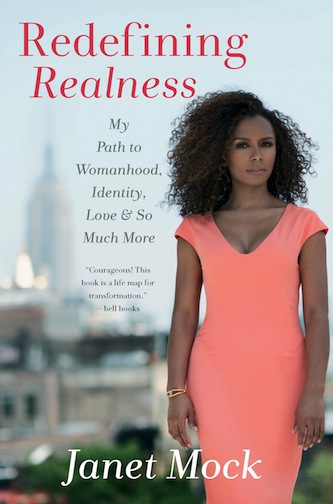
Redefining Realness

Written by , Posted in Feminism, Reviews

Four Stars

janet-mock-book-coverYou might be familiar with Janet Mock. She has been a writer for People magazine (which I unapologetically read every week), and more recently has shared her story of being a trans woman of color in a feature for Marie Claire magazine. I first learned about her where I learn about many things that aren’t necessarily covered on CNN or in the New York Times: on Twitter. I’d see her comments retweeted by other people I follow, and learned about her book when it came out earlier this year. I had originally purchased Lena Dunham’s book to read this month, but exchanged it for this one because I realized I don’t really care what Lena Dunham has to say about things, but I do care what Ms. Mock has to say about things.

This book is a memoir that focuses mostly on her youth, starting with her memories as a young child in Hawaii, through moving to New York City for graduate school. Ms. Mock was assigned the gender male at birth, but never felt connected to that; she felt like a girl. Her story is fascinating, surprising, and at times heartbreaking. It can almost read like fiction, because it was difficult for me to realize that someone could experience what she did and come through it not just to survive, but to thrive.

Ms. Mock faced many disadvantages growing up, but she also recognizes that she had some things that other trans youth do not have. Early on she found her best friend Wendi, who was also trans, and helped her to not be alone at school. She is a very smart person and was able to earn a scholarship for college. Her family was supportive of her as she took more steps to make sure that her actions and appearance matched how she felt – she was not thrown out of her home when she shared her reality with her mother. That’s powerful.

Her writing about accepting who she is, and especially about what it means to be a ‘real’ woman, made a strong impression on me. This idea that we value trans people more if they ‘pass’ for cis people, or that someone is lying if they don’t share that they were assigned a different gender at birth, places cis as the center of ‘normal’ when in reality being cis is just common. This sentence, coming on the second-to-last page of the book, is one I want to embroider and hang on my wall: “We must abolish the entitlement that deludes us into believing that we have the right to make assumptions about people’s identities and project those assumptions onto their genders and bodies.” Spot on.

I should say that I’m not used to Ms. Mock’s style of writing. I’ve read loads of memoirs, but most of them are written by comedians, and thus have a very different feel. I think she finds her stride about three chapters in (although who knows in what order she wrote the book), but I nearly stopped after the first chapter because the writing was so very … descriptive. At times I felt like there was some sort of adjective word count she felt she had to hit, that I was reading a book that suffered from a lot of ‘tell not show’ sentences. It’s not the type of writing I generally like to read, but the story behind all of those words was so interesting and powerful that either I figured out a way to accept the style, or it became less prominent as the book went on. No matter – I’m very glad I stuck with it.

Wednesday

19

November 2014

0

COMMENTS

Pro

Written by , Posted in Feminism, Politics, Reviews

Four Stars

After the shit show that was the (legislative side of the) election in the U.S. earlier this month, I needed to read a book that would both make me angry and inspire me. I hadn’t heard about this book before I saw it at our local bookstore, which surprises me, as I thought I was on all of the feminist killjoy mailing lists.

Pro is a well-researched, well-argued look at why abortion rights are so important. That “pro” stands for pro-choice, and it is explored from multiple directions and through different lenses. Ms. Pollitt’s main argument is that those who are “pro-life” aren’t actually pro-life, but more interested in policing the sexuality of women. This isn’t exactly ground-breaking; feminists have been saying this for years. But this book differs in that it lays out literally all of the arguments in favor of banning abortion (either at all stages of pregnancy, or at specific stages, or for different circumstances) and knocks each on down, showing the inconsistencies as well as the impacts these views have on very real women.

The book is over 200 pages long but it only has eight chapters, because each chapter is devoted to going really in-depth into an area of discussion. Early on she shares with us the data on U.S. views on abortion, and how they aren’t really that consistent with the actions U.S. voters support. She then explores the idea of “personhood,” and whether those who oppose abortion really do view the blastocyst, embryo, or first trimester fetus as a person with the same rights as the pregnant person (ultimately arguing that they don’t, because of the other actions they take). This is followed by an exploration of whether women are actually people, some myths about abortion, and then the concept that it isn’t so much abortion, but what abortion represents (woman’s increased control of her life) that pro-life people oppose. Finally, she ends with a look at why compromise isn’t actually an option, followed by what it would mean to truly support women as mothers.

The only problem I have with this book is one that I have with any book that talks about reproductive rights, and it is the complete lack of recognition of the trans issues involved. Yes, it is usually women who are the target of laws restricting abortion, but trans men can also get pregnant, and are victimized by these laws as well, and there’s just no mention of that.

The author claims the target audience of the book is people who aren’t really sure where they stand on the issue, and I agree that these folks might find this book interesting. I think it’s also great for those of us who are very clear on where we stand but could use a little additional education.

Saturday

15

November 2014

0

COMMENTS

The Need for Sick Leave

Written by , Posted in Feminism, Politics

About two weeks ago, Austin got a bad cold. He missed three days of work, but was basically fine by Saturday. Yay! But the next day I woke up with a cough. For two days it wasn’t so bad, but by the time I got home on Wednesday, it had taken over, and I was sneezing and sniffling and just generally miserable.

Obviously I do not like colds. However, this one has reminded me of how grateful I am for paid sick leave, and how disturbed I am that every company isn’t required to provide it. Me at work on Thursday would have meant sneezing every five minutes, disrupting colleagues, and spreading germs, all while doing no real work because I would be fuzzy from cold medicine. Instead I got to take the day and sleep, rest, drink fluids and blow my nose as often and loudly as needed. I had Friday off already, which means that I’ve been able to take care of myself to the point that I will be healthy when I go to work on Monday.

Without that leave, the cold could have gotten much worse. It’s been literally freezing here, so an upper and lower respiratory infection could turn into bronchitis (as it often does for me) or even pneumonia. But I didn’t have to make the 30 minute walk to and from work, or sit in freezing conference rooms. I could stay on the couch, with the kittens and the Gilmore Girls and multiple boxes of tissues and let the illness work itself out.

I do not understand the argument that if someone is sick they should either come to work (and risk making everyone else sick) or forgo that day’s pay. I’ve heard small business owners complain that they can’t afford this or shouldn’t be responsible, but I disagree. They say they can’t afford it, but can they really afford multiple illness stemming from the guy who couldn’t stay home because he needs to get paid? Paid leave of all kinds is what we should expect and demand as part of the total compensation. If I’m going to give you most of my waking hours five days a week, you should be responsible for more than just a paycheck. You should be care for the wellbeing of the worker. We are not just widgets that are a cost ti be calculated.

But as I said, in my case, I’m lucky. I have sick leave, thanks to my employer recognizing my humanity.

Tuesday

4

November 2014

0

COMMENTS

Yes, Please

Written by , Posted in Feminism, Reviews

Five Stars

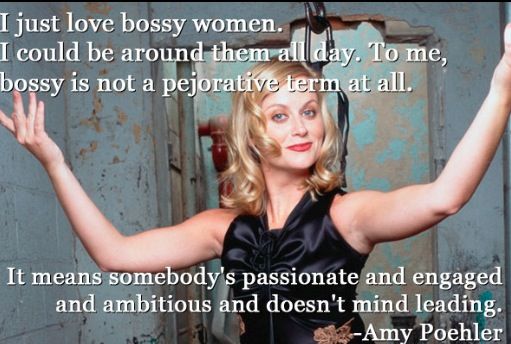
amy poehler

“Good for her! Not for me.”

The above phrase first appears about a fifth of the way through Ms. Poehler’s excellent book. If you’re familiar with her “Smart Girls at the Party” project, it should come as no surprise that she offers up some pretty sweet life advice. I’m almost 35, and I don’t think I’ve seen that sentiment summed up so perfectly. I’m considering having it tattooed on my ass.

Not literally. Well, not actively, anyway. Maybe someday. But for now it is tattoed across my mind.

This book is not exactly what I expected. I was assuming it would be closer to what Tina Fey gave us with Bossypants. I know that comparing one pretty white rich comedian to another pretty white rich comedian isn’t exactly groundbreaking, but these days when I see Ms. Fey I think about Ms. Poehler and vice versa. I picture Amy/Hillary and Tina/Sarah standing at the podium during the Saturday Night Live cold open. I’ve always felt that I know a bit more about Ms. Fey (not that we really know anything about strangers, even after they’ve written a memoir) than Ms. Poehler, although I recall reading in Bossypants the story about Amy very bluntly telling Jimmy Fallon that she didn’t care if he liked something she did or not. That’s awesome.

After reading this book, I feel like I understand Ms. Poehler a bit more. She’s an interesting woman, and a complex one who can be very sarcastic, very blunt, and very sincere in the same paragraph. The sincerity threw me a bit, but I really appreciated it in this book. Unlike Neil Patrick Harris’s book (which I reviewed a couple of weeks ago), this one feels like an exploration. I’m not fooling myself into thinking it’s not a carefully curated version of herself that she’s choosing to share, but she is at least a talented enough writer to make the reader BELIEVE that she’s sharing something real with us.

And what she shares is a mixture of pride, shame, humor, and insight. She tells a story that does not paint her in a flattering light, and while I could take the cynical route and imagine that she did it to absolve herself, I don’t actually think she did. I think she wanted to point out how she screws up, and how sometimes she doesn’t make things right, or spends way too long before she tries to make things right. She talks about hard work, about her marriage ending, and about her childhood. The book jumps around, and at times it isn’t totally cohesive, but it felt real. I imagine that Amy Poehler is someone who would use the phrase “my truth” without irony or judgment. I don’t think I would have believed that before reading this book. I think folks are expecting a laugh-riot peek behind the life of a comedic genius, and while we get that peek into her life, it isn’t all (or even mostly) laughs. It’s funny, for sure, but it’s more than that. I haven’t enjoyed this type of book this much in a while. I plan to read it again, because I think there’s more for me to get out of it.