ASK Musings

No matter where you go, there you are.

Reviews Archive

Friday

7

April 2023

0

COMMENTS

How to Blow Up a Pipeline by Andreas Malm

Written by , Posted in Reviews

Two Stars

Best for:
I’m really not sure, and I’ll get to that in the review.

In a nutshell:
Author (and climate activist) Malm attempts to argue in favor of stronger action by the public where it comes to climate change and fossil fuel.

Worth quoting:
“We face an ostensible paradox here, in that the US is a vastly more violent society — as measured by the diffusion of guns, the incidence of mass shootings, the civilians killed by police, the veneration of armed heroes in popular culture, the belligerence of the state and any other yardstick — than France, and yet the intolerance for violence committed by social movements as at its highest in the former.”

Why I chose it:
While the title is provocative, I was hoping to learn more about the discussion of what to do with the fact that governments are just not acting with enough urgency.

What it left me feeling:
Frustrated

Review:
I’m trying to be more constructive in my reviews, because I’m trying to remind myself that there is a person who spent a lot of time and energy on the book I’m reviewing. I might disagree with their arguments (or even disagree that an argument has been made at all), but unless they are making harmful claims (e.g. expressing bigotry), there’s no point is being unnecessarily critical.

So of course one of the first books I am reviewing with this new approach is one that is going to test it mightily.

The world is on fire. In some places, quite literally. And the leaders are failing us all. As Greta Thunberg pointed out in her speech to the UN: “People are suffering. People are dying. Entire ecosystems are collapsing. We are in the beginning of a mass extinction, and all you can talk about is money and fairy tales of eternal economic growth. How dare you!”

It is very clear that politicians in the nations responsible for the most CO2 emissions, the most burning of fossil fuels, are doing the absolute least in addressing these issues. They sign onto agreements that only require changes many years in the future. They repeatedly move the goalposts. And while that happens, California and Australia burn, islands in the Caribbean are mowed down by increased tropical storms. England reaches 107 degrees F. And private jets are still a thing, and yachts are still a thing, and billionaires are somehow still a thing.

So, what do we do? Malm sort of has a suggestion – more action targeted at the polluters, in the form not just of sit-ins or marches, but in the form of vandalism. Take out pipelines (he doesn’t literally explain how to or directly advocate for that). Deflate tires of SUVs in rich areas (he has done that). Do whatever it takes to be heard.

I don’t know if I agree or disagree with Malm because I found his book challenging to follow, and not because it’s too academic, or beyond my understanding. As previous reviews show, I am generally fine with sharing when I think I just don’t understand a book. This one, I found, is just not well argued. Part of that is its length – it’s not short, but it only has three chapters, and I don’t think the argument was well-organized enough to fit into just three chapters. I think it would be much stronger with more logical and specific delineations.

But it isn’t just that for me – I also am not sure of what the specific argument Malm is putting forth. Obviously I agree with him that climate change is of critical importance and that a different approach is needed, but I’m not sure if I know what the different approach is that he supports. Most of the book seems to be Malm arguing against other people who have made arguments that he disagrees with. And that can definitely work, but I don’t think it does here because those other arguments aren’t well positioned against anything the author himself is offering.

He spends a lot of time looking at historical protests that others suggest were successful due to their non-violent nature, and refutes a lot of that. And while the way he does that isn’t how I would choose to do it, he does do it. He also calls out how some modern-day climate actions are ineffective (specifically Extinction Rebellion) as well as hypocritical in their complete non-violence stance (again, Extinction Rebellion). He also spends time suggesting that violence doesn’t need to mean physically harming people – and I think perhaps even argues that we need a different term, because violence is loaded, and damaging a pipeline shouldn’t be considered violent. Especially when the impact of that pipeline is actual violence, causing actual harm to real people. I can see his point, I think, but I needed more from him here.

The strongest part of the book for me is when he talks about luxury vs subsistence emissions. Like, it’s absurd to suggest that people who burn wood so they can heat their homes and cook food and survive need to be making changes before someone who owns a yacht or an SUV or flies a private jet.

In the end, for me, books like this need to have a specific audience to be successful, and after reading it I am not clear on who the audience is. Is he trying to convince average folks to take up the cause to fight climate change? Is he trying to convince existing activists to step up their games and be more pro-active in their targeting of those causing the most harm to the climate? Is he trying to convince the big movements to stop calling for non-violence? The book cannot be all things to all audiences, and it feels to me that it is trying to be just that, and so ultimately it does not work. The subtitle is ‘Learning to Fight in a World on Fire,’ but I do not feel like the book is teaching how to fight.

The book also suffers (for me) from something I see so often in activism books: the sort of ‘who knows’ of it all. The author, just four pages from the end, says this “How could that happen? This cannot be known beforehand. It can be found out only through immersion in practice.” Which strikes me as disingenuous. 157 pages of arguing about needing to take a new approach to climate activism, but ultimately he isn’t willing to write out specifically what that should look like and how it can work.

If the target audience is people who aren’t yet active in the climate change arena (me), it doesn’t work. I’d be interested to learn if those who are active in that area find the book useful.

Recommend to a Friend / Keep / Donate it / Toss it:
Toss it
Wednesday

5

April 2023

0

COMMENTS

The Family Remains by Lisa Jewell

Written by , Posted in Reviews

Three Stars

Best for:
People who enjoyed the first book.

In a nutshell:
The remains of someone who died 25 years ago have been found. Also, the remains of someone who died just a few days ago.

Worth quoting:
N/A (Audio book)

Why I chose it:
I enjoyed the first book in this series.

What it left me feeling:
Ambivalent

Review:
Spoilers abound, especially for the previous book (The Family Upstairs). CN: Sexual assault, emotional abuse, stalking.

This book picks up where the last one leaves off, and while I can talk about the plot, this review is going to talk a bit more about the descriptions of some of the relationships. The plot itself continues the same multi-person narrative as the last book, but there are added characters, including the wife of someone murdered by an ex-wife in the first book. And that’s the storyline that was the most challenging. I’d imagine it was hard to write, but it was also really hard to read.

I’ve not read gas lighting written so well before. I was infuriated. I wanted to skip those parts but I also knew I needed to not, because it was important that the character experiencing the abuse had her story heard. How the husband love bombs the new wife, then on his honeymoon, gets offended by her suggestion of a sexual fantasy, and turns on a dime. Then completely pretends that things didn’t happen the way they did, turning everything into her part. And once she finally extracts herself from him, whenever she sees him in public, he acts like they’re still great friends and nothing could possibly have ever happened as she described.

In the previous book, we know that the husband ends up murdered by a previous ex wife. And it is one of the more satisfying outcomes, and makes it slightly less horrible to hear about his past knowing what happens to him in the future. But still. Really hard to read.

I do care about the characters (well, most of them heh), and I think Jewell has done a good job in making the women out to be fairly full characters. The others …maybe not as much, but still, enough for me to care about them.

The other story lines aren’t quite as compelling, though there are a couple of twists and turns. Unlike the previous book, though, we know nearly everything that is going to happen, and the twists that do happen feel a bit more out there than in the previous book. I am glad I read it, but just didn’t enjoy it as much as the first book.

Recommend to a Friend / Keep / Donate it / Toss it:
Donate it

Sunday

2

April 2023

0

COMMENTS

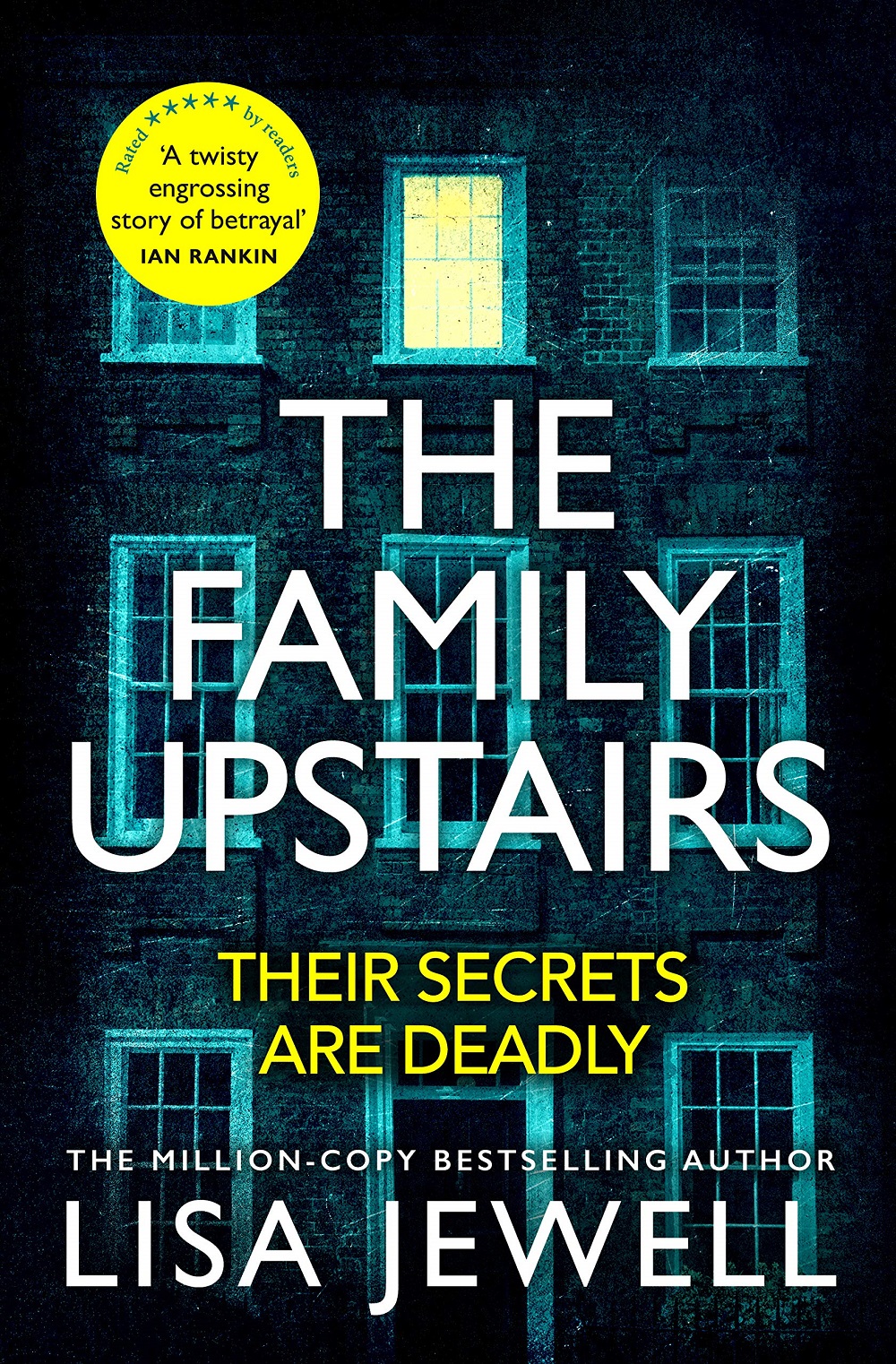
The Family Upstairs by Lisa Jewell

Written by , Posted in Reviews

Three Stars

Best for:
Fans of multi-perspective stories and jump back and forth across time.

In a nutshell:
A baby was found well taken-care of in a sparse mansion. Nearby are three adults dead by suicide. 24 years later, that same baby inherits the mansion and wants to know what happened to her parents all those years ago.

Worth quoting:
N/A Audio book

Why I chose it:
I’d seen this in an airport bookstore a few months back, and then it popped up as a recommendation on audible.

What it left me feeling:
Intrigued.

Review:
The book is a bit dark for sure – CN for sexual assault (in the book, not my review).

I knew nothing about this book going into it other that what was mentioned on the back cover. The book is told from the perspective of three characters (and the audio version employees three different voice actors for the chapters, which was immensely helpful): Henry, Lucy, and Libby. Libby is a baby who was found abandoned in a Chelsea (London) mansion 24 years ago. Henry and Lucy are connected to this somehow.

The voice actors chosen definitely give life to these characters – Henry sounds (to me) like a bit of a sleazy snob, Lucy sounds like someone who has seen some shit, and Libby sounds innocent and confused. I’m not going to say whether that ends up being accurate, but I think author Jewell does a great job of giving each narrator their own personality and way of speaking and acting.

I can’t share much without spoiling the twists, but I have to say that I made some educated guesses along the way and was wrong most of the time, so either the writing and story construction are quite clever, or I’ve not read enough of this genre to pick up on the clues. Either way, I enjoyed how it unfolded, to the point that I started this book on Saturday and finished up the next day.

In looking up some information about this book, I learned a sequel come out last year, so I’ve already downloaded that and imagine I’ll be reviewing it by the end of the week.

Recommend to a Friend / Keep / Donate it / Toss it:
Donate it

Saturday

1

April 2023

0

COMMENTS

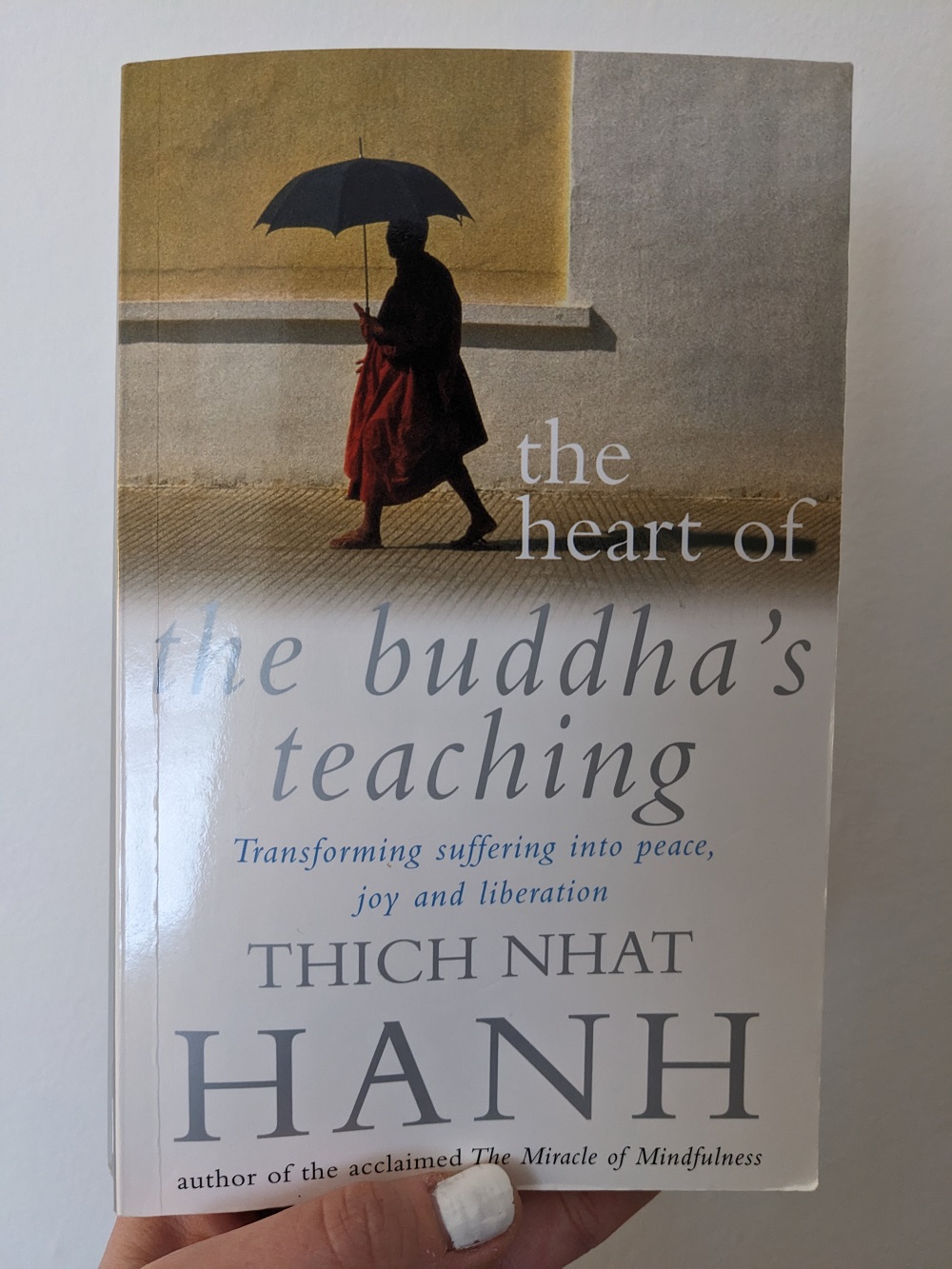
The Heart of the Buddha’s Teachings by Thich Nhat Hanh

Written by , Posted in Reviews

Four Stars

Best for:
Those interested in learning more about Buddhism.

In a nutshell:
Buddhist teacher Thich Nhat Hanh shares an overview of some of the basic tenets of Buddhism.

Worth quoting:
I underlined and starred so, so much.

Why I chose it:
I’ve read some very basic writings on Buddhism many years ago; I’m not more interested in learning more to see if it is a spiritual path I’d like to learn more about.

What it left me feeling:
Calm.

Review:
I tend to think of Buddhists as people who take things in stride, so it was kind of funny to me that the program I use to write my book reviews kept throwing up error messages when I was trying to write this review. Lessons are available everywhere!

The first half of the book focuses on two major Buddhism teachings – The Four Noble Truths and The Nobel Eightfold Path. The second half looks at a variety of other Buddhist teachings in slightly less detail.

I appreciate Thich Nhat Hanh’s writing style. He takes concepts that are a bit challenging and provides analogies and examples that makes things a bit easier to digest. At the same time, I am definitely still a bit confused about … a lot. It’s clear I need to visit an actual Buddhism center and speak with others and learn from others outside of a book, but I think this book was a good place to start.

Recommend to a Friend / Keep / Donate it / Toss it:
Keep

Sunday

26

March 2023

0

COMMENTS

Period Power by Maisie Hill

Written by , Posted in Reviews

Four Stars

Best for:
Anyone who menstruates and wants to know how they can use their cycle to their advantage.

In a nutshell:
Author Hill looks at different aspects of one’s menstrual cycle, as well as different challenges and complications people face and how to possibly address them.

Worth quoting:
“The mental switch you need to make is to realise that your feelings here are very real and have nothing to do with your hormones, but your hormones are helping you to give voice to them, and it’s on you to do something about them.”

Why I chose it:
I order my menstrual products from a company called Ohne, and they had this book. I thought it would be maybe 100 pages and small (almost like a gift book). Nope. It’s beefy!

What it left me feeling:
Empowered

Review:
I am in my 40s and learned a lot of menstrual health that I feel like someone should have maybe mentioned, I don’t know, 30 years ago?

The book is broken down into three sections: one that provides an overview of what all is going on with the vulva / vagina / uterus etc. It’s VERY descriptive – there are even drawings. This section also talks about the different hormones, when they are released during a cycle, and what that can mean for one’s body, energy, and libido. Fascinating.

The next chunk is all about the cycle. Hill wants all of us who menstruate to start tracking our cycles so we can really get to know ourselves and when we might be best suited to tackle certain things in our lives. It’s not about being controlled by one’s hormones or cycle; it’s about having knowledge and making adjustments. Sort of like if I get a great night of rest, I try to take advantage of that to do a harder workout. But if I get a rough night of sleep, I’ll take it a bit easier on myself so I can recover.

Hill breaks the cycle down into seasons: Winter (when one is on their period), Spring (the week-ish after leading up to ovulation), Summer (ovulation and the week after), and Autumn (that week when a lot of us might start feeling a bit blech as the period is about to arrive). Each chapter shows what part in the cycle she’s going to discuss, as well as a chart showing what the different hormones are doing at that time (specifically testosterone, oestrogen, and progesterone). Each season chapter includes a description of what is going on in one’s body, and lists ‘superpowers’ and ‘dangers’, as well as ways to care for one’s self. The thinking here is that after people track their cycles for a few months to see length and such, one can start to anticipate and perhaps plan for events and actions during the part of the cycle that is most conducive to that. The last chapter in this section deals with changes: starting one’s period, perimenopause, trying to conceive, etc. A lot I was able to skim over because it doesn’t apply to me, but it looks like it could be helpful to those to whom it applied.

The last 100 pages are about self-care – different ways to address possible hormonal or menstrual issues. This part I found to be a little less helpful / relevant (I’ve been lucky with my own menstrual experiences), and some if it was questionable (anyone who suggests sugar is addictive, let alone more addictive than cocaine without any context is going to get a side-eye from me), which is why this book gets four stars from me. I think the concerns of women and others who menstruate are so often fully dismissed that there is a danger of us grasping onto anything that seems promising. As I said, I skimmed a few of the chapters that weren’t relevant to me, so I can’t speak to the advice offered in those, but most of what I did read seemed reasonable.

Also, I have to say that I loved how inclusive this book was. Yes, she talks about women menstruating, because the majority of people who do are women. And that is why it’s received so little support and attention in society. But she also recognizes that some men and some non-binary people also menstruate, and they shouldn’t be excluded from the discussion.

Recommend to a Friend / Keep / Donate it / Toss it:
Keep, Recommend to a Friend

Sunday

19

March 2023

0

COMMENTS

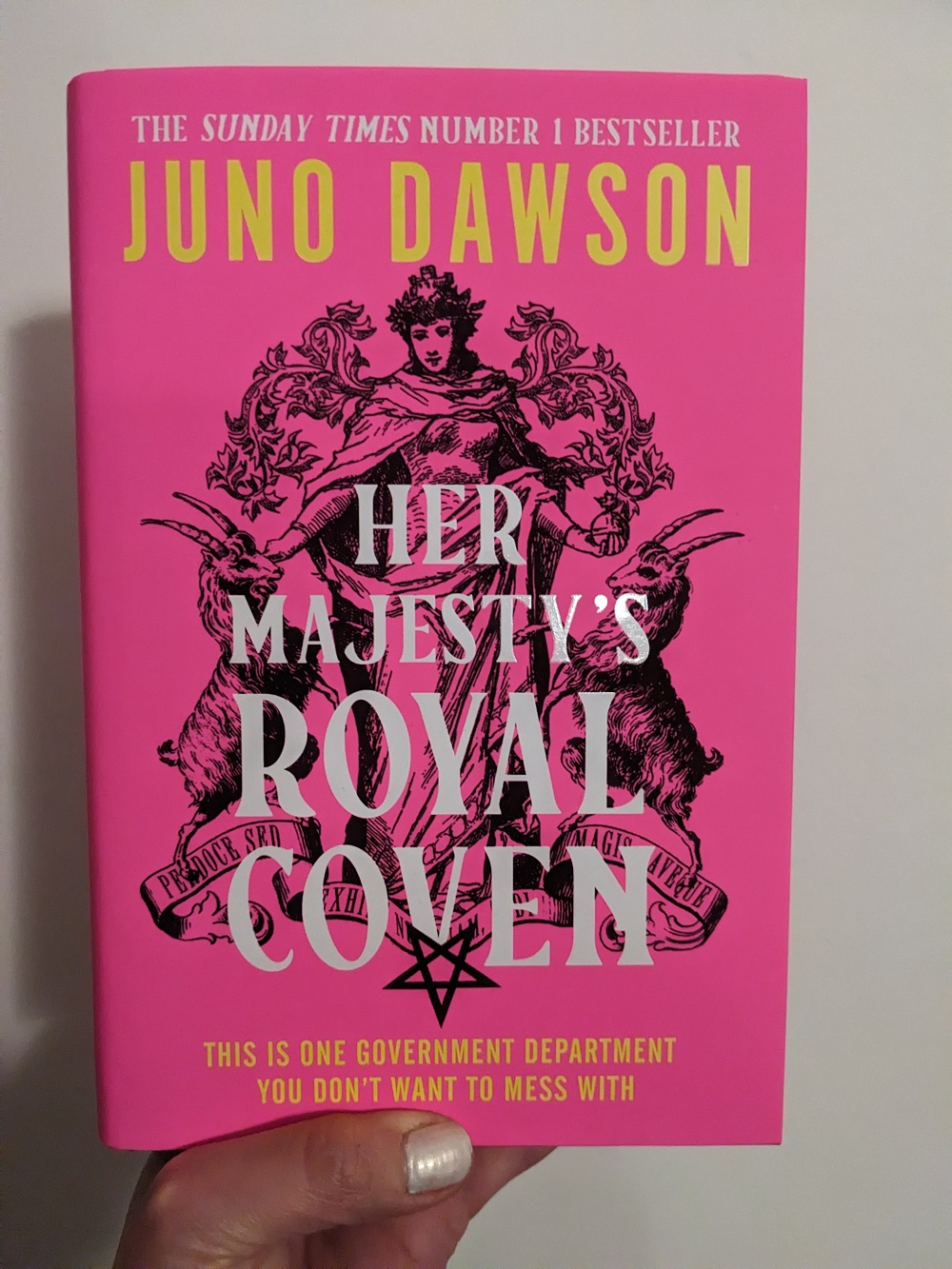
Her Majesty’s Royal Coven by Juno Dawson

Written by , Posted in Reviews

Three Stars

Best for:
People looking for magical worlds set in contemporary time, without supporting, say, anti-trans authors.

In a nutshell:
Witches are real, and there is a prophesy that a newly discovered teen, Theo, might bring about something very, very bad. A group of friends who were young witches together and have now followed different paths all become involved in addressing this.

Worth quoting:
N/A

Why I chose it:
I believe this was the last book I received before I ended a book subscription.

What it left me feeling:
Excited for the second in the series.

Review:
SPOILERS. CN for anti-trans words and actions, violence, war.

Spoilers because I can’t talk about most of the main points of the book without spoiling something that doesn’t happen until maybe 1/3 of the way through.

This book is set in modern times in the UK. HMRC is the initialism for Her (now His) Majesty’s Revenue and Customs, so it’s fun that the author is suggesting that HMRC also stands for Her Majesty’s Royal Coven. As an aside, I wonder if the next book will call it His Majesty’s Royal Coven? Anyway, the point is the book is set in the UK, and there are witches.

Helena, Niamh, Ciara, Elle and Leonie grew up together and discovered they were witches when they were young. Flash forward, and a great war has happened (where Ciara was on the wrong side, and is now permanently unconscious thanks to actions by her sister Niamh), involving all the witches and warlocks. In this world, witches are the more powerful – no warlock could be as powerful as a witch. And yet a teen boy Theo appears and is more powerful that pretty much any witch, and appears to be part of a prophesy that will result in a lot of very bad things. He doesn’t talk, he is scared, and Helena – who is now head of HMRC – asks her friend Niamh – who has left HMRC and works as a veterinarian – to take Theo in while they try to figure what to do.

Here’s where the spoilers come in – Niamh also takes in Elle’s daughter Holly to help train her now that she has learned she is a witch, and Theo comes out to Holly as trans. Which explains how Theo could be so powerful – she’s not a warlock, she’s a witch! Niamh and Holly are super supportive, but Helena is not. Helena is for sure a TERF, and from then on things get rough between the friend group.

Leonie is the only member of the friend group who is Black, and also the only one who is a lesbian. She left HMRC to form her own coven for witches who are Black and women of color so they have a place to be safe from the racism of white women. I think that part is well done and really interesting to read, but I appreciate some reviews I read that feel like Leonie is tasked with taking on too much representation (why are all the other witches in the friend group straight and white?), and her storyline sometimes feels a bit shoehorned in. That said, I think Leonie was my favorite character after Niamh, and part of that is probably because we spend much more time with Niamh.

The author of the book is a trans woman herself, and I’d imagine writing this book was a bit cathartic for her, given how shitty so many alleged feminist white women are to trans women in the UK right now. The reason the book for me is only three stars is that the writing is a bit … underdeveloped? Like, I wasn’t sure for awhile if I was reading a YA book. The chapters are all very short, and are from different character perspectives, which is a device I quite like, but needed a bit more refinement I think. That said, the ending was a full on gut punch, and I’m super looking forward to the sequel, which comes out this summer.

Recommend to a Friend / Keep / Donate it / Toss it:
Donate it

Sunday

5

March 2023

0

COMMENTS

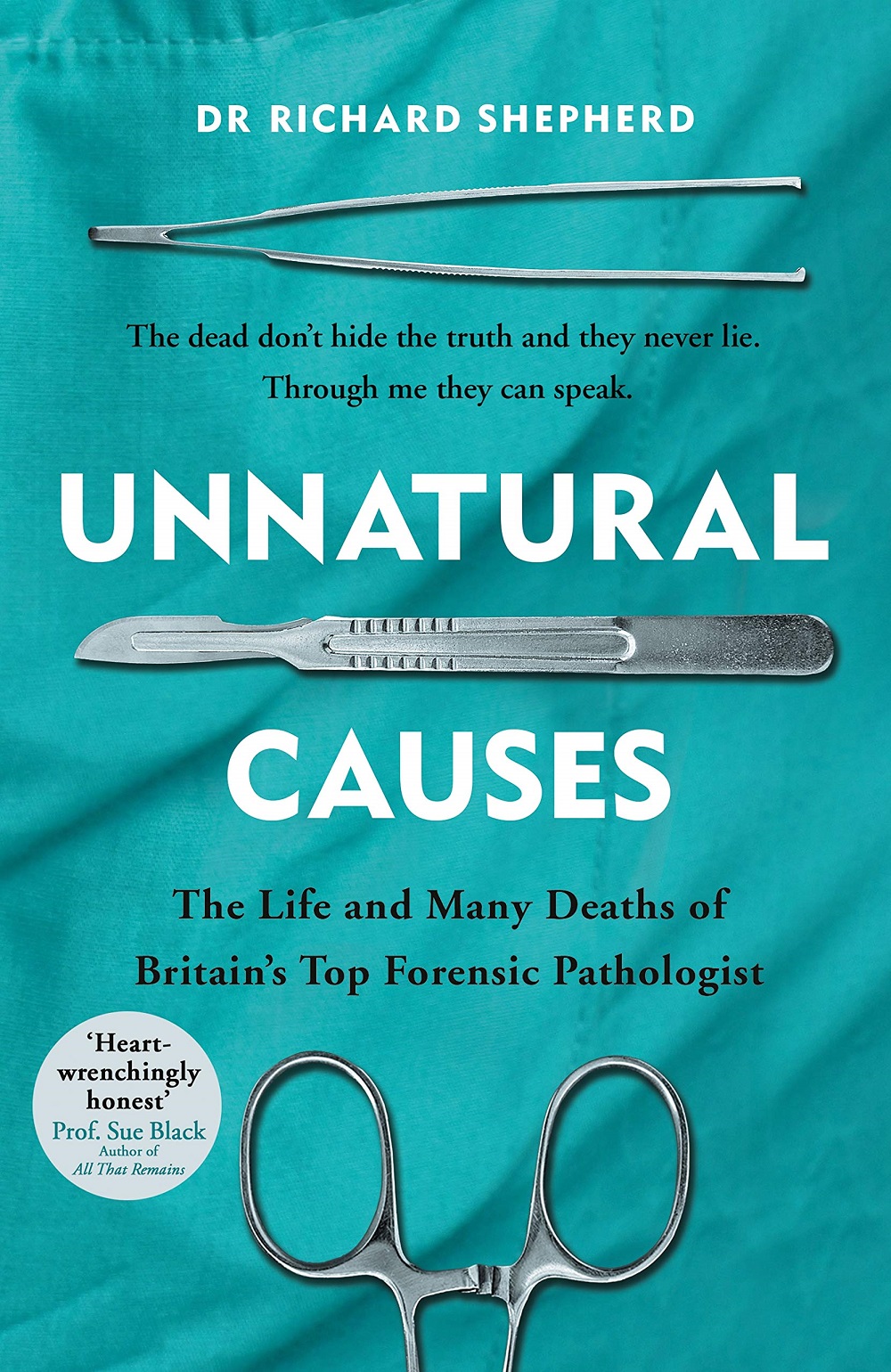
Unnatural Causes by Dr Richard Shepherd

Written by , Posted in Reviews

Three Stars

Best for:
Those interested in the details of forensic pathology.

In a nutshell:
Forensic pathologist Dr Shepherd shares his experience in the field, along with how his work impacted his life and the lives of his family members.

Worth quoting:
N/A Audio book

Why I chose it:
Although I no longer work in emergency preparedness, I do still find the field fascinating, and because I did work on mass fatality response planning in particular, I

What it left me feeling:
Contemplative

Review:
This book basically did what is promised – it gave me some insight into forensic pathology in the UK. As someone who worked with forensic anthropologists and medical examiners / coroners in the US, I was interested to see if its much different in the UK. Not really, though the system of naming conventions is slightly different (e.g., in the state I worked in, a coroner was elected, while a medical examiner was a medical doctor, and one would find a medical examiner in large population areas, whereas it seems only coroner is used here).

Dr Shepherd spent most of his working life in the 1980s and later, so he’s seen the evolution of things like DNA testing for identification. He has also scene changes in how certain types of deaths are treated and investigated, including deaths in police or prison custody, and deaths of small children. He also worked on some well-known forensic events in the UK, including the Marchioness boat disaster on the Thames and the 7 July bombings in 2005.

He also had a wife and raised two children, and he speaks of how his working life impacted theirs. His wife later in life retrains to be a doctor as well, so their calendars are usually in conflict, with him on call for events taking place at any time day or night. There are a lot of professions where we assume someone will be available 24/7 (and rightly should be), but I don’t think we spend enough time thinking about how to best support the people and the families of the people who we expect to fill in those roles.

He touches often on the concept of truth, which I found fascinating. People in his profession are often called to make definitive conclusions, whereas often the data and examination lean heavily towards one conclusion, but others cannot necessarily be ruled out. How we die isn’t always straightforward, and the stories told around death aren’t complete if they don’t include the information the dead provide through examination of their bodies. And even then … sometimes we just cannot know exactly what or how something happened.

I listened to the author read the audio version of this, which I would recommend. However, he is very detailed in his descriptions of things, so if you would be sensitive to accurate discussions of anatomy after death as well as the manner of injury for things like homicide and sexual assault, I’d suggest skipping this one.

Recommend to a Friend / Keep / Donate it / Toss it:
None of the above

Sunday

5

March 2023

0

COMMENTS

How to Kill Men and Get Away With It by Katy Brent

Written by , Posted in Reviews

Four Stars

Best for:
Anyone with a strong stomach and a desire to read a deeply disturbing but also kind of funny revenge fantasy. I had a fairly long travel day yesterday, involving two short flights but a lot of airport time. I started the book at 11:30. I finished it at about 5pm.

In a nutshell:
Content notes for the book and the review: sexual assault, pedophilia, murder, animal cruelty, probably a lot of other things

Influencer Kitty accidentally killed someone who was about to sexually assault her. And got away with it. Will this become a pattern?

Worth quoting:
“ ‘Ladies,’ he says, holding his glass up like he’s Leonardo DiCaprio in The Great Gatsby. If you think extremely average white men have a confidence they don’t deserve, imagine one with money who has been gushed over since he was about twelve.”

Why I chose it:
My partner spotted it in a bookshop and though it would be right up my alley.

What it left me feeling:
Stunned

Review:
I mean … this book is absurd. Obviously. Pretty much all the characters, including the main one, are pretty unlikable. Pretty, rich, vapid. Etc. And the book is violent as fuck (so probably not the healthiest media to consume). And there’s some sex scenes that were a bit racier than I was expecting (As someone who reads mostly non-fiction, or if its fiction, it’s often crime-based, I’m also forgetting that people like to read sex scenes. I just don’t expect them.) And the literal logistics of some things (like her ability to dismember a large man’s body) are doubtful.

But.

BUT.

In real life, I’m opposed to the death penalty. I think the prison industrial complex and the criminal punishments systems are deeply fucked.

In real life, I’ve also been cat called, and known numerous women who have been sexually assaulted by men who faced no repercussions. So a book that’s all about a woman who has had enough and just takes matters into her own hands? I found it pretty satisfying. The plot of the book also has some twists and some slightly unexpected moments, so it isn’t totally predictable.

The author in a note at the end acknowledges that there have been many recent looks at women as revenge / serial killers. I think this book succeeds where the film Promising Young Woman tried and failed.

Recommend to a Friend / Keep / Donate it / Toss it:
Donate it

Sunday

5

March 2023

0

COMMENTS

How to Do the Work by Dr Nicole LePera

Written by , Posted in Reviews

Two Stars

Best for:
People who are already working with a therapist, as that therapist can point out which parts of the book are useful and which are … super not.

In a nutshell:
Instagram influencer psychologist Dr LePera offers her suggestions on how to work through issues

Worth quoting:
I underlined a lot, but I don’t think there’s anything worth sharing.

Why I chose it:
There’s an area I’m working on in therapy and I asked my therapist for a book recommendation. She suggested this one. She and I are going to have a chat about it next session.

What it left me feeling:
Both motivated and suspicious

Review:
As I was reading this book, I had some reservations. Some parts were helpful in me understanding things, and some suggestions fall into the ‘couldn’t hurt’ category, but something about this book was rubbing me the wrong way. Was it because I just wasn’t ready to read some of the suggestions? Or was it because it felt a little … grifty? Honestly, I’m already going to side-eye anyone who promotes intermittent fasting, but no author and I are going to agree on everything. But there’s something about the tone of this book that feels very bootstrap-y. Like, a little bit like The Secret but for therapy? Dr LePera seems to push the notion that one can literally fix anything through some breath work and journaling.

She does pay lip service to privilege (though really as it relates to racism, and not seeming to see how people who are not disabled, or how people in other marginalized communities might face challenges) but overall the biggest take-away for me from her is that the individual is both responsible for and able to create their own future. Which, on the surface, sounds great … except it isn’t true? Like, some shit is beyond our control, and it seems weirdly un-evolved and unhealthy to ignore that. She talks about diseases that have a genetic component, sharing stories of for example a woman with MS who couldn’t walk but now can, I guess because she healed her inner child? I’m being glib, but I find that to be a dangerous outlook.

As I said, I had some reservations, but I did also find parts related to inner child work and parental relationships useful. If I’d written this review the second I put down the book, it probably would have been a solid 3, maybe 3.5 stars. She even has a new book coming out and is coming to my town to talk, and I signed up for tickets. Seemed like a sign!

Except, literally the next day, a good friend who is a therapist, and who had no idea I was reading this book, out of the blue raised how dangerous this woman is as an Instagram influencer. And I should have picked up this – she has a name for the people who are super into her work. Like, that’s just culty behavior. I appreciate and recognize the need for supports for people around mental health, especially as one on one therapy is expensive and not even available to many people, but the way she presents her information on Instagram really raises some questions about the ethics of this type of work in the way she does it.

Now, is that a reasonable thing to include in a book review? I think so. One can’t separate the ‘art’ from the ‘artist’ when the artist is still possibly causing harm, so I think anyone who is considering picking up this book should do more research than I did into the author.

Recommend to a Friend / Keep / Donate it / Toss it:
Keep it (for the bits mentioned above that were relevant)

Thursday

23

February 2023

0

COMMENTS

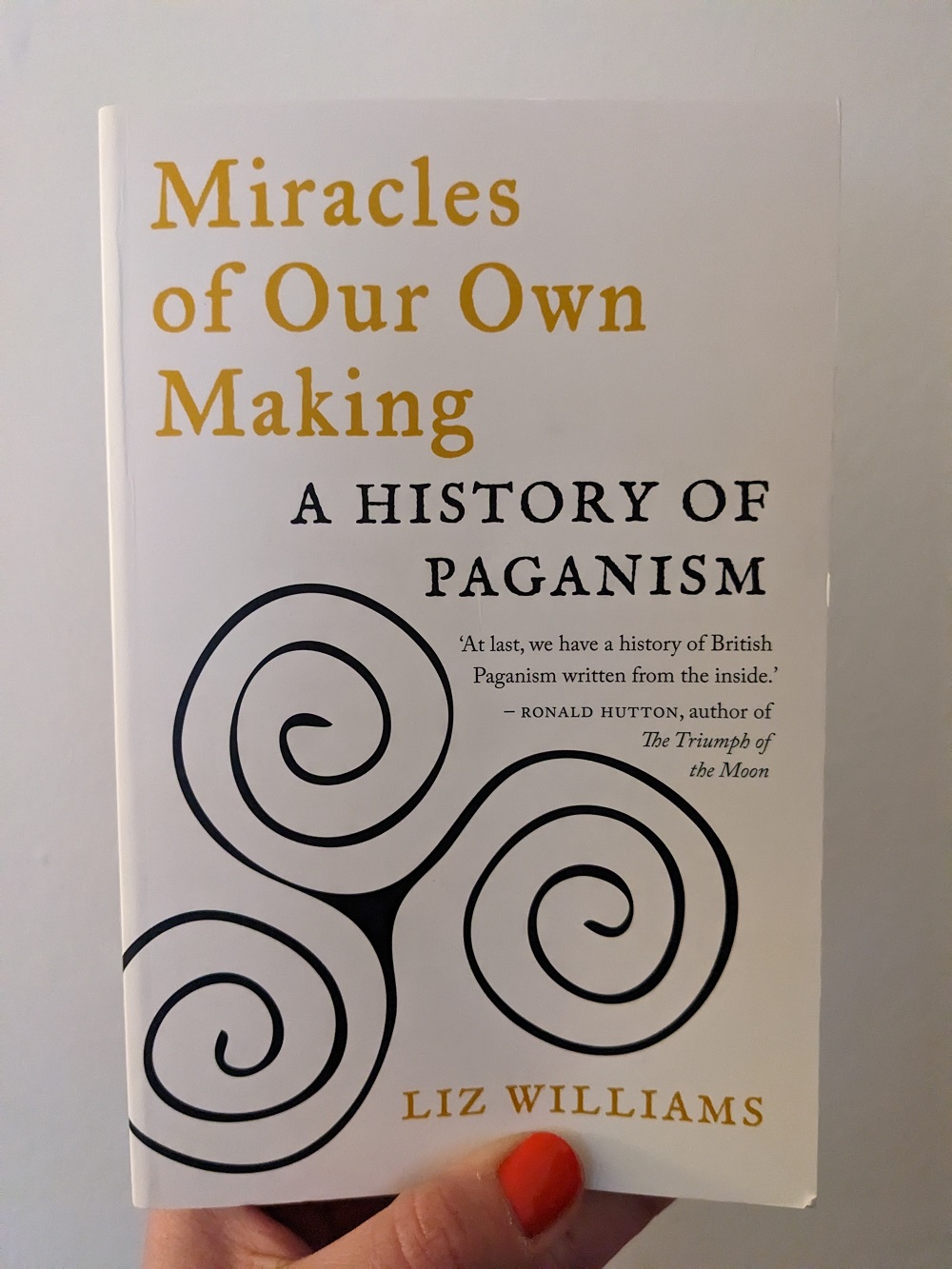
Miracles of Our Own Making by Liz Williams

Written by , Posted in Reviews

Three Stars

Best for:
Pagans interested in some of the history of the beliefs and practice.

In a nutshell:
Author Williams provides a multi-century overview of the beliefs, practices, groups, and secret societies that are associated with paganism in the UK.

Worth quoting:
“It is always worth your while to ask two questions: ‘how do we know?’ and ‘who said this first?’”

Why I chose it:
I find spiritual practices and belief systems outside the big three Abrahamic faiths to be quite interesting.

What it left me feeling:
Searching

Review:
I was raised vaguely Christian (like, my mom went to a church on Christmas and Easter until I was maybe six). I had a VERY Christian phase in 8th and 9th grade, but by college and after I was leaning more agnostic, with a brief exploration of paganism in the form of Wicca.

As I get older, I think that I’m getting a bit less rigid in some of my beliefs (though more rigid in others lol). Like, I don’t think I’ve ever seriously defined myself as atheist, because I can’t know. And it’s sort of arrogant to assume I do, or even can. But I find nature, and the power of nature, to be calming and inspiring, and so when I think about spirituality and religion, I think of that, and I’m more open to the ideas around it.

Which brings me to why I picked up this book. I was in a fairly tiny bookshop and this jumped out at me. I don’t know much of the history of different forms of paganism, and thought this would be an interesting bit of reading. And the first half was, but the second half, I don’t know, I found it hard to follow. It feels like it it would have worked better as an encyclopedia – each chapter, in the back half, has a lot of sub-headings of different groups or belief systems, and while Williams makes a solid effort to connect all of these things, it doesn’t totally work for me.

One thing Williams’s research makes clear is that there isn’t really a straight line or unbroken connection between ancient pagan belief systems and current paganism, despite what some claim. Modern practices draw from a lot, but Williams argues that they pull from what spoke to them. They aren’t partaking in something that’s been unchanged for centuries. I suppose that matters to some people, but I don’t know. I think one can learn a lot from a variety of beliefs and practices, and can put together something that feels right to oneself.

Recommend to a Friend / Keep / Donate it / Toss it:
Keep for reference