ASK Musings

No matter where you go, there you are.

Sunday

22

December 2019

0

COMMENTS

How to Open a Bank Account

Written by , Posted in Move to UK: Settling In

If you’ve followed my advice on getting a flat from a proper estate agent or council housing, your tenancy agreement should be sufficient proof of address for the banking system in the UK. However, again, before signing, look up your address on the Royal Mail postcode finder and make sure it matches EXACTLY.

Because all banks are different, I think it’s a good idea to have additional proofs of address:

  • If you are able to, change your US bank account address to your UK address and ask them to mail you a physical copy.
  • Whomever is working should get a letter from their employer that is from the HR head and includes the worker’s name, start date, job title, salary and, of course, address that matches the tenancy agreement and Royal Mail postcode finder address.

As soon as you have a tenancy agreement, call your chosen bank for an appointment. Hopefully whomever is working is going to be able to pop out for appointments in the beginning to set up your new life, so don’t worry about trying to find a weekend appointment if at all possible. Confirm exactly what you will want (joint current account — their word for checking account — credit cards, etc.) and exactly what they will require from you.

A couple of days after you get your account, your debit cards will arrive, then your pins. And then life will be a little bit easier.

Sunday

22

December 2019

0

COMMENTS

Finding a Flat

Written by , Posted in Move to UK: Settling In

As I mention in the Banking section, it will be loads easier to get a bank account if you have a lease with a known estate agent or management company and not with a private landlord, even if that landlord has many, many properties. I’m a very do-it-yourself kind of person, so I jumped onto sites like Zoopla and Open Rent and we ended up with a private landlord. We like our flat, but I wish we’d at least known the drawbacks of this arrangement.

In addition to researching online independently, Google “Letting Agents [city name  / neighborhood name]” to find ones that are in the neighborhood you want to live in. Book an appointment with them to show you flats, and be prepared to share what you’re looking for. Those Zoopla and Open Rent searches can come in handy here; the estate agent might have a connection to properties that interest you but even if not, the listings will help show them what you’re looking for.

Other things to keep in mind as you look for a flat:

  • What will your commute look like? Are you near multiple tube / rail / bus options?
  • Is the address on the tenancy agreement (what we call a lease in the US) the same as what shows up in the Royal Mail postcode finder? It needs to match perfectly, so get that sorted out right away.
  • Are the utilities already set up and can they be put in your name immediately to help with proof of address?
  • Is there a phone line so you can have internet installed?
  • What internet companies will service your address?
  • How far is the nearest large grocery store? How about the nearest local / express store?

The person doing the letting may ask for a letter from your new boss confirming you work there and what your income is. If you are not the one working, it can be helpful to have a reference from your previous boss. If you rented instead of owned your previous residence, see if you can get a general “this is a great tenant” letter from them as well.

Because you don’t have a credit history in the UK, some places might be more receptive if you are able and willing to provide more upfront than just the deposit and first month’s rent. We provided a six-week deposit and three months rent. I realize not everyone can do that, but we think it helped us considerably.

However, even if you have the money available, you’ll still need to be able to transfer it to a landlord or estate agent. We had to make three transfers: one for the application (which was applied to our deposit), one for the balance of the deposit, and one for the three months of rent. Rental rules have changed a bit since we arrived – landlords can only take three weeks for the deposit and cannot assess any application fees, so keep an eye on that.

If possible, at least for this first bit, I recommend opening a Monese account (you have to download the app; they don’t have a web presence). It’s based in the EU and you can even get an ATM/debit card. It’s what my husband and I are using for our personal accounts. We tried to transfer money to it before we moved (you can open the account while still in the US), but there was a mix-up with our credit union. If it had worked out, what we would have done is move as much money as possible to the Monese account (basically the amount we’d be willing to pay for a deposit and first one, two, or three months rent) so that we could much more easily move money over when we found out place.

In the end, we used Western Union for the application fee, TransferWise for the deposit, and a direct transfer from our credit union for the rent. Not great, and it probably ended up costing us so much more than if we could have done one giant transfer to Monese and then used that to transfer directly to the landlord.

Sunday

22

December 2019

0

COMMENTS

Where Do I Find…

Written by , Posted in Move to UK: Upon Arrival

One thing that I found a little frustrating is how specialized so many shops here are. I’m used to being able to get a lot of things in one place; in the UK things can be a little harder to track down. So, to help you out…

Groceries: This is pretty straightforward. ASDA, Tesco, Sainsbury’s, Waitrose, and Co Op are all grocery stores in the London area. Some will have the appendage “Local” or “Express” to their names; that means they are smaller. Those smaller shops still usually have an impressive selection of produce, which is good. They also will likely be open long hours seven days a week — 6 AM – 10 PM or 7 AM – 11 PM.

These stores often also have a giant counterpoint — a “Metro” or “Superstore” version. This is important because shops in the UK with a large square footage are limited to being open for six hours on Sundays, and must be closed on Easter and Christmas. So, if you arrive on a Sunday, be sure to get your shopping in mid-day if your only option is one of these larger shops.

Toiletries: Many grocery stores (even the small locals) will have a selection of basic toiletries, which can help in a pinch. But for the bigger things — and in some cases for pharmacies — you’ll want Boots or Superdrug. They have cosmetics, dental care items, hair care items, skin care items, and some limited nutrition (vitamin) options.

Health: Boots and Superdrug may have a pharmacy in them, but the NHS also has pharmacies. Look for the green cross sticking out the side of the shop over the door, and that’s where you’ll go to get cold medicine, pain reliever, etc. Like the US, pseudoephedrine is a behind-the-counter medication, but while you don’t have to sign a register, they will ask you a LOT of questions about use. They also don’t have Vicks, but I’ve found that Night Nurse is a good equivalent.

Home Goods: I’m talking about things like sheets, or dishes, or kitchen supplies. Many of the “Super” versions of grocery stores like Sainsbury’s or ASDA have home goods sections. Dunelm is a smaller-scale Bed-Bath-and-Beyond-type store that will have a wider selection of pillows / duvets. Argos is also a kind of fascinating shop that is good for somewhat cheap home goods. We were able to get a large litter box, trash cans (rubbish bins), clothes hangers, etc., from this place. What’s fascinating to me is that this is essentially a catalog shop. You look either online or in a catalog, then place your order and their staff pull it from their shelves. They also deliver, which can be nice.

Pet Supplies: Pets at Home is a good shop option. They have supplies for dogs and cats, as well as smaller animals. We were able to find a couple of things we used in the US there, but be prepared that some of the higher-end brands aren’t available in the UK. I’m sure there are equivalents, so you’ll need to play around with brands and see what your little buddies like.

Office Supplies: Maplin has small electronics like printers and such supplies (but they’re are online only), as does Currys / PC World. Ryman has stationery.

Sunday

22

December 2019

0

COMMENTS

Jet Lag

Written by , Posted in Move to UK: Upon Arrival

Everyone has their own suggestions, tips, and tricks to combat jet lag. I’ve not found one that works super well for me. I used to try to stay up all day the day I arrive, but I just end up tired and still waking up way too early the next day. So I do suggest taking just an hour nap so you can get through the day.

I know, that’s controversial. But I can’t function without sleep, and I don’t sleep well on planes, so I chose to take a nap, and it allowed me to at least sort of function the first few days.

But it will be rough, so take care that you and your partner aren’t snipping at each other — or are more understanding if you are. Moving is rough; throwing sleep deprivation on top is rougher.

That said, here are some tips on how you might be able to beat jet leg better than I did:

NHS tips

15 Ideas

Sleep Foundation

Sunday

22

December 2019

0

COMMENTS

Pets

Written by , Posted in Move to UK: Upon Arrival

The company that you’ve been working with as recommended by the airline will handle all the paperwork when your animals arrive. If you’re flying into Heathrow, the animal customs center is about a 15 minute drive from the airport. Basically, you don’t need to do anything more once you’ve dropped them off at cargo in your home city.

However, it will take animal customs four to eight hours to process you animals.

That’s right. Four to eight hours. In our case, we got our luggage and a ride to our temporary housing, showered up, and then got a call from the import company that our animals were going to be cleared for pick-up around 11:30 AM. We got a ride back out to Heathrow and picked them up.

Maker:S,Date:2017-9-26,Ver:6,Lens:Kan03,Act:Lar02,E-ve

We donated our kennels to the animal customs office (they can always use them) and transferred our buddies to the carrier they are used to. They were okay – they hadn’t really used the litter box, but we traveled with one in our suitcase (you can buy portable ones online) and set it up in our temporary flat until we could get a permanent litter box.

One of the larger pet supply shops you’ll probably want to visit until you find a local one is Pets at Home. They have a wide range of food, litter, toys, carriers, etc. Basically, think US Petco. Because the cat food our little buddies like isn’t really available in the UK I’ve had a lot of conversations with the Pets at Home staff, and they’ve always been helpful and friendly.

Remember to give your furry family members a lot of love, pets, treats, and attention. They will have gone through what is likely the most stressful experience of their little lives, and will be in a brand new place, with new scents and sounds. If you can avoid needing to take them to the vet for a couple of months, I’d suggest that. Sadly our cat Jameson got a cold, so we took him to the vet less than a week after arriving. They gave him two medications and he was fine right away, but I really wish we hadn’t had to put him in a carrier and on a bus so soon after such a traumatic event.

Sunday

22

December 2019

0

COMMENTS

Immigration and Customs

Written by , Posted in Move to UK: Upon Arrival

Arriving in the UK

We took a red-eye flight and landed at Heathrow at 7:15 AM on a weekday, along with what seemed like 2,000 of our closest friends. That might sound like an exaggeration, but it took nearly an hour to get to the counter. It sucked. We were tired, cranky, nervous, and surrounded by people. Also, I hadn’t used the bathroom before getting in line, which is not an error I’ll be making again.

You’ll need to have your passport with you (duh) but also the letter that is included when your visa is returned. It explains in more detail your visa. The immigration agent who checked us in explained the system and process very kindly. Also, as I mentioned in the visa section, do NOT go to the e-gates, despite them saying people with US passports should use them. You need to talk to a human and get your paperwork checked.

By the time we got through, our luggage had been offloaded and removed from the carousel. We weren’t stopped at customs for inspection, so we got out the door at arrivals and were met by our ride to our temporary housing.

The Final Step

Within ten days of arriving in the UK, you’ll need to pick up your biometric residency permit. It’ll be at a post office close to the address you provided in your visa application as your temporary residency, and it’ll only take a few minutes to get. Bring your passports and your immigration letters, and you’ll be given these little credit-card sized permits with a (if you’re me, very unflattering) photo of you and some details about your visa, including:

  • Dates that the visa is valid for
  • National Insurance number
  • Limitations on work (I, for example, am not allowed to work in sports broadcasting, I think)
  • The fact that you are not eligible for benefits

You are not required to carry this with you as you move about the UK, but you will need to show it whenever you return to the UK from traveling abroad. I recommend sticking it in your passport so you always have it with you when you go away.

Sunday

22

December 2019

0

COMMENTS

Friends and Family

Written by , Posted in Getting Ready, Move to UK: Before You Go

Moving across an ocean is a big deal, and many things can be managed with careful planning, lists, and timelines. It’s going to be a stressful time (do I sound like a broken record yet? Good!), and it’s easy to let the move become all-encompassing, but it’s important to take the time to see your friends and family before you go.

In our case, our move came just nine days into the new year, so we took a week-long road trip to visit our families around the winter holidays. It meant seeing five sets of family members and sleeping in four different homes, taking two flights and driving about 700 miles at a time when we had so much to do.

IMG_20171226_165928.jpg

But it was worth it. We got to see family members, have some down time when we weren’t focused on bank accounts and shipping options and runs to Goodwill. We relaxed, we ate, and we caught up. It was wonderful.

We also did a couple of good-bye events: one to drink our alcohol about a month before we left, and one the Sunday before our flight that was more of an open house at a brewery that allowed kids. We got to chat with folks and say goodbye.

Finally, we set up dinners or other events with some of our closest friends so that we could have some dedicated time with them. We wanted to see them and hang out without loads of other people around. One couple even offered to let us stay with them the last few days we were in town so our renter could move in, which ended up being a life saver!

We also did a tour of our favorite restaurants and shops that we knew we’d miss. That became especially necessary after we had packed or given away all of our kitchen items.

Like I said, it can seem like all that matters is figuring out the move, and there are definitely certain steps that you must take, and certain rules you need to follow, but remember that you’re a person with relationships that you’ll want to foster even when you’re 5,000 miles away. Don’t miss out on the time you still have with these friends and family members.

Sunday

22

December 2019

0

COMMENTS

Leaving Your Home

Written by , Posted in Getting Ready, Move to UK: Before You Go

If you rent your home, you’ll need to give notice to your landlord. Depending on what your lease says and what your financial situation is, I’d wait until you have your visa to give notice – that should be sufficient time in most cases. If your lease allows for subletting, you can get the jump on that. Some leases will allow you to buy yourself out with a month or two of rent and a forfeit security deposit. Just keep in mind that some of these things are expensive and some are time consuming.

If you own your home, you’ll have to decide if you want to sell or rent it out. We decided to rent ours and lucked out with finding someone without posting (they really wanted our place and were moving to our town for a new job – they even bought some of our furniture!). But if we hadn’t had someone interested, we would have engaged a property management company to handle things. It costs some money, but in our market, at least for now, our mortgage can be covered by a renter.

If you can’t get the mortgage covered, you might want to consider selling the house. I’ve never sold a home, but I know it can take a lot of time and energy. It might even be easier once you’ve moved out and can repaint / re-carpet and stage your home. If you can find some cheap flights, it might be reasonable to consider the whole family flying over together and then having the partner without a job fly back soon after to sort out the rest of things. Either way, speak to your real estate agent about options.

Sunday

22

December 2019

0

COMMENTS

Packing and Shipping

Written by , Posted in Getting Ready, Move to UK: Before You Go

It is SHOCKINGLY expensive to ship things to the UK. Originally we thought we’d ship a couple of things and then just bring a ton of suitcases, but someone I know who works at a major international airline warned me that it could be very expensive AND it’s possible we wouldn’t be allowed extra luggage.

Yikes. If you’re moving during vacation season, there could be some limits on luggage extras, so I cannot stress strongly enough to check with your airline. In the end, it’s likely a safe bet to just plan on bringing two checked bags and one carry-on per person traveling. We were lucky enough to use miles to travel business class, so we managed to book one extra bag (five checked bags total), and our weight limit was higher than if we’d been traveling coach. That basically accommodated all of our clothing and toiletries, along with some of the items needed for our cats.

So, what does that mean for your other things? Well, I love books. And I wanted our books to come with us. Books are heavy, so in each of the boxes we shipped, about half were books, and half were other items. In the end we shipped five medium-sized boxes (we purchased the heavy ones from Home Depot). We also used a lot of tape; the one lesson we learned from that is to tape up all the seams AND all of the edges. All of our boxes arrived, and the only damage was to glass items I didn’t cushion well enough, but half of the boxes were splitting at the seams.

We decided early on that we were not bringing any of our furniture with us. We had some lovely pieces that I was sad to part with – some we sold to random folks, some we sold or gave away to friends, and some our renter ended up purchasing. But so many flats in the UK come furnished or partly furnished – many, many more than in the US – so we decided we’d find a furnished flat and supplement with Ikea furniture (which we did, but more on that later).

There are options out there for shipping in pods, which are generally flat rates based on size. But those also mean the items might not arrive for three months, and that didn’t seem worth the cost. In the end we just barely ended up spending less on our shipping than any of the quotes we received, although we probably also shipped less than we could have.

Each of the five boxes we shipped cost about $350, and were shipped via USPS. We were able to track it all the way through, but local independent shop that handled the paperwork and such for us did warn that we might not be able to track our packages once they were turned over to the UK.

We also shipped some art. We have some we paid to be framed back in the US; the company that framed them essentially unframed them for us for free, and charged $20 to un-frame ones they didn’t originally frame. Two of our items were framed using acrylic, not glass, and so could be shipped as is. Those two shipments were in addition to the five boxes.

What made it easy for us was that my partner’s new company allowed us to ship to their office. Once we found a flat, we were able to just get a van taxi and move it all over to our new place.

We didn’t ship or give away everything, however. Our wedding china is stored in two boxes in the crawl space under a friend’s staircase. We also didn’t ship two boxes worth of photo albums, which now live at another friend’s place. We might ship those to us if we want them later, but for now they are safe and sound. And finally, we have a nice record player and collection of records that are living at a third friend’s place.

Downsizing can be fun; the key is to not immediately upsize once you get to the UK…

Sunday

22

December 2019

0

COMMENTS

Animals

Written by , Posted in Getting Ready, Move to UK: Before You Go

Do you have furry friends who will be making the trek across the world with you? Awesome! I have to say that having our buddies Jameson and Tigger with us made the UK feel more like home very quickly. However, it was also one of the greatest stresses of our move. And that’s because we were doing it all ourselves, and the websites that help are all government websites that can bury the most important information.
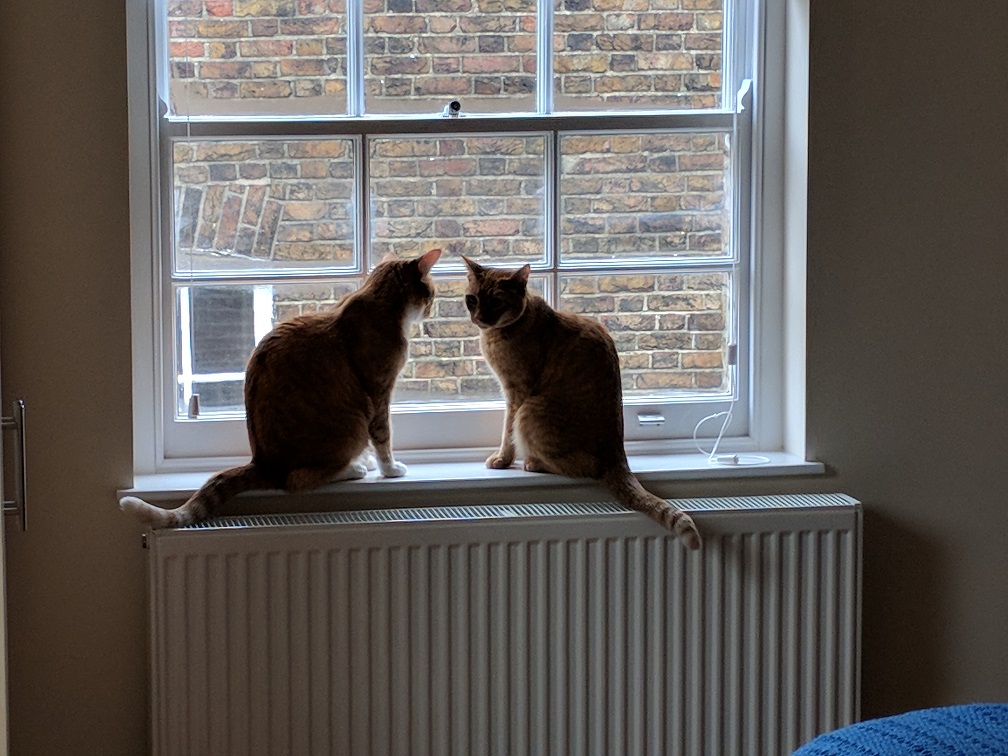
Maker:S,Date:2017-9-26,Ver:6,Lens:Kan03,Act:Lar02,E-Y

Moving pets requires serious planning and attention to dates in a way that rivals the visa process. And the worst case scenario is you could show up to the airport on the day of your flight and not be allowed to drop off your pets. So you’ve got to plan ahead.

I’m going to share our experience with our cats. The shots needed likely differ with dogs, but the timing should be the same.

First things first: animals cannot enter the UK in the cabin of the plane. So you need to make your peace with the fact that your buddies are going to be in cargo for a long time. Like, a very long time. And that’s okay – there are staff dedicated to making sure your furry friends are taken care of. But it’s going to be traumatic for them as well, and there isn’t any way around it (unless it’s a service animal, and even then there are very strict rules).

Your pet needs to be micro-chipped. If you adopted your pet, they are probably already micro-chipped, but unfortunately it’s possible the microchip your pet has isn’t the right one. We rescued our two cats, and they were fixed and chipped, but using a different technology than the UK uses. You need to check that your chip has 15 digits; if not, it’s not the right one. Set up a vet appointment and get a new chip inserted.

Your pet also needs to be vaccinated against rabies. Which I’m sure she is. BUT. The rabies vaccine only counts if it’s given after the UK-compatible microchip has been inserted (same day is fine). I did find a section of the USDA website that implied you could provide some other paperwork to show a previous rabies vaccine counted, but we didn’t want to risk it. So I suggest that at the same appointment you get them micro-chipped you also get them re-vaccinated for rabies.

If you’re us, the vet tech will not realize that’s why you’re doing the rabies vaccine earlier than necessary (even though it’s been explained multiple times), and simply not administer the vaccine. But it is critical that they do it (we fixed it later that day – poor cats, two vet trips in five hours!), AND it must be done MORE THAN 21 DAYS BEFORE YOU’LL ENTER THE UK. That is key. I recommend doing it well before then, but no matter what, it must be more than three weeks before you’ll arrive.

Because your animals will be traveling in the cargo hold, they need to be in a very secure kennel, and they can’t travel in the same one. I recommend following the instructions on the website of the airline you’ll be using. Our cats were in the 200 size, which seems huge until you realize they need space to move around and stretch.

I also recommend purchasing the pet travel kit (available on Amazon), which includes metal bolts, food and water trays, and a piddle pad. Even if you purchase the kennel that is recommended by the airline, it will still likely have plastic screws and bolts connecting both halves, and the airlines require metal ones. So get the kit. They’ll also require an absorbent lining, so stick the piddle pad underneath a towel.

And then just leave the kennels out, for at least a month before the trip. Put food and water in the dish. Let the animals get used to the kennels and, if possible, don’t use them for anything else. You don’t want them to associate it with a trip to the vet or anything else stressful.

We used United Airlines for our trip. A few things to keep in mind:

  • It’s fucking expensive. Each cat was about $700, plus the fee once we arrived in the UK (more on that)
  • There are very specific rules about the time the cats need to arrive before the flight and, if you have a connection, the time in between. Our flight left at 6:55 AM; we had to drop our cats off at cargo at 3:30 AM. That is not a typo. And we had a connecting flight, so there needed to be at least three hours between connections because of the international component.
  • You will need to work with a pet importer on the other end. I strongly recommend you go with whomever the airline uses, because that’s their partner and they do this on a daily basis. It might be a little more expensive, but these are your family members; do you really want to screw around with this?

One thing we learned that was pretty cool is that pets are the very last thing that gets loaded onto the plane and the very first thing that gets unloaded. When we landed in Houston, we had barely taken our seat belts off when we saw a van with “Pet care” on the side pulling away from our plane. They get the animals to a safe and comfortable place to reduce their stress. Awwwww.

Okay, back to the process of getting your animals approved and avoiding quarantine. No more than ten days (check your airline on the specifics, but they mean business – 11 days and you’ll be rejected if their rules say ten) before travel, your animals will need to be seen by a USDA approved vet, who will complete a pet health certificate. You might see mention of a pet passport, but that only works within the EU. They’ll do a quick check of your animal, and then fill out this really complicated form and emboss their seal in it. If you have fewer than five pets, they’ll all be listed on the same certificate. You can find the details here.

Now, here’s the part that almost totally fucked us over: you THEN need to send this certificate, along with proof of micro-chipping and proof of rabies shot (all signed in BLUE INK) to your regional USDA office, which needs to check it, emboss the certificate, and send it back to you.

Are you thinking what I am? That you can’t do the vet appointment until ten days before you arrive in the UK, but you also have to send it somewhere? Yeah. We didn’t realize it until the morning of the vet visit. Luckily the regional USDA office is only an hour from where we lived, so we got the money order (that’s what they need) for the certificates and paid for express overnight delivery, and pre-paid for express overnight return delivery. We sent it on Wednesday and got it back Friday morning, which was good, because our flight was Tuesday. SO MUCH STRESS.

If possible, and if your USDA office is nearby, make an in-person appointment. Then you can just drive over and get it done, instead of spending a couple of days hoping that Fed Ex doesn’t manage to mess it up. But make the in-person appointment well in advance – they book up quickly.

I mentioned above that you need to work with a pet importer to handle the animals when they arrive. They will have some paperwork that you need to complete, and they will be your contact when you arrive in the UK, delivering your pets to animal customs and letting you know when they are available for pick up. When you book your cats through the airline, get the information on who they recommend you use.