ASK Musings

No matter where you go, there you are.

Sunday

17

June 2018

0

COMMENTS

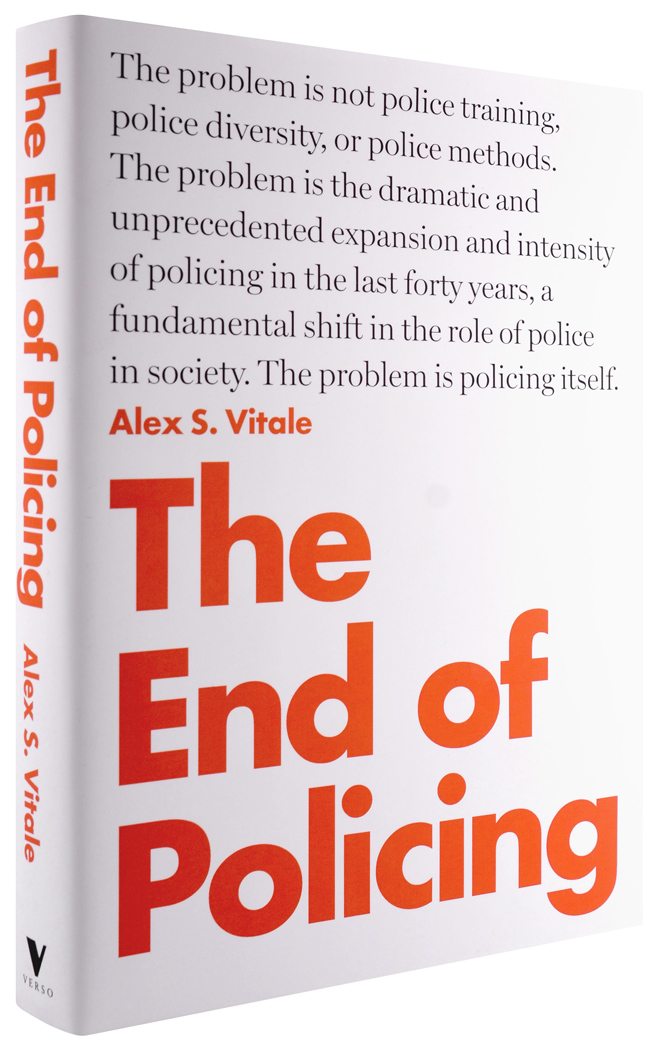
The End of Policing by Alex S. Vitale

Written by , Posted in Reviews

4 Stars

Best for: People who know that there’s a deeper problem with the police than most of our society will acknowledge, but don’t have all the evidence at their fingertips.

In a nutshell: Sociology professor Vitale offers a logical and thorough examination of the many different areas where police are seen as necessary but are, in reality, making things worse. And, more importantly, offers alternatives to police involvement in those areas.

Worth quoting:
“At root, they fail to appreciate that the basic nature of the law and the police, since its earliest origins, is to be a tool for managing inequality and maintaining the status quo.”
“A kinder, gentler, and more diverse war on the poor is still a war on the poor.”
“We must break completely with the idea of using police in schools. They have no positive role to play that couldn’t be better handled by nonpolice personnel.”
“We must move beyond the false choice of living with widespread disorder or relying on the police to be the enforcers of civility.”
“They need stability, positive guidance, and real pathways out of poverty. This requires a long-term commitment to their wellbeing, not a telephone referral and home visits by the same people who arrest and harass them and their friends on the streets.”

Why I chose it:
I know that the police (in general) in the US are not helping. But even suggesting that perhaps their power needs to be tamped down is often greeted with disbelief and the suggestion that they are necessary. I wanted a book that would provide me with the facts I needed to counter the disbelief.

Review:
This is a well-researched, well-sourced, well-written discussion of the state of policing in the US. Author Vitale starts with a history of policing to redirect readers from the idea that the police were created to protect people. He then breaks down policing into eight areas where they are often seen as ‘necessary:’ police in schools, police as responders to people in mental health crisis, police sweeping up those experiencing homelessness, police “saving” sex workers, the war on drugs, police in gang areas, police at the border, and police silencing political opponents.

My favorite part of this book is that Vitale offers not just descriptions of the problems, but also attempted reforms (and why they aren’t sufficient), and then offers ALTERNATIVES. That is what, I feel, is missing in so many books that take on this topic. They share important information and outline the problems, but then sort of throw up their hands in a ‘yup, it sucks’ manner. Vitale instead points out what will actually work, and it’s often much better (and cheaper) for the community.

The best examples of this are in the sections on police in schools, police and homelessness, police and those with mental illness, police at the border, and police as political silencers. The solutions offered in the police and sex work and police and the war on drugs sections require a bit more on society’s part, but are definitely do-able. The solutions offered on gang violence, however, admittedly require a much larger shift in how we provide support to our communities than many people accept.

The section on the border patrol was especially poignant given what is going on in the United States right now; I know many of us would like to see ICE abolished, and this book certainly helps make that case.

The only thing that was missing, and that I would have liked to see, would be a discussion of the need (or not) for police to investigate crimes. Does Vitale think that in situations where murders have taken place, we could have a small police squad? Or does he think the community could manage that as well? I’m unsure what that could look like, but would enjoy reading his thoughts on that.

Sunday

17

June 2018

0

COMMENTS

Friday

15

June 2018

0

COMMENTS

Assholes Fifty-Six and Fifty-Seven

Written by , Posted in Assholes

Originally published on 15 June 2018.

It’s been a few weeks since I last inducted someone to the Asshole Hall of Fame (hey Jeff Bezos, you just got what you wanted — no responsibility for the impact your company has on the city of Seattle! You continue to be an asshole!). So far, none of the assholes have redeemed themselves (in fact, our first inductee, Elon Musk, continues to up his asshole game), and I fear that today’s inductees will be no different.

I give you Asshole Hall of Fame members 56 and 57: US Attorney General Jeff Sessions, and the people of the US Immigration and Customs Enforcement (ICE) agency.

Let’s start with Jeff Sessions. He has been an asshole since well before I was born. If you’re not familiar with US politics, he’s a former US senator who, when nominated to this role by President Trump, faced some opposition from his fellow senators. In fact, when Sen. Elizabeth Warren attempted to read into the record a letter from Rev. Dr. Martin Luther King Jr.’s wife, Coretta Scott King, that detailed why Mr. Sessions was completely ill-suited for a federal judgeship because he’s SUPER RACIST, Sen. Warren was kicked out of the Senate chambers. That’s where the whole “Nevertheless, she persisted” thing came from.

You can read in more detail just how much of a shitty human being he is here (thanks GLAAD!).

You might be asking why, then, am I inducting him now? Well, because he has been instituting new US immigration policies that seem better suited to early 1940s Germany than any society that values all human lives.

Immigration may be a challenging issue, but I’d argue that the US is trying to make it infinitely more complicated than it needs to be. This isn’t a site for deep policy analysis, however (although a girl can dream), so instead of offering up my own thoughts on every possible option, I’m just going to point out that separating children from their parents at the border is morally reprehensible and something only an asshole would order (or do, which we’ll get to with ICE agents in a moment). As is suggesting that fleeing domestic and gang violence should not be a reason to be eligible for asylum.

The only way to request asylum is from within the country you hope to resettle in. The people fleeing dangerous homelands and potentially deadly circumstances are asking for help, and the US is not just shutting its doors, but yanking children through them first and then throwing the kids into, among other places, a refurbished Walmart. It’s depressing, but re-purposing a corporate building to detain brown children is a pretty perfect portrait of the USA right now.

Republicans (e.g. President Trump) have argued this separation is based on policies instituted by President Obama; the reality is that Jeff Sessions only views straight white men (and the occasional fetus) as human; our friends trying to get here from south of the border mean nothing to him. He doesn’t care about the children he’s harming, the families he’s destroying, or the people his policies might ultimately sentence to death.

Sessions’ latest attempt to legitimize his cruel policy is to refer to a quote from the Bible about obeying the law. Leaving aside the complete inappropriateness of using the Bible to justify US law, that idea in general fails to recognize one pretty obvious reality: laws can be immoral. Also, I feel like others have used the Bible to justify some pretty shitty stuff.

Jeff Sessions is a national embarrassment and should be utterly ashamed of himself. He’s a racist, a bigot, and of course, an asshole.

Also assholes? The people who are continuing to implement these immoral policies, i.e., the men and women of ICE. I know that it is easy for me to suggest that people who might need the salary from their job to survive should quit. But frankly, I believe the entire organization (created after 9/11, when the US made loads of ill-conceived policy decisions) is morally bankrupt and needs to be retired. The individuals implementing these orders are complicit in inflicting unimaginable pain and grief of those who are already suffering immensely.

I just finished reading “Lilac Girls,” and was struck by this passage:

Mrs. Mikelsky held Jagoda [her baby girl] tight.
“Give it to me,” the prisoner-guard said.
Mrs. Mikelsky only held tighter.
“She’s a good baby,” I said to the guard.
The guard pulled harder at the child. Would they tear her in two?
“It can’t be helped,” the guard said. “Don’t make a scene.”

“Just take it,” Binz said with a save of her crop.
The guard who had come with Binz held Mrs. Mikelsky from behind while the first guard pried Jagoda from her mother’s arms.”

The guard hiked the baby higher on her shoulder and walked back through the incoming crowd.
Mrs. Mikelsky crumbled to the floor like a burning piece of paper as she watched her baby be taken away.”

That’s from a scene that takes place at a concentration camp. And it’s now happening at the US border. It’s a bit of a cliche to refer to people with whom one disagrees as Nazis, but the actions speak for themselves. People who have done nothing wrong (they followed the rules to seek asylum) are having their children taken from them. The people who are doing the taking should be ashamed.

They, too, are assholes.

Wednesday

13

June 2018

0

COMMENTS

Lilac Girls by Martha Hall Kelly

Written by , Posted in Reviews

4 Stars

Best for: Those looking for a bit of inspiration in tough times; those who want to learn more about a group of WWII women (the Rabbits) who haven’t received a lot of coverage.

In a nutshell: Three women’s lives intertwine – Caroline, a retired US broadway star who volunteers at the French Consulate in NYC, Kasia, a Polish teen who is just starting to assist the resistance, and Herta, a German Doctor who experiments on young girls in a concentration camp.

Worth quoting:
“To make things worse, Washington tightened visa restrictions, and it became almost impossible to enter the United States from Europe.”
“A new thing the Nazis had forced upon us was patriotic music, played via loud-speaker outside the theater.”
“It’s just a thing, Kasia. Don’t waste your energy on the hate. That will kill you sure as anything. Focus on keeping your strength. You’re resourceful. Find a way to outsmart them.”
“The county doesn’t want more foreigners.” — “Foreigners? Half the country just got here a generation ago. How can you just let people die?”

Why I chose it:
I’m not sure why I originally purchased it, but I brought it with me when I moved. I decided to read it now partly because of the horrendous actions the US government is taking against refugees seeking asylum. I thought there might be some parallels, and there definitely are.

Review:
That whole idea of ‘never again’ seems to ring hollow these days. It’s distressing how a book set nearly 80 years in the past can resonate with the current state of the world. And yet, here we are.

Note: There are some minor spoilers below, but this is a novelization of real events, so it’s more history than spoilers. Also, this review is LONG.

First, let’s start with the fear I had: that the depiction of the Nazi doctor Herta (who really existed) would attempt to bring the readers to, if not an understanding of her perspective, then at least an explanation for her actions. But nope. Herta is evil in the scariest way: she’s not extraordinary. She doesn’t bark orders or dream up new ways to kill people. She is not pleased with her first task, of ‘expediting’ the deaths of those at the ‘reeducation’ (read: concentration) camp who were ‘too ill.’ She loves Germany, and sees nothing wrong with what Hitler is doing. She doesn’t try to get away from her tasks, which includes the horrific sulfonamide experiments on teenage girls.

Ms. Hall Kelly’s depiction of Herta shows that there are no excuses for participating in such activities, and that even if there are parts of your personality that are perfectly pleasant and normal, you can still do evil things. Even more so than in “All the Light We Cannot See,” the author here is effective in avoiding the trope that you have to be a monster to do monstrous things. Herta is a human. A horrible human, but she’s still a human. Nazis weren’t animals; they were people who made the active choice to harm other humans; to view them as less than.

I share this somewhat spoiler-y (there is no redemption arc for Herta) information so that those who might find any book that tries to find the good in the Nazis repugnant needn’t worry that this is one of them.

The style of this book is quite effective – each of the three women featured speak from their own perspective in alternating chapters. In the first part, it’s a simple 1 / 2 / 3 pattern; in the second part it mostly sticks to that; by the third and final part, Herta is featured less as we focus on the post-war lives of Caroline and Kasia. Many chapters end in cliffhangers, which can get a bit old, but for the most part it worked well.

I appreciated a couple of things about how Caroline was portrayed (keeping in mind that she is a real person): that she was still living her life even against the backdrop of the horrors of war, and that part of her life involved helping people she didn’t know and might never meet. There is a romantic entanglement that shows that the world does not stop when bad things happen, even if perhaps we feel it should. Caroline does a lot, working at the consulate, selling possessions to fund care packages for orphans in France and then fighting on behalf of the Rabbits years after WWII is over. I don’t know if she could have done more, but there are certainly others who were doing less. She cares about people who have been harmed, even when some of her countrymen think we should all move on.

Finally, Kasia. Kasia is the one character who isn’t 100% real, although she is based mostly off of a real Rabbit. The Rabbits were Polish political prisoners at a concentration camp who were operated on in horrendous ways (by Herta, and by others). Over ten years after the end of the war, many still had challenges getting quality medical care, as Poland went from Nazi control to Communist control when the war ended.

Kasia changes the most in this book, from a 15-year-old whose biggest issue is that the boy she likes seems to be into her best friend, to someone having an understandably difficult tie adjusting to what the Nazis did to her, her family, her friends, and her country. She survives six years in the ‘reeducation’ camp, and at one point wonders how ordinary life could be as challenging. She is not perfect; she is spirited, scared, and filled with guilt as she blames herself for getting her family in the position they find themselves in. It is heartbreaking but ultimately hopeful.

As I said in the beginning, this book reminds me of what is going on in the US regarding immigration. I’m going to quote the book at length here because I think this is important.

Mr.s Mikelsky held Jagoda [her baby girl] tight.
“Give it to me,” the prisoner-guard said.
Mrs. Mikelsky only held tighter.
“She’s a good baby,” I said to the guard.
The guard pulled harder at the child. Would they tear her in two?
“It can’t be helped,” the guard said. “Don’t make a scene.”

“Just take it,” Binz said with a save of her crop.
The guard who had come with Binz held Mrs. Mikelsky from behind while the first guard pried Jagoda from her mother’s arms.”

The guard hiked the baby higher on her shoulder and walked back through the incoming crowd.
Mrs. Mikelsky crumbled to the floor like a burning piece of paper as she watched her baby be taken away.”

First, notice the guards always refer to the little girl as “it?” She’s not a human baby, she’s a thing to them. Hopefully you can see why this stood out to me. ICE agents might claim to just be following orders, but what they are doing to people is inhumane and disgusting, and somehow it’s just … happening. Some members of the US Congress are speaking out, but US citizens haven’t taken to the streets, haven’t shut down all of the detention facilities. We could argue that we’re exhausted because every day, the US President or his minions do something more horrendous than the day before. And that’s true. We must pick our battles. But preventing children from being torn from their parents arms, and all of them being locked into cages? That seems to be a damn good battle.

Sunday

10

June 2018

0

COMMENTS

What I’m Reading – 10 June 2018

Written by , Posted in What I'm Reading

Tr*mp Administration Being Shitty, As Per Usual

“But absent from the summit’s introductory statement were reporters from several news outlets, including the Associated Press, CNN, and E&E News. One reporter with the Associated Press was allegedly forcibly removed from the EPA headquarters after trying to enter to report on the summit.” EPA bans CNN, AP from covering summit on chemicals, ‘forcibly’ removes reporter (by Natasha Geiling for Think Progress)

“The Attorney General did not appear to be unveiling a new policy so much as amplifying a practice that has been adopted by the Trump Administration, which has been separating parents who are in immigration detention from their children. The Times reported in December that the federal government was considering a policy of separating families in order to discourage asylum seekers from entering. By that time, nonprofit groups were already raising the alarm about the practice, which they said had affected a number of families. In March, the American Civil Liberties Union filed a class-action lawsuit on behalf of the hundreds of families that had been separated when they entered the country with the intention of seeking asylum.” Taking Children from Their Parents is a Form of State Terror (by Masha Gessen for The New Yorker)

“Border authorities were accused of kicking a child in the ribs and forcing a 16-year-old girl to “spread her legs” for an aggressive body search. Other children accused officers of punching a child in the head three times, running over a 17-year-old boy and denying medical care to a pregnant teen, who later had a stillbirth.” Border Patrol Kicked, Punched, Migrant Children, Threatened Some with Sexual Abuse, ACLU Alleges (by Gillian Edevane for Newsweek)

“After I told the officers that I was here to seek asylum, they brought me into a room and asked me questions about why I had come to the United States. I told them of the danger that I had faced in Honduras — resulting from a military crackdown against protests following a contested presidential election. Each day people were disappearing; I fled just after the military tear-gassed our home.
I turned over documents that showed both my identity and my son’s, including my Honduran ID card, his birth certificate and his birth record from the hospital — and the latter two documents listed me as his mother. The officers kept all these documents, and they never asked any questions about whether he was my son. We spent that night in a facility — it would be the last night that my son would sleep in my arms for months.” At the border, my son was taken from me (by Mirian G for CNN)

“Instead, Manuel died a brutal death alone in a foreign land, a symbol of gang supremacy in a country plagued by violent drug cartels. It happened three weeks after U.S. Immigration and Customs Enforcement returned him to Mexico, a country he had left at age 3 when his parents brought him here without a visa.” Des Moines DREAMer dies within weeks after being sent back to Mexico’s violence (by Rekha Basu for Des Moines Register)

Failed Emergency Response

“When journalists were getting texts from people in the administration of Governor Ricardo Rosselló who said that the aftermath of the hurricane felt like a nuclear bomb had struck the island and that the situation was worse than what everyone thought, we knew the death toll wasn’t accurate. When funeral directors started telling people that they were burying way more bodies than usual, or when our family members told us about their neighbors dying in still-darkened rooms, or being buried outside their homes, we knew that the official death toll was much higher than the 64 people the government had eventually admitted to.” Puerto Ricans knew the official Hurricane Maria death toll was fake. We saw too many dead to believe it. (by Julio Ricardo Varela for NBC)

“We now have an answer to this question as the scope of devastation from Hurricane Maria becomes more clear. What we have learned is that there are life-and-death consequences to putting someone like Donald Trump in command of the federal government. The profound failure of leadership and management that Trump’s critics feared has actually happened, and we are just now learning the scale of that disaster.” Trump’s Human Toll (by Jamelle Bouie for Slate)

Racism

“A new study, however, suggests that the main threat to our democracy may not be the hardening of political ideology, but rather the hardening of one particular political ideology. Political scientists Steven V. Miller of Clemson and Nicholas T. Davis of Texas A&M have released a working paper titled “White Outgroup Intolerance and Declining Support for American Democracy.” Their study finds a correlation between white American’s intolerance, and support for authoritarian rule. In other words, when intolerant white people fear democracy may benefit marginalized people, they abandon their commitment to democracy.” The Trump effect: New study connects white American intolerance and support for authoritarianism (by Noah Berlatsky for NBC)

Criminal Punishment System

“To the assertion that the police simply need to be better trained, we must ask, better trained in what? The history of policing in the United States makes clear the police are in fact trained to discriminately execute, brutalize, and detain people, many of whom haven’t done anything against the law. Once you come to understand the institution’s ties to white supremacy, it becomes clear the system is toxic and cannot be fixed. So instead of spending more time trying to reform the institution, we should focus on delegitimizing police and ramping up well-organized approaches that benefit our communities.” The Case for Delegitimizing the Police (by William C. Anderson for Rewire)

“The officers instructed Barnett to exit the vehicle and to get on the ground. Once he was on the ground, they began to kick him, Barnett says. Barnett was transported to a local hospital for treatment of the wounds sustained during the stop. Once there, he says the officers began to beat him again. Barnett says he never fought back.” Two Mississippi Officers Have Been Fired After Being Accused Of Beating A Black Man Ordered To The Ground At Gunpoint (by Ashleigh Atwell for Blavity)

“Kazazi was carrying $58,100 in plainly labeled bank note bundles, along with receipts for his withdrawals and documentation showing that the funds were to be spent on a property in Tirana, Albania for his relatives. Cleveland TSA officials found the money and alerted Customs and Border Protection, who repeatedly questioned Kazazi, denying him an interpreter (his English is not fluent), strip searching him, and, eventually, confiscating his life’s savings under civil asset forfeiture rules. CBP has not charged Kazazi with any crimes or civil infractions, but under civil asset forfeiture rules, they don’t have to. It’s not Kazazi who’s under suspicion — it’s the money, and it is literally presumed guilty until proven innocent. Kazazi has to pay out of his own pocket for a lawyer to sue the government to defend his money and prove that it is not proceeds from a crime.” Customs stole a US citizen’s life savings when he boarded a domestic flight, now he’s suing to get it back (by Cory Doctorow for Boing Boing)

Sexism and Misogyny

“And, look, you don’t have to take my word for it. Maybe a bunch of men calling me a cunt doesn’t strike you as harassment. The thing is, many, many other female journalists have experienced the same pile-on from MuskBros every time they tweet criticism of him. Shannon Stirone, a freelance journalist who covers space for publications like Popular Science, Wired, and The Atlantic, told me: “Sadly there is a pattern to what happens after criticizing Elon. There is a reason I don’t do it very often because I don’t enjoy dealing with the backlash from the army of men who come out to defend him. I’ve gotten replies calling me a ‘stupid bitch’ and names along the same vein. They are so deeply angry and instead of using their words they lash out in the only way they seem to know how, which is to be abusive and demeaning.” What It’s Like When Elon Musk’s Twitter Mob Comes After You (by Erin Biba for the Daily Beast)

“There is no mention of alteration, so we are left with the manipulative subliminal messaging that someone else achieved the forever pre pubescent “fantasy” but we can’t. We have failed. Her breasts have been plumped, her legs lengthened, her skin smoothed. But all in secret. It’s so dangerous to put these images into the world of women who themselves often do not even meet the requirements, without the help of a computer, and say nothing of it. There should either be a detailed declaration in small print of the features altered, or we should see the original image and celebrate the humanity and reality of the subject and her photographer. Who frankly, may as well not bloody be there if a computer is doing all the work. Where is the dignity in it? For anyone involved?” Please can we bloody ban airbrushing? (by Jameela Jamil for her website)

“The Supreme Court on Monday dismissed a lower court’s decision that allowed an undocumented immigrant teenager to obtain an abortion over the protests of the Trump administration. The action, which came in an unsigned opinion without noted dissents, wipes out the lower court’s ruling as precedent.” Supreme Court throws out lower-court decision that allowed immigrant teen to obtain abortion (by Robert Barnes and Ann E. Marimow for Washington Post)

Homophobia

“Of course, it’s difficult to imagine Hinkle being blindsided by the national team’s embrace of LGBTQ Pride. U.S. Soccer — and women’s soccer in particular — have long fostered a close relationship with the LGBTQ community. Multiple members of the USWNT — including Megan Rapinoe, Ashlyn Harris, and retired star Abby Wambach — are members of the queer community, and, as writer Katelyn Best wrote in OutSports, “the women’s national team fanbase is among the gayest in sports.”” Soccer star confirms she quit national team because God didn’t want her to wear a LGBTQ Pride jersey (by Lindsay Gibb for Think Progress)

Disablism

“Every few months, another city, state, or country announces that it’s banning the use of plastic straws. These policies are meant to lead the way in removing plastics from the ocean, but, according to our best estimates, straws are not a major source of marine plastic pollution, and such laws are unlikely to have a noticeable affect on the levels of plastic entering our waters. The proposed bans do, however, have the unintended effect of making restaurants less accessible for many disabled people, while revealing the ableism embedded in far too much consumer-based environmentalism. There’s a better way. Instead of bans, we should shift all our use of disposable plastics from opt-out to opt-in. At the same time, let’s recognize the limits of focusing on consumer choice. Want to reduce plastics in the ocean? Make the producers pay for their waste.” Banning Straws Won’t Save the Oceans (by David M. Perry for Pacific Standard)

“Disabled people who shared their concerns, frustrations and criticisms of the straw ban on Twitter, many attempting to patiently explain why they are a necessity for some, have received hostility from many and support from few. The ‘just curious’ want to know why the alternatives aren’t good enough for disabled people and despite the abundance of articles, handy info graphics and tweets addressing that, seem incapable of finding the information out for themselves. Or perhaps it’s because those aren’t detailed enough and don’t explain exactly what is ‘wrong’ with the disabled person that prevents them from drinking without a straw.” Curiosity: Vancouver’s Straw Ban – Another Barrier and Another Excuse For Non-Disabled People to Shame, Marginalize, Interrogate and Demonstrate They Don’t Care About Discrimination Against Disabled People (by aneeone)

Gun Violence

“So far in 2018, 36 people have been killed by a school shooter. Ten of them died at Santa Fe, where 13 others were injured. Sarah is one of those 13, thanks to surgery that stemmed the bleeding from two major veins in her neck. Lopez’s life has predictably been turned upside down ever since. Her days are now spent at the hospital by Sarah’s bedside, organizing doctors and appointments. Then there are the stunningly surreal moments. Her marriage has broken down. She’s met the president of the United States. An NFL star dropped by to check on them.” Her Daughter Was Shot In The Santa Fe School Massacre. Here’s What It’s Like For One Mother. (by Amber Jamieson for BuzzFeed News)

Labor

“The court majority rejected an argument that federal labor law protects employees’ right to band together in legal action just like it protects their rights to organize unions. While the National Labor Relations Act grants collective bargaining rights, it “says nothing about how judges and arbitrators must try legal disputes that leave the workplace and enter the courtroom or arbitral forum,” wrote Justice Neil Gorsuch for the majority.” SCOTUS Just Screwed Workers. What Does That Mean for Washington State? (by Heidi Groover for The Stranger)

Poverty

“The Stranger reported in April that five years of eviction records show the Seattle Housing Authority sometimes evicts tenants over missed rent of less than $100. The agency’s practices face criticism from legal and tenant advocates, who say SHA is too eager to kick people out of housing and too willing to saddle them with extra debt. SHA defends its practices, saying it offers tenants payment plans and other assistance if they fall behind on the rent. The agency says evictions represent a small fraction of the total number of people it houses.” Advocates Call For Changes to Seattle Housing Authority Evictions (by Heidi Groover for The Stranger)

Just Ridiculously Awful Human Beings

“In a phone call, Larson confirmed that he created the now-defunct websites suiped.org and incelocalypse.today ― chat rooms that served as gathering places for pedophiles and violence-minded misogynists like himself. HuffPost contacted Larson after confirming that his campaign website shared an IP address with these forums, among others. His sites were terminated by their domain host on Tuesday. On the phone, he was open about his pedophilia and seemingly unfazed about his long odds of attaining government office.” Congressional Candidate In Virginia Admits He’s A Pedophile (by Jesselyn Cook and Andy Campbell for Huff Post)

Something Good

Abby Wambach is a national treasure, and she had some amazing things to say at the Barnard Commencement this year. Please read the whole thing. Abby Wambach, Remarks as Delivered

Saturday

9

June 2018

0

COMMENTS

Post Truth: The New War on Truth and How to Fight Back by Matthew D’Ancona

Written by , Posted in Reviews

4 Stars

Best for: Those of us feeling a bit hopeless as we see that facts don’t seem matter to so many people.

In a nutshell: Over five brief but information chapters, author Matthew D’Ancona walks us through what has been happening lately (focusing on Trump’s election and Brexit), offers some ideas of how we got here, and suggestions about what we can do to keep the hole from deepening.

Worth quoting:
“Yet political lies, spin and falsehood are emphatically not the same as Post-Truth. What is new is not the mendacity of politicians but the public’s response to it.”
“This collapse of trust is the social basis of the Post-Truth era: all else flows from this single, poisonous source.”
“All that matters is that the stories feel true; that they resonate.”
“Among the most pernicious myths to afflict our times is the insistence that there is an unbridgeable gulf between an intellectual, ‘over-educated’ elite and ‘ordinary people’ in the ‘real world.’”
“It should be a core task of primary — not secondary — education to teach children how to select and discriminate from the digital torrent.”

Why I chose it:
I am someone from the US who now lives in the UK. I’m watching as Trump destroys relationships with allies, rips children from parents, and generally screws over the US, while watching the UK continue punching itself in the face as it refuses to accept that Brexit is a utterly shit idea. I was looking for something to pulls me out of the despair.

Review:
This is an interesting and well-written book that left me feeling slightly more optimistic, although it’s definitely not a panacea. Mr. D’Ancona has researched the history of politics (and philosophy; more on that in a minute) to provide a feasible argument for how we’ve gotten to a place where facts matter very little, and opinions on what is true are all equally weighted even when they very much shouldn’t be. He spends time discussing climate change and anti-vaccine absurdities, but most of his focus is on how Trump was elected and how Brexit happened.

He offers support for his thesis that we are shifting to a place where emotions matter more, but he is careful to point out that we haven’t ever lived in some utopia where everyone accepts and views reality in the same way. I think that’s important, because while things are definitely getting worse, it’s naive to believe that there was a time that was dramatically better. The concern is that its getting so much worse, and will keep going unless we actively stop it.

When the President* refers to facts as fake news, and people believe him, it’s hard to not feel as thought everything is a lost cause. How do you reason with someone like Jenny McCarthy who ignores all the actual evidence and decides that her son is all the proof she needs? How do you get through to people who have a worldview — and values — that are incongruous with many facts?

Mr. D’Ancona talks about the influence of post-modernism on where we are (though he is careful to point out that this seems less intentional — Trump likely doesn’t know what that even is); that it makes some measure of sense since that school of thought asks us to question our reality. The problem comes when you view all the perspectives of that reality as equally valid.

So, what can we do? The final chapter focuses a lot on technology, but also on our need as people to be vigilant about checking our sources and not spreading misinformation. This is where I start to diverge a bit from Mr. D’Ancona — he talks a lot about trying to reach those who, for example, voted for Brexit. I’d argue that perhaps the better use of our time is trying to work with those who have expressed indifference in the past, at least initially. In the US in 2016, 100 million people didn’t vote. Perhaps they are less invested in manipulating facts, and are just tired of trying to sort it all out. Perhaps we can reach them.

Thursday

7

June 2018

0

COMMENTS

Using Public Transportation

Written by , Posted in Etiquette

Sometimes I think I could write an entire book (or at least a thick pamphlet) about public transit etiquette. In few other situations are we a captive audience with no immediate escape, surrounded by strangers. To me, this means we need to take extra care that we’re considerate of those around us. As someone who uses public transportation on a regular basis, I’ve been collecting a list of things that people should do (or not do) to make travel less challenging. Today, I share them with you!

Entering
Let’s start at the very beginning, because apparently folks get tripped up from the word go. Different public transit system have different rules about payment, which can create some bottlenecks, as well as confusion for people using the bus or rail for the first time.

To not be that guy, figure out how you can pay before getting onto your chosen mode of transportation. If you need a transit card, purchase one ahead of time. If you need to ‘tap in’ prior to boarding, do that; otherwise have your payment method ready to go when you’re in line to board. If you’re going to pass through a gate, don’t get in line until you have your ticket out and ready to go (especially during rush hour – that sea of people is moving with or without you).

Also — and this seems to be a challenge for some folks, especially on elevators — you need to let people off the mode of transportation before you try to get on. That’s not just manners; that’s physics. A full train won’t have room for you until some people get off the carriage. And keep an eye out for the people who are stepping off only because they are letting others exit; they should be allowed to re-board before new people jump in.

Unless you have a mobility need that requires use of certain spaces on the bus or train, move all the way into the vehicle. I think we all have a little fear that we’ll somehow miss our station or stop, but I’ve seen that happen maybe once in twenty years of heavy public transit use. If you’re getting off at the next stop, try to be one of the last people to get on the bus so you don’t have to push your way out. If not, move all the way in and fill up all the available spaces. If you just decide to stop halfway back, there may be people who will miss the bus or train. That’s not cool.

Also, if you’re standing in the space for strollers and wheelchairs, and someone using a stroller or wheelchair gets on, you need to move. Seriously.

Finding a Seat
If you’re lucky (or traveling outside of commute hours), there may be seats available. If you can allow people some personal space, that’s ideal. If you need one of the spaces made available for people with mobility challenges, take it. If someone in the seat appears to not fit that same bill, it’s okay to ask that they move, but you should also recognize that not all mobility issues are visible. Related — if you just took that seat because it was the only one open, and someone who needs it gets on, you should vacate it without being asked.

If there are double seats empty, you should choose those instead of sitting next to another person. If it’s a long bench (like on the tube) and there are options that allow you to have an empty seat on one or both side of you, choose that first.

And unless there are multiple empty seats, don’t set your bags on the empty seat next to you. Did you purchase a second fair for your bags? No? Then that seat is not yours. Also, don’t put your feet on the seats. That’s just nasty.

Finally, a word for guys (sorry, not interested in your protestations, this is 99.9999% of the time a guy thing): close your legs. I do not need your thigh taking up 1/3 of my seat just because you feel the need to air out your junk. Keep to your space, and keep out of mine.

Food and Drink
Everyone gets hungry and we don’t all have time to sit down for a meal, but try not to bring especially pungent foods on board. People are stuck in this carriage or bus and can’t get away from your fried fish fillet. In some cases, it might even cause someone to vomit on you.

That would suck.

If you need to bring something to drink with you, please make sure it has a lid on it, and that you can drink out of it without creating a spill risk. No one wants your hot coffee on their shirt.

Illness
I cringe when the person who sits or stands next to me on the bus starts sniffing, but I get angry when they cough or sneeze on me. I completely understand that people with colds (and other illnesses) might need to take the bus or the train. That’s life. But what I don’t get is the same people not wearing a mask. Half the time it seems folks are just sneezing and coughing out into the open; the other half they cough into their hand and then grab onto the shared posts that people use to keep their balance.

Gross.

If you have to travel when you’re sick, please just wear a mask.

Phone Use
I’ll cover that in another essay.

Alright. Hopefully if you’ve been doing some of these things without realizing it, you’ll stop. Or, if you’re interested in being the worst possible version of yourself, perhaps you’ll find inspiration here. Either way:

Wednesday

6

June 2018

0

COMMENTS

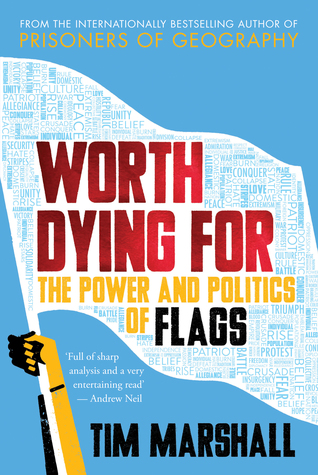
Worth Dying For: The Power and Politics of Flags by Tim Marshall

Written by , Posted in Reviews

Five Stars

Best for: People interested in world politics.

In a nutshell: Tim Marshall examines many (though not all) of the flags of nations, as well as flags of political movements and other organizations as a way to examine what these symbols mean to people.

Worth quoting:
“The people of the nations of Europe have stubbornly resisted becoming one, not because they don’t like each other but because they like themselves.”

Why I chose it: I thoroughly enjoyed Mr. Marshall’s examination of how geography influences world politics, so I was excited to see he has other books on somewhat similar topics. Considering what’s going on in the US with the national anthem, NFL, and protests against racial injustice, this seemed especially appropriate.

Review:
Can you make flags interesting? If you’re Tim Marshall, you can, and you do. I inhaled this book, finishing it over the course of two days while on vacation (in Portugal, whose flag includes a coat of arms that dates back to the 1100s). It’s not just an explanation of the symbolism of flags (though it is that); it’s a look at how the flags are viewed by those who fall under them, and by those who are outside them.

The book starts out with chapters on the US flag and the UK flag; I learned some new things about my own nation’s flag, and about the flag of my current home nation. It was interesting to be reminded of how the US flag is often burned abroad, and how the flags of both the US and UK have been co-opted at times by far-right nationalist groups that might make other residents of those nations uncomfortable with displaying them.

From these two deep dives into imperial nations, the book shifts to focusing on themes along different types of flags. Mr. Marshall looks at many flags of the EU member nations (and the EU flag itself), the flags in the Middle East, flags that are meant to invoke fear, flags in Asia, flags in Africa, flags in South America, and a smattering of others (including the Jolly Rodger and the Red Cross).

The book is full of some fun facts that you might find useful at a pub quiz or when playing trivial pursuit (1/6 of the world’s flags have Christian symbolism on them!), but it’s also full of interesting observations about what it means to have a flag, and what a flag can mean for a people, or a movement. June is Pride month in the US, and there is discussion of the rainbow flag in this book. While you might not be clear on what each of the six stripes represents (don’t worry, Mr. Marshall will inform you), you know what it means when you see it. That’s powerful.

Tuesday

5

June 2018

0

COMMENTS

Word by Word by Kory Stamper

Written by , Posted in Reviews

Four Stars

Best for: People who love words. So, you know, ALL OF US.

In a nutshell: Mirriam-Webster Dictionary lexicographer Kory Stamper shares a behind the scenes look at what goes into that tome so many of us take for granted, the dictionary.

Worth quoting:
“The fact is that many the things that are presented to us as rules are really just the of-the-moment preferences of people who have had the opportunity to get their opinions published and whose opinions end up being reinforced and repeated down the ages as Truth.”

Why I chose it:
I love words!

Review:
I’ve been in a bit of a reading black hole the past month. After powering through all three of the Crazy Rich Asians books in like a week, I posted just one (ONE!) review in May. I have maybe three or four books that I’m a chapter or two into, but I just couldn’t get into any. So I picked this one up because it seemed fun, and thank Maude, I’m cured. This was a delight to read, and has kick-started my consumption of the written word.

Being a dictionary editor sounds partially amazing and partially horrible. No one talks except outside the office on lunch breaks (which, most days, is my dream, but still, I like to at least have the option), and there’s a lot of time spent reading. Unfortunately, the reading isn’t for pleasure so much as it is to look for interesting examples of words being used, to refer back to at a later time when revising the dictionary.

I’ve never put a whole lot of thought into dictionaries; I don’t own a physical one anymore, but I think I might pick one up after reading this. Ms. Stamper has a great grasp of language (as you’d hope), and manages to make what could be extraordinarily dry subject matter come alive with interesting stories, clever anecdotes, and vivid imagery. Its a great little book that I think my fellow Cannonballers would enjoy.

Sunday

20

May 2018

0

COMMENTS

What I’m Reading – May 20, 2018

Written by , Posted in What I'm Reading


Brexit

“The Scottish parliament has voted against Theresa May’s Brexit legislation by a large margin, putting the UK on the brink of a major constitutional dispute. Holyrood rejected the UK government’s EU withdrawal bill by 93 votes to 30 on Tuesday after Labour, the Liberal Democrats and Scottish Greens backed Nicola Sturgeon’s decision to oppose proposals on post-Brexit power sharing set out in clause 11 of the bill.” Scottish parliament decisively rejects EU withdrawal bill (by Severin Carrell for The Guardian)

Racism

“The sixth-grader told police after he got off the bus, a group of teenagers approached him and forced him into a four-door vehicle that had flames on the side, KTRK reported. An adult male was driving the vehicle and took Parker to a vacant house or building, where the boy allegedly was assaulted. Lee said she received threatening messages from her son’s phone and that her son said one suspect had a tattoo on his forearm that said, “I hate black people.”” Shoeless 13-year-old fled alleged kidnappers: Police (by Justin Doom for ABC News)

Maxine Waters is the hero we need right now: “I will not yield one second to you.”

“The incident unfolded after T.I. arrived at the entrance to the gated community to find the guard asleep in the guardhouse, Sadow said. After waking the guard up, T.I. “clearly identified himself and sought entry,” but the guard refused, even after the rapper got his wife Tiny on the phone to confirm, the attorney added. “Words were exchanged and apparently the guard and/or a supervisor called the police. When the police arrived, they were not interested in hearing T.I.’s side of the story and wrongfully chose to end the situation by arresting T.I.,” Sadow said.” Rapper T.I. Was Arrested While Trying To Get Into His Own Home (by Nidhi Prakash for BuzzFeed News)

“Lee sought advice from his mother, Twyla Lee, who told him to talk to the manager of the store. But the store’s manager reportedly never made an effort to speak with him or the others. Then, an elderly woman who had no prior involvement in the situation, called one of the young patrons a “punk.” The woman reportedly asked, “Are your parents proud of you for what you do?” Local news outlet CBS St. Louis affiliate KMOV-TV reports the woman and the group of young patrons got into a heated altercation, prompting the manager to finally step in. “When she called us a ‘punk,’ and she didn’t have anything to do with the situation, everyone in the store is against us looking at us crazy, (and) we didn’t do anything,” Lee said. “I was totally embarrassed, and we’re the only ones defending ourselves against everyone in the store.”” Nordstrom Rack Apologizes After Police Are Called On 3 Young Black Men Falsely Accused Of Stealing (by Ricky Riley for Blavity)

Fatphobia

“Clearly, we are far from ending this epidemic. But finally, for once, institutions are beginning to name the behavior of the men who make unwanted remarks and unwelcome ultimatums, who expose themselves, who demand our bodies. For once, we’re learning to believe women. The women coming forward are undeniably courageous: young and old, rich and poor, famous and unknown. And overwhelmingly, they’re thin. But 67% of American women are plus size. So where are the fat women?” Why Don’t We Hear Fat Women’s #MeToo Stories? (by Your Fat Friend for The Establishment)

Xenophobia

“Hadeel Louz, 25, is a Palestinian human rights activist in Gaza who has been attending the protests in recent weeks and on Monday. “We didn’t have anything with us but water, to drink,” she said. Along with her family, Louz was among tents roughly 500 meters (0.3 miles) away from the border fence when she saw people around her being shot. With her voice shaking, Louz said her 16-year-old neighbor, Nouh al Najr, was among those shot. “I just heard he will have to have his leg cut off,” she said, adding that Yaser Murtaja, a Palestinian journalist killed in April, was a close friend of hers. “He was only holding just his camera — so what was his fault?” she asked.” Israel kills at least 55 Palestinians for protesting in Gaza as new U.S. embassy opens (by D. Parvaz for Think Progress)

Ridiculously Inappropriate Law Enforcement Activities

“According to Bockholt, “The training and evaluation device[s]”—the books—”included an embedded recorder [and] allowed military training staff the ability to evaluate the students[‘] training.” Bockholt did not provide additional information about the other training exercises it conducted in Seattle in April. Library spokeswoman Andra Addison says the library was not informed in advance about the exercise.” Bomb Scare that Nearly Shut Down Central Library Was “Realistic” Army Exercise (C is for Crank)

Something Good

“If you don’t believe me, just stop and think and imagine, think and imagine, well, think and imagine a world where love is the way. Imagine our homes and families when love is the way. Imagine neighborhoods and communities where love is the way. Imagine governments and nations where love is the way. Imagine business and commerce when love is the way. Imagine this tired old world when love is the way.” Read the Full Transcript of Bishop Michael Curry’s Wedding Sermon (via Town and Country)