ASK Musings

No matter where you go, there you are.

Books Archive

Monday

5

April 2021

0

COMMENTS

The End of Days by Jenny Erpenbeck

Written by , Posted in Reviews

Five Stars

Best for:
People interested in a deep look into just a few lives – their potential, their reality, their what-could-have-beens. People who like novels that aren’t conventional but aren’t totally out there.

In a nutshell:
Five generations of one family experience the 19th century, stopping and restarting along the way.

Worth quoting:
“She’d been able to remake her thinking from scratch, but not her family history.”

“Before striding off on a new path, must one not have acquired a profound understanding of what was wrong with the old one?”

“At many points during her life she had done something for the last time without knowing it. Did that mean that death was not a moment but a front, one that was as long as life?”

Why I chose it:
This was a birthday gift from my partner.

Review:
This review will contain some mild spoilers for the first part o the book.

The premise of this book is what a life might be like should certain events not have happened. I thought it might be a reset at birth each time, but no. The first section looks at the lives of the characters if the daughter (no one has names) dies around eight months. Everyone is destroyed in different ways – the father makes a decision that I find shocking and fascinated; the mother ends up completely shutting down.

In the intermission, we look at what would have happened if, when the baby wasn’t breathing, someone had done something to startle the baby back to life, and follows the family until the baby is a young woman. They all are experiencing pain due to WWI and famine, and there is now a second, younger daughter. The main daughter is traumatized and does not want to live, and, this story ends with her death at 19.

It goes on for there, with five total lives / continuations of life, following the great grandmother, grandmother, mother, daughter, and son. No one has names. No one has an easy life.

It’s an interesting idea, seeing how something going a little different might alter the course of one’s life but also the lives of everyone around one. It’s been done so many different ways, but this way feels … dark but also refreshing. It is a book that both feels totally originally and also extremely familiar.

Something that has struck me throughout the book is just the heaviness of everyone’s lives, and the fact that we don’t know what other people are going through. In this book, the grandmother of the daughter carries a secret with her that affects both her and her daughter. The daughter gathers her own secrets that impact her son. There is generational trauma, and things these family members experience that no one else in their family knows, let alone understands. There’s so much pain held inside. How many of the people we know well, or just encounter on a daily basis, are holding onto a pain we’ll never know about?

Keep it / Pass to a Friend / Donate it / Toss it:
Pass to a friend.
Sunday

4

April 2021

0

COMMENTS

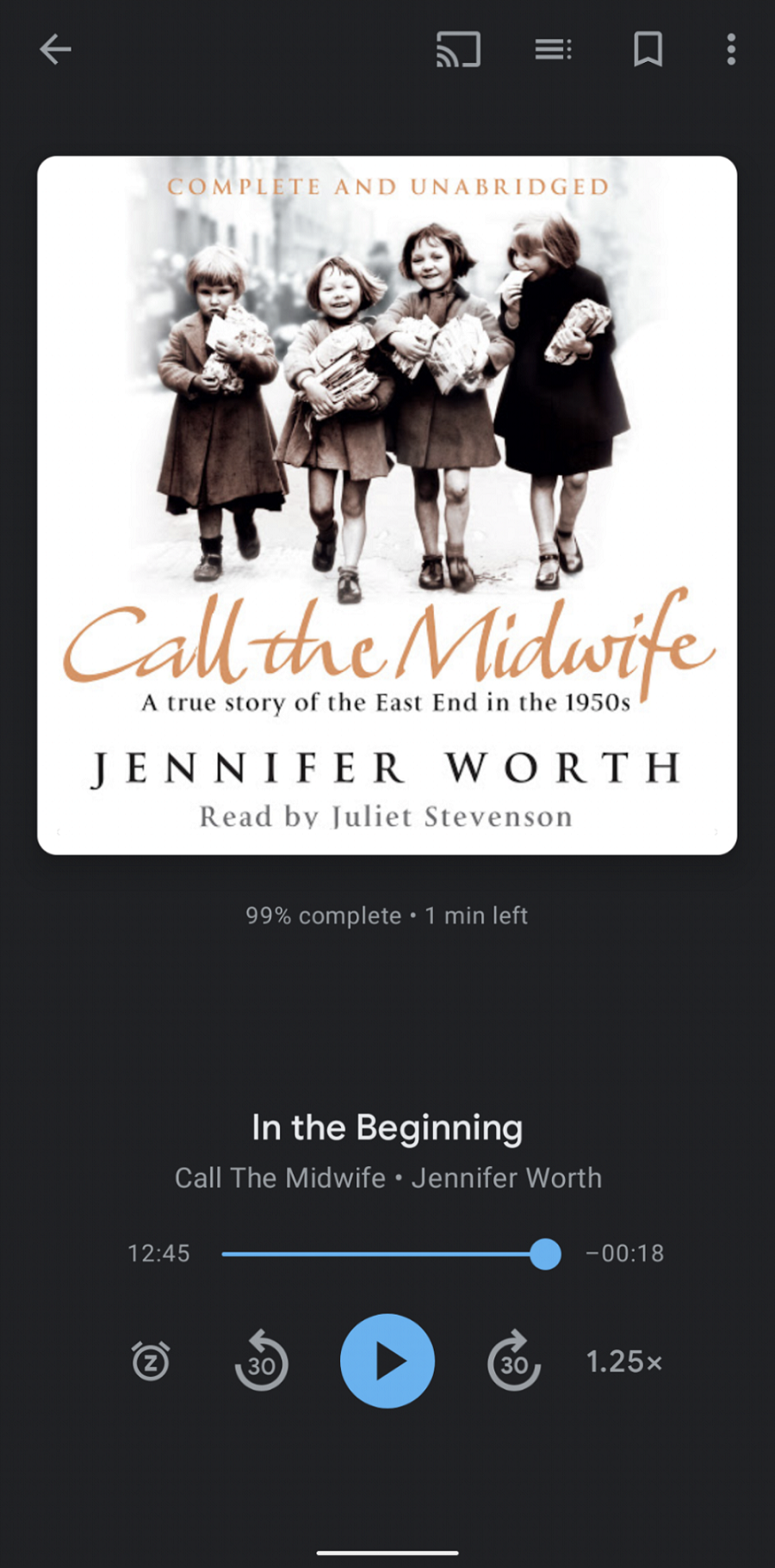
Call the Midwife by Jennifer Worth

Written by , Posted in Reviews

Four Stars

Best for:
Fans of the TV show Call the Midwife; anyone interested in life in London in the 1950s.

In a nutshell:
Midwife Jennifer Worth recounts stories of her time working in the East End of London, soon after the creation of the National Health Service (NHS).

Worth quoting:
N/A (Audio Book)

Why I chose it:
I very much enjoy the TV show Call the Midwife, and have been eying the book in shops for a couple of years now. Finally decided it might be fun to listen to the stories.

Review:
First things first: this book is much more descriptive when it comes to births than the TV show. The show does, I think, a great job of showing how messy and challenging childbirth can be, but hearing all the aspects of it described? That might be a bit much for someone who hasn’t given birth. I have not given birth, but found the descriptions of the different situations to be fascinating.

Jennifer Worth is assigned to work at Nonnatus House, which is an order of nuns who focus on providing nursing and midwifery to the community. She shares her experiences of the East End of London, which includes living conditions that many of us would find nearly unbelievable and definitely shocking were we to encounter it as the norm today. Worth is honest in her reactions (and at times revulsions), and I think that helps the reader understand what life was like for some people. And while Worth is often judgmental when she encounters new situations, by the end of each story she seems to have recognized either where her judgment has been wrong, or at least come to have more understanding and compassion for people who are in a different life situation than she is.

As someone who enjoys the TV show, I couldn’t help but superimpose the actors who play these individuals onto them, which is a challenge when the description is fairly different from the character on TV (this is especially true for Fred). I had to remind myself a few times that the stories she’s sharing, which of course will have shifted due to the passage of time and the fallibility of human memory, are essentially about real people, and real lives, lived not so long ago.

Keep it / Pass to a Friend / Donate it / Toss it:
Keep it (Audio Book)

Tuesday

30

March 2021

0

COMMENTS

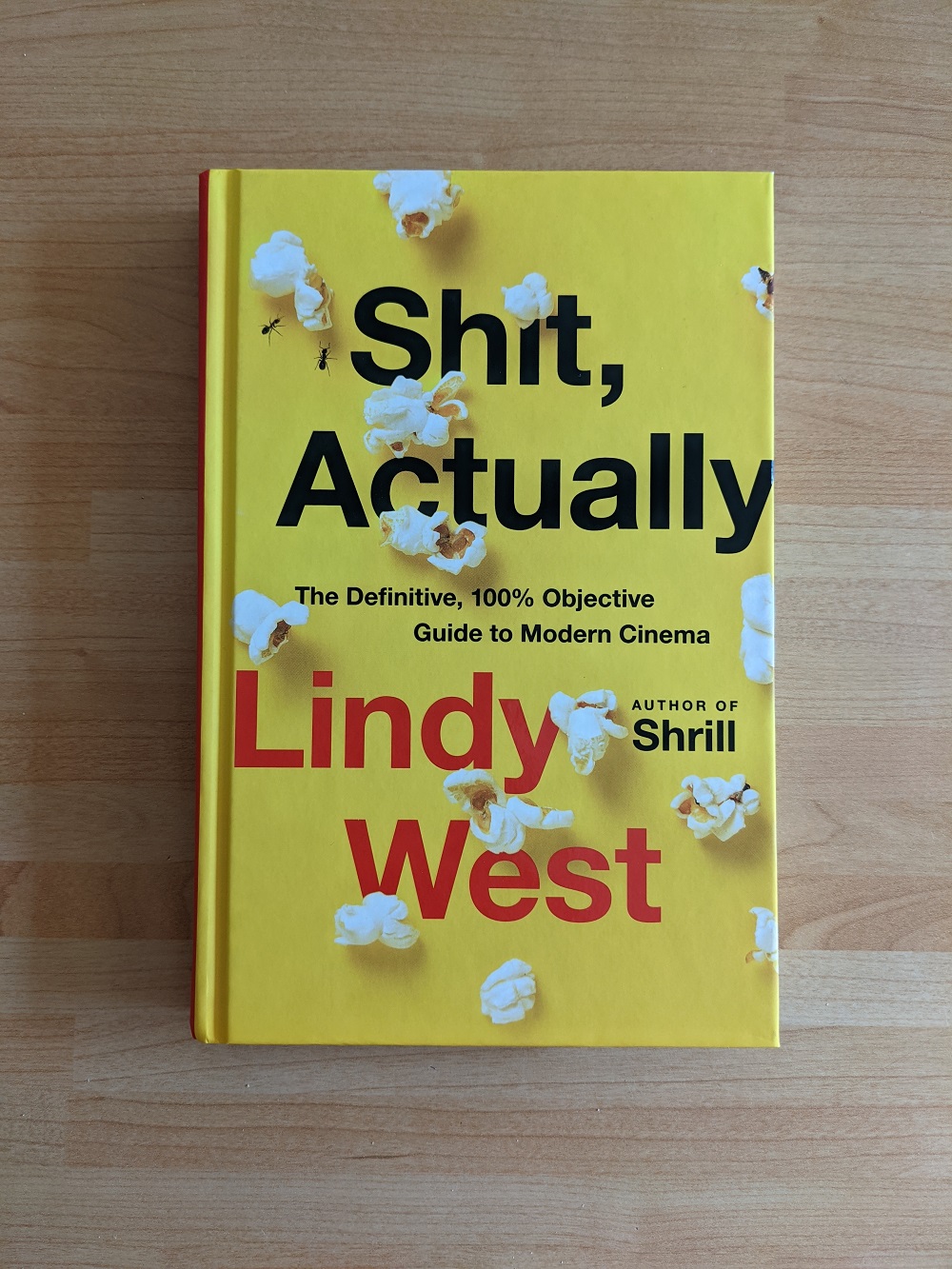
Shit, Actually by Lindy West

Written by , Posted in Reviews

Five Stars

Best for:
Anyone who watched blockbusters from the 80s-early 2000s and enjoys a fair bit of of honest snark.

In a nutshell:
Lindy West, who started as a film critic, revisits a bunch of films and comments on them.

Worth quoting:
ARG SO MUCH

From the Harry Potter review: “Even in the moment when his whole family is being terrorized by a giant, fatboy Dudley can’t stop himself from plunging his face directly into the cake and omph momph gromph skromph. As a fat woman, this moment of cultural representation moved me deeply.”

From the Forrest Gump review: “‘My momma always said life is like a box of chock-lits. You never know what you’re gonna get.’ I mean, you mostly know. They write it on the lid.”

From the Rush Hour review (a film directed by Brett Ratner) “Unfortunately, due to the indefatigable vileness of men throughout history, sexual exploitation and abuse of power have pervaded all of our art and media, and everything is tainted and fucked!”

Why I chose it:
It’s LINDY WEST. Also MOVIES.

Review:
I don’t believe this book has been officially published in the UK. When it first came out, the only place I could theoretically find it was on a website I’d rather not use. I eventually was able to get it from a different bookseller, but it took over a month for it to arrive.

Worth the wait.

I thoroughly enjoy West’s writing. Shrill is an excellent book, and The Witches Are Coming was a great follow-up. But I love that she got a chance with Shit, Actually to just sort of … have fun. Obviously she doesn’t turn off her brain when watching these films (as evidenced by that last quote above), but there’s a sense of joy coming from the writing even when she’s reviewing such steaming piles as American Pie.

The book starts out with a review of The Fugitive, which West proudly proclaims as the best movie ever, and the one by which all others are judged. In fact, her rating system is 10/10 DVDs of The Fugitive.

This book arrived yesterday. I spent the evening reading it, then finished it up today, because it was just so good. So fun. I laughed to the point of snorting multiple times. And yes, part of that is possibly because I, too, am a white lady who is about the same age as West, so we are going to have some cultural touchstones in common. I’d seen all but one film she reviews, but even that review had be cracking up.

Times are hard, and it’s fun to read something delightful like this.

Keep it / Pass to a Friend / Donate it / Toss it:
Keep it.

Monday

29

March 2021

0

COMMENTS

The Draining Lake by Arnaldur Indriðason

Written by , Posted in Reviews

Four Stars

Best for:
People who enjoy a good mystery.

In a nutshell:
A skeleton has been found in a drying lake bed. Might be suicide, except there’s Cold War-era Soviet equipment tied around the skeleton’s body.

Worth quoting:
N/A

Why I chose it:
I had bought a bunch of this author’s books all at once, and finally decided to pick up this last one.

Review:
These books are either growing on me a bit, or the story within this one was just a bit more interesting to me. Not sure, but I’m not complaining, because after reading the first hundred pages on Friday, I basically devoured the last 300 today.

The premise: a skeleton is found in a lake and associated with some Cold War era Soviet equipment. The person likely was killed in the late 60s / early 70s. So Detective Erlendur and his colleagues need to figure out if anyone who was reported missing around that time might be this victim.

At the same time, we are in the memories of an unnamed man who was a young member of the Icelandic Socialist Party, and who was invited to study in East Germany, Leipzig, during the 60s. He’s all in on the ideals of socialism, but his experiences are getting odd. Is someone spying on him and his friends?

I think what I most enjoyed about this book is that I both sort of knew what was coming but also was surprised by the ending. There are another 5-7 (unsure if all have been translated into English) in this series; I think I’ll likely get around to reading all of them in the next couple of years.

Keep it / Pass to a Friend / Donate it / Toss it:
Donate it.

Sunday

28

March 2021

0

COMMENTS

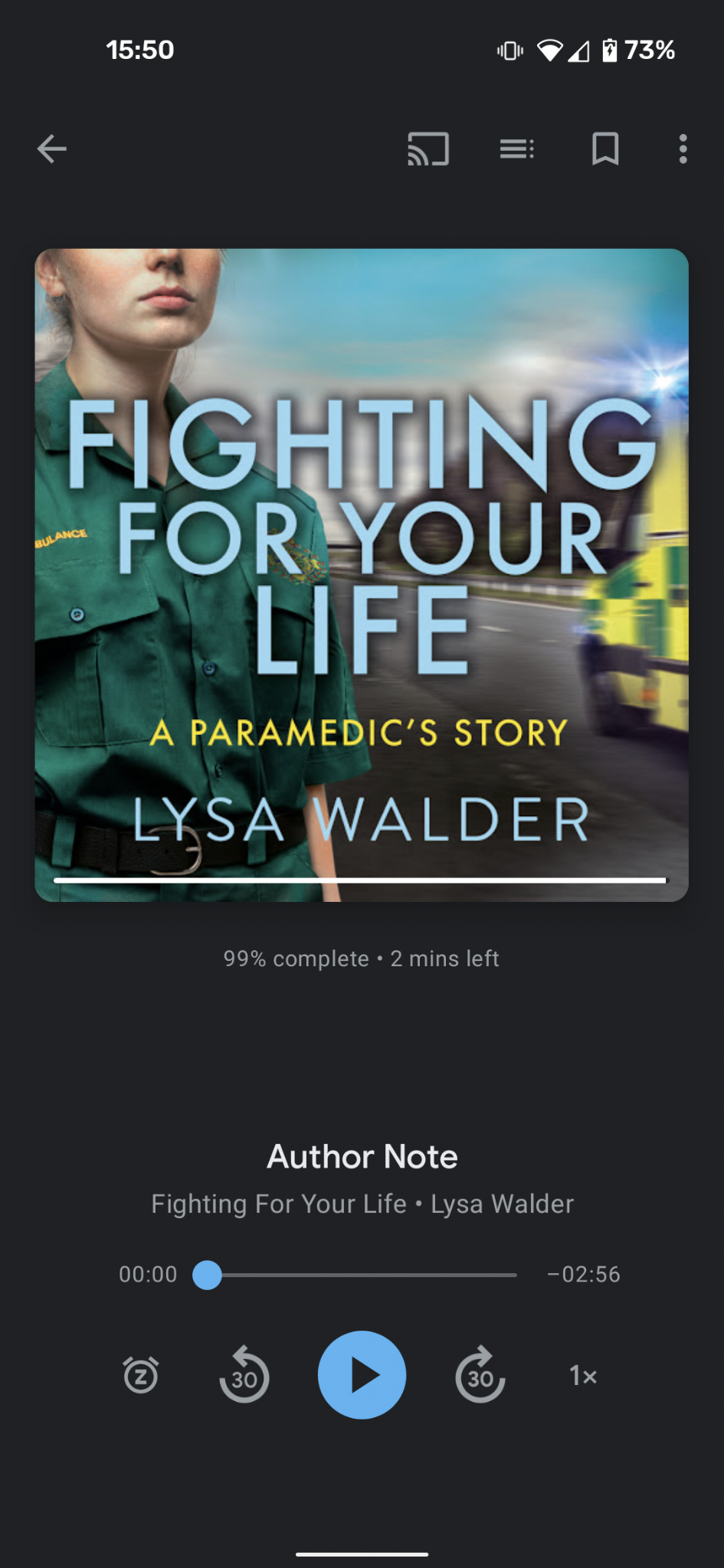
Fighting For Your Life by Lysa Walder

Written by , Posted in Reviews

Three Stars

Best for:
Anyone who likes sort of true-life medical stuffs.

In a nutshell:
London paramedic Walder shares stories from various Paramedic calls she’s experienced during her career.

Worth quoting:
The bit at the end with tips about calling 999, should probably be printed and distributed in every household in the UK.

Why I chose it:
I was looking for something not too involved that I could listen to on my longer runs. This came up in the audio book app I use, given some previous purchases.

Review:
This is a fairly short book (5 hours as an audio book) that is broken into different types of paramedic calls author Walder has experienced during her career. She doesn’t share lots of her personal life or her path to the field like previous similar books; instead after a fairly straightforward interview she just gets right into it.

I can see why she decided to write the book and why a publisher chose to print it – the stories are generally interesting, not too over the top or salacious, and give a wide perspective on what it is like to be a paramedic in London. We don’t learn a lot about the author herself, but that’s okay – not every book like this need to go deeper into the author’s life. I don’t think the book is that much the worse for it, though it would have been interesting to learn about what (if any) support is offered to paramedics after particularly traumatic experiences.

If this isn’t usually your type of book, I’m not going to say you should drop everything and pick it up, but if you find yourself enjoying medical memoirs, you’ll probably like this one.

Keep it / Pass to a Friend / Donate it / Toss it:
Audio book, so kind of have to keep it.

Saturday

13

March 2021

0

COMMENTS

Soccer Goalkeeper Training by Tony Englund and John Pascarella

Written by , Posted in Reviews

Three Stars

Best for:
Coaches of goalkeepers

In a nutshell:
Authors Englund and Pascarella offer their ideas for technique, fitness, tactics, and mental preparation.

Worth quoting:
“Communicate!”

Why I chose it:
I am a goalkeeper.

Review:
I bought this back in 2018 when I started playing football (soccer) again after a couple of years off. When we come out of lock down 3 in England, I will get back on the pitch, this time with a new team, and with a five-month off-season. While I run 8-10K every day, I’ve done virtually no strength or agility training for three months.

Yikes.

I decided to crack this book and while it includes a lot of very good information, it isn’t for me as a player – it is for the coaches. And while I appreciate they use some photos of women keepers, they choose to refer to every goalkeeper as ‘he’. Not exactly an inclusive approach.

I was hoping there would at least be some information in there on exercises one can do to improve strength and agility outside of formal training with one’s team, but there is none of that here. The discussions around different types of tactics were, however, very useful, and I’ll likely review them again regularly to get my mind back on football.

Keep it / Pass to a Friend / Donate it / Toss it:
Keep it – some of the training diagrams might come in handy some day.

Friday

12

March 2021

0

COMMENTS

Say Nothing by Patrick Radden Keefe

Written by , Posted in Reviews

Five Stars

Best for:
Anyone who appreciates excellent investigative reporting, people who are intrigued by true crime, anyone who is interested in the Troubles.

In a nutshell:
Investigative journalist Keefe uses the disappearance of widow and mother of 10 Jean McConville in the early 70s to explore the Troubles, focusing primarily on the Republican fight.

Worth quoting:
N/A (Audio book)

Why I chose it:
I find the Troubles to be an absolutely fascinating part of history. And they are being discussed a bit more often now, as the Good Friday Agreement is at risk due to Brexit.

Review:
For some reason, I have always found Ireland to be interesting. I’ve visited the Republic multiple times, and also spent time in the North, including in Belfast and Derry, where I visited the Museum of Free Derry. I was even accepted to a Masters program in Belfast where I planned to focus my studies on The Troubles, though ultimately I chose another path. I’ve read many books on the topic, and most have been emotive and intriguing, but none have been as well-written and fascinating as this one.

The book feels almost like a crime novel, but it’s about real people. Jane McConville was a widow with ten children, living in the Catholic area of Belfast in the early 1970s, when a group came and took her away. She was never seen again. Her story is the through-line we keep revisiting as Keefe explores some of the major players in the Republican fight for Irish independence in the North of Ireland. Dolours Price is the other main focus of the book, and her story of serving in the violent Provisional Irish Republican Army (IRA) is much of what keeps the book together.

Keefe explores how Price enlisted in the Provisional IRA (membership in which was and remains a crime) and carried out attacks, including the bombings in London in March 1973, and then engaged in a hunger strike after her conviction in an attempt to be recognized as a political prisoner and returned to Ireland. Keefe follows Gerry Adams as well, who has always claimed he was never a member of the IRA, but who clearly was very high up within the organization.

The book explores how the IRA disappeared some individuals, such as Jane McConville, and the impact that had on their families. But it also looks at the evolution of the movement from a violent one to one that embraced politics, through to the Good Friday Agreement of 1998. It then asks the question – what now? Price herself asks that question repeatedly, as she wonders what everything she did in her youth meant, given that the North of Ireland remains part of the UK.

Another intriguing part of the book is how the Belfast Project, which was housed at Boston College, plays a part in solving the McConville mystery. The Project was where individuals secretly recorded their experiences of the Troubles, with the promise that their recordings wouldn’t be released until after their deaths (spoiler: that didn’t happen). The goal was to build an archive of recollections before those with first-hand knowledge died.

I got the audio book version, and it was nearly 15 hours long but ultimately worth it, though I think a physical version would be just as good. Keefe is brilliant at spinning together tons of information without losing his reader.

Keep it / Pass to a Friend / Donate it / Toss it:
Keep it

Thursday

25

February 2021

0

COMMENTS

The Secret Midwife

Written by , Posted in Reviews

Four Stars

Best for:
Anyone interested in how maternity wards are run and what life for a midwife is like.

In a nutshell:
Secret Midwife ‘Pippa’ shares her time as a midwife, from starting training at age 17 through having to be signed off for stress as cuts to the NHS made staffing more and more scarce.

Worth quoting:
Audio book that I listened to while running, so I didn’t make note of any.

Why I chose it:
I find memoirs (and comedy books) to be best for running, as there isn’t a plot I need to keep track of. I also enjoy books about the medical profession and, despite not having or wanting children of my own, I find books and TV about childbirth and parenting to be kind of fascinating.

Review:
I previously read The Secret Barrister, which I found to be a great introduction to the legal system after I moved to the UK. The concept of these ‘Secret’ books is that by not sharing their names, the authors are able to provide further, more honest insight into their respective professions. One might wonder why a midwife might need to keep her identity hidden – the parents, sure, would need to be anonymized for their privacy, but the midwife?

And then you read the book, and realize it’s because if she were identifiable, she couldn’t speak honestly about the failures of management and the NHS Trust for which she works without fear of retaliation. The more I think about it, the more I get it – pretty much every worker in every field fears for retaliation when they point out the failings of their companies and managers. Why would midwifery be any different?

‘Pippa’ trains as a midwife starting at age 17, becoming fully qualified by age 20. She shares stories of successful births, unsuccessful births, stillbirths, miscarriages (including her own), and angry parents who blame midwives when things do go according to plan. She also shares her own depression and stressed caused by a complete lack of support from management. Midwives are working more with fewer resources – at one point ‘Pippa’ shares that there could be as many as 40 women on the ward with only 6 midwives available! That’s absurd.

The NHS has been receiving loads of praise lately because of their herculean efforts during the pandemic. And that praise is justly deserved – doctors and nurses have been working flat out to save as many lives as possible. But the NHS has been stripped of so much funding as of late, treated less like what it should be – a public institution providing excellent care for everyone – and more like a private business. And anyone who as lived anywhere with a primarily private healthcare system knows that is NOT the model to emulate.

The Secret Midwife is an excellent storyteller, and the person who read the audio book did a great job bringing those stories to life. I’m not sure if this needs to be a listen instead of a read, but I think either option will work.

Keep it / Pass to a Friend / Donate it / Toss it:
N/A (Audio book)

Saturday

20

February 2021

0

COMMENTS

Skin by E. M. Reapy

Written by , Posted in Reviews

Four Stars

Best for:
Women who have felt unseen – or too seen. Women trying to figure out what they want to do, and looking for ways to do it.

In a nutshell:
Natalie is a former teacher traveling, looking for what is next. She has disordered eating, binging when she is uncomfortable, sad, uncertain. She travels, lives with her family, travels some more, looking for what feels right.

Worth quoting:
“People always hoping that others will complete them, be their other half. It’s dangerous. We’re already whole. Don’t halve yourself for someone.”

“I’ve had my own body shit too. Some people carry their baggage on the inside.”

Why I chose it:
It was part of a subscription box.

Review:
When I read the description I was a bit concerned it might turn into an Eat Pray Love situation, but it doesn’t read that way. Natalie isn’t relying on ‘exotic’ locations to help her find herself; she doesn’t try on local cultures like a costume. She uses the time to try to work on herself.

The book starts in the middle – though not in a time-jumping sort of way. Natalie has already quit her job as a teacher, and is currently in Indonesia. She’s traveling alone, and is spending her evenings in her hotel room, binge eating. She meets folks on occasion, but doesn’t tend to have a lot of fun with them. She’s not a sad person, she’s just a person trying to grow and figure herself out.

I appreciate how the book unfolds – most chapters Natalie is in a new place. One chapter she’s in Australia with her Aunt; another she’s living in Dublin with friends. She spends time living with and taking care of her grandmother. She also starts working at a gym, and while I appreciate that the book doesn’t end (spoiler alert) with her suddenly becoming a star athlete, or married, she grows, learns more about herself. It’s a little two steps forward, one step back, like life often is.

Right from the start, I could relate to Natalie a bit. Me and food haven’t always had the best relationship, although I’ve not been where she is. I have travelled alone, however, and not being the most social, I’ve spent many evenings in a hotel room, alone, eating what I found at a local convenience store, watching local TV or reading a book. Most of my time alone has been spent in Ireland, so I didn’t have language barriers, but it was still hard at times. It was also wonderful – I loved the freedom of figuring out what and where I was going each day, not having to check with anyone on my plans. And I loved having the space to think, daydream, write, plan, without having chores or anything else to do. It was fun, a bit stressful, sometimes hard, sometimes sad, but I know helped me grow. That time was a real gift, and reading this book brought me back to those times, which was pretty great.

Keep it / Pass to a Friend / Donate it / Toss it:
Donate it

Sunday

14

February 2021

0

COMMENTS

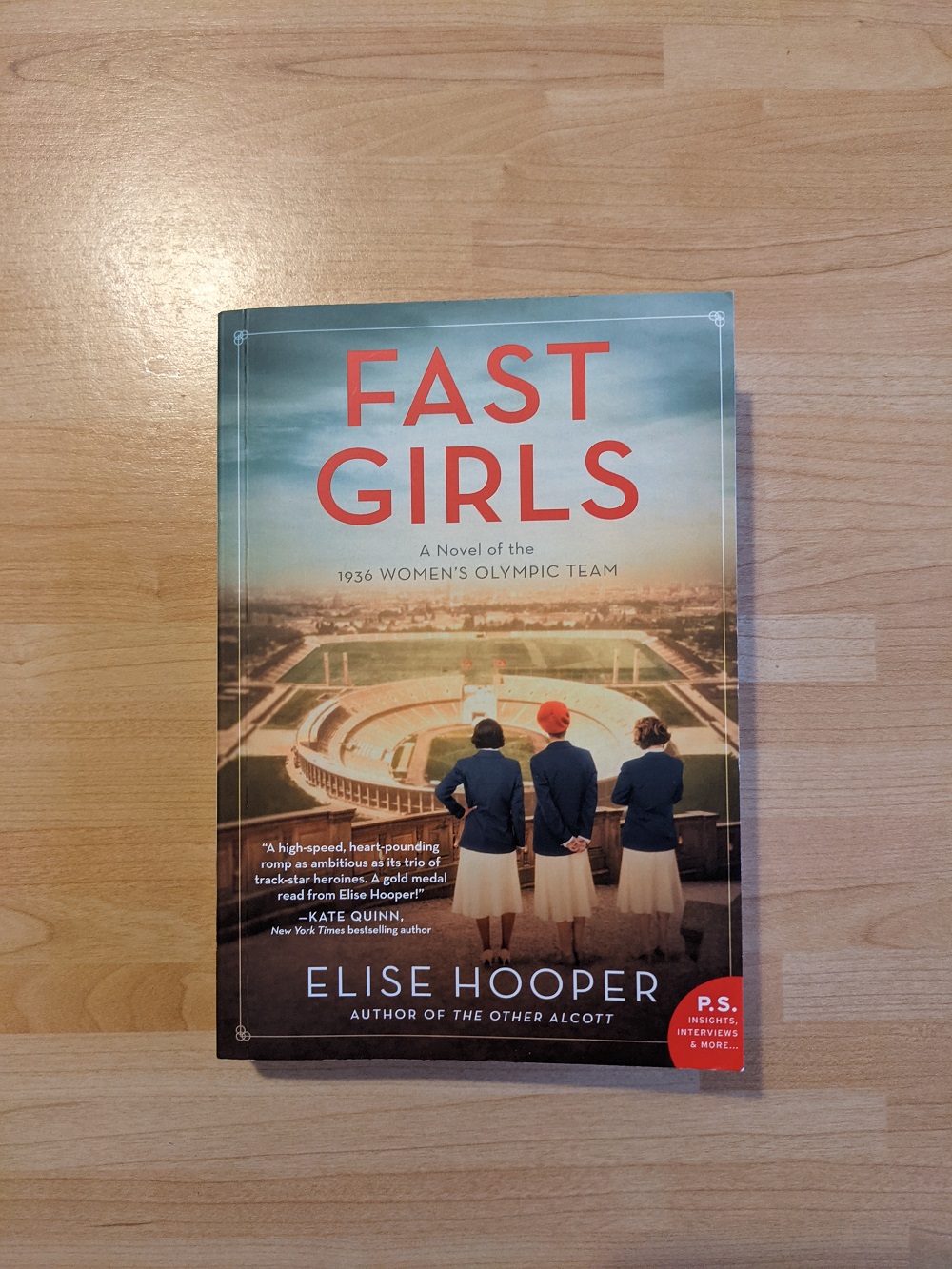
Fast Girls by Elise Hooper

Written by , Posted in Reviews

Four Stars

Best for:
Anyone interested in how women have had to fight against sexism, misogyny, and racism to do simple things like run really fast.

In a nutshell:
Three women’s stories are told starting in the late 1920s through to the 1936 Berlin Olympic.

Worth quoting:
“Getting a taste of what it felt like to be good at something and then having it taken away still left her feeling crushed when she allowed herself to think about it.”

“Rules could be broken. Judges could be wrong. People did not always do the fair thing. Final results were only as reliable as the system that produced them.”

“It is well documented that women cannot be subjected to the same mental and physical strains that men can withstand … It is important not to overburden this developing young feminine mind with the distractions of sport and competition.”

Why I chose it:
It was a birthday gift from my mother-in-law, who knows I have a strong interests in women in sports and women’s rights overall.

Review:
If you’re mostly interested in reading about the 1936 Berlin Olympics, this is not the book for you, despite the title and cover. It’s definitely in there at the end, but takes up maybe 15% of the whole book. But if you’re interested in reading fictionalized accounts of real women athletes, fighting for their rights to compete and perform and receive anything close to the same treatment as men athletes, this is a good book to pick up.

Author Hooper follows three athletes primarily – Betty, a white woman who wins gold at the inaugural women’s 100 track event at the 1928 Olympics; Helen, a young white outcast who discovers she is an excellent runner while dealing with understanding her sexuality, and Louise, a Black woman who has to deal with both the sexism and racism of the athletic world.

These women, along with nearly every other athlete mentioned, are historic figures, and the major life events they encounter (including a plane crash that Betty survives, and sexual abuse of Helen) are all real. As the author shares at the end, unfortunately Louise is the woman she was able to find the least about in her research, though all are discussed in an afterward that shares how their lives went after the Berlin Olympics.

The author intersperses point of view chapters with letters and newspaper articles and oh MY gosh do you want to get angry? That last quote from up above, about women not being able to handle mental / physical strains, and how they shouldn’t be distracted? Flames on the side of my face. I’ve been an athlete (mostly soccer) since I was about six, and while most of the time I’ve had support and the ability to play when and where I want, the reality is I’ve faced sexism individually (when I played on a co-ed team — not from my teammates, but from opposition) and collectively (I now play in women’s soccer leagues here in England and the refs are shit and both make way too many technical calls like foul throws and then offer no protection from dirty play).

I also appreciate how the author spends time specifically focusing on the ways that Louise, as one of the two Black women who is on the women’s team during the Los Angeles and Berlin Olympics, deals with overt and casual racism all the time, from not being selected for the relay in Los Angeles despite having faster times, to being forced to sleep in lesser accommodations on the way to the Olympics. Betty, Helen, and the other white women athletes are definitely facing a ton of misogyny and sexism, but for Louise and her teammate Tidye, they have racism added on top.

As I mentioned, the book is more about the lives of the women in the eight years leading to the Berlin Olympics, but they do definitely talk about the proposed boycott, and the treatment the Nazis showed to their own athletes and to athletes from other nations. I’d say it’s hard to imagine being willing to compete at those games, but like, people went to the 2014 Olympics in Socchi, where Russia has horrible laws against people who are not straight. As I get older and more informed, the way the Olympics are run makes me less and less interested in supporting them at all (I mean, did you see the comments by the now former head of the Toyko games just, like, this month?), but I do still want to support the individual athletes and teams who work so hard to complete these amazing feats of athleticism.

Keep it / Pass to a Friend / Donate it / Toss it:
Donate it