ASK Musings

No matter where you go, there you are.

Books Archive

Saturday

10

November 2018

0

COMMENTS

No Is Not Enough by Naomi Klein

Written by , Posted in Reviews

Three Stars

Best for: People still looking for answers to how we got here (i.e. got Trump) and some thoughts on ways to move forward.

In a nutshell: Trump’s election shouldn’t have been a surprise, and it doesn’t need to be the end of the world.

Worth quoting:
“If the goal is to move from a society based on endless taking and depletion to one based on caretaking and renewal, then all of our relationships have to be grounded in those same principles of reciprocity and care.”

Why I chose it: I keep looking for books to help me figure out a good way forward, and Junebug’s review suggested it’d be a good one. And it was, mostly.

Review:
I feel like there are two books here: a history book and a how-to book. And while the tag lines and blurbs are promoting the latter, the vast majority of it feels like the former to me. And that isn’t necessarily a bad thing, I just feel like lately I’m reading a whole lot of build up and not a lot of “now do this.” It’s especially frustrating when some of the things she warns us about not only happened but were way worse. I spent a fair amount of time in the first chunk saying “Oh honey, past you was a bit off, and not in a positive direction.”

That’s not to say there aren’t things in here that I learned. There’s a lot about US and world history I know nothing about, and haven’t sat with to connect all the dots, and to that end I think Ms. Klein does a mostly good job. However, at times it felt like a book that was trying to fit as much relevant information as possible without the best through-line. It could have benefited from some stronger editing and perhaps reorganization, though I appreciate she was trying to get this book out quickly as the Trump administration continued rolling over human and civil rights ad the environment.

The very last bit of the book focuses on options for going forward, but even there it feels a little … insufficient. She talks about the Leap Manifesto she was a part of putting together in Canada, but there isn’t a lot of how to try to reproduce that in the US or even within a state in the US.

I think I just want to know what to do. Does that make sense? And that’s a lot to put onto any author — or anyone, really — but at this point I’m tired of the history, at least the parts I’ve lived through. And that’s why for me this book is only three stars.

Monday

29

October 2018

0

COMMENTS

All You Can Ever Know by Nicole Chung

Written by , Posted in Reviews

Four Stars

Best for: Anyone interested in a beautifully written memoir that explores adoption, transracial adoption, race, and family.

In a nutshell: Author Nicole Chung was born to Korean parents in the US and adopted by a white couple. In this book, she explores what it meant to be one of the only Asian people around growing up, as well as how she connected with some of her birth family.

Worth quoting:
“People were not so simple; people could be and think and want many different things at once.”

Why I chose it:
I’ve seen so many people online raving about it.

Review:
This is a lovely book. When thinking about words that could describe it, I could also have gone with powerful, honest, or insightful. But I chose lovely because the writing is just that, as is the way the author handles complex and complicated issues.

Nicole Chung was born two months premature to parents who had moved to the US from Korea just five years prior to her birth. They already had one child together; they chose to place Ms. Chung up for adoption, but not through what we would probably think of as regular channels (i.e., an agency). Instead, someone working in the hospital knows the couple who would become Ms. Chung’s adoptive parents and alerts them to this possibility.

Ms. Chung is raised in the pacific northwest, in a part of Oregon with very few other Asian individuals. Her parents are always open about the fact of her adoption, but they don’t take steps to help Ms. Chung learn about her Korean heritage, and she doesn’t not pursue it independently much until she reaches college. Once she is married, she decides to see if she can get in touch with her birth family, motivated further when she learns that she may have a sister.

This book explores one story, and it is not claiming to be universal, but still, the issues it addresses can apply to so many of us, I think. There are obviously some specifics (e.g. the reality of transracial adoption) that may only be directly relatable to similarly situated individuals, but the overall concepts of belonging and family, about other possible life scenarios, about whether a choice was the best one (and if that is even the right question to ask), about how our families influence who we become, and even about nature vs. nurture, they all take up space here. I’ll be thinking about this one long after I pick up my next read.

Saturday

27

October 2018

0

COMMENTS

Farenheit 451 by Ray Bradbury

Written by , Posted in Reviews

Five Stars

Best for: Everyone. All of us should read it.

In a nutshell: In the future, firemen don’t put out fires – they set them. Specifically, they set books on fire.

Worth quoting:
“You weren’t hurting anyone, you were hurting only things! And since things really couldn’t be hurt, sine things felt nothing, and things don’t scream or whimper … there was nothing to tease your conscience later.”
“We must all be alike. Not everyone born free and equal, as the Constitution says, but everyone made equal.”

Why I chose it:
I figured I’d take the opportunity to finally read this book. I can’t believe I haven’t read it.

Review:
Oh holy shit. This was written in 1953. SIXTY FIVE YEARS AGO. And yet it is super relevant today. Damn, that’s depressing.

This is an extremely quick read. I started it yesterday and ended it yesterday. It takes place over just about a week (or less) in time at some point, in some place, in the US. People don’t read anymore because they aren’t allowed to. Books are banned, and firemen (I’d normally say firefighter because gender neutral, but that literally doesn’t work here) respond to people tattling on their neighbors who are suspected to have books. Because books aren’t necessary — the stories and ideas in them conflict with each other, and that can lead to harm, so it’s better to just watch stories with no plot that take up the entire living room, work a few hours pushing buttons or making widgets, and fall asleep with earbuds in playing pleasing music.

As someone who loves books, this was hard to read. But beyond that, the idea of government telling us that we aren’t allowed to read anything, a government that seems only interested in pleasure, but superficial pleasure. And look, I loves me some superficial pleasure. But for me, that’s not the only purpose in life. And in this version of the US, that’s the only goal. That’s all people look for.

I think what hit me the hardest was the discussion about how people slowly stopped registering for liberal arts courses (drama was the main example) until such colleges simply shut down, and people were only taught to push buttons and manufacture things. I see in that a bit of the push to move EVERYONE to STEM education. I 100% want people who haven’t felt supported in pursuing a STEM education and career to have access to it, and I don’t think we’re there yet. At the same, I see people slamming liberal arts degrees — things like philosophy, sociology, women’s studies, literature — as useless. You should get a degree in engineering, not history! And I think that is such a dangerous way of looking at things. There’s value in it all, and there’s definitely value in the ability to think critically. One can obviously learn to think critically without being a philosophy major (or going to college at all), but books and other ways to access discussion and knowledge are necessary.

The ending feels a little abrupt, but that’s okay. I’d recommend this to everyone, if only as a reminder of where things could go, and the dangers that accompany that.

Thursday

25

October 2018

0

COMMENTS

Sadie by Courtney Summers

Written by , Posted in Reviews

Five Stars

Best for: Anyone who listens to long-form storytelling podcasts; anyone who appreciates good storytelling; anyone who can stomach a book with some really disturbing parts.

In a nutshell: Nineteen-year-old Sadie has gone missing, and its possible that it has something to do with the recent death of her 13-year-old sister. Her surrogate grandmother contacts an NPR-type radio station to see if one of their journalists can help find Sadie. (Ignore the tag-line on the cover though — it doesn’t do the plot justice.)

Worth quoting:
“I always forget fear is a conquerable thing but I learn it over and over again and that, I guess, is better than never learning it.”

Why I chose it:
I was at the independent bookshop in the town I grew up in and asked if they had Rebecca Traister’s new book Good and Mad. They didn’t, but the bookseller did say that if I’m interested in female rage, she had a suggestion for me. She wasn’t wrong.

Review:
This book is fantastic, but right up front I need to say that it deals with a REAL dark topic. Sadie is looking for Keith, who was her mother’s boyfriend for a while when she was 11 or 12. Very quickly we learn that Keith has done something to earn Sadie’s wrath, and frankly, it’s really not good. And this is a YA book. Jesus.

The story unfolds in a couple of ways: through a season one Serial-style podcast exploring Sadie’s disappearance, and through point of view chapters Sadie. They alternate, with the slowly catching up to Sadie’s story. So we’ll often get the podcast exploring things that we already know a little of, which makes it that much more compelling. Like, I know what’s already happened. You’ve got to work harder at figuring it out, West McCray (the podcast creator)!

The podcast sections are brilliant. The first episode starts with the fact that there is a theme song for it. That alone was just an excellent touch. And by the fourth episode, the first line is always “The Girls is brought to you by Macmillan Publishers.” Like, of course it eventually has a sponsor. It has to make money somehow. But seeing it written out (as opposed to, say, skipping through that week’s Hello Fresh or Casper Mattress ad read) illuminates how absurd it is. The story of the murder of one sister and the disappearance of another has a sponsor. Yikes.

Plus they way the podcast episodes are written – I could hear them. Of course, I first thought the host was a woman, so I was literally hearing Sarah Koenig as I read it, and had to adjust later on. (What? West is a gender-neutral name.) Then there are the descriptions of different conversations, like the host on the phone with his producer, or interviewing someone in person, or doing their voice-over in studio. I listen to many podcasts (The Dream is my current favorite).

By interspersing the podcast episodes with perspective chapters from Sadie, seeing what she’s going through, her trauma, her pain, her determination, it’s a reminder that these podcasts are about real people. Sometimes they’re historical, with the individuals long-dead. But so many of them are about real people, with family and lives. I keep referencing Serial, but I think this is a bit different from that, because, for all they may have tried, that was more about the accused murderer than the victim, and I don’t think Hae Min Lee’s family was happy about it, whereas in this book, Sadie’s family is explicitly asking for help.

Sadie is an interesting character. She’s from a dying town, and spends her whole life until the story picks up living in a trailer. She cares for her sister after their mother — who has a substance use disorder — leaves them. She doesn’t see much a future for herself, and is fueled mostly by her sister’s murder. It’s heartbreaking, the moments when you see that Sadie could have had a different life. Not dramatically different, but there are so many what-ifs: What if her mother had stayed? What if her mother hadn’t favored her younger sister? What if her sister hadn’t been murdered?

There are a lot of cliffhangers – nearly every Sadie chapter ends with an “oh shit,” then the next chapter is a podcast episode. It makes it so hard to stop reading; I was up until about 11 reading it last night, and just finished it this evening. The end had be processing a whole shitload of emotions.

I don’t read much YA unless it’s so popular that it’s about to / has already become a movie (So, basically The Hunger Games, The Hate U Give, The Fault in Our Stars). I’m just not in the know, and so usually I need someone to make a recommendation. This book is also a YA murder mystery, so yeah, not really one that would normally be on my list.

But damn, I’m thankful to the bookseller who recommended it. Female rage indeed.

Wednesday

24

October 2018

0

COMMENTS

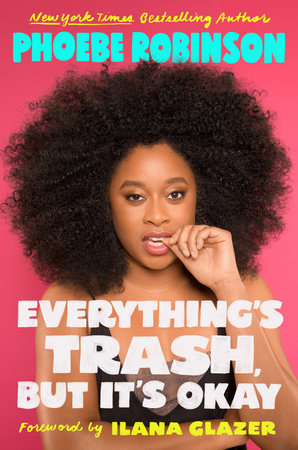
Everything’s Trash, But It’s Okay by Phoebe Robinson

Written by , Posted in Reviews

Four Stars

Best for: People who like personal essays and also Ms. Robinson’s style of humor (e.g., loads of hashtags)

In a nutshell: In the follow-up to her first collection of essays, Ms. Robinson shares more of the serious aspects of her personal life (including her financial challenges, her experience with interracial relationships, and the failures of feminism) while also telling hilarious stories about meeting Oprah and Bono (not at the same time, but could you even imagine?).

Worth quoting:
“I am also a ludicrous trash fire like the kind you see on Naked and Afraid when people sign up to be in the wilderness when they’re barely capable of troubleshooting Mozilla Firefox, let alone making an actual fire from scratch.”

Why I chose it:
I enjoyed Ms. Robinson’s first book, and this one looked pretty great.

Review:
I have to admit that I don’t listen to 2 Dope Queens anymore. It sort of fell out of rotation for me, mostly because some of the stand-up acts were just not my thing, and it’s hard to figure out how to fast-forward the right amount on a podcast. But that doesn’t mean I stopped enjoying Jessica Williams or Phoebe Robinson. So when I saw Ms. Robinson had a follow-up book out, I knew I wanted to read it.

I laughed a lot while reading this book. Not on every page, but definitely each essay — including the more serious ones — offered something to crack up about. I think her style may not be for everyone, as she tends to employ a lot of ridiculous abbreviations and beyond long hashtags, but for me, it works.

While the book focuses on some things that are indeed trash, I also really enjoyed the sections where Ms. Robinson focuses on what’s gone well in her life. It doesn’t feel like bragging; it’s just more fun to read about the good things. I’m genuinely happy for her.

That said, the serious chapters are well done. The essay on feminism is a great look at the ways women of color often don’t feel supported by white women, and her vulnerability when discussing her financial troubles is relatable to the point that I think it could genuinely help some similarly situated folks.

If you like Ms. Robinson, I think you’ll enjoy this book.

Thursday

18

October 2018

0

COMMENTS

L’art de la Simplicite by Dominique Loreau

Written by , Posted in Reviews

Two Stars

Best for: People interested in some fun home and beauty tips (but only if you skip the section related to health and food, because it is awful). If you’re really interested in a fun minimalism book, just get the Marie Kondo one.

In a nutshell: French author has ideas on how to live a minimalistic life, mostly borrowed from her view of Japanese culture.

Worth quoting:
“Life is far more enjoyable when we cultivate the habit of losing ourselves in our own thoughts: this is a precious gift that brings great happiness.”

Why I chose it:
I love shit like this (usually). I like organizational tips.

Review:
This book is equal parts useful and dangerous. On the one hand, Loreau offers some great points about being present in the moment, about minimizing our possessions, and about the need to focus on one thing at a time. Given the fact that I’m currently writing this review while listening to a podcast and eating breakfast, I can obviously use some help on the latter at least. If that were the entirety of the book, then this would probably be a three-star book for me.

But it’s not. Loreau also jumps into the discussion of physical and mental health, and hoo boy, does she get it super wrong. I mean yes, of course, less sugar is probably a good thing (for most, but not all, people), but her obsession with getting the reader to want to be slim (skinny) is just bizarre. There’s a whole section of affirmations focused on this idea, as though one cannot be fat and happy or “overweight” and healthy. It’s insulting. And if someone had a history of body image issues or disordered eating, it could be triggering.

And then there’s her flippant ideas about mental health and human relationships. She literally says that we should “swap our therapy sessions for a case of champagne.” The fuck? She also thinks we should never be critical of others or complain. Her solution is we should write a lot (good!) but never share our writing. Yes, I’ve seen and understand the thinking of, if you’re upset with someone, writing them a letter to get it all out and then burning the letter. But this feels different. I think that if Loreau were in charge of the world, there would be no negative or critical analysis of anything.

So, this book failed as a Brain Candy read because it wasn’t just fun and fluffy. But I chose it for that, so I’m stuck with it.

Monday

15

October 2018

0

COMMENTS

Wicked by Gregory Macguire

Written by , Posted in Reviews

Two Stars

Best for: People who like fantasy. So, apparently, not me.

In a nutshell: It’s billed as the back story of the wicked witch of the west. Instead it’s a convoluted mess of a book that I could not follow.

Worth quoting:
“Galinda didn’t often stop to consider whether she believed in what she said or not; the whole point of conversation was flow.”
“I don’t dress for your approval, boys.”

Why I chose it: I initially tried to read the Audrey Hepburn book Alabama Pink reviewed, but after about 80 pages it still felt like homework. I thought this would be a fun read.

(Narrator: It was not.)

Review:
I think this solidifies my thought that Alabama Pink and I would not have belonged to the same book club. I absolutely hated the Cannon Book Club pick by Craig Ferguson (seriously, it’s so bad), and of the remaining dozen books to review for this square, none really caught my eye. I tried the Audrey Hepburn biography and it was as dry as a desert and just as monotonous. I realized that Wicked was an option, and given how popular the musical is, I assumed this would be a fun, interesting read.

Sadly, I assumed incorrectly.

I think part of this is because I just don’t enjoy fantasy that much. I don’t like having to learn a new vocabulary, or new worlds. Having to memorize the geopolitical landscape of a fictional world just isn’t generally my favorite thing to do. So clearly this isn’t the book for me.

I also think that it isn’t particularly strongly written. I mean, I’m sure my opinion is wrong, and someone out there could explain to me how it is factually a masterful book, but clearly I missed something. In fact, when I finished, I went back to read the Wikipedia entry about the book, and holy shit. Plotlines were discussed that I didn’t even recognize.

Books shouldn’t feel like chores. At least, I don’t think they should. And I don’t mean they shouldn’t be challenging, or tough, or interesting. I’ve read many books that are slow reads, that I need to concentrate on deeply, and that have many layers to explore. But those books don’t feel like things I’m trying to get through so I can get to something better. Sadly, this one did.

Monday

1

October 2018

0

COMMENTS

Fear by Bob Woodward

Written by , Posted in Reviews

Three Stars

Best for: I’m not sure. I guess, anyone from the US who wants a little bit more of the story?

In a nutshell: A bunch of people who have worked in (and possibly still do work in) the White House tell their tales of a completely inept President and some horrifying policies.

Worth quoting:
“In the car, Trump described his advisers, ‘They don’t know anything about business.’”
“Trump gave some private advice to a friend who had acknowledged some bad behavior toward women. Real power is fear. It’s all about strength. Never show weakness. You’ve always got to be strong. Don’t be bullied. There is no choice.”

Why I chose it: This seemed like a sad, appropriate choice for the BINGO category, and also something I should probably read.

Review:
Meh. I don’t think this book was that interesting. I mean, from a historical perspective, it’s an important book. And the fact that the journalist was able to gather such detailed insight into this presidency and administration is amazing and necessary.

But it’s not a good read.

It’s basically like reading a diary. There’s no real through line at all. I guess maybe that’s what happens when you write the story while it’s still unfurling itself? The main point is that Trump is just woefully inadequate and obviously completely unqualified to do much of anything, let alone run the government of a nation of 350 million people. Also, he’s a racist. And very, very lazy. And a great example of why you don’t want a business leader running the government.

There! You don’t have to read this.

A couple of complaints I have, and why I chose the title to this post that I did. Obviously Bannon was a source, as was Porter. You know, the white supremacist and the wife beater. And I get that they had insider information that Woodward wanted to tell the story; there were just moment throughout the book where I almost forgot what horrible people they are. And while some people might think that’s a good thing, to get the full story, I think that’s a bad thing. Because I think we need to recognize that everything Bannon does is colored by his white nationalist views. His motivation is clear, but other than his introduction and a couple of sections on ‘globalization,’ it could be easy to forget what a horrible person he is. And I’m not okay with that.

Additionally, the last chapter focuses primarily on Mueller, and seems to be arguing that Mueller has nothing (at least, that’s how I read it). It obviously comes directly from Trump’s attorney Dowd, who is trying to portray himself positively. Whatever, it’s not surprising that someone might have some selfish reasons for communicating with Mr. Woodward. But what frustrated me was his repeated claim that Trump “doesn’t have time” to participate in the Mueller investigation. A claim that isn’t refuted, but is clearly wrong. Trump DOESN’T DO ANYTHING. I mean, he does a ton of horrible things *cough* Kavanaugh *cough*. But it doesn’t take him any time at all. He doesn’t even start his day until 11 AM. He’s golfed something like 200 days that he’s been in office. He has plenty of time.

As I said, the book is likely very important, but you’ve probably gotten as much out of it as I have if you listened to the evening MSNBC shows the week it came out.

Friday

21

September 2018

0

COMMENTS

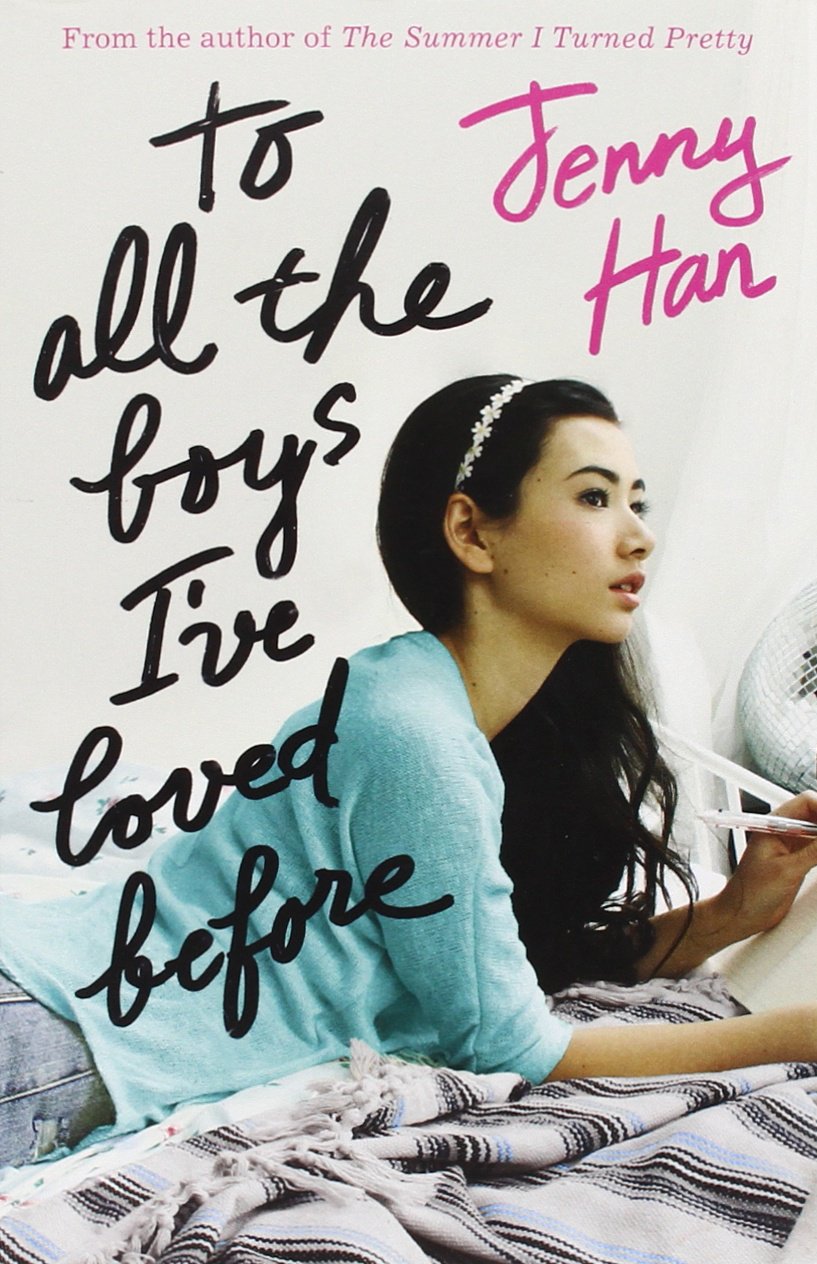
To All The Boys I’ve Loved Before by Jenny Han

Written by , Posted in Reviews

Four Stars

Best for: Young adults.

In a nutshell: Lara Jean writes letters to boys as a way to get over them. Somehow, they get sent. Yikes

Worth quoting: “It’s funny how much of childhood is abut proximity. Like, who your best friend is is directly correlated to how close your houses are; who you sit next to in music is all about how close your names are in the alphabet. Such a game of chance.”

Why I chose it: The Netflix version of the book has been getting great reviews, so I figured I’d check out the book. After accidentally ordering the German-language one, I finally got my hands on it in English this week.

Review:
*Minor spoilers*

A few months ago, my mother and I were talking on the phone and she shared that while she was cleaning up in my old room, she ran across a letter I’d hidden in a book. It was apparently something I’d written in middle school, and was to a boy who I don’t know anymore, but who I definitely remember having a crush on. She said she didn’t read it, but who knows. Regardless, when she told me about it, laughing, I told her to shred it. I was MORTIFIED.

Guys, I’m 38. That letter was written at least 24 years ago. Even typing it out now, I’ve got slight butterflies in my stomach, because it would have been humiliating had it ever gotten to its intended recipient.

Which is all to say – holy shit, does Lara Jean handle herself amazingly well when the letters she’s written get out. Luckily, none of the guys she sends them to are total assholes, which I guess helps. But still, I think the biggest take-away from this for me is that she doesn’t just immediately disappear into herself; she takes back what control she can to try to fix the situation. I think that sends a good message to readers.

As far as the film is concerned, I think the changes they made make sense, but it’s odd to see Josh with so little screen time and Peter with so much. Also, I did not picture John Corbett as the dad, but he does a great job. The ending is a bit more Hollywood than the book, but again, I get it. They had 100 minutes; they made it work. If you had to pick one or the other, I’d say it’s about even for me, but I think the book every so slightly wins out.

Saturday

8

September 2018

0

COMMENTS

Snowblind by Ragnar Jónasson

Written by , Posted in Reviews

Four Stars

Best for: People who enjoy an interesting mystery set in a different country (unless you’re from Iceland, in which case, people who enjoy an interesting mystery).

In a nutshell: Ari Thór is about to finish police school and has been offered a posting in a very small, very northern town in Iceland, starting right before winter arrives. Someone has died, and he suspects murder. But the rest of the town isn’t so sure.

Worth quoting:
“She was a prisoner of her own prosperity, here in this spacious detached house in a quiet neighbourhood, where people paid to cut themselves off from the world’s problems.”

Why I chose it: I visited Iceland this summer (it was amazing and I can’t wait to go back), and of course had to buy a book while I was there.

Review:
I read this book in a day and then immediately went online and ordered the other four books in the series. So, there’s that.

I enjoy a good mystery — I’ve just never really known where to go to find one. A couple of years ago I got into Stephen King, but I’m not big on supernatural components, and wasn’t sure when it was going to pop up in his writing, so I’ve mostly stopped. I used to read John Grisham books (more thriller than mystery, I guess) when I was younger, but haven’t picked one of his up in years (is he still writing?).

For me, this is a good mystery. There are a lot of characters, but not so many that I can’t keep up with them. There are some red herrings, but they aren’t ridiculous. However, I’m not sure if there is enough there that one could actually figure out exactly what really happened, so while the reveal is satisfying for sure, there is a very little bit that one might suggest comes out of left field. Regardless, it was an enjoyable read for me.

As I’ve made clear (https://cannonballread.com/2018/08/im-annoyed-you-all-made-me-read-this/), I don’t read nearly as much fiction as non-fiction (I just checked, and I’ve read 100 fiction books since starting with Cannonball Read 5, and 297 non-fiction books), and generally I don’t pick books with male protagonists. I also am leery of male writers, as the women they write (if they include them at all) are often superfluous to the story, or outright offensively stereotypical.

Mr. Jónasson’s writing didn’t fall into that category for me, thankfully. While his main character is a young man, there are women who feature prominently in the book. They don’t all exist just to satisfy or move forward the men in the book. Because of Jónasson’s writing choices, many of the women get at least one point-of-view chapter, and I think he does a good job of creating an interesting community of characters that I wanted to learn about.