ASK Musings

No matter where you go, there you are.

Books Archive

Friday

12

December 2014

0

COMMENTS

An Astronaut’s Guide to Life on Earth

Written by , Posted in Reviews

I got this from my sister for Christmas last year. The only profession I can recall really wanting (as much as little kid wants anything) was astronaut. Of course I didn’t actually do the things one would need to do, like join the military, to do that (and my vision would have disqualified me before anything else did). But I still talk about going to space someday.

This book is different from Mary Roach’s “Packing for Mars” in a good way: it’s told from the perspective of an astronaut from Canada who has been to space three times, including as commander of the International Space Station. The book is a memoir of his time preparing for, supporting, and traveling to space, and is framed as a way to be successful in life on Earth.

He makes some great observations, including a chapter on sweating the small stuff (you should) and treating the things that lead up to the big events (going to space) as just as important as those big events. It makes sense – if everything is focused on these large events that may or may not happen, and that’s all that is seen as worthwhile, everything else (the vast majority of life) will seem like a waste, or sad. And while it might not be this dire for all of us, his advice of being as prepared as possible and thinking about the ‘next thing that will kill me’ can be helpful too.

I also really liked his discussion of being a minus one, a zero, or a plus one. His idea is that we are all one of those things in each role we fill, and those who come in aiming to be a plus one when they are new on the scene tend to end up as a minus one. He suggest we all aim to be a zero (someone who doesn’t screw things up, but isn’t the champion), and by doing that, as we develop expertise in the area, we eventually will end up being a plus one.

I think that with many of his suggestions you could argue that there is a downside (if you’re focused on the small stuff, how do you look at the bigger picture), but I also think it depends on perspective. In that example, you look at the big picture but then break it down into much smaller steps to complete to get there, and care about each of those steps. Which actually seems to match most of the advice people give with things like goals and resolutions. My goal might be to buy a house, but I can’t just say that and then it happens. There are a lot of smaller steps involved, and each of those involves smaller steps, and it makes sense to lay them out and work at doing those steps well.

I’d recommend this book for sure – it was a pretty quick read for 300 pages, and his writing is interesting and vivid. If you aren’t going to get a chance to read it, though, please check out the video the author put together while on the ISS. You may have seen it before. It’s pretty great.
 

Wednesday

10

December 2014

0

COMMENTS

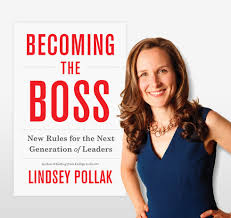
Becoming the Boss

Written by , Posted in Reviews

Four Stars

boss

I’m doing decently well in my career, but until this year I haven’t really supervised anyone full time. My first employee is young, and eager to learn, and I want to figure out how to be a good manager for her while also ensuring the work gets done well.

So I went in search of a good management book for someone like me. Let me tell you – the business and management section of most bookstores is bleak. It’s like the self-help section (odd cover art, weird fonts, bizarre titles), but without the soul. However, this book stood out as one that seemed less distressing and focused on money. Ms. Pollak has built her career providing advice and coaching to others, and with this book she is targeting the millennial generation, as they are the ones starting to step into leadership roles for the first time. Now, I am technically Generation X, but a lot of what she shares in this book still applies.

She starts with a history of business and management philosophies, which is a good place to find more books to read on this topic. She then moves in to ways to ‘learn,’ ‘lead,’ and ‘last.’ She has great suggestions on social networking, managing conflict, and different management styles. The way she presents the information worked really well for me; when I finished reading it I went through and copied down all the parts I really wanted to remember into a book so I would follow up on the items. I’m not going to end up doing everything she suggested, but I feel good about the ones I plan to pursue.

My only complaint is this one section, where she talks about outsourcing what you can. “If it will save you time for more important personal or professional priorities, why not hire a virtual assistant or intern to take care of tasks such as grocery shopping, scheduling haircuts and doctor’s appointments, running errands, hanging your new curtains, or even doing your holiday shopping?” Virtual assistant? Sure. But intern? I disagree. An intern should be learning about whatever field they are working in, so unless they are interning as a virtual assistant, suggesting people get one to hang curtains strikes me as inappropriate.

Despite that misstep (at least she didn’t suggest hiring an UNPAID intern), I feel good recommending this to others looking for a not-cheesy management book.

Saturday

6

December 2014

0

COMMENTS

Sustainable Happiness

Written by , Posted in Politics, Reviews

Three Stars

I subscribe to Yes! magazine. If you aren’t familiar with it, it is a a great quarterly magazine that looks at the issues facing our world from the lens of trying to actually address them. Where some magazines just talk about the problems, this one tells stories about people who are actively solving, or trying to solve, them. When I got an email telling me they’d put together a book called “Sustainable Happiness,” I decided to buy it.

It’s not exactly what I was expecting – instead of a book about simple living and making a different in society, with a clear narrative, it instead is more of a grouping of some of their past magazine articles. Which isn’t a problem – I review Bad Feminist just a few weeks ago, and many of the essays in it had already appeared in other places – but it didn’t totally work for me. Some of the essays are really interesting, like the ones on restorative justice and equity, but because of the nature of magazine articles, the chapters leave me wanting a lot more. I feel like books can serve as a way to go deeper into some of the issues that magazine articles usually don’t, but this book missed that opportunity.

That said there are some great reminders and take-aways. The Tech Sabbath article is one I read before, and had toyed with incorporating. Re-reading it makes me want to pursue at least one day a month where I don’t use my computer or smartphone or tablet, and just spend the day reading, walking, or talking with friends. However, there are a couple of essays that feel a bit out of place, like the one on porn addiction (seriously). The magazine is definitely worth checking out, and this book is a good introduction to it, but if you already read the magazine, I don’t really see the need for the book.

Wednesday

3

December 2014

0

COMMENTS

Being Mortal

Written by , Posted in Reviews

Five Stars

“A colleague once told her, Wilson said, ‘We want autonomy for ourselves and safety for those we love.’ That remains the main problem and paradox for the frail.”

The above quote sums up beautifully much of what Dr. Gawande discusses in this really lovely, interesting and motivating book. Being Mortal focuses on how modern medicine has failed us in that it can keep people alive much longer than it used to, but often at a very serious cost. His focus is primarily on the elderly, but he also includes the seriously, terminally ill in this exploration.

Think about the above quote. We all want to do what we want – to have the freedom to decide when we will get up in the morning, what we will eat, and who we will spend time with. But, when it comes to our loved ones, it seems that so often what we most want is for them to be safe. It is that concern that has led us to do things like put people into nursing homes to keep them safe from falls, even though they are much more miserable. As long as they are safe, that’s all that matters. But Dr. Gawande makes the very compelling argument that the safety isn’t the primary concern, or shouldn’t be. Allowing people to live meaningful lives, whatever the person’s own definition, should be our concern as people age or experience the end stages of a terminal illness.

The book does a great job of illustrating how doctors really shy away from having the frank conversations with their seriously ill patients. They provide information, but that information is often based on what to do to lengthen life, not improve the quality of it. Taking a page from the palliative care / hospice movement, Dr. Gawande advocates for asking the hard questions, like what do the patients fear most, what is the quality of life they’d be willing to tolerate, and similar questions, to really get at the heart of their concern.

Dr. Gawande also looks at how, especially with the elderly, we focus too much on keeping them safe as opposed to happy. He provides the back story on the nation’s first true assisted living facility, where residents were allowed to do things like lock their doors. Yes, they might fall, but the staff was dedicated to providing whatever support services were necessary to allow these residents to keep as much independence as possible. It is amazing when you really think about how much we focus on things like fall prevention (which is important, obviously), but not on really figuring out ways to prevent the falls WHILE allowing people access to the things in their lives that matter, like deciding when to get out of bed in the morning.

I strongly recommend this book, especially for those who have parents who are elderly, or for those who care about the quality of life of seriously ill people. It asks us to reframe our thinking, and really consider what it is that we value, and how we would want others to take that into consideration as we got older or sicker.

And with that, I complete my second Cannonball Read.

Sunday

30

November 2014

0

COMMENTS

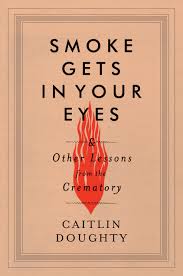
Smoke Gets in Your Eyes

Written by , Posted in Reviews

Five Stars

smokegets

Last year I reviewed a book about a forensic anthropologist, where I mentioned I do work related to death. It is one part of what I do, and (at least for now) has never actually involved me providing after-death care, or even arranging for it. It’s a possibility, though. And it is a field that I find unendingly interesting.

I can’t remember who recommended this book to me, but I’d like to say thank you. Its premise is one young woman’s experience working in a crematory. Most of the book – I’d say maybe 70% – involves stories from her time there, seamlessly woven with interesting notes about how different cultures have handled death of the millennia. She does a really fantastic job at this, especially since this is her first book. The book takes a bit of a shift towards the dark about three-quarters of the way through (I know, how much darker can it get? It’s a book about death! But it does), but it finishes up nicely.

Ms. Doughty’s book points out all of the ways that we have turned death into something to be hidden and feared. This is a relatively new construction – at least the hidden part. Many cultures have feared death forever, and some have just seen it as a way of life. Ms. Doughty, while a part of the death care industry, learns through her experiences that she wants to provide a different way of understanding and recognizing death. I’ve not yet read any of her blog posts (http://www.orderofthegooddeath.com/) but I plan to, because I find her perspective interesting.

I bought this book at 1 P.M. today; I’m writing the review just before 6 P.M. I literally only put the book down to use the bathroom and to fold some laundry. That’s it. And at 240 pages, it’s not a short book. But it’s an interesting one, and one that I think has value not just for those who find the death care industry interesting, but for those who think that maybe there’s something missing from how we handle death in the U.S.

Sunday

30

November 2014

0

COMMENTS

Bad Feminist

Written by , Posted in Feminism, Reviews

Four Stars

bad-feminist-roxane-gay

I’ve heard many people reference this collection of essays, to the point where I sought out the author’s twitter feed so I could get a feel myself about what her writing was about. After having enjoyed her (often random) tweets for a while now, I finally picked up her book. Well, I downloaded it. And now I’m mostly just mad that it took me this long. I really should have just read it the second I heard about it.

Ms. Gay writes about many different cultural topics throughout this book, each fitting loosely into the categories of gender and sexuality; race and entertainment; politics, gender, and race; and ‘me’ (the author). I appreciate the fact that I don’t agree with everything she says in every essay – that’s kind of the point. Not that the author expects us to disagree with her, but that she owns the fact that she is a complex and complicated person, with many different opinions that don’t always neatly line up. She listens to problematic music, she reads Vogue unironically, and she (gasp!) shaves her legs. She’s a bad feminist.

But she’s not. She’s a fantastic feminist, because she approaches things with a critical eye. It is, in fact, possible to like things that are not good. Her essay on the song “Blurred Lines” is a great example of this: the lyrics are horrifying and basically an ode to justifying rape, bat damn if the song isn’t catchy. She is also able to provide a different perspective than so much of what we see in mainstream feminism. Ms. Gay brings the perspective of not a white, straight woman but of a Haitian American queer woman. That doesn’t mean she speaks for all black women, or all bisexual women, but it does mean that her commentary comes from a place that doesn’t get nearly enough coverage in most of the media out there.

For some reason I had some trouble with a few of the earlier essays. Part of that may have just been the mood I was in. But for me the last 200 pages of the 300+ page book flew by, and I was sad it was over. However, thanks to the interwebs, I can still read her writing, as she is the editor of The Butter, a subsection of The Toast.

Saturday

29

November 2014

0

COMMENTS

The American Way of Eating

Written by , Posted in Politics, Reviews

Two Stars

americaneating

Ms. McMillan decided to explore how food works in the U.S. To do this, she took a decidedly Barbara Ehrenreich approach: she went out and worked in the field. Literally. She chose to seek work in the California central valley as a farm worker, in Michigan as a Wal-Mart supercenter grocery employee, and as a cook at Applebee’s in Brooklyn, New York. She allowed herself a small cushion of funds with each new job to help with finding a place to live in her new cities, but if she ran out, she did what people who don’t have nest eggs to pull from: she took out an advance on her credit card, or just went without.

Each section starts out with a page that lists her hourly earnings, what that would translate to weekly and annually after taxes, as well as what percentage she spent on food, broken down by eating out and cooking at home. As expected, the work she did was hard, the money she earned was ridiculous, and in many cases it was just easier to eat shitty food than to find the money or energy to cook well.

Some of the author’s observations are quite interesting and good to see; her main take-away is that healthy eating isn’t just about the availability of fresh food, as so many campaigns want us to believe (have you had that ‘food desert’ ad, featuring two kids, in an endless loop on Hulu like I have? I now loathe that ad). It’s also about having a solid education in how to cook (which so many of us don’t), a job that provides the wages AND the time and energy to do that cooking, and a supportive public system like adequate healthcare and child care to allow people to cook instead of eating out.

From my perspective, the most surprising thing was how little cooking actually happens at a restaurant like Applebee’s. I spent one summer working as a hostess and busser at a local restaurant, and other than the giant vat of butter we kept cooling in a sink from which we would scoop a dish to bring out to the fancy tables, everything appeared to be cooked and prepared in the kitchen. Not so with Applebee’s. Yikes.

This book is written pretty well. She manages to weave in statistics and other information in well, and I found her sections on Wal-Mart and the private food supply chain to be very interesting. However, and I knew this going into reading the book – why did SHE need to tell this story? A college-educated, white woman? Come on. Couldn’t she have actually interviewed people who had their own stories to tell? I mean, obviously she did do that to a degree, but this was the Tracie McMillan story, and it absolutely did not have to be. I mean, at one point she is hired on part-time at a Wal-Mart outside of Detroit, and all I could think was that she was taking a job away from someone who actually needed it. I couldn’t get over it, and I don’t necessarily think this book needed to be written in this way. I’m not recommending it, mostly because I think there are a lot of other, better ways to learn about these industries, that don’t involve taking jobs away from people who need them, or replacing the voices of poor people, many of whom are people of color, with the voice of a middle-class white woman.

Sunday

23

November 2014

0

COMMENTS

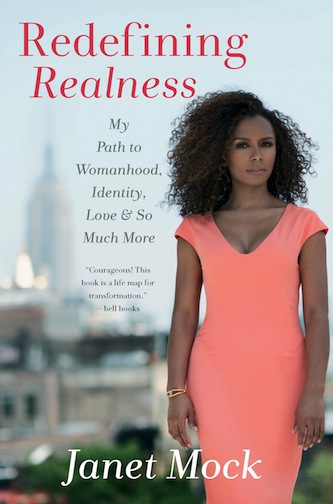
Redefining Realness

Written by , Posted in Feminism, Reviews

Four Stars

janet-mock-book-coverYou might be familiar with Janet Mock. She has been a writer for People magazine (which I unapologetically read every week), and more recently has shared her story of being a trans woman of color in a feature for Marie Claire magazine. I first learned about her where I learn about many things that aren’t necessarily covered on CNN or in the New York Times: on Twitter. I’d see her comments retweeted by other people I follow, and learned about her book when it came out earlier this year. I had originally purchased Lena Dunham’s book to read this month, but exchanged it for this one because I realized I don’t really care what Lena Dunham has to say about things, but I do care what Ms. Mock has to say about things.

This book is a memoir that focuses mostly on her youth, starting with her memories as a young child in Hawaii, through moving to New York City for graduate school. Ms. Mock was assigned the gender male at birth, but never felt connected to that; she felt like a girl. Her story is fascinating, surprising, and at times heartbreaking. It can almost read like fiction, because it was difficult for me to realize that someone could experience what she did and come through it not just to survive, but to thrive.

Ms. Mock faced many disadvantages growing up, but she also recognizes that she had some things that other trans youth do not have. Early on she found her best friend Wendi, who was also trans, and helped her to not be alone at school. She is a very smart person and was able to earn a scholarship for college. Her family was supportive of her as she took more steps to make sure that her actions and appearance matched how she felt – she was not thrown out of her home when she shared her reality with her mother. That’s powerful.

Her writing about accepting who she is, and especially about what it means to be a ‘real’ woman, made a strong impression on me. This idea that we value trans people more if they ‘pass’ for cis people, or that someone is lying if they don’t share that they were assigned a different gender at birth, places cis as the center of ‘normal’ when in reality being cis is just common. This sentence, coming on the second-to-last page of the book, is one I want to embroider and hang on my wall: “We must abolish the entitlement that deludes us into believing that we have the right to make assumptions about people’s identities and project those assumptions onto their genders and bodies.” Spot on.

I should say that I’m not used to Ms. Mock’s style of writing. I’ve read loads of memoirs, but most of them are written by comedians, and thus have a very different feel. I think she finds her stride about three chapters in (although who knows in what order she wrote the book), but I nearly stopped after the first chapter because the writing was so very … descriptive. At times I felt like there was some sort of adjective word count she felt she had to hit, that I was reading a book that suffered from a lot of ‘tell not show’ sentences. It’s not the type of writing I generally like to read, but the story behind all of those words was so interesting and powerful that either I figured out a way to accept the style, or it became less prominent as the book went on. No matter – I’m very glad I stuck with it.

Sunday

23

November 2014

0

COMMENTS

The Perfectly Imperfect Home

Written by , Posted in Reviews

Four Stars

I found this book at this local store called Watson Kennedy, which is the kind of store I could easily spend hours in. It’s the kind of place where everything costs just a little more than it probably should, and where items are organized by color instead of type. It’s the kind of place that sells several kinds of olive oils as well as antique etiquette books. Anyway, the reason I share this is because it’s also the kind of store that leads people to buy books they really don’t need.

This is just such a book, but it was actually a joy to read. It’s a coffee-table-type book filled with lovely illustrations and tips for decorating your home. The tips are great, and only a little ridiculous at times. It’s a well-written and useful book (hence the four star rating), and I found it inspirational. The only problems are that a) I don’t really have a budget to start adding things to our house (although my husband and I both dream of a new couch, and maybe a coffee table that isn’t a $19 shoe rack from Target) and b) we rent our apartment. So a lot of the suggestions – especially ones involving painting walls or hanging a lot of items on the wall – just aren’t practical for us right now.

However! Someday we will figure out a way to buy a place, and at that point I will pull this book out again and look it over. The suggestions about lighting were especially great, which is a sentence that really makes me feel like an adult. I don’t think 13-year-old me would think that I’d enjoy a book with a lot of talk about lamps, and yet I did. If you are lucky enough to be about to buy a house, or trying to figure out ways to decorate your home, I think this is a nice book to pick up.

Wednesday

19

November 2014

0

COMMENTS

Pro

Written by , Posted in Feminism, Politics, Reviews

Four Stars

After the shit show that was the (legislative side of the) election in the U.S. earlier this month, I needed to read a book that would both make me angry and inspire me. I hadn’t heard about this book before I saw it at our local bookstore, which surprises me, as I thought I was on all of the feminist killjoy mailing lists.

Pro is a well-researched, well-argued look at why abortion rights are so important. That “pro” stands for pro-choice, and it is explored from multiple directions and through different lenses. Ms. Pollitt’s main argument is that those who are “pro-life” aren’t actually pro-life, but more interested in policing the sexuality of women. This isn’t exactly ground-breaking; feminists have been saying this for years. But this book differs in that it lays out literally all of the arguments in favor of banning abortion (either at all stages of pregnancy, or at specific stages, or for different circumstances) and knocks each on down, showing the inconsistencies as well as the impacts these views have on very real women.

The book is over 200 pages long but it only has eight chapters, because each chapter is devoted to going really in-depth into an area of discussion. Early on she shares with us the data on U.S. views on abortion, and how they aren’t really that consistent with the actions U.S. voters support. She then explores the idea of “personhood,” and whether those who oppose abortion really do view the blastocyst, embryo, or first trimester fetus as a person with the same rights as the pregnant person (ultimately arguing that they don’t, because of the other actions they take). This is followed by an exploration of whether women are actually people, some myths about abortion, and then the concept that it isn’t so much abortion, but what abortion represents (woman’s increased control of her life) that pro-life people oppose. Finally, she ends with a look at why compromise isn’t actually an option, followed by what it would mean to truly support women as mothers.

The only problem I have with this book is one that I have with any book that talks about reproductive rights, and it is the complete lack of recognition of the trans issues involved. Yes, it is usually women who are the target of laws restricting abortion, but trans men can also get pregnant, and are victimized by these laws as well, and there’s just no mention of that.

The author claims the target audience of the book is people who aren’t really sure where they stand on the issue, and I agree that these folks might find this book interesting. I think it’s also great for those of us who are very clear on where we stand but could use a little additional education.