ASK Musings

No matter where you go, there you are.

Books Archive

Monday

7

April 2014

0

COMMENTS

The Immortal Life of Henrietta Lacks by Rebecca Skloot

Written by , Posted in Reviews

Five Stars

Others have reviewed this for Cannonball Read already, so here are the basics in case you missed it: Henrietta Lacks was a black woman who died at Johns Hopkins, where she had been admitted due to complications from cervical cancer. She had radium treatment at one point, and when she received the treatment, a biopsy of her tumor was taken at the request of a researcher. From there, the cells were cultured and became some of the first that would grow, and keep on growing, in a lab, making them perfect for testing all sorts of things, including the polio vaccine that helped eradicate the disease from the U.S. The problem is that she never knew about this (nor did she consent), and her family didn’t find out until about 25 years later. While researchers and biomedical companies were making history (and money), Henrietta’s descendants were mostly poor, without much secondary education or even basic health insurance.
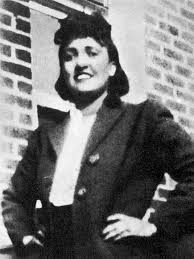
Lacks

The author, Rebecca Skloot, is a white woman who first learned about the “HeLa” cells in high school. She wanted to know more about the woman behind the cells, and spent over a decade writing this book – she tracked down medical records, met with researchers, and eventually was able to spend lots of time with Henrietta’s children and grandchildren, helping them to learn more about the mother they didn’t ever get a chance to know.

This book is fascinating in many ways. The first is just the sheer quality of Ms. Skloot’s storytelling. She weaves the present and the past together seamlessly, finding clever and logical ways to intertwine the research, the history, and the science so that the book flows really well.

It is also a great book for those of us interested in biomedical ethics. Once we part with something that was once connected to us, does it stop belonging to us? Do we have any right to demand that our tissues not be used in ways that we might find objectionable? What about genetic mapping – if my DNA is found to be really helpful in some sort of research, am I obliged to be okay with that research? Are my (hypothetical) kids obliged to be okay with research that is traceable to their genetic code? And can we ever really consent when the alternative to saying “sure, use my cancer cells” may be that they don’t remove the cells? These issues are mentioned throughout the book, but get a more thorough review during the afterward, where one particularly douchey Harvard researcher seems to think that research matters above all else. Which, who knows, maybe he’s right, but he doesn’t make any legitimate  argument about it.

Finally, the book is fascinating in the most important way a non-fiction book like this can be – it tells us about a real, flawed family that has been devastated not just by the loss of their matriarch decades ago, but by the realization that her cells live on in ways they never imagined and didn’t entirely understand in the beginning. It’s a glaring statement about the priorities in this country when a person can ‘donate’ cells that very seriously changed the medical world forever, but her family can’t afford health care for themselves. There’s so much here about racism, classism, and elitism that I could write a thesis on it. But instead I’ll just leave you with the strong recommendation that you pick up this book.

Tuesday

1

April 2014

0

COMMENTS

The Girls’ Bicycle Handbook by Caz Nicklin

Written by , Posted in Reviews

Four Stars

Bicycle

While visiting my sister this past weekend, we spent 90 minutes waiting for a table for a late lunch (that we never got – long story). The restaurant is part of a giant building that also has a coffee shop, an Anthropologie-esque objects area (perfumes and such), as well as a funky book store, where I found this gem. I’ve been contemplating buying a bicycle and, despite the name (ugh, “girls”), was interested enough in the content and the visual presentation to pick it up. I’m quite happy I did.

The book is by a bicycle blogger and business owner who lives in London. While the publisher did translate the spellings to American English, some of the suggested measurements were clearly straight converted from metric – unless the author casually says things like “pick a point 62-98 feet in the distance.” Doubtful. But other than that, the advice is sound. From detailed descriptions of different types of bikes to fit your expected use (as opposed to just walking in and saying “I want to ride … a bike,” which was kind of my plan), to the different types of accessories you might need to be safe, the Ms. Nicklin lays out great suggestions.

The book is peppered with profiles of other female bicyclists who either do interesting things (like cycle around the world) or have their own cycle businesses that specialize in items for female cyclists. Yes, the gendered idea struck me as a bit odd at first, and many of her suggestions are relevant to men, but she does take on things like dresses and fabrics to ride in, or how to avoid helmet hair after the commute to work. But it isn’t just about looking cute on a cycle; it’s about the steps to take to feel free and safe enough to really use this mode of transportation. There’s a chapter on bike security, safe riding and rules of the road, and a really detailed section on cycle maintenance. The author wants women to understand the cycles, and know how to make needed repairs and such on our own when possible. It’s pretty cool.

I’m starting to save up, and am going to look at taking a one-day class through REI. And when I’ve got some money saved, I’ll definitely be taking this book with me as I set out on my way.

Tuesday

25

March 2014

0

COMMENTS

My Sister’s Keeper

Written by , Posted in Reviews

In one version of my future, I attend graduate school so I can get a PhD in Philosophy, focusing on biomedical ethics. I find the topic endlessly fascinating, and full of such interesting and open-ended questions. So I can’t believe that I waited this long to read this book. I’d really like to dive into the subject matter of the book, so if you’re planning on reading it and want to avoid all manner of spoilers, here’s my one sentence review: it’s good, it grapples with interesting issues, and the version on Audible is probably the first time I’ve really enjoyed a novel as an audiobook. Also – don’t watch the movie version (which I’ve been doing while writing this review). It’s just so different, and the choices they make really take away from the story the book is trying to tell.

The basic premise of the book is that Anna is seeking medical emancipation from her parents, who want her to give a kidney to her dying sister Kate. Anna is 13, Kate is 16, and their older brother Jesse is 18. Anna was conceived as a genetic match for Kate after Kate was diagnosed with leukemia at age 2. The book is told in alternating chapters from many characters perspectives: Sara, the mother; Brian, the father; Anna; Jesse; Campbell, the attorney hired by Anna (pro-bono) to take on the case; and Julia, the guardian ad litem who is tasked with reporting to the court on what is best for Anna. The audio book really excels here because each character’s chapter is voiced by a different voice actor, which brings a real richness to the storytelling.

One thing the book does extremely well is telling us Kate’s story without ever giving us Kate’s perspective on things. It’s a bold choice, considering she’s the reason for the situation. But Ms. Picoult knows what she’s doing – she wants us to all to consider what the rest of the family goes through, because they all revolve around Kate and her constant illness. Jesse’s chapters focus on the fact that he hasn’t had really any attention, and that he’s dealt with by becoming an arsonist (perfect choice, since Brian, the father, is a fire fighter). Campbell and Julia have a side story, a history, that both seems a bit unnecessary but also serves to remind us that people have lives that go on outside of this family. The parents’ chapters are heartbreaking and brutal, especially Sara’s chapter where she describes giving birth to Anna. She’s so focused on saving the umbilical cord blood that at no point does she express any interest in her newborn. I don’t doubt that Sara loves all of her children, but I don’t know how she can love them all with the same passion she carries for saving Kate.

Anna’s chapters are challenging because she’s only 13, and she is so torn between loving her sister desperately and wanting a life of her own. Anna’s been called on to save her sister repeatedly, through stem cell donation, bone marrow transplants, and other donations. It’s affected her ability to do things, like go away to summer hockey camp (because her sister might need something from her). Anna and Kate are really close, though, so you know Anna is internally conflicted about wanting to save her sister and wanting a life for herself.

The issues that Ms. Picoult is grappling with in this book are so numerous. Is there something wrong with genetically engineering a child with the express purpose of saving another child’s life? Can the parent love the engineered child in the same way – can he or she ever see the child as an independent being, as opposed to being the one who is responsible for saving the other child’s life? What about other siblings in a sick child’s family? Even outside of all the issues of the sister being asked to contribute to and save the other sister’s life, what happens inside a family where one child is chronically, likely terminally, ill? Is it wrong of the other children to want to have lives, even if their ill sibling can’t? And how can a parent be asked to provide opportunities to the healthy children when they are so focused on saving the sick one? I can’t imagine being in that situation – it seems so horribly challenging, and exhausting, and unfair. And finally, what about the child who wants to make decisions for herself and stop being tied to her sister? It seems so easy to say ‘it’s just a ______’ (blood donation, bone marrow donation, etc.), but really, there’s got to be a limit. And can we expect a child, or a teenager, to pass those limits?

Having read the book, I’m still not sure how I feel about any of these questions. But they’re interesting, and as science progresses, we’re going to have to explore more of them.

Thursday

20

March 2014

0

COMMENTS

I Don’t Know What I Want, But I Know It’s Not This by Julie Jansen

Written by , Posted in Reviews

Two Stars

Hmmm. I can’t tell if this is a bad book, or just isn’t the book that I wanted or needed it to be. I’m in the midst of a bit of a self-improvement kick (and my books this year will likely reflect that), and bought this one during one of my many ill-advised book store visits. It looked interesting, and even seemed to offer suggestions for people like me, who have ‘good’ jobs but just feel like they might be in the wrong career and are looking for something different.

office-space-4

The book starts with a whole lot of self-assessment. Some of it is really interesting and some of it seems to require a whole lot of self-reflection that could mean the book could take a reader months to get through. Some of it feels like a glorified Cosmo quiz, but some of it really did get me thinking about what I want out of the work I do to make money, and what I need to do to get there.

After sixty pages of self-assessments, worksheets and quizzes, the author breaks her advice down into chapters to address common problems people who are unhappy in their work are likely to face:
– Finding meaning in work
– At a good point (financially) and not able to take a pay cut
– Current very negative work environment
– Bored
– Desire to run a business
– Close to retirement

Obviously close to retirement wasn’t really applicable to me, but the rest did, at times, apply to how I’ve felt about my career over the past few years, so I read through them. Each was filled with some more quizzes and attempts at forcing self-reflection, but I think the book tried to be all things to all people and so ended up not giving me enough to work with in any given area. I think it did help me sort through my thoughts on starting my own business, as well as my desire to have a job that makes a difference in people’s lives, but I didn’t finish reading it with any sort of concrete action plan. Maybe that’s on me, or maybe it’s on the book, but either way I can’t really recommend this to anyone who is struggling with where to go in their career.

Wednesday

19

March 2014

0

COMMENTS

I Feel Bad About My Neck

Written by , Posted in Reviews

Three Stars


When I lived in New York, I used to watch Sleepless in Seattle all the time. That and When Harry Met Sally. Now that I’m back in Seattle, when I’m missing New York, I watch When Harry Met Sally, or You’ve Got Mail. No, I don’t have an obsession with Meg Ryan; I have a love of fun, sweet movies that feature two of my favorite cities and have interesting female leads. But there is a common thread across these movies, and that is that they were written by Nora Ephron.

I recently realized that I was spending too much on a monthly Audible.com membership and went to cancel. I was about to lose nine credits (NINE), so I did a quick scan of books and downloaded nine audio books, including two by Ms. Ephron. I figured her work would be interesting, fun, a little on the sweet side, but ultimately satisfying. I was mostly right.

The audio version is a pretty quick one – I got through it on a couple of runs and a few walks to and from work. It wasn’t laugh out loud funny, but it was insightful and amusing. The book is a collection of essays on being a woman. Specifically, the essays are her reflection on being an older woman. She tells stories from when she was younger, but most of those stories come back to how it relates to her thoughts now. She wrote it when she was 64, which is near my own mother’s age, so I also think I was hoping for a little insight into what my mother may be experiencing as she’s gotten older, which I feel like I got.

The stories aren’t mind-blowing, and Ms. Ephron’s reading of it is very slow (she pronounces every word very deliberately), but I’ve always enjoyed hearing these books read by the person who experienced the stories. I feel like it adds something to the experience. In the essay on death, it added a somewhat disturbing note, as Ms. Ephron died in 2012. She seems like she was an interesting person, a lovely friend, and clearly a talented writer. If you’re looking for an interesting read that sometimes goes a little deeper (though not always – there is an entire chapter devoted to her hatred of purses), I’d recommend this.

Saturday

15

March 2014

0

COMMENTS

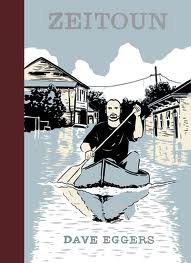
Zeitoun

Written by , Posted in Reviews

Four stars.

While at a friend’s house for dinner last week, a friend lent me this book. This is the same one who turned me on to steampunk, so I trusted her judgment. I found this to be a really compelling, interesting and infuriating book about one component of the horrors of Hurricane Katrina. However, I really wish that I hadn’t Googled Mr. Zeitoun when I finished it, for reasons I’ll share at the end. This review will contain some spoilers, because there is a bit of shift in the middle of the book that I’d like to address.

zeitoun

The book is told alternatingly from the perspective of Mr. Zeitoun, a Muslim originally from Syria, and his wife Kathy, a woman who converted to Islam in her youth. The first part tells of their preparation for the storm, going between their perspectives. Additionally, the book gives us their back stories in pieces during the build up to the storm and beyond. The main thing to know is that the Zeitouns own a painting and contracting company, as well as a few rental properties. They also have four children.

Mrs. Zeitoun and the children leave New Orleans, but Mr. Zeitoun stays behind. He keeps an eye on their house, and checks in on their rental properties as well. He makes it through the storm, and even the levee breech that floods the first floor of his home. Over the next week, he travels around New Orleans in a canoe, helping with a few rescues and taking care of some left-behind pups. But a week after the storm, he is at one of his properties with a tenant and friend, and gunmen storm in.

We learn that he has been arrested, and are given a look at the utter failure of the criminal justice system after Katrina. The unwarranted arrests, the abhorrent treatment, the suspension of all rights of those accused to even know what they are accused of. Mr. Zeitoun was not allowed to contact his wife at all while he was in jail, waiting for a hearing – for over a week she thinks he is dead. Because of his ethnicity, the police tell him he’s suspected of being Al Qaida, or Taliban. It’s utterly absurd, and a reminder that in a disaster, some people rise to the occasion and some people use it as a reason to mistreat others. Unfortunately, that holds true for civilians and military / law enforcement alike, although it seems that those in power are more likely to take advantage of the situation than those without power. One example is an interview with one of the law enforcement officer who arrested Mr. Zeitoun – he tells of how he and his fellow officers would steal fuel and cigarettes from convenience stores because they ‘needed’ that to do their work; meanwhile these same officers were shooting and arresting people for ‘looting’ things that they needed for survival. The double standard is so disturbing.

I’m also disturbed and reminded of how often the public is willing to let law enforcement and the military do what they ‘need’ to do in a disaster, regardless of who they hurt, what laws they break, or how despicable their actions would (or should) be viewed during regular operations. I work in emergency management. Things fall apart. You do have to adjust, but it seems as though so many folks in power use disasters as an excuse to adjust things to they have even more power (I’m looking at you, post-9/11 PATRIOT ACT).

Even more spoilers ahead.

Ready?

Okay. So Mr. Zeitoun is released after three weeks, and the charges are, I believe dropped. I figure that’s the biggest spoiler of all, because the entire second half is a lot of ‘will he ever get out’ storytelling.

One last thing. After finishing the book I googled “Zeitoun” to get a picture of him and his family, and the first couple of links are to the website, and the book on Wikipedia. Disturbingly, however, this was the third link down: Zeitoun found not guilty on charges he tried to kill his ex-wife. Holy shit, guys. So they divorced, he was charged with beating Mrs. Zeitoun at one point, and then charged with trying to kill her. Yikes.

Saturday

8

March 2014

0

COMMENTS

One More Thing: Stories and Other Stories

Written by , Posted in Reviews

Two Stars

Hmmm. So, there are definitely parts of this book that I really, really enjoyed. Parts that either made me laugh out loud or that were funny without being chuck funny. But other parts … I’m unclear if my humor is just not the same, or if I wasn’t getting it, or if I’m not the target.

I picked the audio version, which was read not just by Mr. Novak (of The Office fame), but Rainn Wilson, Mindy Kaling, Katy Perry, Lena Dunham and others. That definitely made the experience more enjoyable. The first story had me laughing pretty hard right off the bat, but I can say that I think that first story is actually one of the stronger ones, so perhaps if you get a chance, check the book out at a book store and read that first story. If you don’t see the humor in it, the book probably isn’t for you, as it doesn’t really get better from there, in my opinion.

There is definitely some brilliance in this book – including chapters that are just a few words long (the one on carrot cake may be my favorite two sentences in literature, if only because they so perfectly describe my feelings on the subject). At times I got the sense that he was going for a David Sedaris feel, but ended up sounding more like David Sedaris now (which I don’t enjoy), as opposed to early David Sedaris (which I enjoyed and felt was both funny and insightful). I don’t want to bash the book as, again, I may not have been the target who would really enjoy it, but I want to set expectations for people who are thinking that it’s someone who wrote for The Office, so clearly it will be well done. It’s fine.

Tuesday

4

March 2014

0

COMMENTS

A Feast for Crows: A Song of Ice and Fire Book 4

Written by , Posted in Reviews

Oooooh boy. So this one took me awhile to get into again. I think a lot of people are big fans of how each book tends to start with this sort of long chapter that focuses on people we don’t know and won’t likely see again (or see much of any time soon). I … am not. I think in retrospect those chapters are an interesting way to set the tone of the book, but it also means that I’m going to really need to struggle to get through it to get to the characters that I know and love.

AFeastForCrows

Without getting into further detail on this, I have to say that while I don’t think book was as full of “HOLY SHIT” moments as book three, it still definitely has some very strong and shocking moments. I didn’t really realize it until the end, but Mr. Martin only tells the next chapters for about half of the well-known characters in this book. I won’t say which ones, but there’s a cute little note at the end, where he says that he could have either told half of everyone’s stories, or a book’s worth of half the stories, so the next one (book five, which thankfully is already out) should tell what was going on with the rest of the characters during this time.

I think there’s definitely some good character development in this one, especially for one character (I won’t say which because given the propensity for people to get killed, it seems like mentioning that someone is still alive is now considered a spoiler), who I think Mr. Martin has done just a fabulous job with. I want to get started on the next book, especially before season five (plus I really want to go back and read Joanna Robinson’s spoiler posts from Pajiba), but at over 1000 pages I think I need to take a break before tackling that tome.

Monday

3

March 2014

0

COMMENTS

Blindspot: Hidden Biases of Good People

Written by , Posted in Politics, Reviews

Three Stars

blindspot

You’re not racist, right? I mean, if given two equally qualified candidates for a job you were hiring for, you’d be just as likely to give it to the Black person as the White person, right? And you’re in favor of same sex marriage, so you definitely don’t give any preference to straight people, right?

Not so fast. The premise of this book – which is backed up by some pretty solid science – is that we all hold biases in our unconscious minds that influence what we do. Because they are unconscious biases, it’s hard to imagine we have them, and even harder to figure out how to address them. I mean, it’s one thing to make it illegal to ban people of a certain race from eating in one’s restaurant; how do you fix something that is so deep in your brain you don’t even know it is there?

The concepts in the book are mostly supported by the IAT, or Implicit Association Test. The book goes into much greater detail, but here’s the basic idea: when presented with a variety of words, is it easier for you (as measure by how quickly you do it) to sort them into the category associated with positive characteristics when that category is also associated with a specific race? So, if the option is Black/Positive and White/ Negative, and the word ‘happy’ pops up on the screen, is your reaction time sorting that correctly going to be slower than if the options are Black/Negative and White/Positive? If so, you have an unconscious preference for White people.

It’s a pretty fascinating test and, like I said, has been validated many times, and expanded beyond race to measure all sorts of different possible biases – I recently took the test to see if I had an unconscious negative association regarding people with disabilities. I did not – huzzah! You can play around with it yourself – but man, be prepared to be disappointed. The vast majority of folks who take the race test show at least some unconscious preference for White people. It’s a bummer.

So, what’s the point then? How do we fix this? That’s basically the problem with this book – there isn’t a lot here by way of suggestions as to how to fix this. I can think of some that are alluded to, such as vastly increasing the positive representations of people of color in the media so that those negative associations don’t creep into our minds. But being really aware of these biases seems to be a good place to start. That, and not being so defensive about whether there really still are biases out there. Just because you live in an area where people don’t call Black people the n-word or non-straight people the f-word doesn’t mean there aren’t unconscious biases at work.

Thursday

27

February 2014

0

COMMENTS

Start With Why

Written by , Posted in Reviews

Two Stars

During a training on equity and social justice, the leader showed a bit of Simon Sinek’s talk on “Starting with Why”. She only showed a couple of minutes, but I was intrigued enough to buy his book.

The Good
The underlying concept is interesting and I think pretty useful. While the book is focused on success in the business world, I think the concept is sound when applied in other sectors and even one’s personal life. The theory is this: most companies can say what they do (build computers), and most can communicate how they do it (using great technology, sturdy resources, intelligent staff), but the truly successful companies can say WHY they do what they do. ‘Starting with Why’ means looking beyond the traditional ‘I do it to make money’ concept to pinpoint what your real reasons are for doing something. Once that’s been identified, you should make choices that align with your ‘Why.’ The big examples he uses to illustrate this are Southwest Airlines, Apple, and Wal-Mart (before the founder died). As far as concepts go, it’s not bad.

The Bad
But the bad is so bad. On my e-reader version, the book is 246 pages long. It wasn’t until page 108 that a woman appeared. All of Mr. Sinek’s examples were of cis men who started businesses or were leaders; the vast majority of them were also white men. Martin Luther King Jr. does get discussed, but other than him? It’s like a nightmare – a bunch of white dudes talking about how awesome they are.

The first mention of a woman is a woman in the military, too. So he didn’t find a woman who had started a company that fit his theory; he had to look in the military. Hmmm. His second reference to a woman comes another fifty pages later, and it’s not even a reference to an actual human. You know how sometimes authors alternate the generic pronouns they use when illustrating a point? “If someone wants to do x, he should…” or “If someone wants to do y, she should…”? Well, only once did I catch Mr. Sinek using a female pronoun … and it was in a situation describing being emotional. REALLY?! Dude. It’s like satire at this point. Very few women mentioned, and when mentioned it’s focused on non-business work or on emotion.

There are also some fairly white-savior moments, like when he was describing an organization founded to ‘help’ kids in the Middle East ‘realize they can do more.’ Um, hmmm. Perhaps that organization was different than described, but in reality it sounds like a pet project a rich white kid decided to do without really looking at what the community needed. Not exactly something to shout about. He also uses such demonstrably false phrases as “Working hard leads to winning.” Sometimes is does lead to winning, but sometimes (many times, depending on where you start in life) it does not.

Overall
As I said, the concepts aren’t bad, and I actually plan to apply them to my working life. But I definitely do not recommend the book. Watch the Ted talk. Maybe see if he has an article out there you could read. But save yourself the headache of plowing through an unintentionally whitewashed, male-centric version of history as told by Mr. Sinek.