ASK Musings

No matter where you go, there you are.

CBR15 Archive

Saturday

6

May 2023

0

COMMENTS

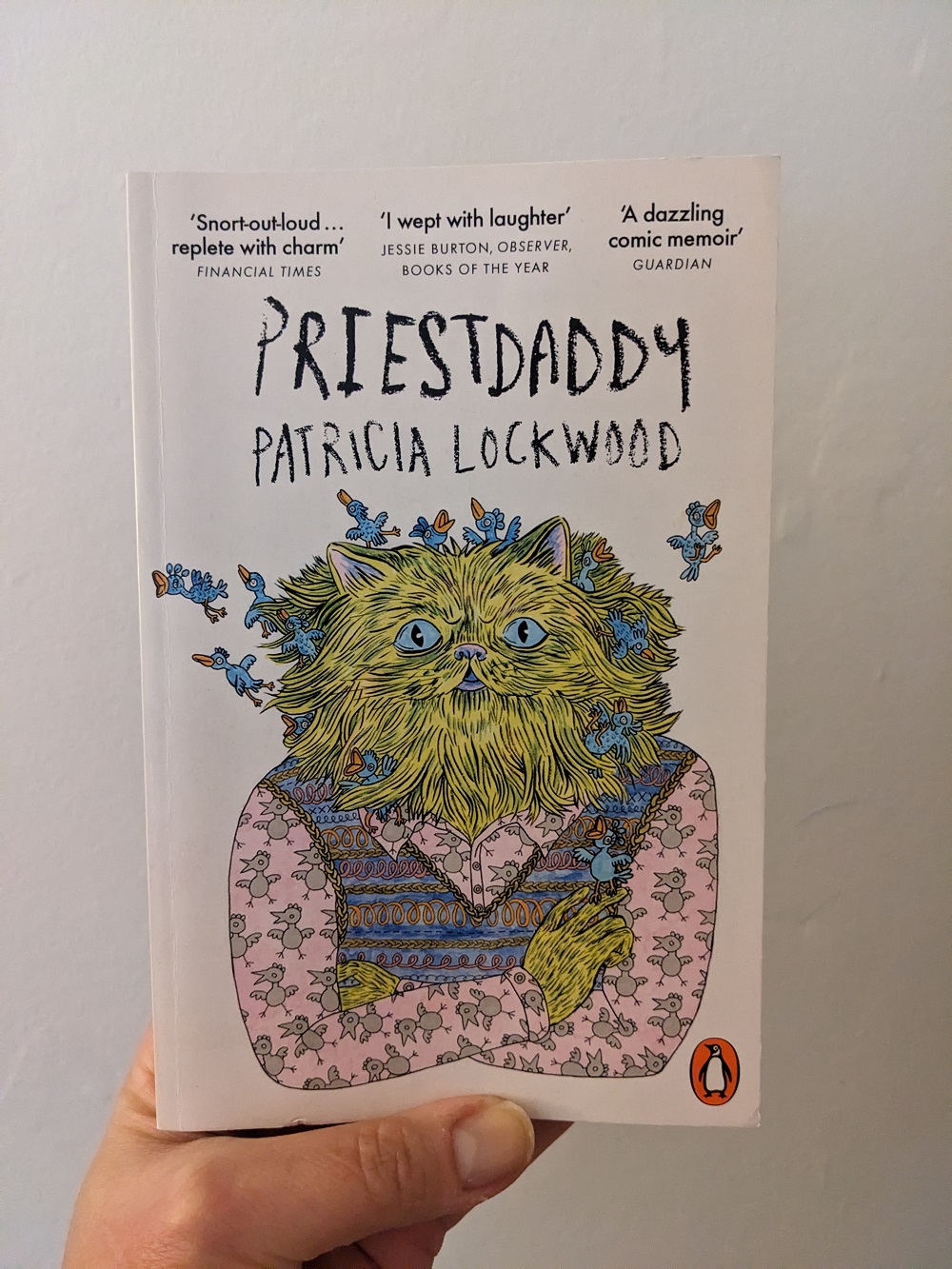
Priestdaddy by Patricia Lockwood

Written by , Posted in Reviews

Three Stars

Best for:
Those who enjoy well-written memoirs that involve a religious upbringing.

In a nutshell:
Author Lockwood was raised by her father, a Catholic priest. Unusual, no?

Worth quoting:
“I know all women are supposed to be strong enough now to strangle presidents and patriarchies between their powerful thighs, but it doesn’t work that way. Many of us were actually affected, by male systems and male anger, in ways we cannot always articulate or overcome.”

Why I chose it:
This was recommended to me at a bookstore after a discussion of the types of books I enjoy.

What it left me feeling:
Vaguely annoyed.

Review:
On paper (heh) this is the type of book I enjoy. It is extraordinarily well-written; Lockwood has a talent with words. It involves someone who has rebelled against the expectations put on them. But something about this book just wasn’t for me.

Lockwood’s father started out as a member of clergy of a different religion, one that allows the church leaders to be married. He then decided to convert to Catholicism, when he already had a wife and some kids. Apparently if one converts and passes some tests, one can be a married Catholic priest.

Obviously, there aren’t many people like Lockwood’s father, so her experience isn’t one people can necessarily directly relate to. However, as someone who is no longer a part of the faith that her family practices, I’m sure her story is relateable to many. And it is impressive that despite not sharing some many strong beliefs with her father, mother, and siblings, her family is still supportive of her. So supportive, in fact, that the majority of this book is written while Lockwood is living with her husband at her parent’s home after some back luck with employment.

I think the challenge I had with this book is that Lockwood’s father is not someone I can like or support. He’s misogynistic and just strikes me a deeply unpleasant and destructive person. He doesn’t treat his wife well, and it turns out he was publicly supportive of a Bishop who moved sexual predators around diocese. To Lockwood’s credit, she discusses this, but that doesn’t make it any more understandable as a reader.

I also don’t believe I had the same reading experience as those who provided some of the blurbs – I did not weep with laughter, though I did chuckle. I’m not sure I’d call this a ‘comic memoir;’ I think it’s more a lyrical memoir with some funny moment but also some deeply disturbing ones.

I’m not disappointed I read this book – as I said, the writing is fantastic – but it just wasn’t for me.

Recommend to a Friend / Keep / Donate it / Toss it:
Donate it.

Saturday

6

May 2023

0

COMMENTS

At Atlas of Extinct Countries by Gideon Defoe

Written by , Posted in Reviews

Four Stars

Best for:
People who enjoy clever bits of history, and geography.

In a nutshell:
Defoe explores the origins and collapse of 48 countries.

Worth quoting:
“Note: if your plan involves the British coming to your rescue at any point, then it is a Bad Plan. Can’t emphasise this enough.”

“…countries are just daft stories we tell each other. They’re all equally implausible once you get up close.”

Why I chose it:
I’m a sucker for geography and weird historical facts.

What it left me feeling:
Amused.

Review:
This book was exactly as described, and very entertaining. Obviously a book that deals with real people and real lives has to strike a balance, and Defoe does that quite well.

Each country is covered in five or fewer pages. Each entry includes the now-defunct nation’s population, capital, languages, currency, cause of death, and what nation it is part of today. It also includes the location not in latitude/longitude, but by using three words, as part of the What 3 Words system.

Defoe doesn’t hold back judgment of the people who declare these nations, or destroy these nations. He offers commentary and wit, but also educates the reader. And the very short entries make it a great book to read before bed, when you want to learn something but still be entertained.

Recommend to a Friend / Keep / Donate it / Toss it:
Donate it

Wednesday

26

April 2023

0

COMMENTS

Natives by Akala

Written by , Posted in Reviews

Five Stars

Best for:
White people living in the UK; anyone who likes to suggest that there isn’t racism or classism in the UK.

In a nutshell:
Journalist and rapper Akala discusses racism and classism in the UK and the places it colonized set against the memoir of his life growing up as someone racialized as Black in the UK.

Worth quoting:
I listened to the audio book so no specific direct quotes, but I can say that I did take a lot of notes in my notes app.

Why I chose it:
Growing up in the US I was barely taught anything about the history of racism and the current racism there. And definitely learned nothing about racism in the UK.

What it left me feeling:
Better educated

Review:
This book is part memoir and part well-researched political discussion of race and class. It isn’t so much prescriptive — Akala isn’t writing a book about how we end race and class disparities in the UK, though he definitely touches on how things can be improved — as it is descriptive. It comes across as extremely well researched, and the arguments puts forward (especially when pointing out hypocrisy) make sense.

Akala was born to a white mother from the outer islands of Scotland and a Black father from the Caribbean. He discusses the education he received in Camden, a part of London, and the racism he encountered from teachers there. He also discusses what is was like as a Black teen, and what he and some of his peers went through, including interactions with racist police and less-than-legal activities.

These stories of his youth and young adulthood serve to tell us more about his life experiences, but also serve as jumping off points to discuss broader political and sociological issues. He touches on so many topics, from the abandonment of the Windrush generation, to the fight against apartheid, to society’s desire to only focus on racism when it’s the type typically engaged in by poor people (as opposed to the institutional racism of the wealthy ruling class).

He has a great chapter debunking a lot of absurd thoughts and comments, such as playing the ‘race card,’ the concept of going back where they ostensibly came from, identity politics, and freedom of speech. He always backs these comments up with data; for example, did you know that in 2017, Jamaica was 8th in the world for press freedom, while the UK was … 40th?

He also talks a lot about the assumptions around which countries have racism, and what that racism looks like. For example, there tends to be rumblings in the UK that the racism here is not as bad as in the UK, which I’ve heard myself as someone from the US living in the UK in 2020 when police murder of Black people was getting news coverage. There was a lot of ‘it’s not as bad here’ comments from white British people. At the same time, Akala offers a nuanced take about how racism manifests itself given the different histories in different countries.

There’s so much more I could go on about, and I won’t because the book isn’t prohibitively long so I think you should just go read it. But I did want to mention some areas of inconsistency / hypocrisy that Akala brings up a couple of times. One is Black on Black crime. Specifically, why a Black person stabbing another Black person in London gets that label, but a gang fight between two white people in Glasgow, or the entire Troubles in the North of Ireland isn’t considered or referred to or brought up as white on white crime. Another is how we can support and celebrate Mandela for ending apartheid while also celebrating those who helped enact it (Churchill) or denigrating others who early on were vocal in opposing it (Cuba and Castro).

I enjoyed hearing the author read the book in his own voice, but I think I might pick up a physical copy too so I can have it to easily refer back to.

Recommend to a Friend / Keep / Donate it / Toss it:
Recommend to a Friend

Friday

21

April 2023

0

COMMENTS

Queen of Codes by Dr Jackie Ui Chionna

Written by , Posted in Reviews

2 Stars

Best for:
People who are really interested in the translation of Mozart’s and Beethoven’s papers.

In a nutshell:
A detailed biography of Emily Anderson, one of the female code breakers in the UK during WWI and WWII.

Worth quoting:
N/A

Why I chose it:
It sounded interesting – who doesn’t enjoy a good story about the people who helped fight fascism?

What it left me feeling:
Bored

Review:
I am just not having a lot of luck with books this year. I’ve had more 2 and 3 star reviews so far this year that at this point in any other year, I think. And this is another one. This is not a bad book, but it is not a book that I enjoyed.

Emily Anderson definitely had a secret life, and she was a great code breaker. But I can’t tell if this book didn’t do her justice, or if her story would perhaps have been better suited for inclusion in an anthology or as a long read magazine article.

Anderson was an Irish woman who was very talented in linguistics. She assisted with code breaking during the first world war, worked as a professor, then returned to work on reviewing diplomatic messages before resuming her work to assist the allies during WWII. Her work in Africa was critical in helping to defeat Italy, so that’s wild. She was also super into translating Mozart’s and Beethoven’s papers, and the discussion of that takes up nearly as much of the book as the discussion of her work on state secrets.

There are definitely interesting aspects of Anderson’s life – she appears to have been a lesbian, never marrying a man and living with at least a couple of women for an extended period of time. She also was a woman working in a field that was overwhelmingly male. A field where only the only women who could work in it were unmarried women or widows, and they had to resign if they got married. A field where (shockingly) women were paid much less (like, 75% less) than men for the same work, and sometimes less than their inferiors.

I’m not sure if it’s because it was the audio book, but so much of this just felt like a reading of papers without real story-telling. We know very little about Anderson because very little of her personal correspondence was found, and since she worked in a sensitive field she never shared what she did. Instead, she was known for her work translating letters. Ultimately I don’t feel like I got to know Anderson well at all, and I think that a good biography should help the reader do that.

Recommend to a Friend / Keep / Donate it / Toss it:
Donate it


Sunday

16

April 2023

0

COMMENTS

Happiness by Aminatta Forna

Written by , Posted in Reviews

Three Stars

Best for:
People who enjoy sweet, thoughtful books.

In a nutshell:
Two lives collide on the streets of South London.

Worth quoting:
“He wondered if one day every feeling in the world would be identified, cataloged and marked for eradication. Was there no human experience that did not merit treatment now?”

Why I chose it:
It was recommended to me as part of a book spa.

What it left me feeling:
Contemplative

Review:
This is an interesting book that I found more challenging to read than I expected.

The plot: Attila is a psychiatrist originally from Ghana who has traveled around the world to various war zones and other areas filled with trauma, assisting the traumatised. He is in London, where he once lived, for a conference. Jean is a scientist originally from the US who tracks foxes in South London. Their lives intersect when the son of a family friend of Attila’s goes missing after his mother is wrongly detained by immigration authorities.

The book takes place primarily where I live and work, so I recognize so many of the geographic markers, which made the book so vivid for me – I go for runs in the part where Jean is tracking foxes, walk along the street where Attila meets with someone caring for another friend of his. I regularly see foxes on my morning runs, and had a fox den with three pups behind the garden of my first flat here. So in some ways I could see the scenes of the book playing out as clearly as if I were watching them on screen.

The book deals with so many themes – aging, family, community, immigration, prejudice, racism, love, loss, trauma. It looks at the conclusions people jump to, and the pathologizing of human emotions. It explores how people relate to people they love, how the decisions we make can take us far from what we once thought of as home, and how we build new lives.

The book moves through time a lot, but I found it a bit harder to follow in this book than in similar ones. That didn’t make it bad, or wrong, and I can see the thread and the reasoning behind it, but I’m not sure it worked that well for me. That said, it is definitely a book that I will think about for a long while.

Recommend to a Friend / Keep / Donate it / Toss it:
Donate it

Thursday

13

April 2023

0

COMMENTS

Love, Pamela by Pamela Anderson

Written by , Posted in Reviews

Two Stars

Best for:
I’m not entirely sure. I hope her fans would enjoy it.

In a nutshell:
Pamela Anderson provides the Cliff’s Notes version of her biography.

Worth quoting:
N/A

Why I chose it:
When the limited series about the sex tape of Pamela Anderson and Tommy Lee was released this year, Anderson was vocal in that she had not given her consent for her story to be told that way, so I chose not to watch the show. I thought I’d pick up her memoir to hear what she has to say about her own life in her own words, sort of as a way to counteract that.

What it left me feeling:
A bit sad

Review:
I appreciate that Anderson has been given a chance to speak for herself. She has made some decisions about how she presents herself publicly that some people don’t agree with (posing for Playboy, starring in a TV show where she mostly just wore a bathing suit), with those same people forming opinions about her that likely don’t align with reality. Some people probably know her for her association with PETA as well, which might also impact their views of her.

What these folks probably don’t expect, based on stereotypes, is that Anderson is very well-read, and very interested in literature, the arts, and all manner of activism.

I didn’t have much of an opinion on Anderson before reading this book; after reading it, I probably am less inclined to seek out her work. She’s clearly been through a lot in her life, and has managed to really take control of her future and build her own story, and I think that’s wonderful. I also don’t think we would enjoy spending time with each other.

Which is fine! That’s not the point of a memoir – it’s not about liking or disliking the author; it’s about the author sharing their version of their story, in the hopes that people who only know one part of them might know more. With that comes the risk, of course, that the knowledge will lead some people to become less of a fan, or less interested in the person in general, and that’s happened here. Prior to reading this, I would say I was truly ambivalent about Anderson until I saw that the TV series was made without her consent. Now … eh?

Many things led me to this conclusion – here are just a couple. She sounds very judgmental of women who choose medicated over unmedicated births (I also just generally cringe when people refer to one type of way of giving birth as natural, as though birth could be artificial). And this is yet another celebrity promoting crypto and blockchain. I feel like a lot of memoirs released in the last couple of years are not going to age well in this area… But also – this is a very short memoir. I appreciate she can share what she chooses, but it definitely felt a bit disjointed and a bit like the abridged version in a way that I haven’t experienced with most other memoirs.

When thinking of how to best sum up what I walked away with from this book, I come to this conclusion: like all people, Anderson is complex. She and I have next to nothing in common. I think people should leave her alone and not watch the tape that was stolen and published without her consent. And I likely will not really think about her again unless a story about her pops up in my news feed.

Recommend to a Friend / Keep / Donate it / Toss it:
Donate it

Tuesday

11

April 2023

0

COMMENTS

Paris The Memoir by Paris Hilton

Written by , Posted in Reviews

Three Stars

Best for:
Anyone who paid any attention to Paris Hilton in the early 2000s. My guess is you probably don’t know the whole story.

In a nutshell:
Paris Hilton – known as a party girl who lived it up with Britney Spears and Lindsay Lohan – shares her story.

Worth quoting:
“Terrible things can go fuck themselves.”

Why I chose it:
It’s a celebrity memoir written by a woman. Like, obviously I’m going to read it.

What it left me feeling:
Conflicted.

Review:
Well that was unexpected.

Paris Hilton and I are basically the same age, and so while I didn’t follow her life (never watched her TV shows or listened to her music), I lived in the world and was aware of pop culture enough to be familiar with her story. Or so I thought. I’m certain that the less kinder me of my 20s probably cracked a joke or two about her intelligence or her style. It’s wild to think how that was just how people made money; paparazzi photos, gossip websites following, reporting on, and ultimately making as much fun of famous young women as possible. We’ve recently seen people acknowledge it when it comes to Britney Spears.

Hilton comes across as someone who is sweet and who just didn’t quite fit into how society wants people to live their lives. Obviously she is super rich and comes from a wildly famous and successful family — and she never pretends that isn’t the case. But the book talks about how her undiagnosed ADHD made so much of her childhood difficult, and how she had things she wanted to do that conflicted with what her parents wanted for her. Of course, she was very young when these conflicts arose, so its understandable that her parents were distraught at their inability to keep their daughter safe, as Paris was constantly sneaking out.

But what her parents did next is what many parents who believe they are at their wits end do: they sent her away to the equivalent of reform school. I’d heard of such places before, where they come and literally kidnap children in the middle of the night. It’s criminal, frankly, and while I cannot claim to understand what it is like to be the parent of a teen who is in need of help the parents can’t give, paying someone to tear their child (especially a teenage girl, given the fears of sexual assault so many live with) from their bed in the middle of the night by masked men is just unfathomable to me.

About 1/3 or more of the book focuses on Paris’s year at this horrible reform boarding school. The treatment she underwent – and that children are still undergoing now – is so vile, heartless, and deeply fucked up. Beatings, sexual assaults. Staff lying to her parents about what really was going on at the school. Staff forcing their captives to turn on each other, hurling venom and cruelty at them nightly. I just … I can’t imagine how people survive that, and she did, and that trauma has impacted her entire adult life. I appreciate her sharing it with the readers, and I think it’s wonderful that she is advocating for legislation to shut down these schools and better regulate others.

Paris also talks about her life as a party and it girl of course, and at times uses language I find jarring to hear. Referring to one’s self as an icon and girl boss unironically isn’t really something I’m supportive of, but she embraces that part of herself. She also has no qualms kindly calling out those who profited from her challenging times. Like, famous people who made jokes or wrote songs about the sex tape that she most definitely did not want released, and that was recorded when she was a teenager.

She also acknowledges her own faults and role she played in things. She apologizes for transgressions in her youth, including a culturally inappropriate Halloween costume. At times it feels like she’s not entirely taking full responsibility for her actions – her DUI from ‘one margarita’ comes to mind – but even there she isn’t flippant and seems to be offering explanations as opposed to excuses.

I absolutely cannot relate to Hilton in most aspects of her life. She is someone who is pushing NFTs and cypto hard, and I find that concerning. When she speaks of her business and work in ‘the metaverse’ I definitely find it off-putting, especially as the language choices sound a bit like a parody of what a Harvard MBA would say to try to impress someone on a date. It’s a world I both don’t understand and don’t think is a net positive, especially as I don’t think people should be allowed to acquire hundreds of millions of dollars of wealth.

There are so many stories out there, and I’m sure many people think it odd to spend my time listening to this one, but I also think its a great example of how what we read online and what is shared with us about anyone — famous or not — is likely nothing close to the full story.

Recommend to a Friend / Keep / Donate it / Toss it:
Donate it

Friday

7

April 2023

0

COMMENTS

How to Blow Up a Pipeline by Andreas Malm

Written by , Posted in Reviews

Two Stars

Best for:
I’m really not sure, and I’ll get to that in the review.

In a nutshell:
Author (and climate activist) Malm attempts to argue in favor of stronger action by the public where it comes to climate change and fossil fuel.

Worth quoting:
“We face an ostensible paradox here, in that the US is a vastly more violent society — as measured by the diffusion of guns, the incidence of mass shootings, the civilians killed by police, the veneration of armed heroes in popular culture, the belligerence of the state and any other yardstick — than France, and yet the intolerance for violence committed by social movements as at its highest in the former.”

Why I chose it:
While the title is provocative, I was hoping to learn more about the discussion of what to do with the fact that governments are just not acting with enough urgency.

What it left me feeling:
Frustrated

Review:
I’m trying to be more constructive in my reviews, because I’m trying to remind myself that there is a person who spent a lot of time and energy on the book I’m reviewing. I might disagree with their arguments (or even disagree that an argument has been made at all), but unless they are making harmful claims (e.g. expressing bigotry), there’s no point is being unnecessarily critical.

So of course one of the first books I am reviewing with this new approach is one that is going to test it mightily.

The world is on fire. In some places, quite literally. And the leaders are failing us all. As Greta Thunberg pointed out in her speech to the UN: “People are suffering. People are dying. Entire ecosystems are collapsing. We are in the beginning of a mass extinction, and all you can talk about is money and fairy tales of eternal economic growth. How dare you!”

It is very clear that politicians in the nations responsible for the most CO2 emissions, the most burning of fossil fuels, are doing the absolute least in addressing these issues. They sign onto agreements that only require changes many years in the future. They repeatedly move the goalposts. And while that happens, California and Australia burn, islands in the Caribbean are mowed down by increased tropical storms. England reaches 107 degrees F. And private jets are still a thing, and yachts are still a thing, and billionaires are somehow still a thing.

So, what do we do? Malm sort of has a suggestion – more action targeted at the polluters, in the form not just of sit-ins or marches, but in the form of vandalism. Take out pipelines (he doesn’t literally explain how to or directly advocate for that). Deflate tires of SUVs in rich areas (he has done that). Do whatever it takes to be heard.

I don’t know if I agree or disagree with Malm because I found his book challenging to follow, and not because it’s too academic, or beyond my understanding. As previous reviews show, I am generally fine with sharing when I think I just don’t understand a book. This one, I found, is just not well argued. Part of that is its length – it’s not short, but it only has three chapters, and I don’t think the argument was well-organized enough to fit into just three chapters. I think it would be much stronger with more logical and specific delineations.

But it isn’t just that for me – I also am not sure of what the specific argument Malm is putting forth. Obviously I agree with him that climate change is of critical importance and that a different approach is needed, but I’m not sure if I know what the different approach is that he supports. Most of the book seems to be Malm arguing against other people who have made arguments that he disagrees with. And that can definitely work, but I don’t think it does here because those other arguments aren’t well positioned against anything the author himself is offering.

He spends a lot of time looking at historical protests that others suggest were successful due to their non-violent nature, and refutes a lot of that. And while the way he does that isn’t how I would choose to do it, he does do it. He also calls out how some modern-day climate actions are ineffective (specifically Extinction Rebellion) as well as hypocritical in their complete non-violence stance (again, Extinction Rebellion). He also spends time suggesting that violence doesn’t need to mean physically harming people – and I think perhaps even argues that we need a different term, because violence is loaded, and damaging a pipeline shouldn’t be considered violent. Especially when the impact of that pipeline is actual violence, causing actual harm to real people. I can see his point, I think, but I needed more from him here.

The strongest part of the book for me is when he talks about luxury vs subsistence emissions. Like, it’s absurd to suggest that people who burn wood so they can heat their homes and cook food and survive need to be making changes before someone who owns a yacht or an SUV or flies a private jet.

In the end, for me, books like this need to have a specific audience to be successful, and after reading it I am not clear on who the audience is. Is he trying to convince average folks to take up the cause to fight climate change? Is he trying to convince existing activists to step up their games and be more pro-active in their targeting of those causing the most harm to the climate? Is he trying to convince the big movements to stop calling for non-violence? The book cannot be all things to all audiences, and it feels to me that it is trying to be just that, and so ultimately it does not work. The subtitle is ‘Learning to Fight in a World on Fire,’ but I do not feel like the book is teaching how to fight.

The book also suffers (for me) from something I see so often in activism books: the sort of ‘who knows’ of it all. The author, just four pages from the end, says this “How could that happen? This cannot be known beforehand. It can be found out only through immersion in practice.” Which strikes me as disingenuous. 157 pages of arguing about needing to take a new approach to climate activism, but ultimately he isn’t willing to write out specifically what that should look like and how it can work.

If the target audience is people who aren’t yet active in the climate change arena (me), it doesn’t work. I’d be interested to learn if those who are active in that area find the book useful.

Recommend to a Friend / Keep / Donate it / Toss it:
Toss it

Wednesday

5

April 2023

0

COMMENTS

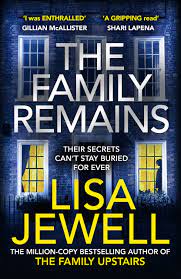
The Family Remains by Lisa Jewell

Written by , Posted in Reviews

Three Stars

Best for:
People who enjoyed the first book.

In a nutshell:
The remains of someone who died 25 years ago have been found. Also, the remains of someone who died just a few days ago.

Worth quoting:
N/A (Audio book)

Why I chose it:
I enjoyed the first book in this series.

What it left me feeling:
Ambivalent

Review:
Spoilers abound, especially for the previous book (The Family Upstairs). CN: Sexual assault, emotional abuse, stalking.

This book picks up where the last one leaves off, and while I can talk about the plot, this review is going to talk a bit more about the descriptions of some of the relationships. The plot itself continues the same multi-person narrative as the last book, but there are added characters, including the wife of someone murdered by an ex-wife in the first book. And that’s the storyline that was the most challenging. I’d imagine it was hard to write, but it was also really hard to read.

I’ve not read gas lighting written so well before. I was infuriated. I wanted to skip those parts but I also knew I needed to not, because it was important that the character experiencing the abuse had her story heard. How the husband love bombs the new wife, then on his honeymoon, gets offended by her suggestion of a sexual fantasy, and turns on a dime. Then completely pretends that things didn’t happen the way they did, turning everything into her part. And once she finally extracts herself from him, whenever she sees him in public, he acts like they’re still great friends and nothing could possibly have ever happened as she described.

In the previous book, we know that the husband ends up murdered by a previous ex wife. And it is one of the more satisfying outcomes, and makes it slightly less horrible to hear about his past knowing what happens to him in the future. But still. Really hard to read.

I do care about the characters (well, most of them heh), and I think Jewell has done a good job in making the women out to be fairly full characters. The others …maybe not as much, but still, enough for me to care about them.

The other story lines aren’t quite as compelling, though there are a couple of twists and turns. Unlike the previous book, though, we know nearly everything that is going to happen, and the twists that do happen feel a bit more out there than in the previous book. I am glad I read it, but just didn’t enjoy it as much as the first book.

Recommend to a Friend / Keep / Donate it / Toss it:
Donate it

Sunday

2

April 2023

0

COMMENTS

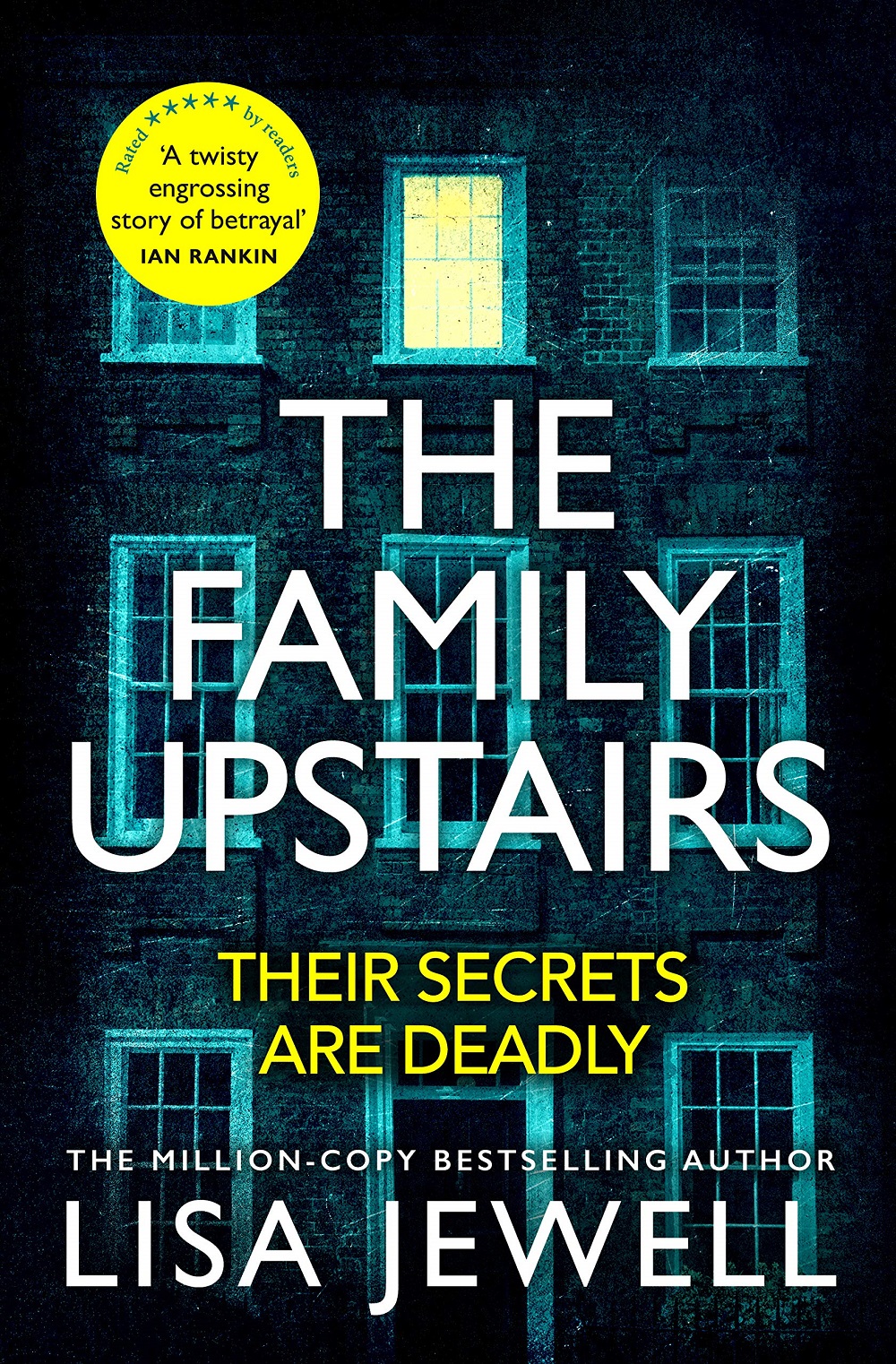
The Family Upstairs by Lisa Jewell

Written by , Posted in Reviews

Three Stars

Best for:
Fans of multi-perspective stories and jump back and forth across time.

In a nutshell:
A baby was found well taken-care of in a sparse mansion. Nearby are three adults dead by suicide. 24 years later, that same baby inherits the mansion and wants to know what happened to her parents all those years ago.

Worth quoting:
N/A Audio book

Why I chose it:
I’d seen this in an airport bookstore a few months back, and then it popped up as a recommendation on audible.

What it left me feeling:
Intrigued.

Review:
The book is a bit dark for sure – CN for sexual assault (in the book, not my review).

I knew nothing about this book going into it other that what was mentioned on the back cover. The book is told from the perspective of three characters (and the audio version employees three different voice actors for the chapters, which was immensely helpful): Henry, Lucy, and Libby. Libby is a baby who was found abandoned in a Chelsea (London) mansion 24 years ago. Henry and Lucy are connected to this somehow.

The voice actors chosen definitely give life to these characters – Henry sounds (to me) like a bit of a sleazy snob, Lucy sounds like someone who has seen some shit, and Libby sounds innocent and confused. I’m not going to say whether that ends up being accurate, but I think author Jewell does a great job of giving each narrator their own personality and way of speaking and acting.

I can’t share much without spoiling the twists, but I have to say that I made some educated guesses along the way and was wrong most of the time, so either the writing and story construction are quite clever, or I’ve not read enough of this genre to pick up on the clues. Either way, I enjoyed how it unfolded, to the point that I started this book on Saturday and finished up the next day.

In looking up some information about this book, I learned a sequel come out last year, so I’ve already downloaded that and imagine I’ll be reviewing it by the end of the week.

Recommend to a Friend / Keep / Donate it / Toss it:
Donate it