ASK Musings

No matter where you go, there you are.

CBR9 Archive

Saturday

12

August 2017

0

COMMENTS

Surpassing Certainty by Janet Mock

Written by , Posted in Reviews

Four Stars

Best for: Fans of Ms. Mock’s writing and those interested in learning more about her life; people interested in a tight memoir focused on just a few years of early adulthood.

In a nutshell: Author Janet Mock shares part of the story she chose not to include in her first memoir “Redefining Realness.”

Line that sticks with me: “I did not have the luxury to sulk, though. I could not wallow. I could not let my bitterness affect the quality of my work. Doing so would only make it harder for those coming after me.”

Why I chose it: I enjoyed Ms. Mock’s first memoir and wanted to read more.

Review: It took me awhile to get really into this book. I’m not sure if it was because of the week I was having, but it took me about a week to read the first half and just an afternoon to finish it. I’m glad I pushed through, because it’s a great read.

Ms. Mock shared her journey as a trans woman in her first memoir. However, she left out her first romantic relationship and marriage, which she delves into in this book. She explores her work as an exotic dancer, her time in college in Rhode Island and Hawaii, her marriage to a man in the Navy, and her pursuit of a journalism career in New York City.

She is candid about the challenges in her relationship, and about the challenges she had in undergraduate and graduate school, and as a woman of color in publishing. Her moments of revelation around colorism and around her confidence being perceived negatively are especially poignant.

Ms. Mock writes in language that is a bit flowery for my preference, but she tells a great story. This is not to say that I think she do anything different; sometimes I find her writing feels more like a novel than creative non-fiction. And perhaps that is a good thing; I just can find it a bit challenging to navigate. But clearly that’s not a barrier for me, as I still picked this up having read her first book.

Sunday

6

August 2017

1

COMMENTS

Matilda by Roald Dahl

Written by , Posted in Reviews

Five Stars

Best for: Kids. Adults. Humans. Other.

In a nutshell: Very smart young woman Matilda uses her mind to fight back against those who treat her — and the people she cares about — poorly.

Line that sticks with me: “Of course you looked! You must have looked! No one in the world could give the right answer just like that, especially a girl! You’re a little cheat, madam, that’s what you are! A cheat and a liar!”

Why I chose it: As part of our library’s summer reading challenge, one of the BINGO squares is a book recommended by a young person. My eight-year-old niece recommended this one.

Review: I don’t think I’ve ever read a Roald Dahl book. I know, I know. No James and the Giant Peach, no BFG. I first heard about Matilda through Mara Wilson’s (grown-up) writing a few years back, since she played her in the film. So I had a very basic understanding of the book’s plot, but not much more than that.

I started it at lunch and didn’t put it down until I was done. I loved how smart and kind and capable Matilda is. I loved that she uses her brain to help people, but also that she isn’t so absurdly wise beyond her years that you don’t believe she’s only five. And I loved that it showed sometimes adults are wrong and sometimes adults are right. That you kids should speak up for themselves.

I do have to say … as lovely as Miss Honey is, she and all the other adults at the school really were completely failing at protecting those children from Miss Trunchbull. I don’t care how intimidated you are by your boss, if she treats kids that way you do something about it. Yikes.

Sunday

6

August 2017

0

COMMENTS

How to Be a Bad Bitch by Amber Rose

Written by , Posted in Reviews

Two Stars

Best for: People who like Amber Rose; people who like glossy how-to book with lots of pictures and not a lot of text.

In a nutshell: Amber Rose offers some (I suppose not totally shockingly) heteronormative advice to woman.

Line that sticks with me: “Don’t follow trends if they don’t look good on you.” [Note: but why not? What if you like the way they look? Does she mean if *you* don’t’ think they look good, or if society doesn’t?]

Why I chose it: It looked like it could be fun.

Review: This book is fine. Some parts – like the push to cultivate confidence and not change yourself for others – are laudible. Other parts are so focused on the idea that women will want to date men that I’m curious whether Ms. Rose is aware that non-heterosexual people exist.

In the first couple of chapters there are some clear product placements; I can tell you what skincare brand Ms. Rose uses, and what body shaping undergarment brand she prefers. I was worried this was going to carry on throughout the entire book, but that was it.

There are photos of Ms. Rose on pretty much every page. Most are glamour shots, but some are of her as a kid and teen, which are fun and sweet. There are also some good tips in here, but none that are especially groundbreaking or new, and some strike me as oddly old fashioned and gendered. She makes some pretty sweeping generalizations about what ‘men’ and ‘women’ are like, which is fairly uninspired.

Saturday

5

August 2017

0

COMMENTS

If You Lived Here, I’d know Your Name

Written by , Posted in Reviews

Three Stars

Best for: People about to visit or who have just visited rural Alaska; people who like short slice-of-life stories.

In a nutshell: Obituary writer and Haines resident shares stories of life in a rural Alaskan town.

Line that sticks with me: “Following an old Haines rule, we dressed for the weather, not the vehicle.” p 19

Why I chose it: Two weeks ago I was on a cruise in Southeast Alaska, and took an excursion through Haines. It was a gorgeous part of the country, and when I saw this book in a store at our next stop, I decided to pick it up.

Review: Author Heather Lende is a journalist for one of the two local papers in Haines, population 2,400. About 15% of the residents are Tlingit, and pretty much everyone participates in some form of hunting, subsistence fishing, or dramatic outdoor activity like snowshoe hiking.

As you might expect from this book, there is a lot of talk about how Haines is the best place on earth, and how the people who live there are a different type, but Ms. Lende is also honest in examining some of the downfalls and challenges of choosing such a life. If someone is seriously injured during a snowstorm, they might not be able to get evacuated out. Their closest level one trauma center is in Seattle. Because of the types of jobs one can find in town, there are deaths from fishing accidents, or small aircraft crashes.

Many — but not all — of the stories relate to a death, which makes sense, since Ms. Lende is an obituary writer. But some are just about other components of life, whether adopting a daughter from overseas, or working with a political opponent on a fundraiser for medical bills.

This book is well written, but there are some parts that I found questionable. The first is the chapter when Ms. Lende goes to adopt her daughter. She repeatedly uses the term G*psy instead of Roma to refer to her daughter’s birth family. Not cool.

There’s also a chapter about political disagreements that is meant to come across as teaching the reader a lesson about how you can still come together and have pleasant times with people you disagree with. Unfortunately, the disagreement she and this man in the story had was essentially over the humanity of members of the LGBTQ community, so I had a hard time with the ‘let’s all get along’ nature of brushing that very real issue under the rug.

I enjoyed reading this, but I wouldn’t really say I recommend it.

Saturday

29

July 2017

0

COMMENTS

The Hypnotist’s Love Story

Written by , Posted in Reviews

Four Stars

Best for: Someone who wants a quick read with some interesting explorations of loss.

In a nutshell: Ellen (they hypnotist) has just started a relationship with Patrick. Patrick’s wife died seven years ago, when their son was only a year old. Saskia was Patrick’s first relationship after his wife died, and after they broke up, Saskia began to stalk Patrick. It continues.

Line that sticks with me: “You weren’t meant to admit, even to yourself, how badly you wanted love. The man was meant to be the icing, not the cake.”

Why I chose it: I’d downloaded it during my Liane Moriarty phase two years ago but never got around to reading it. But I was just on a cruise, so it was perfect.

Review:
This book reminds me a bit of “What Alice Forgot” in that it doesn’t quite follow what I now consider the Liane Moriarty formula: two or three interweaving story lines told out of order with a great mystery revealed. This has elements of it, but felt fresh to me.

I enjoyed the storytelling and the elements of mystery – some characters pop up unexpectedly – but the main plot felt a bit deeper than one might expect from a beach read (which is where I think her books often end up). Saskia is a stalker, and in general I wouldn’t be interested in their perspective. And she is not made out to be any sort of victim, but as the story progresses, I think we start to recognize that her motivation is more complicated. But that said … if the genders were reversed, I’m not sure if I would feel as much empathy for Saskia as I found myself feeling. And regardless of the amount, is it odd to feel any at all?

The book also looks at how we view losses differently when it comes to an unwanted break-up versus a death. We all carry bits of previous relationships, but when someone leaves us through death, they can become canonized. And the next person who dates the one left behind is there because the previous person isn’t. How do you handle that? How long ‘should’ one grieve a death? And is there a particular reason why we allow for more grief over a death than over the end of a long-term relationship? Is it reasonable to expect someone to get over being left in a few weeks when they thought they had a life with someone? And how can their grief be directed in a healthy way. Moreover, how does it all change when there are kids involved?

I enjoyed this book a lot. The ending was satisfying to me, although I could have seen it ending differently and also being enjoyable.

Saturday

29

July 2017

0

COMMENTS

The Underground Railroad by Colson Whitehead

Written by , Posted in Reviews

Five Stars

Best for: People who like good, intense writing and want a bit more insight into slavery in the U.S.

In a nutshell: Cora escapes the plantation she is enslaved on and faces more challenges and danger.

Line that sticks with me: “Truth was a changing display in a shop window, manipulated by hands when you weren’t looking, alluring and ever out of reach.”

Why I chose it: It’s been on my shelf for a few months; my visiting brother-in-law suggested it was a good book to bring on our family vacation last week.

Review:
Colson Whitehead is a talented writer. He tells a compelling story about a brutal time in U.S. history, weaving in components that aren’t necessarily accurate from a time perspective but that still happened. He doesn’t pull any punches with the horrors of life as a slave and punishment of slaves, but this book doesn’t feel like torture porn. It is graphic but not voyeuristic.

The story itself is fascinating. Mr. Whitehead follows Cora but also tells some of the story of her grandmother and mother, as well as of the people she encounters along the way. We never sympathize with slave owners, but Mr. Whitehead also allows them to be more than just caricatures with twirling mustaches. But what’s better, he allows for the people helping out on the underground railroad (which, in this telling, is an actual railway that is buried underground) to be less than saintly. I also appreciate that the individuals in this book are fully developed and provided with things to do that aren’t just in service of the main character.

Cora, however, is a remarkable woman. She is conflicted. She is brave, but not reckless. She thinks things through. She is skeptical (rightfully) of others. She doesn’t start out totally naive, but Mr. Whitehead draws her out so that she matures in her understanding of the motivations of others. She wants to survive, and she wants to believe that perhaps better things can happen for her.

I’m happy that this book moved up to the top of my to be read list; if you have it on yours but haven’t picked it up yet, I promise you won’t be disappointed if you start it today.

Saturday

15

July 2017

0

COMMENTS

Life on Mars by Tracy K. Smith

Written by , Posted in Reviews

Four Stars

Best for: People unsure about poetry but looking for a way in.

In a nutshell: Collection of poems about life. Not just on mars.

Line that sticks with me:
“I didn’t want to believe
What we believe in those rooms:

That we are blessed, letting go,
Letting someone, anyone,

Drag open the drapes and heave us
Back into our blinding, bring lives.”

Why I chose it: There’s a poetry square on the summer reading BINGO I’m playing, and I figured, why not start with something from our nation’s Poet Laureate?

Review: As I mentioned in the title, I don’t believe that I’ve read any poetry since high school. This slim collection seemed manageable, plus I loved the cover.

Having read it, I’m sure that I’m missing some layers of meaning, but even with that acknowledgment, I can still say that I enjoyed this collection. I can see myself going back to it in the future, re-reading some of the poems.

The poem “They May Love All That He Has Chosen and Hate All That He Has Rejected” was especially powerful, as Ms. Smith explores some particularly hate-filled murders (hopefully you know what I mean by that), including that of abortion provider George Tiller. In one section of it, she has the murdered writing postcards to their killers. It’s powerful.

I’m not sure how much more poetry I’ll choose to read. In my city we have a poetry bookstore, so I might go in later this year and see if they have suggestions on more poems, and also on ways to really understand and read them.

Friday

14

July 2017

0

COMMENTS

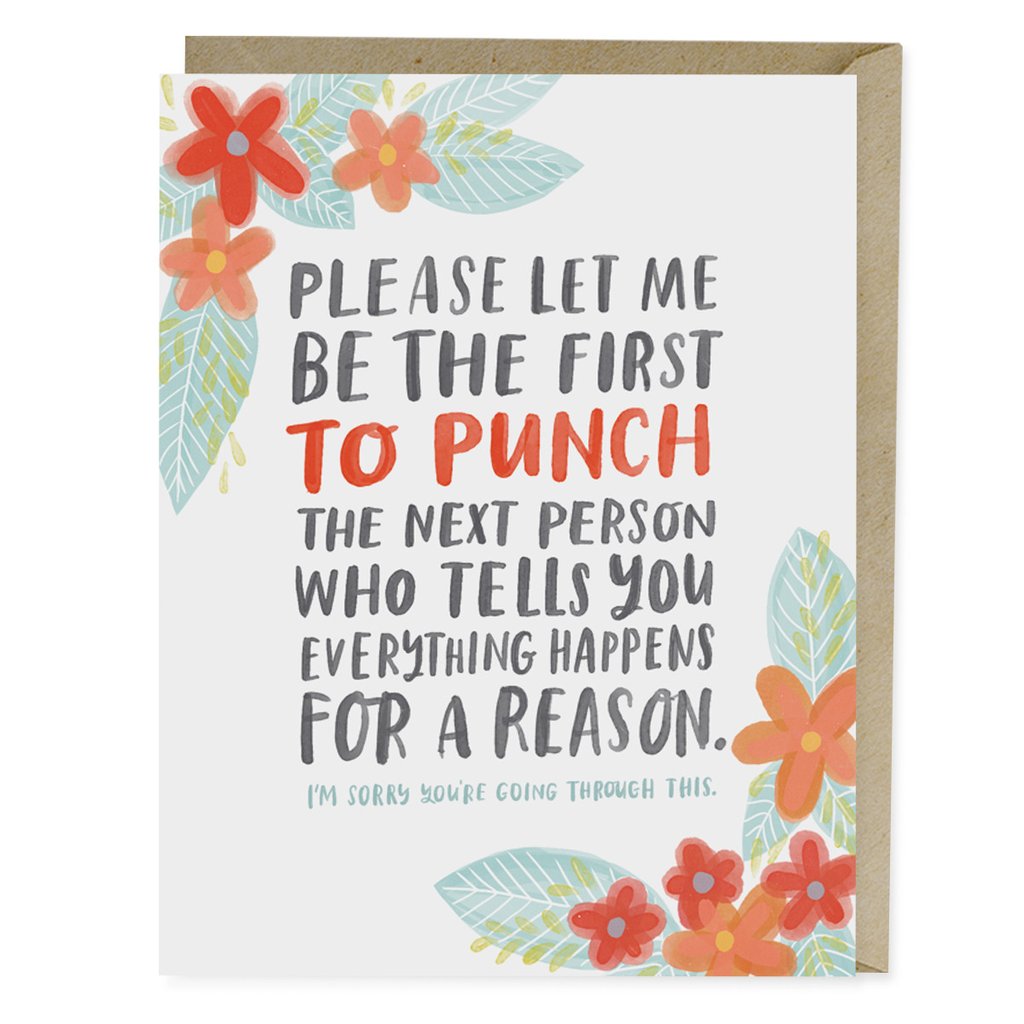
There Is No Good Card For This by Kelsey Crowe and Emily McDowell

Written by , Posted in Reviews

Four Stars

Best for: Those who have friends or family going through a rough time, or who someday will have friends or family going through a rough time (so, all of us).

In a nutshell: Dr. Crowe and Ms. McDowell provide practical ways to be there for the people you care about when they are experiencing the worst.

Line that sticks with me: “Just because you have experienced the same thing as someone else does not mean you know how they feel.”

Why I chose it: Two reasons: I write my own modern etiquette blog, and I get a lot of questions on this topic; and I’ve had a lot of friends go through some really rough times lately and want to get better at being there for them.

Review: What a great idea for a book! It’s easy to read, full of practical advice, reassuring stories, and serious examples that show how you can go wrong and how you can do better.

But it isn’t about shaming your efforts or instilling the fear that you’ll say the wrong thing. In fact, from the very beginning, the authors are clear that while yes, it is possible that you’ll screw up (and they go into detail in the last section, with example and language to avoid), you really need to set that fear aside and just do what you can.

I think probably the most helpful bit is the “Empathy Menu.” It’s basically four pages of different roles you can take on to be supportive. I appreciate it because the point is to focus on what you’re good at being able to offer, as opposed to trying to do something that ultimately won’t work. Don’t offer to cook if you can’t or don’t have time. It’s okay to be the person who can provide child care but not the person who can put together a great playlist for them to listen to while undergoing a medical procedure.

It is inevitable that people we love (as well as ourselves) will experience something awful at some point in their lives. I suggest taking a day or two to read this so you’re prepared, and then keep it on the shelf so you can refer to it when you just aren’t sure what you can do for your friend or family member.

Thursday

13

July 2017

0

COMMENTS

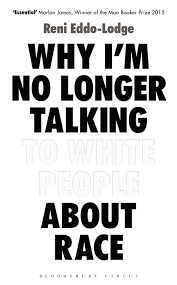
Written by , Posted in Reviews

Five Stars

Best for: People interested in great writing on race, especially writing that gives perspective on race that isn’t US-centric.

In a nutshell: Ms. Eddo-Lodge explores the history of racism in Britain and looks at ways to address it today.

Line that sticks with me: “Being in a position where their lives are so comfortable that they don’t really have anything material to oppose, faux ‘free speech’ defenders spend all their spare time railing against ‘offense culture.’” (p133)

Why I chose it: I follow Ms. Eddo-Lodge on Twitter and find her work to be insightful and interesting.

Review: This book was released last month in the UK; I ordered it on Amazon to be able to read it before its official US release in December. And I’m so glad I did, because it is a fantastic book that I think US readers can really learn from. Ms Eddo-Lodge weaves her own experiences in with a thoughtful analysis of the difference aspects of racism, including strong chapters devoted to the intersections of racism and sexism as well as racism and class.

The book is broken down into seven chapters, each of which could stand alone as its own but also fits in and builds upon the others. The first chapter focuses on the history of race and racism in Britain. Those of us familiar with Brexit and the rise of white nationalism in the UK (not to mention its imperialist history) will not be surprised by some of this. At the same time as someone raised in the US it was interesting to read the perspective of a British person. Specifically, the idea that the US tends to take up so much of the discussion world-wide about racism, which can leave other countries thinking that they don’t necessarily have it within their own borders.

I found two chapters to be especially resonant. “Fear of the Black Planet” talks about the deeply held fear of white nationalists that they are losing ‘their’ country to people of color, and that they need to fight this. Because of libel laws in the UK, Ms. Eddo-Lodge had to offer Nick Griffin, a white nationalist, a chance to respond to some comments, so part of this section is a transcript of their interview. It is fascinating in that Mr. Griffin digs his own hole, as it were. Not to him I’m sure, but I think that anyone just reading his responses to Ms. Eddo-Lodge’s thoughtful questions will recognize how utterly wrong he is about race and what makes a country and its people.

The other chapter is the one on feminism, where she delves into the concept of white feminism. I think we’ve seen a lot of that in the US lately as well, and she offers up a strong and straightforward way of explaining it: “It’s not about women, who are feminists, who are white. It’s about women espousing feminist politics as they buy into the politics of whiteness, which at its core are exclusionary, discriminatory and structurally racist.”

If you are in the UK, Australia or New Zealand, I strongly recommend you go buy this at your local bookstore. If you are in another country, you might be able to order it online through Amazon. If you have a tall to-be-read pile at home, please place a request with your local library and bookstores that they be sure to carry this when it is released in December.

Monday

10

July 2017

0

COMMENTS

The Little Book of Talent by Daniel Coyle

Written by , Posted in Reviews

Two Stars

Best for: People looking for a quick read and a couple of helpful tips.

In a nutshell: Mr. Coyle provides 52 tips to help you get better at something. Anything.

Line that sticks with me: “But in the talent hotbeds I visited, practice was the big game, the center of their world, the main focus of their daily lives.” (p 39)

Why I chose it: As part of that whole summer reading BINGO thing our public library is doing, one square is ‘recommended by an independent bookseller.’ Also, I like to learn things.

Review: Hmm. There are 52 tips, which I suppose is meant to correlate to weeks in the year, but the book isn’t laid out like that. Instead, each tip ranges from a paragraph to a few pages, grouped by getting started, getting better, and keeping it up.

Some of the tips were helpful and familiar. The one I mention above, about practice, reminds me of the book by Commander Hayden (astronaut). Since they might never go to space, they have to treat preparation as the real thing. That’s what matters.

Other tips run contrary to ones I’ve learned before, especially about writing. One is to “never mistake activity for accomplishment.” Which, yikes. Like, the fact that I write every single day — haven’t missed a day since March (that includes when I had food poisoning), when I started that — is a fucking accomplishment. That activity is making me a better writer.

The tips are meant to be universal but, as mentioned above, I don’t think they are always applicable. And while the title is certainly true — this is a little book — I think it could have been a series of blog posts, or perhaps included in some sort of habit app. Not sure it warranted this fancy binding and shiny cover.