ASK Musings

No matter where you go, there you are.

Author Archive

Sunday

29

March 2015

0

COMMENTS

Waistcoats and Weaponry by Gail Carriger

Written by , Posted in Reviews

Three Stars

waistcoats

Sophronia and her friends are getting ready to head back to her hometown for her brother’s engagement masquerade ball (ah, yes. the traditional engagement masquerade – the husband and I really missed out). Their good friend, who is part of a werewolf pack (although not a werewolf herself), is distraught and leaves their dirigible school when she gets bad news. From there, things get even odder.

Steampunk is a fairly new genre for me, but I get its appeal, and I enjoy these somewhat quick reads. Things can’t be solved with a quick text message or crowdsourced post on social media – people have to really work to puzzle things out. It’s refreshing. Plus, it’s fun to picture these worlds where everyone is dressed really nicely and worries about manners. I wouldn’t want to actually live in that time (apparently some members of the conservative party in Ms. Carriger’s universe are just as racist as some of the politicians in our universe), or in a world with vampires and werewolves, but it can be fun to visit.

Slight side note – can people who are creating new world consider creating ones where being gay isn’t a thing that people find ‘shocking?’ Or find to be a bad thing? There’s so much creativity in this book that it’s disappointing that sexuality – and conservative views of it – seem to have been transplanted directly from our universe to theirs.

Regardless, if you like steampunk and YA, I think you’ll probably enjoy this book.

Sunday

29

March 2015

0

COMMENTS

What If? By Randall Munroe

Written by , Posted in Reviews

Five Stars

What If

I don’t think that I’ve laughed out loud at a book that wasn’t a straight up comedy memoir in a long time. Randall Munroe is the cartoonist behind xkcd. In this book, he takes on some pretty awesome questions that are utterly ridiculous (but still fun to think about) and sorts out the science. The tone kind of reminded me of my favorite fiction book this year, “The Martian.” There are a lot of calculations that I don’t fully understand, but he explains them well and with loads of humor.

Each response include some hilarious footnotes (seriously, there’s one that’s a somewhat obscure reference to the TV show Friends) and lots of his great cartoons. A sample question (and one of my favorites, because it involves maps) is ‘which US state is actually flown over the most?’ To answer this, Mr. Munroe looked at 10,000 flights and determined a state was flown over if a flight did not take off or land in the state, but crossed the state’s airspace. He also, for a little extra fun, calculated which airport is responsible for the most flights that cross that state. The answer to the question, by the way, is probably not what you’d guess it is.

The editing of this book is superb; some of the best comments appear as a surprise turn after flipping the page. And the questions are mostly really interesting; only a couple responses did I feel like skimming. Mr. Munroe also offers up examples of some of the more disturbing questions he’s received. He doesn’t answer these, but provides sometimes hilarious cartoon responses to them.

I read this book over a couple of days while travelling and think it’s mostly perfect as a travelling book. Each question only takes up three-five pages (and probably 20% of that is cartoon), so you can pick it up for ten minutes at a time. Really the only drawback for reading a physical version (as opposed to the ebook) is that it is currently in hardback and a slightly odd size – the height seems to match most hardcovers, but it is a bit wider. If you travel with a partner, I suggest bringing it as once you finish it your partner can pick it up and will likely enjoy it.

Wednesday

25

March 2015

0

COMMENTS

Revisiting Europe

Written by , Posted in Adventures

This is going to be quick. We decided last fall to do another visit to London and Paris in the spring. I wantedto see my friends, and we both loved Paris when we were last there. We’re now in Paris, having spent four nights in London. One thing that was a reminder for me is that trips to London aren’t really vacations for either of us. For me, they are reunions, full of wanting to see my friends as much as possible. For Austin, it’s a lot of going where I want to do. He likes my friends a lot, but it is more socializing than either of us usually do, and in a condensed time.

Which is why we go to London first. We see friends, get ourselves exhausted, and then can relax on the next leg of our trip. We took the train down this morning, and were greeting by a hail storm. It was actually kind of cool. Our hotel here is LOVELY. Hotel Banke. Check it out. Don’t know what deal we got online, considering how expensive the drinks in the bar are. But the room (we’re on the top floor!) is sweet – not as small as I expected, and with a gorgeous view. After freshening up we decided to seize the sun that had burst from the giant rainclouds and went on a 5 and a quarter mile tour of the city in about three hours. 

Based on a recommendation from the front desk, we had a very French meal – at a large restaurant that has been open for almost 150 years. They were very kind (they had menus in English as well as French), and my steak and frites was delicious.

The only real downside right now is that I have a cold. It’s not nearly as bad as some other colds, but it’s not fun, and I’d rather just be able to keep going without having to stop to take medicine, or blow my nose, or rest. But considering I’m in Paris with the best man I know, I’m still pretty lucky. 

Oh, and I’ve already had macarons. So yeah, this trip is awesome.

Friday

20

March 2015

0

COMMENTS

I Am Malala by Malala Yousafzai

Written by , Posted in Reviews

malala


This one has been on my to-read list basically since it came out. I knew I admired her for her stance on education (and her willingness to be so vocal at such a young age), but I didn’t know much about her beyond that, or much about her home.

This is a really interesting book for someone like me, who is not familiar with Pakistan, or at least not familiar with it beyond what gets reported in the U.S. media. If you look up images of Swat (the region of Pakistan where Ms. Yousafzai and her family come from), you will see it is utterly gorgeous. The book provides some basic history of the area, giving the reader a lot of great information about the culture, about religious influences, about the military, and the politics of the region.

The book starts with a quick chapter on the assassination attempt that nearly took her life and made her even more recognizable than she was, but the vast majority of the book is about her life before the shooting. In addition to the history I mention above, she talks about her daily life, about how things changed with the Taliban, about challenges of education. Her father is a really interesting person, as is her mother; I loved reading about them as well as Ms. Yousafzai.

The book itself is told in Ms. Yousafzai’s voice, with some assistance from Ms. Lamb. I don’t know if it was written in Pashto and then translated, or written directly in English (she is fluent in those languages, as well as Urdu), but it definitely does feel like something written by a young woman. The language is at times very flowery and the sentences can seem short and simple, but they paint a very vivid picture. I can clearly pull up in my mind her home, her school and her town; she is an excellent storyteller.

You probably heard that she was awarded the Nobel Peace Prize last year; her work is pretty amazing. If you want to learn more (but don’t plan on picking up the book just now), you can visit the Malala Fund website.

Wednesday

18

March 2015

0

COMMENTS

Cleaning House. Literally.

Written by , Posted in Random

After finishing the Life-Changing Art of Tidying Up, I decided to actually try it out, and Austin agreed to join me. I started with my clothes, as suggested, and between the two of us we worked out way through the house, area by area. Electronics, books, photo albums. Kitchen stuff. All that is left is a drawer and nook in the office that Austin needs to look through, and a tub of holiday decorations.

We probably could have sold many of the clothes and books we decided we didn’t need anymore, but we donated everything instead. Someone else will enjoy these things, and hopefully the money will help some folks who need it more than we do.

Our house is lighter now. Our bookshelves don’t have as many items, and our closets aren’t stuffed full. There’s something pretty cool to know that everything in our house either brings us joy or serves a real purpose.

Some items were hard to part with. Clothing that I purchased when I was fitter than now was especially challenging, as part of me feels like I’m accepting that I might not get that fit again. But there’s no point in taking up space in my closet – or my brain – with items that I don’t love and don’t need. Same with some books. I can appreciate the idea of holding onto items that I want to read, or projects I want to start, because I like the idea of them.

At the same time I think part of growing a bit wiser is recognizing the difference between an aspiration that I want to do for me and an aspiration that I want to want to do, if that makes any sense. I have limited time when I’m not at work or sleeping, and I want to choose to do things that are meaningful to me. It might seem odd, but this really helped.

Sunday

15

March 2015

0

COMMENTS

When Paris Went Dark by Ronald C. Rosbottom

Written by , Posted in Reviews

Three stars.

paris-liberation

This is a dense book, but it’s easy to read. It’s an almost 400-page look at the four years when the Nazis occupied Paris. As someone raised in the U.S., I’ve heard jokes about how quickly the French surrendered during World War II, and how the U.S. liberated them. But that seemed a bit simplistic, so when I saw this in a book store I knew I wanted to read it.

Mr. Rosbottom has done a ton of research and created a really interesting story. Even though there is no, say, central narrative (i.e. there is no one family we follow from start to finish, which some writers of history do, such as Erik Larson did with “In the Garden of Beasts,” which I read earlier this year), each chapter follows the previous in a logical manner, and is still filled with stories that help us understand what life was like.

He spends time talking through how very quickly the French did come to an agreement with the Nazis about how France would be governed. Ultimately this probably saved Paris from being destroyed in bombing campaigns. He follows that up with how the Nazis were greeted and interacted with Parisians during the first year, and how that slowly changed. There were eventually curfews, and rations. Jewish people (especially foreign-born Jewish people) were rounded up and send off to prisons and concentration camps.

And this is where the most interesting discussions come up. How much should the French people – not the military, but the people – have fought back? By not engaging in a resistance movement, were they essentially accepting the Nazis? Were they cowards, or were they people who recognized that they didn’t have much they could do? Should we blame those who, say, served Nazi soldiers, even though the acts of resistance some carried out resulted in many deaths of French people? Do we blame people for doing what they think they need to do to survive?

This is clearly a sore spot in French history. Immediately after the liberation, those who were considered to be ‘collaborators’ were treated horribly – and many of those were women, who were taken in the street, had their heads shaved, and paraded around for sleeping with Nazis. Some people were accused of things they didn’t do and were killed by mobs. And some, like members of the French Police, helped bring in people to be sent out of the country and ultimately killed. How much responsibility should they bear when acting under an Occupation?

These are bigger discussions than can be resolved in one book, but if Paris interests you, if World War II interests you, and if philosophical discussions interest you, I’d suggest this book.

Sunday

15

March 2015

0

COMMENTS

What I’m Reading – March 15, 2015

Written by , Posted in What I'm Reading

Classism

– ” One USDA pilot program in Massachusetts provides a credit of 30 cents for every SNAP dollar spent on fruits and vegetables. The preliminary data shows the program resulted in a 25 percent increase in produce consumption. A similar program that doubles SNAP expenditures at farmers markets—you get $2 worth of fresh produce for every SNAP dollar you spend—has shown similar promise.” People on Food Stamps Make Healthier Grocery Decisions Than Most of Us (via @MotherJones)

Racism

– “I’m sure a white man who despises black people enough to sing about violently harming them can be a perfectly great dude to other white people. Why wouldn’t he be? He thinks white people are superior and deserving of his respect.” “He is a good boy.”

Climate Change

– “DEP officials have been ordered not to use the term “climate change” or “global warming” in any official communications, emails, or reports, according to former DEP employees, consultants, volunteers and records obtained by the Florida Center for Investigative Reporting. The policy goes beyond semantics and has affected reports, educational efforts and public policy in a department with about 3,200 employees and $1.4 billion budget.” In Florida, officials ban term ‘climate change’ (h/t @das_kunk)

Sexism in Tech

– “I found that 18 percent had characters whose gender was not identifiable (i.e., potatoes, cats or monkeys). Of the apps that did have gender-identifiable characters, 98 percent offered boy characters. What shocked me was that only 46 percent offered girl characters. Even worse, of these 50 apps, 90 percent offered boy characters for free, while only 15 percent offered girl characters for free.” I’m a 12-year-old girl. Why don’t the characters in my apps look like me? (h/t @JessicaValenti)

Labor

– “Anne McLeer, Director of Research & Strategic Planning at SEIU Local 500, says: “There’s no question there’s a role for adjunct faculty and professionals with outside experience coming in to teach a class or two. But the problem is a disproportionate number of classes, especially in the humanities, being taught by adjuncts who don’t have any job security or opportunity to advance up the levels.”” I was a professor at four universities. I still couldn’t make ends meet. (h/t @greenhousenyt)

Police

– “Anthony, who valiantly and publicly struggled with mental illness and bipolar disorder, was walking and rolling around on the ground in his apartment complex completely naked. Clearly having some type of psychotic episode, witnesses observed Anthony and called police to help him. He threatened no one.” The tragically unnecessary police murder of Anthony Hill (via @ShaunKing)

– “Computer users identified by Capital as working on the NYPD headquarters’ network have edited and attempted to delete Wikipedia entries for several well-known victims of police altercations, including entries for Eric Garner, Sean Bell, and Amadou Diallo. Capital identified 85 NYPD addresses that have edited Wikipedia, although it is unclear how many users were involved, as computers on the NYPD network can operate on the department’s range of IP addresses.” Edits to Wikipedia pages on Bell, Garner, Diallo traced to 1 Police Plaza (h/t @kellyweill)

– “Leutz made contact with three separate women outside of police business, including romantic advances (”did u feels something when we locked eyes” is an actual text he sent to a woman he stopped and then pursued for a month) including one woman who he thought might be the victim of domestic violence.” SPD fires officer who should probably have been fired a while ago (via @Seattlish)

Government Overreach

– “The Apple research is consistent with a much broader secret U.S. government program to analyze “secure communications products, both foreign and domestic” in order to “develop exploitation capabilities against the authentication and encryption schemes,” according to the 2013 Congressional Budget Justification. Known widely as the “Black Budget,” the top-secret CBJ was provided to The Intercept by Snowden and gives a sprawling overview of the U.S. intelligence community’s spending and architecture.” I Spy: The CIA Campaign to Steal Apple’s Secrets (via @jeremyscahill)

– “The petition calls for criminal charges against 47 senators who “committed a treasonous offense” in writing a menacing letter to the government of Iran, now in the middle of negotiations with President Obama aimed at reaching a nuclear energy agreement.” White House petition to try 47 Republican senators for treason goes viral (h/t @jaythenerdkid)

Wednesday

11

March 2015

0

COMMENTS

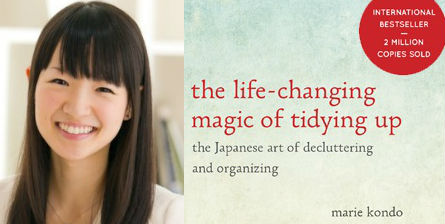
The Life-Changing Magic of Tidying Up

Written by , Posted in Reviews

Four Stars

marie-kondo-decluttering3

I heard about the “KonMari Method” from a quick blurb in New York Magazine a few weeks back. Seeing as how I love to be tidy and clean, as well as the fact that I’m feeling a bit weighed down from all of our stuff, I ordered the book and started reading it on Sunday. I nearly finished it in one go, I enjoyed it so much.

First off, I must admit that this problem of having too much stuff is admittedly not a luxury everyone has. Duh. Just as pervious reviews of books about what to eat have been greeted with the occasional ‘nice to have that problem’ comment, I can imagine that this might cause more than a few eyes to roll. And that’s cool – you do you. But considering the fact that I, for example, love to write in my books, I often can’t go the library route, leading me to acquire and hold on to many more books than I actually really want to keep. I think most folks who have access to some disposable income can end up spending it on things they either don’t need now, or hold onto items they no longer need.

Ms. Kondo’s premise is that homes get messy because we have more items than we need, and instead of constantly buying clever containers, shelving units and even full off-site storage lockers, we need to cull what we have back to the items that bring us joy. Yeah, that’s right. Joy. Some reviewers get caught up on this – how could toilet paper, for example, bring us joy? Well, considering the despair I’ve felt over discovering I was out of toilet paper only after I’d put myself in a position to need it, I don’t actually think that’s a stretch. Same with, say, a kitchen tool. My bread knife doesn’t make my eyes sparkle, but man do I love the fact that I don’t smush delicate breads when I use it.

The KonMari method is, on the surface, simple. Touch literally every single thing that you own (in order – starting with clothes), and decide whether to keep it or discard it. Once you are sure you are going to keep the item, you find the right place for it, and that’s where it lives. You don’t go room by room as some places suggest; you do all of one type of item in one go. Anything in that category that you forgot to put in your pile for consideration gets automatically tossed.

She also asks us to be respectful of our things, to thank them for doing what they have done for us. This might be too touchy-feely for folks, but it worked for me. And it helps ease the pain of the slow realization that you aren’t ever going to read Ulysses, and that’s okay. You bought the book, and it taught you that reading Ulysses isn’t enough of a priority for it to make sense for you to hold onto the book. Thank it and discard it.

Yes, discard. That could mean donate, recycle, or even throw out. Does that seem wasteful? I think it might to some. If you bought a dress (or received it as a gift) four years ago and never wore it, her theory is it is more wasteful taking up physical space in your closet and emotional space in your mid than it is to donate it to Goodwill. And this does go for EVERYTHING – she even direct readers to take every photo out of every photo album and photo box, go through them, and only keep the ones that really speak to you. Brutal, right? But man, that sounds kind of amazing.

If anything I’m writing appeals to you, then I strongly recommend this book. I plan to tackle the clothing portion starting tomorrow night, and I can already tell that there are some items that I’m going to discard that a week ago I couldn’t have imagined. But the chance that I might need it for a Halloween costume in a decade isn’t a good enough reason to keep it around.

Her point is also that once you clean up the clutter from your house, you will have more clarity in other parts of your life. Am I expecting that once we reduce our stuff I’ll suddenly find my dream job? No. But I can see that there may be more subtle benefits. On the second-to-last page of the book, Ms. Kondo writes “The moment you picked up this book with the intention of tidying, you took the first step. If you have read this far, you know what you need to do next.” It might seem cheesy, but I do.


Sunday

8

March 2015

0

COMMENTS

What I’m Reading – March 8, 2015

Written by , Posted in What I'm Reading

Injustice

– “The deal has another effect: it all but confirms a two-tier justice system in which senior officials are slapped on the wrist for serious violations while lesser officials are harshly prosecuted for relatively minor infractions.” Patraeus Plea Deal Reveals Two Tier Justice System Leaks (via The Intercept)

Sexism in Tech

– “There are all kinds of studies and surveys and reports that utterly contradict what Mayer is saying, that gender is, in fact, “an issue” in the tech industry—especially viewed through an intersectional lens that reveals the lack of equitable opportunities for women of color and women with disabilities.” Today in LOLOLOLOL WHUT (via Shakesville)

– “Adria trusted Ronson to tell her story, to do it justice, only to have Ronson draw a false equivalence between her, a woman challenging inappropriate sexual jokes at a tech conference (at which everyone had signed a photo disclosure form), and the man who was making those inappropriate sexual jokes. And to draw a false equivalency between her, a woman challenging sexism in a professional space for technology workers, and Justine Sacco, a woman casually making racist jokes under her real name while employed as a senior director of corporate communications for tech company IAC.” The Falsest of False Equivalencies (via Shakesville)

War on Drugs

– “Rhonda was sitting quietly in a windowless courtroom between two lawyers last week, her jaw set and her fate unclear. Her lawyer, and the lawyers representing her son and daughter-in-law, were doing their best to make their case in spite of being legally prohibited from making their case. Instead, the lawyers painted the family as honest and hardworking, calling them “salt of the earth people.” Obviously, they couldn’t say what they wanted to say, what Rhonda wishes she could shout at the jury: The plants were for medical use. Washington State has a medical marijuana law.” A Stunning Overreach from the DEA Is Playing Out in Eastern Washington (h/t @FakeDanSavage)

Misogyny

– “Young people need a clear understanding of what sexual assault is through a curriculum devised by experts, a comprehensive explanation of enthusiastic consent, and a roadmap for how to deal with a culture that victim-blames and is generally decades behind where it should be.” College is too late to start teaching students about sexual assault (via @JessicaValenti)

– “It is actively unhelpful for Kristof to be using a discussion of unconscious bias in order to suggest that conscious, active, harm-objective racism and misogyny isn’t all that common. It’s an argument that gaslights every woman and every person of color who reports lived experiences that suggest otherwise.” Nicholas Kristof Is Being “Helpful” Again (via Shakesville)

– “It also paints a fairly inaccurate – and transactional – picture of female desire. Despite terrible gift books to the contrary, most women don’t get off on men vacuuming or picking up socks (not that there’s anything wrong with those that do). What turns women on is what turns men on: good sex.” Women don’t need ‘choreplay’. They need men to do some chores (via @JessicaValenti)

Worker Rights

– “The cutbacks have been so drastic in some places that they virtually guarantee injured workers will plummet into poverty. Workers often battle insurance companies for years to get the surgeries, prescriptions and basic help their doctors recommend.” The Demolition of Workers’ Comp (via @ProPublica)

Racism

– “For example, few Seattleites seem to be aware of the large role our city has played in re-segregating America’s schools. In 2007, courtesy of a suit brought by a group of predominantly white Seattle parents (Parents Involved In Community Schools v. Seattle School District), the Supreme Court dealt a huge blow to education equity when it declared U.S. schools could not seek to achieve/maintain integration by taking account of student race.” Time to shed the ‘progressive mystique’ and confront racism in Seattle (h/t @StrangerSlog)

Wednesday

4

March 2015

0

COMMENTS

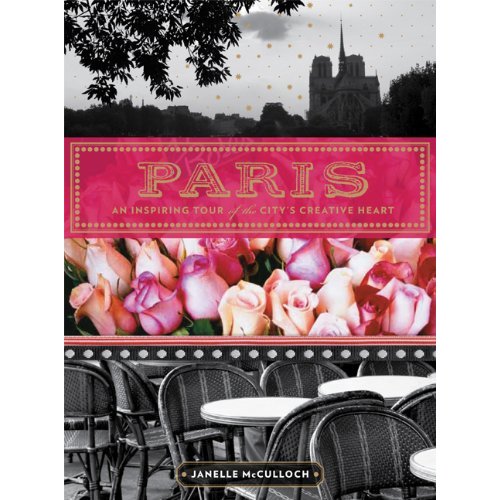
Paris by Janelle McCulloch

Written by , Posted in Reviews

Three Stars

Paris

This is a book I’ve seen in a few different higher-end design stores. It seems like the kind of thing that Anthropologie would stock (shoot, maybe they do); I happened to get it at one of those houseware shops that stocks things according to color. We are lucky enough to be heading to Paris at the end of the month, so I felt justified in buying this book.

Written by a journalist and photographer, this book feels more coffee table book than guide book. The photographs are just gorgeous; honestly, I think it’d be worth buying if you just want something gorgeous to set on your coffee table to pick up now and then. The colors are so vibrant. The accompanying text is fine, but it’s not necessarily exactly what I am looking for in what essentially is a very pretty guidebook.

Ms. McCulloch spends half of the book providing overviews and ‘a walk through’ most of the arrondissements. Each overview is about two pages, followed by two pages highlighting shops, cafes, museums and streets the author thinks the reader should explore. All of the places are then listed in the second half of the book, with addresses and fuller descriptions of them. Which leads me to treat this as a reference book. However, it’s so large that there’s just no way I want to bring it with me on our trip. I could go through and write down each place to visit, but it seems to defeat the purpose, as the shops will be lacking in the context the author worked so hard to provide.