ASK Musings

No matter where you go, there you are.

Feminism Archive

Monday

26

August 2013

0

COMMENTS

Miss Representation

Written by , Posted in Feminism, Reviews

Four stars

Miss Representation is a mostly well-done documentary about the portrayal of women in the media. It looks at a whole host of issues, from the roles available the female actresses, to the lack of women in high political office to the dearth of women on the boards of media conglomerates. There are interviews with some extremely high-powered and visible women (such as Condoleezza Rice and Geena Davis) interspersed with profiles of high school-aged women discussing how the ways women are portrayed in the media have impacted them directly.

Before I jump into what I liked, I wanted to take a minute up front to say what I didn’t like. The filmmaker employs a narrative device that was a little cheesy for my tastes. The whole premise is that she’s pregnant and going to have a girl, and she’s wondering about the world this daughter will grow up in. That part I totally get, but the way it’s done is not … great. It feels a little like an SNL parody. Additionally, there isn’t enough intersectionality for my tastes. Secretary Rice does bring up representations of women of color, but the film could have been SO much stronger if it spent some time really focusing on how the ways women of color are marginalized often differ from the ways white women are marginalized.

Beyond that, nearly every part of the documentary spoke to me in some way. From the depressing reminder of how both Palin and Clinton were treated in the 2008 election (that clip from SNL with both Fey and Poehler at the podium still makes me laugh and then want to cry), to the lack of support for female screenwriters and directors who clearly could have a different perspective, to the photo-shopping of women’s bodies to lead us all to believe that a size 2-4 (can’t be TOO skinny, amirite?) with DDD breasts, clear skin and long flowing hair is not only attainable by all women, but should be their goal, it’s all so familiar and really depressing. I think about how much of my own internal monologue (I’m healthy, it’s fine, so I gained ten pounds, ugh I’m fat, no but that’s society and I’m awesome as I am, but still why can’t I look like HER) has been shaped over the years, and how it’s really a daily struggle to fight back against what I’ve been exposed to my whole life.

To pull out one component to share as an example, there is fantastic (albeit fairly short) segment focused on the B.S. idea that men are the default, and anything featuring women is a specialty bit of media. A film with a male lead is meant to be for everyone, but a film with a female lead? That’s for women only, because how could men expect to be interested? It doesn’t help that those female leads are so often searching for a man to complete them, whereas so many of the male-led films are about the man’s quest to find himself or to solve some problem. The example they used was Star Trek (the first in the latest reboot) – it’s not about Kirk finding love, it’s about finding his destiny. Can we have more of that for women?

All of this makes me think about my friends who are having kids and how I can actively promote positive views of women that fall outside the mass media norm. Not talking negatively about people who look different from me is a no-brainer, but even being vocal about non-conventional choices I’ve made to show that there are all sorts of ways to create a happy life is a way to live my feminism and ensure that it isn’t just something I think about. We’re not having kids, and that’s not something to hide; it’s something to share to point out that there are a lot of different ways to have a family. The fact that we now have a blended last name is also very important to me; it shows that the decision of how to create the new family can be an active choice, and one that represents my values. But what else can I do to be supportive of these kids in a way that shows women have value for reasons beyond how they look in a swimsuit?

Some of this, I think, requires us to make more conscious choices about the media we consume. Sure, it’s easy to just go to the blockbuster because it’s out and everyone wants to go – but what if we DON’T go if there aren’t women represented in them with a story line that isn’t focused on their attempt to find a man? The Heat wasn’t the best film I’ve seen in years, but I was thrilled to give it my money because the focus was not on a romantic interest, but on women and their relationships with each other and their work. I don’t think every decision about the media we consume needs to be a political act, but I wonder how much more representative it would be if more of our decisions WERE political acts?

Anyway, those are my thoughts. Below is the trailer – see for yourself. It’s currently streaming on Netflix.
 

Monday

10

June 2013

0

COMMENTS

Macklemore Lyrics

Written by , Posted in Feminism

I didn’t enjoy Macklemore and Ryan Lewis’s music when I first heard it a couple of years ago. Austin shared some of the songs and I just didn’t really get into it. We even had tickets to see them, but Austin wasn’t feeling great that night so we ended up not going. I know, that’s straight up blasphemy in Seattle, but before you click away please know that I have changed my mind. Sort of.

I heard “Thrift Shop” right around the time the video was released and was immediately hooked. It had a really great beat and wasn’t the typical topic of a popular song. After I heard it a few times I was singing along, and got excited to crank it up when it started to play in my car.

Now, depending on the websites and other outlets you frequent, you may or may not be aware that there were some detractors who point out how the song does sort of reek of economic privilege, and while I don’t want to discount that opinion, for the purposes of this post I’m more interested in looking at another sort of privilege that shows up in the song: gender privilege.

Wait, what?

Yuuup. It’s (hopefully, likely) unintentionally, but it’s there, in this lyric:

“Fifty dollars for a T-shirt – that’s just some ignorant bitch shit”

Bitch shit? Really? Perhaps you’re rolling your eyes, thinking that this ‘P.C.’ (aside – the quickest way to get my eyes to glaze over is to call something “P.C.” as negative, as though respecting people is something to frown upon) stuff is ridiculous, and that bitch is just an adjective used to describe a negative, and has nothing to do with women. Shoot, I didn’t even notice or think about this until it was briefly mentioned on Radio Dispatch – a great podcast by New York-based journalist siblings John and Molly Knefel.

Macklemore and Ryan Lewis aren’t as well-known back east as they are here in Seattle, and during a May episode of the show, John mentioned that Macklemore and Ryan Lewis became better known across the country initially for “Same Love,” the song about marriage equality and civil rights for all regardless of their sexual orientation.  In it, Macklemore recites the following insightful lyrics:

“If I was gay, I would think hip-hop hates me
Have you read the YouTube comments lately?
“Man, that’s gay” gets dropped on the daily
We become so numb to what we’re saying
A culture founded from oppression
Yet we don’t have acceptance for ’em
Call each other f****ts behind the keys of a message board
A word rooted in hate, yet our genre still ignores it
Gay is synonymous with the lesser”

John and Molly pointed out the irony and ideological inconsistency with someone who could articulate the above observations about the treatment of gay people by using the f word regularly, yet seems to have zero problem with using a derogatory word for women a couple of times in a song.

What’s the deal?

In 2005, he wrote a song to address this (sort of): The song is called Contradiction, and includes these lines:

“I stand up for human rights, and treat others how I would wanna be treated
But every song can’t be seepin’ with freedom
‘Cuz the other side of me is sexist then people will feel that I’m preachin’
“Everything’s peace and love?” uhh, that’s somewhat misleading
Because this world is fucked-up and I’m a product to what I’m seeing
Not to justify, but just to touch on my being
I learn from these verses and my purpose gets surfaced with demons
Now I am sexist, I’m prejudice, I put that in my music
She said she heard that perspective, but before she turned around
She said “We have a flame, your fire’s ignited with sound
Are you building the empire up, or using your fire to burn it down?”

I kind of get that – he’s being honest, he’s trying to strike a balance, and he’s a work in progress. But I’m curious as to whether his position has further evolved at all. Does he continue to drop the word gay (in a negative way) or the f word in his other songs because he’s a contradiction? Or does he think that words that are hurtful to and reinforce negative images of gay people are worse than words that are hurtful to and reinforce negative images of women? And if he does – is he correct in that thought?

The Knefels (and I) are clearly not the first people to talk about the use of the word bitch in music. Some people might question why I’m choosing to pick on Macklemore. In all honestly, it’s mostly because I’m not cultured enough to listen to a wide variety of music. I tend to stick with U2, the Beatles, and the older stuff (Billie Holiday, for example). I don’t own much hip-hop or rap music, and I’ve not previously been thoughtful about the lyrics of the music I listen to. I listened to it, enjoyed it (or didn’t), and that was that. Spending more time learning about my (cis, straight, white, middle-class, able-bodied) privilege necessarily means that I’m going to end up evaluating and re-evaluating previous stances. I’m cool with that.

Now, because I’m certainly not going to end up in a conversation with Macklemore about this, I’m left with my own thoughts on the matter. Given my objection to the use of the word ‘bitch’ in a negative connotation and in such a flippant manner (a position I must admit has certainly evolved as I’ve grown up), should I stop listening to “Thrift Shop?” Can a person like a song that (even unintentionally) reinforces the status quo in terms of economic and gender hierarchy?

I want to say yes, but I’m not sure if that’s because I want to be able to keep listening to songs with great beats, or because I can really defend that position. I mean, I watch “Game of Thrones” even when there are some pretty questionable scenes about which the show runners are unapologetic. Is it enough to be aware of and discuss these scenes (or lyrics)? I’m not sure.

Thursday

25

April 2013

0

COMMENTS

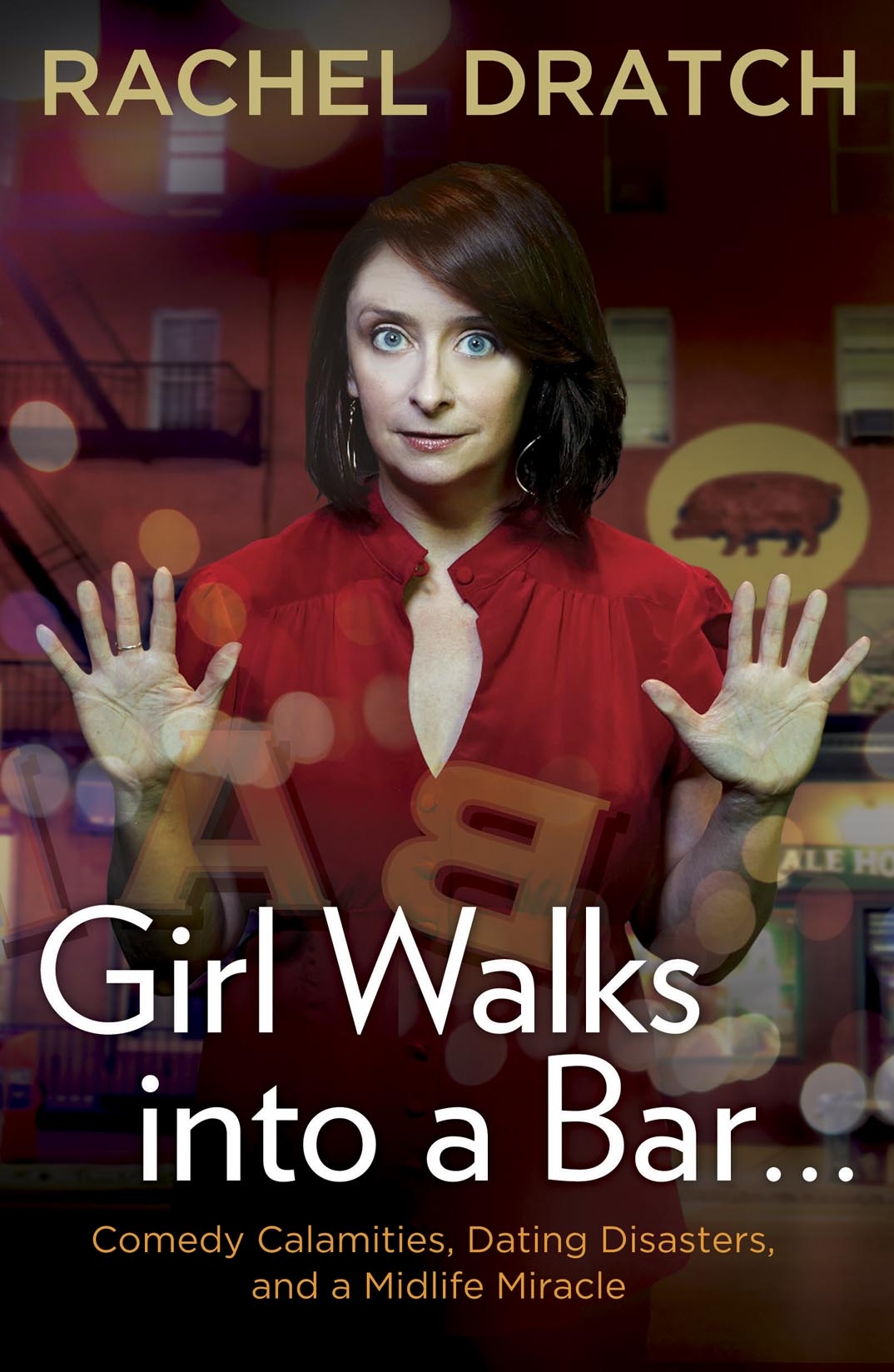
Girl Walks Into a Bar

Written by , Posted in Feminism, Reviews

Girl Walks Into a Bar

I see two fellow Cannonballers have reviewed this book so far; their reviews actually reminded me that I wanted to pick up this book. Once again I chose the audio book route (at the end of the year I should put together a post comparing all the female-written and -read memoirs I’ve listened to this year) and am really happy I did.

As the other reviewers have pointed out, the focus of the book isn’t so much a behind-the-scenes SNL expose; yes that gets coverage as it is part of her life but it’s only part of her story. It’s interesting, it’s well-told, and it provides some insight into that world, but it was only about seven years of her life, so it makes sense to not spend the entire book on that time period.

Ms. Dratch strikes me as pretty laid back, cool lady. She’s funny, entertaining, and can write really well. She also strikes me as one of the most self-aware humans on the planet. Pretty close to the beginning of the book, she starts talking about the 30 rock ‘incident.’ I could hear the exhaustion in her voice, and I don’t blame her. I cannot imagine how frustrating and annoying (not to mention hurtful at times) it must be to be responsible for some hilarious roles and yet have her still most talked about role be ‘getting fired’ from 30 rock.

And to be clear – she’s really not hung up on it. She talks about it because we’re interested in it. But because the implication, the suggestion in hushed (and not so hushed) tones in the celebrity media, is that she lost out because she is not as attractive as Jane Krakowski, it’s repeatedly mentioned when Ms. Dratch’s name comes up. Can you imagine that something that was a bummer for you (losing a job because of a decision to have a different type of character in that position) becomes some giant (celebrity) news story about how you aren’t pretty enough? Ugh. She’s gracious in telling the story, and while others might be skeptical, I believe that she’s made her peace with it and really wishes the rest of us would just move on.

Some of the best parts of this memoir are her discussions about the types of work she is now offered and about her relationship with her son’s father John. Seriously, the entire final third of the book, while not really talking much at all about SNL or 30 Rock, is some of the best writing and the most interesting. I had dinner plans Monday night and was pretty annoyed that my friend showed up just as Ms. Dratch narrated that she’d just checked the pregnancy test and there were two stripes. I knew what was going to happen next (I mean, I knew she had a kid so assumed this was the start of that story), but the writing and the delivery of the words was so compelling I really did not want to turn it off.

I’d definitely recommend this book to others. It’s not particularly long (5 1/2 hours on audio; most of the books I’ve listened to have been between 6 and 8 hours) but it’s interesting, clever and sweet.

Sunday

21

April 2013

0

COMMENTS

I Can Barely Take Care of Myself

Written by , Posted in Feminism, Reviews

Full disclosure: when I first heard about this book I got annoyed for two reasons. The first was jealousy – “Oh man why did she get to write this book? I so could have written this book. Damn it.” The second was annoyance at the title – saying “I Can Barely Take Care of Myself” seems to play right into the stereotypes so many of those with children have about us childfree folks. I can take care of myself just fine and I STILL don’t want children. But as the author so kindly reminded me herself on twitter when I made such a comment, you really shouldn’t judge a book by its title.

I Can Barely Take Care of Myself

Well, I’m no longer annoyed by the fact that she wrote this book before I could – because is it GOOD. Ms. Kirkman (a writer for Chelsea Lately) did a much better job with this material than I could have done. The book feels honest, self-aware and not obnoxious. Of course I’m probably her target audience (happily committed to the childfree life [link to my post on it here]) and I’m not sure what the Eileens of the world (Chapter 11 – man I’ve met many of them) will think of it. But screw that – who cares? It’s nice to read a book that doesn’t assume that every woman in her 30s without kids is just waiting to get pregnant.

I’m still annoyed at the title a bit to be honest, just because even though she spends a lot of time explaining why she really wouldn’t be the best parent, and even though this is (cringe) her truth, it’s still sort of frustrating that such an awesome book’s first impression is “No, you’re totally right, people who don’t want children are a little broken and just recognize that we aren’t as good at life as you parents are.” But that won’t keep me from recommending the content to all my friends (the ones with kids and the ones without).

The book gives us some of Ms. Kirkman’s background, although it doesn’t feel like a full-on memoir. I bought the book on Thursday and read about 40 pages. I wasn’t able to pick it up again until today (Sunday), and I basically read through the last 160 pages in one sitting. While the early chapters were interesting, she really gets into the meat of the different ways childfree folks find themselves in uncomfortable situations. So many people say (sometimes in the comments of articles Ms. Kirkman herself has written) ‘why do you non-reproducers feel the need to talk about your choice?’ We really, really don’t. But because (some, many, a lot of) people won’t accept no for an answer, we’re repeatedly ‘defending’ a position that is really only our (and our partner’s, if relevant) business. Sometimes it’s easier to just preemptively strike.

I don’t want to take away from the joy of any potential readers by spoiling too many of the great insights Ms. Kirkman shares, but here’s one of my favorites. She spends the better part of one chapter talking through this idea that having a child somehow makes someone selfless (the opposite of us selfish childfree folks) and this whole “I really didn’t know the meaning of life until I had a child” concept. I can’t do it justice here but she basically points out that all of these parents making those claims are essentially suggesting that they had no moral compass until they reproduced, which – huh. Interesting thing to admit. She also points out that many childfree folks are contributing to society in a selfless and meaningful way, such as contributing to charity and doing all sorts of things that people with young children may not have the time to do.

She also takes on such fun responses to “I’m not having children” as “But you’d be such a good mother!” and “It’s all worth it!” while addressing how amazingly insulting it is for some people to just assume they know someone better than they know themselves (the “you just think you don’t want kids” condescension). The liberties people take when they hear ‘no’ in response to ‘are you having children’ is mind-boggling, and Ms. Kirkman does a pretty great job in the Eileen chapter of pointing out how horrible and violated it can make us childfree folks feel. We actually DON’T owe anyone an explanation, and yet somehow we always end up having to defend our choices to people at cocktail parties and weddings even if we really would rather be talking about literally anything else. We also really don’t like being forced to essentially lie to try to make small talk easier for the person with the child who cannot understand

She does veer a little into a sort of ‘huh’ realm with what I think might be an ill-advised analogy in the last chapter but I do get what she’s aiming for. And it doesn’t take away from the rest of this well-written book. If you’re interested in hearing her perspective before committing to buying the book, check her out on the April 18 episode of Citizen Radio – it’s what convinced me that I really needed to read this book.

One last quote I’ll be keeping in my back pocket in case I find myself facing boorish folks at a cocktail party thinking I just rolled out of bed at noon: “I get up at seven on weekends because I love my free time. Not every childfree person sleeps late and parties all the time. I am still a grown-up.” Preach it.

Saturday

2

March 2013

1

COMMENTS

No Kids For Me – Why Is That Seen As A Bad Thing?

Written by , Posted in Childfree, Feminism

This post has been writing itself in my mind for over a year, when I had my first real encounter with someone who refused to accept that I did not plan to have children. During a discussion about his two-year-old daughter, the son-in-law of a family friend asked when I was going to have kids. My response of ‘oh, I’m not having children’ was met with a guffaw. He condescendingly insisted that I was wrong and would change my mind. It was a frustrating encounter, but not unusual. It seems childfree people are often told that we either don’t know what we want or we are selfish for wanting what we do.

Oh, I know what I want, and that is a life without my own children. I do not want to raise them. It’s not something that interests me, it’s not something I’ve ever desired, and it is not part of what I want for my life. Please note: this doesn’t mean I don’t like any children – I volunteer as a leader for a Campfire group of 10 four-year-olds. I happily hold my friends’ children, play with them, get them slightly age-inappropriate gifts. It just means I do not want to raise one of my own.

I get that someone who has always wanted to have kids might be taken aback when they encounter someone with an equally strong but opposing viewpoint, and that they might gasp “why” initially, but perhaps after the first “because I don’t want kids” they can let it go. I mean, think of how weird it would be to really start questioning a pregnant woman about why she wants to have children, telling her that she will change her mind and that she’s really missing out on a fantastic life. Seems pretty inappropriate, right? Yeah. Same for refusing to accept someone’s statement that they don’t want kids.

Also, I get really tired of the people who sort of nod, giving us the idea that they either get what we’re saying (or have the manners to let it go), then smile and say “yeah, I get it. It’s fun to be a little selfish.” Say what? The decision to have children is just as self-centered as the decision to not have children. What comes AFTER that may vary in selfishness, but think about it. I think most parents expect that they will find some joy in parenting. My understanding is that it is (or can be) very rewarding but also very difficult. That it’s something that gives parents satisfaction. It’s something they are doing out of a desire, to accommodate their vision of the future. To help them have the life they want.

Sounds remarkably similar to the reasons why people choose not to have children. So why is one choice seen as selfish?

Part of the problem seems to me that the reasons people (who have children) suggest people like me aren’t having children are inevitably quite trivial, but if you ask most of us, the reasons aren’t trivial at all. I’m not childfree so I can sleep in. I’m not childfree because I can’t handle the responsibility. I’m not childfree so I can have lots of money to spend on fancy clothes.

But even if I were – why should anyone else care? Why should anyone feel so invested that they want to change my mind? Or want to suggest that I just don’t know myself as well as someone who does want children? It seems so … unnecessary.

If you still can’t really wrap your head around why someone would not want children, or thinks it’s a ‘bad’ decision, try this analogy:

I don’t want to be a doctor. That doesn’t mean I think doctors are bad, or that pursuing a medical career isn’t a great thing. I also recognize that we need doctors in the world, and are lucky that there are many, many people willing to take that on. No one yells at me for not wanting to be a doctor, or condescends that I will change my mind; they accept that being a doctor is not for me and that I know myself best. They don’t call me selfish for not wanting to go to medical school; they accept that I’ve weighed my options and becoming a doctor doesn’t come up high on the list. And doctors don’t come up to me and say “Oh, you should be a doctor. I know you say you aren’t going to be one, but you’ll change your mind. It’s awesome, and the best possible route for everyone.”

And to address that other looming question: what if everyone thought like I do? Well, what if everyone wanted to be a lawyer? What if no one wanted to be a sewage system operator? There are lots of different roles people can fill in the world, and most people fill many, many roles. But we don’t expect everyone to fill all the same ones; in fact, that would be a recipe for failure. Why must the exception to that be reproducing?

Friday

1

February 2013

0

COMMENTS

Wednesday

30

January 2013

0

COMMENTS

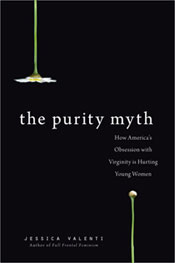
The Purity Myth

Written by , Posted in Feminism, Reviews

cover-purity-myth11

This is a nearly impossible review to write, as this book is amazing, infuriating, and endlessly quotable. I like to write in my books (I know, the horror), underlining passages, commenting on paragraphs, dropping the occasional “the FUCK” in the margins, and fiendishly circling page numbers so I know which ones REALLY need to be remembered. In the case of this book, nearly every page has at least one passage underlined. And I was being conservative with my pen.

Jessica Valenti is a feminist who has spent much of her life spreading the (shockingly controversial) idea that women deserve social, political and economic equality. This doesn’t just mean that she supports the basics like, say, equal pay for equal work; it means she explores the real issues that affect women on a regular basis. She examines the systemic issues, the roots of discriminatory treatment, and makes connections that initially seem obtuse but, given her thorough research and excellent ability to connect the dots, become clear and obvious to anyone willing to think critically.

I read her book Full Frontal Feminism this fall, and plan to read Why Have Kids at some point this year. But this book has caused my blood pressure to rise so much that I think I need a palate cleanser to clear my mind of the absurdity of the anti-feminist movement.

As the subtitle of The Purity Myth suggests, Valenti’s book explores “how America’s obsession with virginity is hurting young women.” The overall thesis can be summed up pretty well with this quote:

“For the record: I think virginity is fine, just as I think having sex is fine. I don’t really care what women do sexually, and neither should you. In fact, that’s the point. I believe that a young woman’s decision to have sex, or not, shouldn’t impact how she’s seen as a moral actor.”

There is so much good in this book that I clearly won’t be able to do it justice. But I’m going to try to point out some of the things that make it so great. Valenti doesn’t (as some of her more ignorant critics claim) propose women go out and have a lot of sex. She doesn’t propose that women not have sex, either. Instead, she chooses to frame the discussion around why women are judged based on *not* having sex, while men are judged on other things. As she puts it in the first paragraph: “It’s time to teach our daughters that their ability to be good people depends on their being good people, not on whether or not they’re sexually active.”

Anyone who has attended high school in America can probably almost immediately bring to mind the image of a classmate who was a ‘slut,’ and, as such, not a ‘good’ person. I find it embarrassing to think back to how sexual activity was used as a proxy for determining the (negative) value of an entire human. It wasn’t always the case; not having had sex (at least at my high school) didn’t peg someone as good or bad, but there were definitely some people who were talked about.

Valenti focuses on all the different ways this idea of purity hurts women of all ages. Many of you are probably familiar with the Madonna / Whore dichotomy (possibly thanks to a scene from Sex and the City featuring Charlotte talking to Trey about her sexual needs); Valenti looks at the way it is reinforced on a regular basis through all sorts of different venues, and how that hurts all women. And if you think about it, it makes perfect sense: if my value is tied up in whether or not I still have an intact hymen, that implicitly means that nothing else I do matters. If all that I am good for is staying ‘pure’ for my future husband then there’s no need for me to access any other opportunities, like, say, a solid education or a career.

The first chapter in the book – and the one that disturbed the heck out of me – focuses on Purity Balls and virginity worship. These FEDERALLY FUNDED displays of paternal ownership reek of creepy incestuous relationships, but operate under the guise of helping young women to ‘save’ themselves, with their fathers promising to protect their virtue. Again, as though a girl’s virtue can be found between her legs and not in her brain.

From here, Valenti discusses many more related topics in fascinating and disgusting detail, including: the dangers of abstinence-only education; the racial and economic implications of the fact that some women are already seen as ‘spoiled’ by virtue of the way they look or the community in which they live; the misinformation spread by anti-feminist organizations; the way that purity is sexualized, contributing directly to the objectification of young women; and myriad other interconnected topics. From an exploration of how society has decided only certain women can be raped, to how this traditional understanding of purity leaves out many people from the get go (where do lesbians fit in, for example?), Valenti hits each topic directly, using straightforward language backed up by solid research and a whole lot of facts.

Some of the best writing is in the area of sexual assault. I dare you to read chapter five without either throwing the book at a wall or at least going to the liquor cabinet for a stiff drink because it is BLEAK.

But it is so important. I plan to gift this book (along with Full Frontal Feminism) to my nieces and nephews when they are old enough, because the information is important, and it isn’t just up to women to change these bizarre notions of a woman’s worth. While some readers may have tuned out at my first mention of feminism, consider picking it up – whether you are a woman or a man, this book will open your eyes and hopefully motivate you to action.

Friday

11

January 2013

0

COMMENTS

The Feminine Mystique

Written by , Posted in Feminism, Reviews

FemMystique

I am a feminist. I don’t think that’s a groundbreaking title to claim, although if you listen to some of my more famous peers (Katy Perry, I’m looking at you), it’s a dirty word. But whether you claim the title loudly and proudly, or claim everything the title represents but annoyingly shun the term itself, it’s good to understand its roots.

Enter The Feminine Mystique, written by Betty Friedan, founder of the National Organization for Women. Dense but accessible, the book focuses on the malaise that struck (straight, affluent, white – we’ll get to that in a minute) women in the 50s and 60s. Ms. Friedan put a name to “the problem that has no name,” exploring why women who seemingly have it all – or at least everything society thinks they should want to have – are unfulfilled, depressed, and even suicidal. She backs up her discussion with facts, referencing studies ranging from Kinsey’s research to polls from Mademoiselle magazine. She pretty neatly takes down the ridiculousness of Freudian theory as applied to women in the United States, and points to evidence that supports the idea that women who access higher education (whether before marriage or during) and pursue careers find themselves happier (and with better sex lives, natch) than their counterparts.

Much of the book is filled with important information and suggestions for how to achieve equality.  While it took me awhile to get into it, I found that by breaking it down into chapters I was able to really process what I was reading. It was frustrating to read lines that could have been written today, describing how people view the ‘role of women’ in the home, that the most important thing that women can do is bear and raise children. As a childfree woman myself, I’m also well aware of the weird dichotomy that exists in the United States today: this worship of the idea of motherhood, but the disdain for mothers (e.g. no mandated paid maternity leave, shock at seeing a nipple in public to feed an infant, the judgment women cast upon each other over life choices).

BUT. And this is a big but, and one that I only discovered by reading the book – Ms. Friedan was apparently homophobic. It’s distressing to learn that she views that “Male homosexuals … are Peter Pans, forever childlike” who have a “fear of adult responsibility.” Say what now? While one can raise all the arguments they want about a book being ‘of its time’ (published in 1966), the fact remains that even in her later years of activism Ms. Friedan was at times guilty of expressing disdain for gay men and lesbians.

The other GIANT issue with this book is that, while focusing on what I would argue was (and to a degree still is) a real issue for women, she presented her arguments as though they applied to all women. I don’t think every book needs to examine all sides of every issue, but she certainly spent no time on the intersectionality of gender with race and class, and she also spent no time (at least that I saw, and I read it pretty closely) focused on why this is the group that needs the attention.

Still, I’d say this is a book to read for everyone who wants to understand better the history of feminism and be reminded not so much of ‘how far we’ve come’ but really of how far we haven’t come.


Friday

16

December 2011

1

COMMENTS

A Woman and Her Experience

Written by , Posted in Feminism

I’m pro-choice, and with the recent Plan B discussion found this blog to be especially relevant. It’s great to read one woman’s story about the real experience of a medical abortion. I’ve linked to the first post in series; if you click on the archive for December you can read the rest. Some of it is pretty graphic, so if blood gets you feeling not awesome, you might want to just read the overview in the beginning.

One Woman’s Experience

Wednesday

18

May 2011

0

COMMENTS

When Should We Trust Her To Make That Call?

Written by , Posted in Feminism

There have been a lot of discussions lately about reproductive rights. Some were hoping that the Republicans would hold out on agreeing to a new budget until there was no more federal funding for Planned Parenthood. Some seem to not understand rape, and so were looking to rewrite laws to define rape as only being forcible (so if you were roofied, too bad!), withholding access to abortion if one couldn’t prove that one had been raped by that definition. The choice people talk about often is abortion, with other services provided by places like Planned Parenthood often getting little to no coverage.

But this article is about a different kind of reproductive choice. It’s about the choice to not have children at all. To essentially guarantee that outcome by choosing sterilization. And it’s about how hard that elective surgery can be to obtain. How doctors are reluctant, especially with women who don’t yet have children, who aren’t married, or who are younger, to perform or even refer people for surgery.

I have no desire to have kids. I do not want to be pregnant. I do not want to reproduce. I do not want children. It’s something I’ve been clear on for many, many years, yet it’s something that some people can’t seem to accept. I remember during the time when I was looking at options for health coverage, my mother kept trying to steer me to ones that had maternity coverage, ‘just in case.’ My, but that is an awkward discussion, explaining that I’m not having children. Seriously not having children.

But back to the article, and the issues in it. There seems to be an expectation that all women not only should want children but will want children, if given enough time. That there’s a one-size-fits-all concept of family, and that concept must involve children, and that no matter what, eventually all people will want them. To the point that some doctors apparently are either so scared that younger women will change their minds and blame them, or just don’t trust the women to know themselves.

However, I have to admit that on first read, I did think about how I would react to a 22-year-old who asked for sterilization. I’d probably be concerned because I know opinions can change. But I don’t necessarily think that is the motivation behind the people who refuse 22-year-olds – or 40-year-olds – this procedure. I think there is a bit of judgment, a bit of paternalism, some fear, and a lot of not understanding how someone could choose a life path that doesn’t match what everyone seems to think we all should follow. We seem fine with 22-year-olds who want to get large artificial bits of man-made material put into their chests. It’s not considered odd for 25-year-olds to have their noses reconstructed, or to have fat sucked out of their stomachs and thighs. Those are pretty serious surgeries, but I don’t see doctors turning women away.

It’s interesting, because part of me understands concern about the decisions people could make, and the regrets they could have about those decisions. But we seem to allow decisions of the same import as long as they fit with what we think is the ‘right’ way to live. Trying to make yourself conventionally pretty by reconstructing your face or body? Have at it! Bucking the expectation that all women will or should want kids? No way. Not until you’re older, by which point society is CERTAIN you will change your mind.

I know there are some other options, but those options seem somewhat silly when one is certain about their choice to not have children. Why should someone take the pill every day, or the patch once a week, or have something artificial inserted into their body because someone else is uncomfortable with the decision the woman has made?

I realize this isn’t the most pressing issue of the day. But it’s interesting to me, from a philosophical perspective, and it was nice to see it discussed somewhere other than in my mind.