ASK Musings

No matter where you go, there you are.

Books Archive

Thursday

20

April 2017

0

COMMENTS

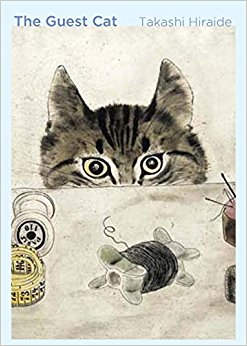
The Guest Cat by Takashi Hiraide

Written by , Posted in Reviews

Four Stars

Best for: Anyone who likes gorgeous, evocative writing and simple but deep stories.

In a nutshell: A writer and his wife ‘share’ custody of a neighborhood cat.

Line that sticks with me: “The garden just didn’t seem the same. It wasn’t our garden anymore. It had lost all its energy and spirit.”

Why I chose it: It was on the ‘popular with our readers’ shelves at the local bookstore and looked pretty cute.

Review: This is a very short (136 pages in a small-form book) little story that I found to be lovely, sweet, honest, and sad. Spoiler – the cat dies at some point. But that is just part of the story, and while it is sad and definitely colors the parts of the story that follow, I didn’t find myself wracked in sobs or anything, as the author is not attempting to manipulate my feelings to that degree.

The narrator and his wife live in what used to be the guest house on the edge of the grounds of a large estate, which is occupied by an elderly couple. They also have a set of neighbors, who ‘own’ Chibi, an independent and playful female cat. Chibi takes to wandering through the small neighborhood, and has a profound impact on the narrator and his wife. The story follows how Chibi enters their world, changes their world, and then leaves their world.

There is very little dialog in this book – but there is tons of rich scene setting. I can picture the gardens, the home, and of course this cat. I really enjoyed this writing – it is very different from what I usually read – and think anyone who loves any type of animal will likely enjoy this book.

Tuesday

18

April 2017

0

COMMENTS

Happiness: A Philosopher’s Guide by Frederic Lenoir

Written by , Posted in What I'm Reading

Three Stars

Best for: Former philosophy students, current philosophy students, or anyone interested in looking at happiness from a more philosophical, less how-to perspective.

In a nutshell: French philosopher Frederic Lenoir examines what many great thinkers have had to say about how we can be happy in life.

Line that sticks with me: “It is essential for us not just o know ourselves, but also to test out our strengths and weaknesses, to correct and improve within us those things that can be changed, but without trying to distort or thwart our deepest being.” (p 48)

Why I chose it: The cover art is pretty fabulous – it made me smile, which seemed like a good sign.

Review: This is fairly concise survey of ancient, modern, western and eastern thought as it relates to happiness. Is the Stoic concept of being aware of how we will lose everything eventually and so not getting too attached what will help us be happy? Or is it a spiritual connection to the divine? Is it self-knowledge and self-improvement? Is it serving others? Does our disposition lead to some self-fulfilling prophesies – are optimists happier because they are optimists?

Lenoir offers up support for all of these ideas, examining the regulars (Aristotle, Kant) while also bringing in some who might be lesser known even to those who study philosophy. I found that the book got me to thinking even more about what I value and the decisions I make each day about how I choose to live my life. It is not a guide to becoming happy, at least not directly; instead it is a meditation on what happiness looks like, whether it is even worth striving for, and what it takes to retain it.

This would have gotten four stars except for one glaring, frustrating issue: save a brief discussion of his enjoyment of Indian sage Ma Anandamayi near the very end, Mr. Lenoir does not bring any women philosophers into the discussion. As someone who chose to take on this project, ostensibly with fairly limitless boundaries (he has published many books previously and so is a known entity), he could have taken the time to explore some of the lesser known philosophers who are women. The book isn’t about which thinkers influenced the philosophy of happiness so much as a discussion of the validity or import of their thought; as such I think there was a ton of space for him to bring in much more interesting individuals than the usual parade of dead white guys.

Saturday

15

April 2017

0

COMMENTS

Why I Am Not A Feminist by Jessa Crispin

Written by , Posted in Feminism, Reviews

Three Stars

Best for: People interested in feminist critique who have a lot of patience.

In a nutshell: There is something called universal feminism, which is what feminism is now. And it is bad, because it is not doing nearly enough. Also, if you don’t worship Andrea Dworkin, you are the worst.

Line that sticks with me: “It’s easier to complain about the power you don’t have than to think about how you are wielding the power you do have.” (p 83)

Why I chose it: Someone in a Pajiba-adjacent Facebook group posted an interview with the author. It seemed like it might be challenging enough to be enjoyable.

Review: I wrote in the margins of this book more than I have in a while, and nearly every comment was negative. Right up front she makes the claim that today’s feminism is trying to be ‘universal’ but doesn’t provide strong evidence to that claim (at least, I didn’t see it). And I get what she’s going for here, but it really doesn’t work. It feels more like she came up with this idea and decided it would be the focus of the book, and then refused to ‘kill her darlings,’ as it were, when it didn’t end up working out that well.

But let’s say she’s right, and that the problem with feminism today is that it tries to be universal. This does not save her from spending a large portion of this book both railing against women who tell other women how to be feminists, while then telling us how we are doing feminism wrong. It’s like she’s decided that the Alanis Morissette definition of irony is correct, and thus chooses to ignore how so many of the complaints she has about ‘universal feminism’ can also be found in the pages of her own book.

She also really has a problem with ‘identity politics,’ which maybe she doesn’t fully understand? Because later in the book she seems to support the concepts behind recognizing that people have different intersections of marginalization. The writing makes me think that this is what might happen if Bernie Sanders and Susan Sarandon had a child, and that child grew up to write a lot of strong words with not a lot of support.

And the thing is, she does have *some* good things to say. And some interesting things to say. For sure. I didn’t always agree with her, but some of her more challenging ideas were certainly interesting. One section, albeit brief, talks about marriage as problematic. In later interviews I think she said something about how feminists don’t get married, but in the book at least, her point wasn’t entirely ignorant about the current state of marriage; she instead seemed worried about what it means to younger women when marriage is the goal. So not so much that marriage itself is the problem, but what choices we make to guarantee we will get to marriage. Not totally ground-breaking, but definitely interesting.

But she absolutely, unreservedly refuses to show her work. If I were grading any of these chapters for a college course, she’d get maybe a C at best in most of them, because she makes wide sweeping generalizations without supporting evidence. In other interviews she has said this is because she didn’t want her message to get lost in the inevitable claims of cat-fighting that would follow. And I am sympathetic to that … but she still has to support her claims. This isn’t a personal blog or a letter to friends. She’s making very strong claims about an entire political and social movement; I shouldn’t have to write “citation needed” in every margin.

The author clearly has a lot of problems with our current society. And so many of the concerns she raises are, I think, valid. She just, in my reading, does a very poor job of creating any sort of cohesive narrative around how these problems and feminism – the current reality of it, not the straw man she’s invoking – are currently at odds. But I’d love to discuss it with others who have read this.

Last thought – she repeatedly expresses her frustration that feminists aren’t fans of Andrea Dworkin. But, as I understand it, Ms. Dworkin was very supportive of anti-trans author Janice Raymond. I admittedly am not that familiar with either of their works, but considering Ms. Crispin only name-checks maybe three feminist authors in the entire book, this seems an odd choice for sure.

I wavered between giving this book two and three stars. If we had half stars, this would be a solidly 2.5 stars book. I did, however, choose the higher option because there are very interesting ideas in here – I just don’t think she does a good job of communicating them.

Friday

14

April 2017

0

COMMENTS

Locked Down, Locked Out by Maya Schenwar

Written by , Posted in Reviews

4 Stars

Best for: People interested in what justice could look like.

In a nutshell: Author Maya Schenwar – whose sister has been in and out of prison – explores what is wrong with our current system, as well as alternatives.

Line that sticks with me: “Isolation does not ‘rehabilitate’ people. Disappearance does not deter harm. And prison does not keep us safe.”

Why I chose it: A political podcast I used to listen to interviewed the author. It struck both my husband and I so much that we accidentally bought two copies.

Review: I grew up assuming that if something bad happens, I should call the cops. Aside from the recognition that this is rooted deeply in the fact that police responding to any incident I report will see a white woman, and thus probably won’t shoot me, it is also based in the idea that justice means the ‘criminal’ is apprehended, tried, convicted, and sent away. This book asks those of us who hold that assumption to set it aside and imagine something else.

Ms. Schenwar is the editor of Truthout, and has written a lot about the prison-industrial complex. Part of her writing is informed by her personal experience of having a family member – her sister – in and out of prison and the broader criminal punishment system for many years. This fairly quick read (I took in all 200 pages in two days) is broken into two parts – the first looks at all the ways the criminal punishment system tears families and communities apart, and the second explores alternatives.

The basic premise is, I think, summed up in the line that stuck with me. Society sees individuals who harm others as needing to be taken out of society. Allegedly, this should ‘rehabilitate’ them, but it doesn’t. It doesn’t keep people who haven’t caused harm yet from harming others, and it isn’t making me any safer when I walk down the street. Instead, our current system is causing more harm by removing individuals and perpetuating even more harm. If the person who earns money fro the family goes to jail, what happens to her husband and children? If a child’s father is in prison and her mother is working multiple jobs to meet her needs, what options does the child have?

So much of our society is built on this very specific way of viewing “justice,” even though there’s not a lot out there to suggest that throwing people in prison gets justice for anyone. The language choices Ms. Schenwar makes throughout really got me thinking – she doesn’t talk about our current system as ‘criminal justice,’ it’s ‘criminal punishment.’ And instead of referring to crime, she talks about harm. The discussion around the latter point I found especially interesting.

The only reason this isn’t a five-star book for me is that, while the examples of alternatives are plentiful, Ms. Schenwar doesn’t, for me at least, offer up what this could look like on a large scale and what it would take to get there. But it’s a starting point for me, and one that will lead me to learn more about prison abolition and what I can do to support such movements.

Wednesday

12

April 2017

0

COMMENTS

Aha! The Moments of Insight That Shape Our World by William B. Irvine

Written by , Posted in Reviews

Three Stars

Best for: Philosophy students, maybe?

In a nutshell: Philosopher William Irvine looks at the ‘aha’ moments in religion, morality, math, science and art.

Line that sticks with me: “More generally, when I cannot give reasons for the moral beliefs I hold, I take it as compelling evidence that I need to take a closer look at those beliefs.”

Why I chose it: I needed a little philosophy.

Review: I’m not totally sure what this book meant to be. The writing is good, but the overall cohesion is a bit lacking.

Irvine breaks his book into five sections, each with three chapters. In the first, he gives examples of the topic area (religion, morality, math, science, and art). In the following chapters he … also does things.

I found the section on math the most interesting, because it was fun to read about the different discoveries and also just learn more about what mathematicians do. But the section that I most enjoyed was on morality. It really gave me the fix I needed to not lose my connection to my philosophy education.

Seriously, it’s not bad, but I’m just not sure what I just read. There’s not a lot of cohesion, and he doesn’t really get at the problem I think he’s trying to solve.

Sunday

9

April 2017

0

COMMENTS

All in Good Taste by Kate Spade New York

Written by , Posted in What I'm Reading

2 Stars

Best for: I’d have thought me, seeing as I love etiquette and entertaining books. So … not sure.

In a nutshell: Large format, colorful etiquette and entertaining book.

Line that sticks with me: N/A

Why I chose it: I collect etiquette books. I even started my own version of an advice column (in website form). I like making things look pretty. And this book looked like fun.

Review: It wasn’t. I suppose a book written by a brand is probably not going to be the best.

I mean, it isn’t horrible. But it’s hard to read. There are pages full of quotes (as in, two pages with maybe ten words spread across it to pad the book). There are pages with random vignettes from people who I assume I should have heard of, talking about how they entertain. There are recipes. There are suggestions for games – some of which sound kind of fun. There are decor recommendations.

It just wasn’t that fun to read. I only found myself making note of a couple of the suggestions, which is not like me. I don’t know. Maybe I wasn’t in the mood, or maybe it wasn’t a great book. Probably a little of column a, a little of column b.

Saturday

8

April 2017

0

COMMENTS

Rest in Power by Sybrina Fulton and Tracy Martin

Written by , Posted in Reviews

4 stars

Best for: Readers who want to learn more about real-life incidents of racism and gun violence.

In a nutshell: Ms. Fulton and Mr. Martin, Trayvon’s parents, tell the story of the murder of their son, from the weeks leading up to it through the verdict.

Line that sticks with me: “And we’re gonna win because we have no other choice. We cannot allow a legal precedent to be established in a city that tells us that it is legal for a man to kill us, tell any story he wants, and walk out with the murder weapon.”

Why I chose it: I believe that Trayvon’s story, like the stories of all victims of racism and gun violence, deserves to be heard.

Review: This is a well-written, compelling account of what happened in Florida in 2012 and 2013. It is biased in support of the narrative that George Zimmerman murdered Trayvon Martin (as opposed to killing him in self-defense) because it comes from his parents’ perspectives. But that doesn’t mean it’s wrong.

If you don’t live in the U.S., you might not have heard about this story. Trayvon Martin was a (just barely) 17-year-old black kid who was walking home to his dad’s girlfriend’s place after picking up some flavored tea and Skittles at the nearby 7-11. George Zimmerman, the neighborhood watch captain, started stalking him because he was “suspicious” (i.e., black). Zimmerman called 9-1-1 and then proceeded to continue tailing young Martin*, eventually getting out of his SUV and shooting young Martin in the chest at point blank, killing him almost instantly.

It was disgusting to read about then, and it’s heartbreaking to read about now. How young Martin’s character was put on trial but Zimmerman’s barely was. How it took over six weeks to even arrest and charge Zimmerman, even though he admitted to killing young Martin. How Trayvon’s parents had to work through their grief in the spotlight because only through the media were they able to get enough attention focused on what was a very poorly handled investigation.

The alternating chapters work well – each parent tells their perspective, but there isn’t a ton of overlap or repeating of stories. The pain that they were – are – feeling comes through, as does their faith in God (especially from Ms. Fulton), which was critical for seeing them through this.

The description of the trial angered me greatly, as it did seem that so many choices that were made were beneficial to Zimmerman – even and especially choices made by the prosecution. The Judge didn’t allow the term “racial profiling” to be used – only the term “profiling.” And Stand Your Ground, while not explicitly used as a defense, appeared repeatedly.

And this, especially pissed me off to no end. As Ms. Fulton makes clear a few times, even if you believe the narrative that Zimmerman felt threatened by young Martin when he got out of the car, the one who instigated the entire incident was Zimmerman. If Zimmerman had listened to the dispatcher who said “We don’t need you to [follow him],” if he’d listened when he was asked to meet the police at the front entrance to the community, if he hadn’t had a gun on him, if he’d STAYED IN HIS FUCKING CAR, Trayvon Martin would still be alive.

Additionally, I think it’s pretty clear that if Zimmerman were black and young Martin were not, Zimmerman would have been arrested, booked and charged within days if not hours of the killing. He got away with murder, and it’s disgusting.

So, as you can tell, this book might raise all the feelings. Be prepared. But I think it’s a book worth reading.

*Usually I use the terms “Mr.” and “Ms.” when referring to individuals in a review. However, one of the things we see when black children are murdered is that they aren’t allowed to be children. With that in mind I didn’t want to give the impression that Trayvon was anything but a kid; hence the “young Martin” phrase.

Wednesday

5

April 2017

0

COMMENTS

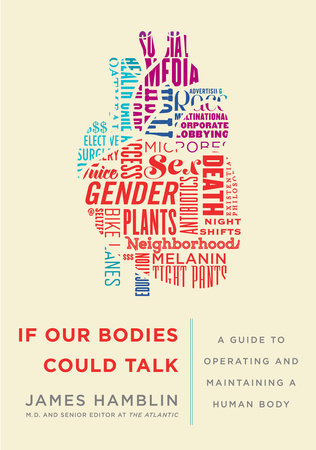
If Our Bodies Could Talk by James Hamblin

Written by , Posted in Reviews

Five Stars


Best for: You, assuming you like quality science writing, humor, and an unexpected amount of social justice talk.

In a nutshell: Journalist and doctor answers questions about our bodies.

Line that sticks with me: (mostly because it’s demonstrative of the author’s dry humor) “But in search of an actual definition, Cleveland clinic begs the question. “Sudden cardiac death is a sudden, unexpected death caused by loss of heart function.” (You guys, why do you have a website?)” p289

Why I chose it: Stopped by the bookstore looking for travel books for an upcoming trip. Saw this (autographed copy to boot, which means sadly I missed his visit to Seattle), flipped through the table of contents, and knew I had to own it immediately.

Review: Ack! So good! This 350-page book is broken down into six sections – Appearing, Perceiving, Eating, Drinking, Relating, and Enduring. And while there are a dozen or so questions in each section, the responses aren’t exactly what you’d expect – they are even better. For example, a question as simple as “What are sunburns?” is answered with a discussion of what sunburns are that eventually leads to a discussion of health disparities and the Watts riots. A question about whether we need to drink 8 glasses of water is the start of a broader discussion about sweat, and juice, and vitaminwater.

It gets better. Dr. Hamblin discusses disparities in care for trans individuals, and the inherent patriarchal bias in how we look at (or don’t – the nipple discussion is fascinating) our different body parts. He tackles ‘gluten sensitivity’ and lactose tolerance (seriously, he points out that lactose intolerance is a weird and sort of racist way to frame it, considering the majority of the world’s population is not lactose tolerant), and spends a whole chunk of the book on aging and dying.

This isn’t a straightforward ‘ask question – get answer’ book; it’s more an opportunity for Dr. Hamblin to quickly answer basic questions and then use them as jumping off points for deeper and more interesting discussions. And it’s so funny. Not constant, joke-joke-joke funny, but witty and dry. I guffawed and laughed out loud multiple times. Nothing is straightforward – I don’t think he ever actually says whether we need to drink 8 glasses of water a day (or more, or less) – but that’s not exactly the point. The point is a discussion about hydration, and dehydration, and over-hydration. It got me thinking about many of the topics in ways I hadn’t before.

Go. Read this.


Sunday

2

April 2017

0

COMMENTS

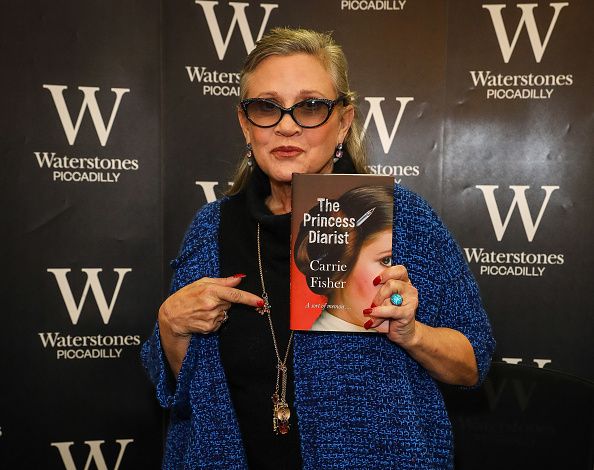
The Princess Diarist by Carrie Fisher

Written by , Posted in Reviews

Four Stars

Best for: Carrie Fisher fans, Star Wars fans, memoir fans.

In a nutshell: Carrie Fisher tells stories of her time before and during the filming of the first Star Wars film, and looks at what it has all meant to her.

Line that sticks with me: “I act like someone in a bomb shelter trying to raise everyone’s spirits.” (p153)

Why I chose it: I was in a bookstore the day after Ms. Fisher died, and this was the last copy of any of her books left. I knew I wanted to start reading her writing, but then decided to start at the beginning and save this for last.

Review: Mission sort of accomplished. After reading two of Ms. Fisher’s four novels, I started the third and decided that her fiction just isn’t my favorite. But I enjoyed her two previous works of non-fiction, so still went forward with this one. And I’m so glad I did.

I am not a big Star Wars fan. The first time I saw it was with a guy named Brandon something. I was a freshman in high school, and he was a senior. He played an instrument in the school marching band – I want to say saxophone – and I was on the drill team, which meant I wore a cheerleader outfit but twirled two small flags instead of two large pom poms. He showed me the first film, in what I later learned was an attempted … seduction? No, that’s too dramatic. Dude wasn’t interested in getting into my pants – I think he was just looking for like a kiss or something. Didn’t work though. (Sorry Brandon! Hope you’re doing well!)

So even though I’m not a big fan, I live in the world, and thus I’m familiar with the movies. I’ve grown to enjoy them, and have now seen all of the films save Episode II (which is actually the fifth one released, right?). I appreciate that Princess Leia has grown to become General Leia. And while I know that Ms. Fisher is not Princess Leia, I also know that much of her life has been consumed by the blurring of those identities.

To me, however, Ms. Fisher is first and foremost Marie from When Harry Met Sally, so reading this book was a great way to learn more about her time as Leia, and what that meant. The middle section is literally pages from her diaries from the time shooting Episode IV, and some of it is delightful, some of it is sad, and some of it is filled with truly bad poetry. It’s fantastic to see someone lay all of that out there. Especially considering just a week ago my own mother called to tell me she’d found some horrible poetry of mine about a crush I had on a boy named Ryan. Oh god, I didn’t even let her finish reading it to me. She held the phone to the shredder as she put that mortifying bit of my history in; I can’t imagine sharing it with millions of people in a book.

But I’m so glad Ms. Fisher did. I enjoyed this book as much as her other non-fiction works, and I think it was better edited than the rest. The story flowed, the chapters felt connected, there was something of a storyline as opposed to essays that didn’t seem to have a connection other than the storyteller. And while I am so sad that Ms. Fisher died when she did, this seems to be a perfect final bit for her to leave us with.

Saturday

1

April 2017

0

COMMENTS

Surrender the Pink by Carrie Fisher

Written by , Posted in Reviews

Two Stars

Best for: Those who (like me) are insisting on reading all of Carrie Fisher’s writing.

In a nutshell: A woman alternately attempts to either win back or move on from her failed relationship.

Line that sticks with me: “She’s completely undemanding somehow.” “How can you respect that?” “Why do I have to respect? I enjoy it.”

Why I chose it: It’s Carrie Fisher, and I want to read all of her work.

Review: I’m not sure if this book of hers just didn’t connect with others or what, but it wasn’t included when I attempted to order all of her work through my local bookstore. I stumbled upon it while looking up the chronology of her writing, and so ended up ordering it through Amazon. The book is physically large – it feels like the size of a self-published book, which makes me think that the publisher isn’t the one who issued this reprint…

Anyway, this book is fine. It’s not bad, but I won’t be reading it again, and it’ll probably end up donated to a half-price book store or Goodwill. It’s a fine, fairly quick read, with some clever lines. It also contains a scene that, frankly, would have sold me on turning it into a movie, because I was doing the equivalent of watching through my fingers (side note: that’s much less effective when reading). So awkward, but so good.

However, I think the story was a little scattered for me. Some of it spans years, while the meat of it spans two or three days. I just had a hard time staying focused. There is also a lot more sex than I was expecting (although I supposed in retrospect the title makes more sense now). Nothing wrong with that, but when you’re like 20 pages in and getting a fairly vivid description of the main character’s three times losing her virginity (she explains it) – well, let’s just say that’s not exactly what I was expecting to read during my commute to work.

Ms. Fisher’s writing clearly has a bit of autobiography in it, so her main characters always seem to be actors and in the film or television industry. I appreciate that she sticks with what she thinks she knows best, and that having characters who write and act allows them a bit more freedom of movement and space, but it wasn’t my favorite.

Basically, if you want an entertaining read and find this at your library, I don’t think you’ll be unhappy with it.