ASK Musings

No matter where you go, there you are.

Books Archive

Saturday

28

January 2017

0

COMMENTS

Reading Lolita in Tehran: A Memoir in Books by Azar Nafisi

Written by , Posted in Feminism, Politics, Reviews

Four Stars
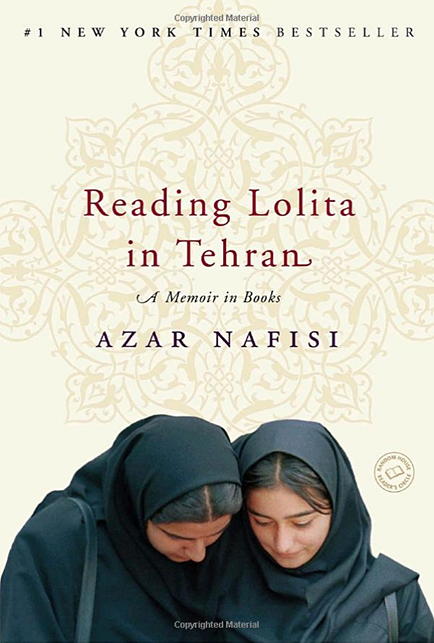
Best for: People interested in one story of life under authoritarian governments.

In a nutshell: A professor uses literature as the framework for her memoir of life teaching in Iran.

Line that sticks with me: “Lack of empathy was to my mind the central sin of the regime, from which all the others flowed.”

Why I chose it: I flew the weekend after the election, and saw this in the airport. I figured perhaps it would be good to study up on life under leadership that doesn’t view everyone equally.

Review: I’d heard about this book many times before, and thought it was all about a group of young girls who got together to read literature that they couldn’t access in other venues. That’s not entirely accurate. Instead it is the memoir of a professor that includes, in some parts, a group of women in their 20s getting together with the professor to discuss literature.

The book is organized into four parts, each using an author as the background to the events. It does not go chronologically; it jumps around a bit, which I found somewhat challenging, although I think it ultimately works well.

The book spends a lot of time exploring what it means to both receive an education and try to educate others with the implementing many strict rules. Dr. Nafisi spends a fair bit of time, for example, looking at what it would mean to follow the requirement to wear the veil, as she would not choose to wear one if it were not mandated. Is that a fight that it is worth undertaking if it means she would not be able to share her lectures with her students?

I think one of the more shocking things for me was how almost casually the author discusses how many people – including some of her own students – are thrown in jail for years for seemingly minor issues. And then they are released and it’s … it’s a big deal but also not surprising. It’s terrifying, and I have to say that given the utterly despicable things the 45th president has done in just the last eight days, I don’t think it’s too ridiculous to think it could happen here, too.

Before reading this book, I knew very little about Iran in the 80s and 90s. And obviously reading one book does not mean I know much more than I did before. But through the lovely writing of Dr. Nafisi, I feel like I understand some of the different perspectives of those living under the regime.
Wednesday

25

January 2017

0

COMMENTS

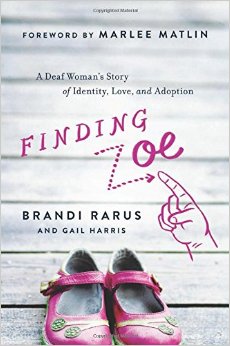
Finding Zoe by Brandi Rarus

Written by , Posted in Reviews

Two Stars

Best for: People interested in learning a bit more about Deaf culture in the U.S. and who also have a strong stomach for not great writing and questionable storytelling.

In a nutshell: Deaf mother with three hearing sons desperately wants a daughter; Deaf husband not totally on board; teenager gets pregnant and surrenders daughter for adoption. True story.

Line that sticks with me: “He felt that part of the magic and mystery of giving birth to a child is parenting that particular child. However, he believed that the one benefit of adopting a child was being able to decide whether that child was right for his family.”

Why I chose it: A colleague selected this for our equity and social justice book club, as she was interested in learning about Deaf culture and about adoption.

Review: First, I should explain that the line that sticks with me is because I found that opinion really challenging and ultimately a bit offensive.

Author Brandi Rarus went deaf when she was six, and was raised in a hearing family. This story is mostly her story, and it is educational but ultimately frustrated me. The biographical parts of Ms. Rarus’s story are interesting, as she can effectively describe the different factions in Deaf culture, the challenges Deaf children can face in education and in determining where they fit and who they are in the hearing world. She also was involved in many important moments in Deaf history in the U.S., including the Deaf President Now protests at Gallaudet and the passage of the ADA. Additionally, she was Miss Deaf America.

I appreciate the honesty Ms. Rarus shares throughout the book but MAN does she put a lot of pressure on the imaginary daughter who eventually materializes in Zoe. She is essentially desperate for a daughter to add to her family of three boys, and while I’ll never understand that desire (I don’t have kids), I get that people have it. The frustrating part for me is the assumptions and the language she uses to describe her future child – basically she sounds like she wants a doll and a best girlfriend. It looks like it turned out okay but what if Zoe turned out to hate shopping or pretty clothes, and got along better with her father than mother?

Additionally, even though I just lauded the honesty, there is something about how all of the players involved in Zoe’s adoption are described that feels false. Like everyone got final review, so nothing is true. And there are so many players – the birth mother, the birth father, the first adoptive family, the foster family, and everyone’s extended family. It can be hard to keep up. There’s also a very confusing situation with the birth father and birth mother and the courts that makes zero sense to me – basically the birth father wants to keep Zoe, but the birth mother wants to place her up for adoption, so she sues to terminate the birth father’s rights so she can have full rights and then surrender the daughter. I just found it odd that courts would terminate parental rights without any cause just so the child could then be adopted. I’m sure there’s a legal reason, but the book doesn’t explain it.

There is a fair bit of religion in here, which is not my thing but was fine and obviously fits as it is part of their story. However, there were some glowing comments about what appears to be a crisis pregnancy center (yikes) and some disparaging and questionable comments about Planned Parenthood and abortion, so that was unpleasant to read.

And finally, I found the discussion the first adoptive family have when they find out that Zoe might have hearing and other developmental challenges to be deeply distressing. First, the idea that there is only ‘one’ good thing about adoption seems very narrow-minded. And the man who made the comment I shared above sounded a bit more like this adoptive father thinks of adopting a child is like picking out a puppy. I get the idea that when adopting, the child should be placed in the home that will be best for her, but more I think this particular father just wanted a more “perfect” child.

Tuesday

17

January 2017

0

COMMENTS

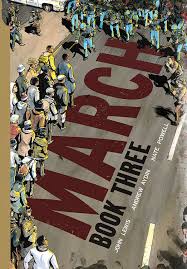
March: Book Three by John Lewis, Andrew Aydin and Nate Powell

Written by , Posted in Politics, Reviews

Five Stars

Best for: Anyone who thinks we don’t still need the voting rights act.

In a nutshell: This is the final – and longest – of three graphic novels about the life of John Lewis. It covers the mid-60s, culminating in the march from Selma to Montgomery and the passing of the voting rights act.

Line that sticks with me: “In Mississippi that summer we suffered more than 1000 arrests, 80 beatings, 35 shootings, 35 church burnings, and 30 bombings.”

Why I chose it: Because the first two books were great and I wanted to learn more.

Review: This final book covers a lot of ground, starting with a church bombing that killed four little girls, through voter registration drives that were accompanied by murders, and a peaceful march that ended up dubbed Bloody Sunday thanks to the vicious actions of the police.

It’s a rough read, but a critical one. I learned so much in the 250 pages, including more detail on some events that I had vaguely heard about previously. For example, I knew that the 1964 Democratic National Convention was contentious, but I didn’t know any of the details. It was so impressive to read about the very deliberate attempts to get the voices of the Mississippi Freedom Democratic Party heard.

Reading about the people who stood in line all day, not allowed to leave to drink water or use the bathroom, only to not be allowed to register to vote – or to be ‘allowed’ but then face ridiculously complicated literacy tests – was infuriating. Then to read about the passing of the voting rights act, and the triumph it was, only to be reminded about how the Supreme Court gutted it recently, leading to voter suppression during this most recent election. It’s like 20 steps forward, 19 steps back (forty years later).

Friday is going to happen, and some people will refer to the PEOTUS as President. Anyone who finds that deplorable but isn’t as well-educated on the past as they should be (like me) would be well advised to read this series to recognize what the fight for rights can look like.

Monday

16

January 2017

0

COMMENTS

March: Book Two by John Lewis, Andrew Aydin and Nate Powell

Written by , Posted in Politics, Reviews

Five Stars

Best for: Anyone who doesn’t know about John Lewis. Also, anyone who does. Also, judging from the latest Pajiba post, Rob Schneider. Ooof.

In a nutshell: This is the second of three graphic novels about the life of John Lewis. It covers the early 60s, focusing on the Freedom Rides and the March on Washington.

Line that sticks with me: “We found out later that [Birmingham Police Chief ‘Bull’ Connor] had promised the Ku Klux Klan fifteen minutes with the bus before he’d make any arrests.”

Why I chose it: I really enjoyed book one and wanted to read the next part of the story.

Review: After I finished this book, I took a minute to wander over to Facebook and was greeted by a whole lot of crap being posted on the Pajiba article about Rob Schneider’s ignorant statement about Congressman Lewis and Rev. Dr. Martin Luther King, Jr. It clearly was shared in some cesspool connected to the white supremacist movement, and it brought out some of the worst our country has to offer.

After finishing this book, I have no doubt that some of these same commenters would have thrown rocks and bottles at the Freedom Riders if they had been nearby. The same ones who claim that MLK ‘won’ civil rights, and that ‘reverse’ racism is the real problem, talk as though they would have supported the fight for integration and equal rights. But I see in them the people Congressman Lewis is talking about, who beat peaceful protestors sitting at lunch counters or who scoffed at those marching on Washington D.C. I see in them the same people who were angry that Black people were trying to buy tickets to see a movie in the whites-only theater, as opposed to the people who should have been angry that a whites-only theater even existed. I think I used to buy into the idea that racism would fade away as the old racist whites died off, but the last few months have shown me – a bit late, I know – that the old racist whites are being replaced by young racist whites who are just champing at the bit to spit in the faces of people seeking the equal rights that this country is still denying to so many.

This book was harder to read than Book One, but I also think it was a bit better. In discussing the freedom rides and other actions, it really gets into the discussions and disagreement that can arise when movements have the same goal but different methods. I think it is naïve to believe that everyone who is ostensibly fighting for the same causes and outcomes will agree on how to do that, and it’s inappropriate to judge the efficacy of a movement just because not everyone agrees on how to act.

Monday

16

January 2017

0

COMMENTS

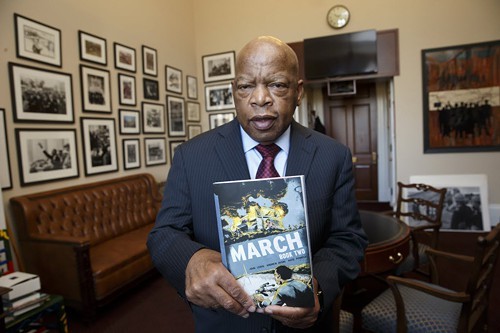
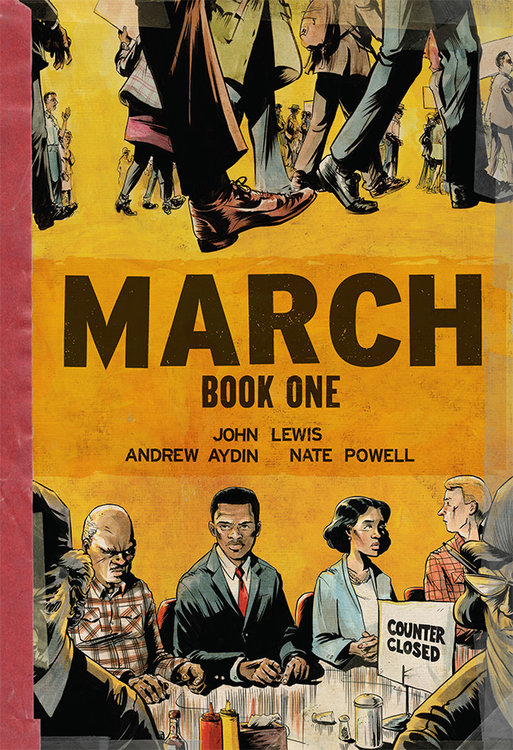
March: Book One by John Lewis, Adrew Aydin and Nate Powell

Written by , Posted in Reviews

Four Stars

Best for: Anyone who doesn’t know about John Lewis. Also, anyone who does. Also, the PEOTUS, because damn.

In a nutshell: This is the first of three graphic novels about the life of John Lewis. It covers his childhood through early college, including his participation in lunch counter sit-ins.

Line that sticks with me: “The police, conspicuously absent while we were beaten, arrived quickly after the mob wore themselves out.”

Why I chose it: My husband purchased the three books last year and just finished the last two this weekend. I haven’t enjoyed graphic novels I’d read previously, but given the shameful comments the soon-to-be President shared this weekend, I thought I’d give it a go.

Review: I have a feeling that this is going to happen a lot with the books I choose this year, but wow, my mostly white, all-suburban California public education failed me in many ways when it comes to U.S. history and current affairs. Also, my parents didn’t express any interest in making sure I was aware of the civil rights movement. I wish I’d recognized then how critical it would be to learn about that part of history, but I’m catching up as much as I can now.

I appreciate the storytelling device, which follows Congressman Lewis through the day when President Obama is inaugurated, and provides opportunities for him to tell his story to a constituent who happens to stop by. We learn about his childhood on a farm, his segregated schooling, his attempt to attend a white college that ignored his application, and finally his work organizing and participating in nonviolent protests of racist policies.

I know there is a naïveté in what I’m about to say, but even though I know it is real, I still have a challenging time accepting that there are people who will shout the n-word and beat up black people, and police who stand by (or actively participate). I just cannot understand. I know it happened – and still happens today – it’s just that it’s so. Fucking. Ridiculous.

The focus on nonviolent protest also intrigues me, because while I can see how effective it can be, I also do wonder about the effectiveness of violence as self-defense. One of my best friends is Quaker, and we’ve had many discussions about the Quaker commitment to pacifism, and the challenges of how we’d like the world to be (one where people do respond to nonviolent protest) versus the world we live in (where that isn’t always the case).

I’m looking forward to reading the next volume, both to learn more about Congressman Lewis and to see what I can learn from his actions that can help as I fight against the injustices going on right now.

Sunday

15

January 2017

0

COMMENTS

On Living by Kerry Egan

Written by , Posted in Reviews

Three Stars

Best for: Someone who wants to provoke (a bit of) deeper thinking on the ways we live our lives.

In a nutshell: A hospice chaplain uses stories from families and individuals she has assisted to make sense of life.

Line that sticks with me: “The things you lose do shape who you become. But the losses don’t obliterate what came before.”

Why I Chose It: This was an impulse buy only in that it was on my list and I didn’t yet own it. I added this one when I saw it being mentioned in multiple different forums. But yesterday, as we were wandering a book store, I thought maybe it would be a somewhat profound choice to read as I celebrated my birthday.

Review: I enjoy reading books like this, which involve health or medical information intertwined with personal stories. Ms. Egan is a hospice chaplain who, years earlier, experienced months of postpartum psychosis after a very challenging childbirth. She weaves that story throughout the book, providing a lens through which the reader can connect the sometimes-philosophical items to the realities we live in.

The stories were all interesting but not overly sentimental or heart-wrenching. Everyone is dying, so that obviously sets a certain baseline, but I did not find myself tearing up at all, which I often find myself doing when reading books like this one. Some moments were funny, some were sweet, and some were sad.

The nuggets of wisdom that come from these stories and the ways Ms. Egan connect them to her own life experiences are relatable. Ideas about how to be kinder to yourself and others, the things we put off, the ways we live based on other people’s opinions, all were within the realm of my reality. I underlined quite a few passages that I know I’ll go back to.

As a final aside, I am not a religious person, so I appreciated that while there was definitely talk of religion, the stories rarely involved discussion of God or religion, but when they did, they certainly weren’t off-putting.

Sunday

1

January 2017

0

COMMENTS

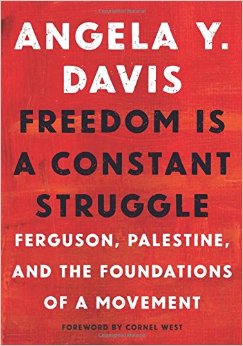
Freedom is a Constant Struggle by Angela Y. Davis

Written by , Posted in Reviews

Four Stars

Best for: Anyone interested in fighting back.

In a nutshell: A mixture of interviews and speech transcripts that seeks to connect struggles for freedom across the world.

Line that sticks with me: “But those protest movements would not have been necessary – it would not have been necessary to create a mid-century Black freedom movement had slavery been comprehensively abolished in the nineteenth century.”

Why I Chose It: I decided to kick off participation in my fifth Cannonball Read with this book because I am hoping to be more intentional with my life, including my reading. Sure, there will be the occasional airport purchase, but what I’d like to do is choose books this year that can help me be a better activist, citizen, partner, and friend. Part of that means reading up on topics I don’t know enough about, and part of that means choosing authors that don’t look like me.

Review: Hopefully you’ve heard of Ms. Davis. She is a legendary activist and academic – you can read about her on her faculty page at UCSC or just employ the Google machine. I had only a passing familiarity with her work and life, but was motivated to pick up her writings after seeing her in Ava Duvernay’s excellent film “13.”

This book is deceptively brief, comprising only ten chapters and 145 pages. But those pages contain enough ideas to keep my mind going non-stop for years. One area that receives the focus of Ms. Davis’s work is prison abolition and its connection to the overall struggle for freedom. I have – partly due to my upbringing and the space I occupy in the world – found it challenging to fully understand how a world without prison could look, but I am learning, and this book helped direct me to further resources.

More importantly, the essays in this collection make the case for connection between so many struggles that may not be immediately obvious to those not well versed in history. I recall seeing murals depicting solidarity with Palestine when I was visiting the Catholic parts of Belfast in the north of Ireland, but I haven’t done the work to connect fight against occupation in Palestine with other fights for freedom. Ms. Davis makes a compelling case for the ways so many of these struggles are connected, and how much we have to learn from each other.

There are just two areas that kept me from rating this a five-star read. The first three chapters are in the form of an interview, and while Ms. Davis’s responses are full of interesting information, complex connections and suggestions for further exploration, the choice of interviewer left something to be desired. Condescending is probably too strong of a word to describe his questions, but I would have preferred to read Ms. Davis’s words uninterrupted. The second area is that while it makes sense that there would be a constancy of theme across the book, the chosen talks included often contained some repetition. For a relatively short book, I would have like to see a bit more variety.

Thursday

29

December 2016

0

COMMENTS

My Year In Books

Written by , Posted in Reviews

At the end of each year I try to look back at the books I’ve read. This year I read 73 books, which is 15% more than my previous best of 63. I have Pajiba and the Cannonball Read to thank for this, because I know that if I hit 52 in a year that helps fund the fight against cancer. But because we also must review the books, it means I spend at least a few minutes reflecting on everything I read. It’s made me a better reader, it’s exposed me to books I wouldn’t have previously considered reading, and it’s introduced me to a lovely community of fellow readers.

So – what did my year look like?

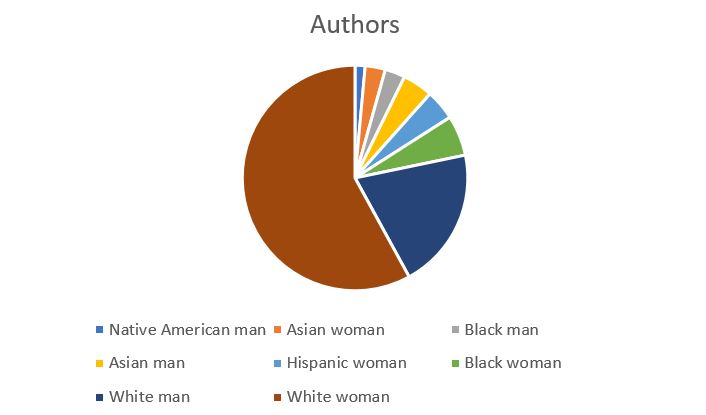
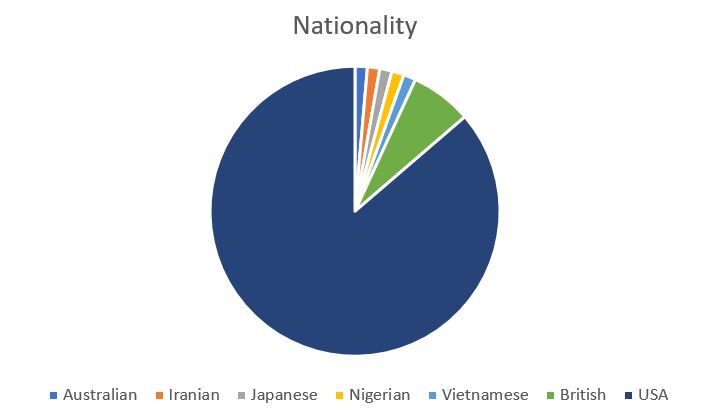
Starting with the most obvious … I read a lot of white women authors. Nearly 60%, in fact. That’s not great. 20% of the books I read are the thoughts of white men, which means that just over 20% come from non-white authors. Most of those are women, but clearly I need to make a more concerted effort to read diverse voices. So next year’s goal: never read two white authors in a row.

Another yikes here – I read SO MANY books from authors who are from the USA. Eighty-six percent, to be precise.

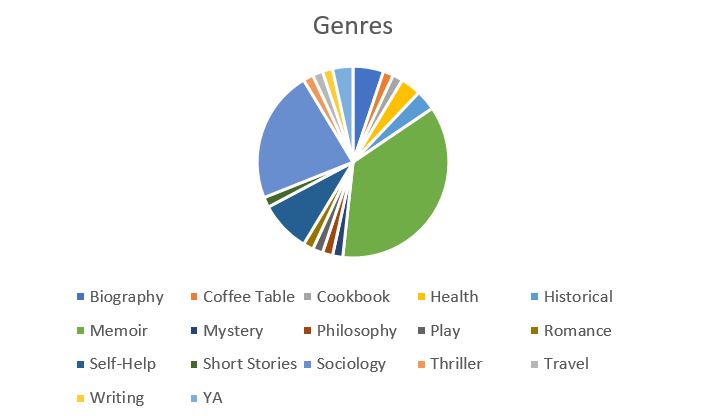
Okay, this is much better. There are clearly some types I gravitate to, such as memoir and sociology. I like to learn about people and things, apparently. But look, there are 17 different genres or types of books on here, including a play, a collection of short stories, and even a cook book. And I know one of those memoirs was also a graphic novel, so that’s 18. That’s good!

Finally, how wisely did I choose my books?

Eh … not bad. Not great – a lot of middling books. But only a handful of bad choices and nothing so wretched that it earned the not-at-all coveted one star.

What can I do better for next year? I do not want to stop reading white women authors altogether, mostly because I just ordered Carrie Fisher’s entire catalogue. But I need to be more intentional in my choices of books, and step back more often to see if going on a ‘kick’ has really meant that I’m just reading a whole lot of the same type of author or book.

As far as my favorite book this year, my recommendations are:

Alright, on to Cannonball Read Nine!

Thursday

29

December 2016

0

COMMENTS

Life After Life by Kate Atkinson

Written by , Posted in Reviews

Three Stars

Quick Take-Away:
On the cusp of four stars, but something didn’t click for me. The middle 350 pages or so really pulled me in, but I felt that the last 50 pages fell short.

Longer Review (with the mildest of spoilers):
The writing in this book is beautiful. I believe this is the first of Ms. Atkinson’s books I have read, but I gather she is someone known for her prose. The premise of the book, for those who are unfamiliar, is that Ursula is born in February of 1910 in England, and immediately dies. And then she is born again, but something slightly different keeps her alive. This replays over and over again, without any real sort of pattern that I could detect; we don’t always get to a certain age and start over, or always start at the same point, or even necessarily get clued into *exactly* what it is that she may have changed to prevent her death.

Ursula dies at least a couple dozen times if not more, and only a few of the storylines get in-depth treatment. One of the more fascinating stories is of her choosing to marry a German in the early 30s and what that leads to; a different route leads her into a bad marriage. There are also some moments that at the time seem important, but now that the book has ended I can’t figure out what purpose they served (was her mother having an affair in one of the storylines, and did it matter?).

I think the most frustrating component for me was that everything felt like it could be more developed – I wanted to see more connections, learn more about what Ursula was thinking and feeling that lead her to make a shift in her life that prevented her death. I just don’t think we got that, so even though I found myself sucked in, upon reflection I can’t quite recommend it to others.

Sunday

25

December 2016

0

COMMENTS

The Misadventures of Awkward Black Girl by Issa Rae

Written by , Posted in Reviews

Three Stars

(This is a review of the audio version)

I think I would have enjoyed this better in written form, because I had a hard time following along and staying interested to the audio version. Essays especially I think lend themselves well to paper (or electronic) versions because they can be read in chunks; the audio version for me meant stopping it a lot right in the middle, and not being able to listen again until I’d forgotten what I already heard.

That said, what I do recall I did enjoy. Ms. Rae is a writer and now actor (her show Insecure debuted on HBO this year) who tells a good story. This book is a memoir that covers her life in mostly chronological order. I chuckled a few times, and found her descriptions to be very vivid.

I can’t offer much more again because apparently I just didn’t absorb a lot from the audio version, but I do think I can recommend it, especially if you are enjoying her TV show or enjoyed the web series that preceded it.