ASK Musings

No matter where you go, there you are.

Books Archive

Sunday

12

July 2015

0

COMMENTS

Heat Wave by Eric Klinenberg

Written by , Posted in Reviews

Four Stars

When you think about disasters that caused a whole bunch of deaths in one swoop in the US in the last 25 or 30 years (outside of a war), you probably think about the September 11 attacks, which killed 2,977 in the US. If I were to ask you what the next biggest disaster in terms of deaths, you’d probably also get it right: Hurricane Katrina and its 1,833 deaths. But do you know what caused the third greatest number of deaths in the past 25 years?

Surprisingly (to me, at least) it was the 1995 Chicago heat wave, which took 733 lives over the course of about a week.

It’s been hotter than usually in the Pacific Northwest, where I live. We had multiple days in a row above 90, which may not sound bad to those of you used to sweltering summers, but in general folks out here don’t have air conditioning (and if you do have it but you don’t have the money for an electric bill of gargantuan proportions, you might just leave it off). My apartment in the evenings was often still in the mid-upper 80s, and we don’t even get any direct sunlight (thank goodness for north-facing windows). I also work in public health emergency preparedness, so I have an extra special interest in things that cause a whole lot of people to get sick and die at once.

Author Dr. Klinenberg is originally from Chicago, and earned his PhD in Sociology at UC Berkely in 2000. Heat Wave is his dissertation, exploring not just the health causes of those 700+ deaths, but the social causes. His thesis is that the hot days didn’t kill these people alone; the systems society has set up (or not set up) instead failed many of these people in a complicated way that would be dangerous to ignore if we seek to avoid it in the future.

Much of his work focuses on comparing two neighborhoods that are very similar in some of the basic demographics, and even have the same microclimate, but had VERY different death rates. In one neighborhood (95% black), 40 out of 100,000 residents died in the heat wave; in the neighborhood next door (86% Latino), only 4 out of 100,000 residents died. That is a huge difference, and one that we should try to explain.

Beyond this, he looks at the role of city government and how they responded (or failed to respond), from the front-line police officers who were tasked with community policing but didn’t check in on the community, through the fire chiefs who ignored warnings from their staff that they should have more ambulances available, to the health commissioner who didn’t really ‘get’ that something was amiss. Dr. Klinenberg also explores the role the media played in not treated the story with the gravity it deserved until late into the heat wave.

Even if you aren’t interested in public health preparedness, or aren’t into sociological profiles, I think you might find this book to be quite fascinating. I’m impressed with the readability of what is essentially someone’s dissertation, and I think I can learn a lot that will be helpful to me in professional life.

This book got me back on track for my cannonball read, too, so I’m quite grateful for that. I haven’t finished a book in nearly three weeks. Between going to Canada for five World Cup matches (including the final – woo!), my computer dying, and learning that my back-up system failed, plus the aforementioned ridiculous heat wave we had, I’ve mostly wanted to just sit on my ass and play games on my phone. But no more! I’m back to reading and it feels fantastic.
Monday

22

June 2015

0

COMMENTS

Body Respect by Linda Bacon and Lucy Aphramor

Written by , Posted in Reviews

Four Stars

So that was pretty good. A little more self help-y than I was expecting even with all that the title might imply.

Drs. Bacon and Aphramor are interested in making sure that we all are aware of the actual science around health as it relates to weight. Not the ridiculous idea that you can tell someone’s health by their weight, but the truth: that health is complex and certainly can’t be reduced to the number on the scale. Plenty of very thin people are extremely unhealthy, but most of society doesn’t care, because they look the way we expect (want?) people to look. And so we project that this visual must also be associated with what we deem to be good – e.g. health.

It’s sort of amazing what we expect from people, and this book is a great reminder of the absurdity involved. We have no comments or scolding of thin people who say ‘I can eat whatever I want and not get fat’ as they bite into a giant burger. Meanwhile, if a fat person eats literally exactly the same diet as the thin person, society judges them as unhealthy. It’s bullshit, and it’s super obnoxious. Personally, I think it relates heavily to the need of some people to feel like they are better than others, and this false idea of what equates with health is a great (and by great, I mean shitty) way to do it.

The book provides a whole lot of great evidence to debunk ideas that the diet industry is built on, such as the concept that calories in = calories out, and that everyone is going to process food the exact same way. Eat fewer calories, lose weight, and keep it off. But research shows that’s just not the case. One study that was especially vivid in showing this involved a bunch of sets of twins who all ate the exact same food. Within twins there was very little variation, but among sets of twins there were wildly different outcomes. So even though these same people were consuming the exact same number of calories and nutrition, some gained weight and some didn’t. And yet this seems SUPER difficult for society as a whole to grasp. People are different, and being fat doesn’t mean someone is unhealthy, or eating too much.

The book doesn’t, however, pretend that what one consumes doesn’t have any affect on one’s weight or health. Instead, the authors choose to focus on how food isn’t just the sum of its nutrients, and that being mindful about it is what will help us be healthiest. I especially appreciated this idea because it a) disparages the shit notion that any food is objectively ‘bad’ or ‘good’ based solely on its nutrition profile and b) recognizes that food actually serves a very valid cultural and social role. Eating a bunch of frozen Jenny Craig dinners might help you lose weight (for a few months before you can it back and then some), but it will also have you missing out on things like sharing some of a beloved family member’s dessert that was baked from a recipe passed down from generations. This idea that we should be automatons who just count calories and types of nutrients to get ‘healthy’ is silly, and it’s nice to see it called out as such.

I think this could be a great book for anyone to read, especially one who is tired of seeing the same shit on TV and online about how anyone can (and should) lose weight if they do x, without questioning WHY we expect these folks to lose weight. It’s not about their health (because we don’t care what thin people eat); it’s about having a group to judge and control. And about making money. And that needs to stop.

Sunday

7

June 2015

0

COMMENTS

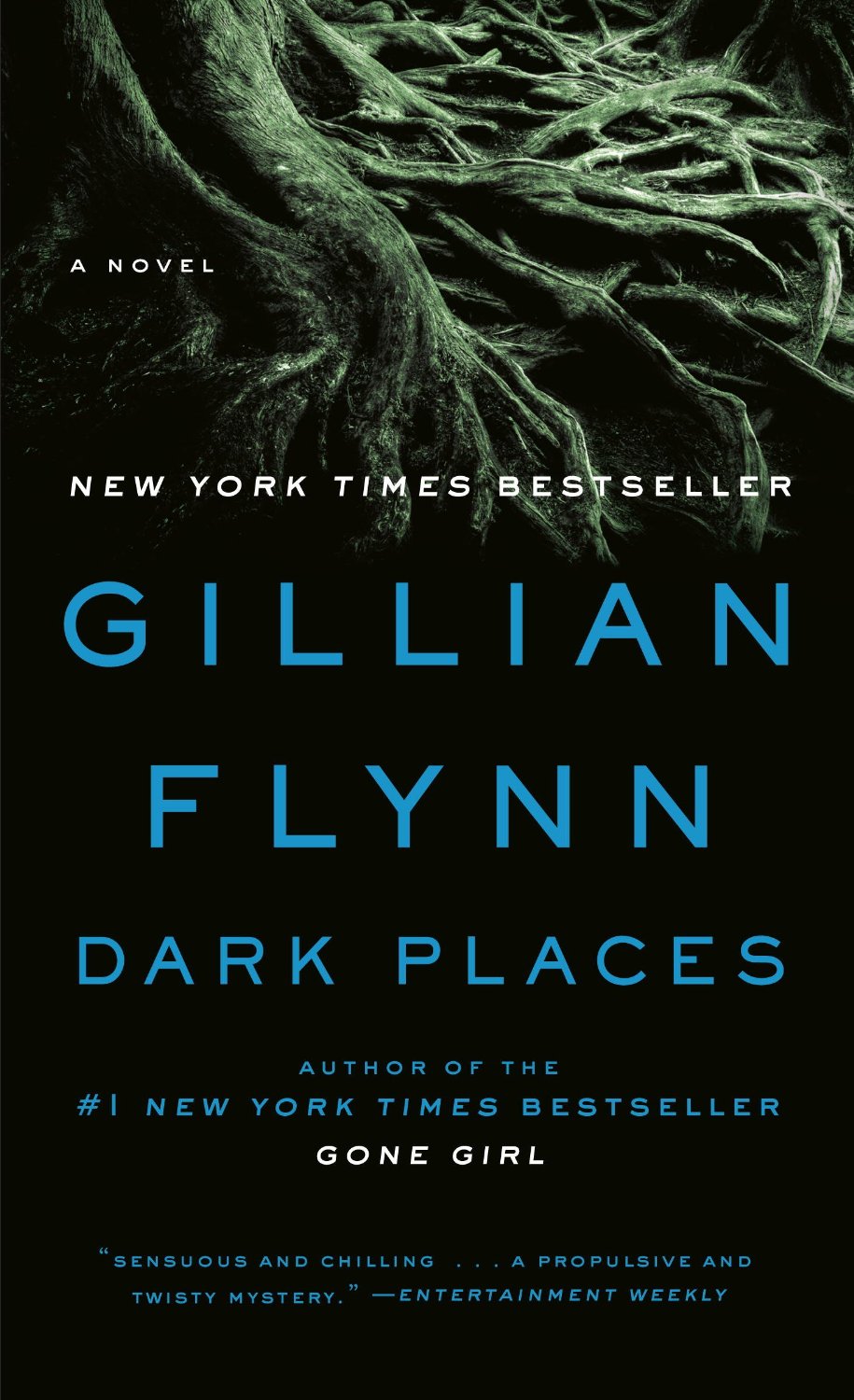
Dark Places by Gillian Flynn

Written by , Posted in Reviews

Four Stars

dark-places

Damn. This was a well-written book that I enjoyed reading. I mean, it’s all kinds of messed up, but it’s interesting, and I don’t think the outcome is at all obvious. It all makes sense, when you think about it.

Libby Day is the sole surviving daughter of the Day family, three members of which were murdered in early January 1985. Her brother was convicted of the crime based partly on her testimony; she (a seven-year-old) testified that she saw him do it. As essentially an orphan (her dad faded in and out of her life) being raised by her aunt, she came into money at 18, thanks to people who had donated to a fund on her behalf when her story was in the news.

The catalyst for the story in this book is that Libby is out of money now, and has to figure out how to get some. She’s never really worked, and doesn’t want to. She comes across a letter from one of those true crime groups to see if she’d be willing to talk to them, with the understanding that they would pay her. Seeing a way to make some money, she agrees, and the story goes from there.

Like I said, this was a book that I enjoyed reading. It was a book that made me choose the elliptical over a run (because I can read on a machine), and the bus over a ride from a friend because that meant 30 uninterrupted minutes with the book. I also read and enjoyed Gone Girl, and I appreciate that Ms. Flynn creates characters that aren’t awesome, and that are sort of (really) flawed. It’s interesting.

Saturday

6

June 2015

0

COMMENTS

Three Wishes by Liane Moriarty

Written by , Posted in Reviews

Four Stars

three wishes

This time, I actually sort of did see the twist coming. Well, one of them. And frankly, not as quickly as I probably should have. But still. I’m getting better.

I believe this was one of Ms. Moriarty’s first novels, although it doesn’t feel like it. It employs the same convention as many of her other ones – the point of view of three different characters. In this case, the characters are sisters. Triplets actually (a set of identical twins and one fraternal twin). They are interesting, leading fairly ordinary lives (although none of them have money troubles, which doesn’t actually seem that ordinary). But they have challenges, and their relationships with each other, their divorced parents, and their partners are all a bit complicated.

There isn’t a ton to say about this book, other than I enjoyed reading it, and it’s kind of perfect for right now, when I have a lot going on at work and home but still want to read something on the bus that isn’t going to overly tax my brain. However, one area that rubbed me the wrong way was that one of the characters drives drunk. She only does it once, and actually gets caught and there is a repercussion of sorts. But it was treated so … lightly? I mean, I think it was meant to show us how the character was feeling, that this person would do this, but still. This person could have killed someone, and it was just weird to have it be some sort of character-building moment as opposed to a really serious thing.

I’d recommend the book if you’re heading out on vacation and want something that isn’t entirely a pile of fluff but that is still very fun and easy to read.

Monday

1

June 2015

0

COMMENTS

The Husband’s Secret by Liane Moriarty

Written by , Posted in Reviews

Four Stars

Yeah, this is another Liane Moriarty book review. Third in a row. And in a few days, you’ll probably have the fourth in a row. Because I am sucking these books down like they are water and I’m a hiker lost in the desert.

I didn’t enjoy it as much as Big Little Lies, but that’s okay. As with Big Little Lies, we follow three main characters who are clearly going to end up connected in some way. There is something hanging over everyone’s head. It’s sort of a mystery, but not necessary a mystery we (the readers) need to be concerned about solving, because much of what is interesting is how the characters react to the mystery, and how actions have unintended consequences. Do I care about the secret (or secrets)? Absolutely. But I care more about how the characters are handling it. I think Ms. Moriarty creates interesting characters, ones that I become invested in over the course of these novels.

Now that I’ve read three, however, I am a bit concerned. Is everyone in Australia straight? Because that seems … unlikely. Considering all of these books are set with a focus on parents of young children, you’d think there would be at least a couple of families with two mothers, or two fathers. And I’m not so sure about the ethnic diversity of her characters. I recall a few described as blond, or redheaded with light skin and freckles.

If these three books I’ve read are an indication, Ms. Moriarity has a bit of a formula. We get to know characters, and there is a THING hanging over them, and some might know, and some might not, but we the readers definitely don’t. Or at least, I don’t. For the most part. Perhaps it should be more obvious? I don’t know. All of the twists have pretty much caught me off guard. Maybe I’m just behind on my novel reading, and it will become more obvious later. Whatever, don’t care. I’m enjoying the hell out of these books, and this one was no different.

Monday

1

June 2015

0

COMMENTS

Big Little Lies by Liane Moriarty

Written by , Posted in Reviews

Five Stars

lies

I downloaded this pretty much the moment I finished ‘What Alice Forgot.’ And thanks to Ms. Moriarty I didn’t get nearly as much sleep as I planned to on this trip home because I couldn’t put THIS book down, either.

The book is told from the perspectives of three different women, all parents of kindergartners at a school that has much economic diversity. At the end (and sometimes beginning) of each chapter, there are quotes from what turn out to be statements to the police, because someone gets murdered at trivia night. But, thanks to Ms. Moriarty’s clever story-telling, we don’t know WHO gets murdered until very near to the end of the book. And why they do, depending on who it is, could be one of many reasons.

I really, really enjoyed this style of storytelling. It was compelling as hell. The characters were interesting. The women weren’t all one-note, or all the same. The men were probably a bit less complex, but eh. I’ve read loads of stories over the years where the women (if they were even in the books much) were very generic and the men complex, so I’m fine with this.

I don’t know if I should have enjoyed this book as much as I did. In some respects it did seem to be making fun of some parents and their concerns, at least a little bit. But who knows, maybe that’s appropriate. I’m super excited to learn that it’s being made into a short-term series for HBO. I will watch the hell out of that.

Monday

1

June 2015

0

COMMENTS

What Alice Forgot by Liane Moriarty

Written by , Posted in Reviews

Four Stars

Amnesia

Yes. More please.

Seriously, I loved this book. I know some folks have reviewed it on here, but I can’t recall if they liked it or not. I hope they did. I was in the midst of reading an exceedingly boring book on Camus (shocking, I know) when I got to the airport Thursday night. I saw this at Hudson News and bought it. I started reading at the gate, put it down when I got off the plane, stayed up way too late reading it that night, and finished it tonight after dinner. It’s 450 pages long. It’s just that easy to read.

It’s fun and interesting. The main plot point is that Alice Love is 39, has three kids, and is going through a divorce. But the book opens with her waking up from hitting her head on the floor of the gym, thinking she is 29, expecting her first child, and madly in love with her husband. Yikes.

I love the ideas explored in this book. Are the little hurts people cause us, when put together over time, enough to make us want to not be with them? Should they be? If you woke up tomorrow in the same predicament, would 10-years-younger you approve of current you? Is that a good thing or a bad thing? And, most importantly, how freaky would it be to go home to three kids you don’t know and be expected to parent them?

There are a lot of relationships explored in this book – Alice and her sister, her mom, her grandmother, her (soon-to-be-ex) husband. Her and other mothers. Her and old friends. It’s mostly told from Alice’s perspective, but her sister and grandmother contribute in interesting ways that (usually) work. I was satisfied by the end, but mostly because I think the journey to get there was, for me, believable. A bit complicated and interesting, but believable. And it makes me want to read more by this author, for sure.

Monday

25

May 2015

0

COMMENTS

Spinster by Kate Bolick

Written by , Posted in Reviews

Three Stars

This book is not what I expected it to be. I think I was looking for something slightly less memoire and containing some measure of humor. That isn’t to say that Ms. Bolick isn’t a great writer; she managed to take a book that I probably would never have read had I truly understand what I was in for and make it interesting. But in case you thought this would be an out-loud feminist discussion, it’s not that. At least, it isn’t entirely that.

This is a very subtle book. At times I wasn’t really certain where it was going. Ms. Bolick chooses to tell us her own story of not desiring marriage by sharing the life stories of her “five awakeners” (a term that, I should say, had my rolling my eyes each time it appeared). All white women with some economic means, these women are certainly interesting, and do a passable job of demonstrating the challenges women have faced when choosing a path that doesn’t match the one that it seems most everyone else is both taking and expecting them to take.

This book can’t help but be a very narrow study, as it is a memoire of sorts; it is about Ms. Bolick’s life and struggle with her desire to have control over her life on her own terms. She isn’t asexual; she has many relationships, and experiences love. She just doesn’t think that marriage is on her list. And while this is about her experiences, I have to say I wish that one of her “awakeners” had been a woman of color. Ms. Bolick also makes some comments regarding women in the workplace that I don’t necessarily think hold true for non-white women, even though they are presented as universal truths. Hmmm.

Like I said, it’s not what I was expecting. If the title and a couple of two-sentence synopses made you interested in the book, I suggest reading a few more reviews before picking it up to make sure it’s where you want to spend your time.

Sunday

17

May 2015

0

COMMENTS

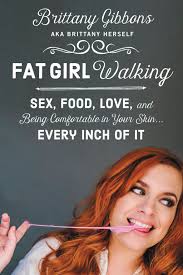
Fat Girl Walking by Brittany Gibbons

Written by , Posted in Feminism, Reviews

Four Stars

brittany herself

**Apparently this isn’t released until Tuesday, but my local Barnes and Noble had it out yesterday, so I guess I’m reviewing this from the future? Awesome!**

You might be familiar with Ms. Gibbons. She’s the woman who went on TV in her bathing suit (in Times Square, no less), wearing a size 18ish. She had sex with her husband every night of the year in hopes of improving her own body confidence. She runs the website ‘Brittany, Herself’ and is the leader of the ‘curvy girls army.’

I found this book while trying to kick-start by Cannonball Read yesterday. I bought four books that I could see myself forgoing TV for (although not the new Game of Thrones tonight, because I’m not an animal). This one really jumped out at me, and I pretty much inhaled it. I read it before bed last night, only stopping because my eyes refused to cooperate. I read it on a 30 minute walk to get lunch, and on the walk home. I was even a little sad that today was a run day, not an elliptical day, so I couldn’t read it while working out.

I related to a lot of what Ms. Gibbons shares in this collection of essays, even though I’ve never had children (her discussion of being a mother permeates much of the second half of the book, but is certainly not the overall focus). No one would describe me as thin. Fat? Eh, probably not usually. But I’ll freely admit to having more than one totally fine morning destroyed because I stepped on the scale.

And that’s bullshit. Ms. Gibbons articulates the ways in which it is bullshit much better than I can, so I’ll just leave it at that. There are some really laugh-out-loud moments, and some really thoughtful ones that gave me pause. I was reading this too quickly to even bother to underline passages I especially liked (the book would have been mostly underlined anyway), but this one stuck out:

“The reality was that my life wasn’t miserable because I was curvy; I was miserable because I thought I’d be happier if I were thinner, and when I sat to think about it, it didn’t really make sense.”

Word.

Saturday

16

May 2015

0

COMMENTS

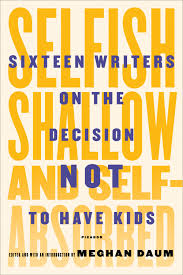
Selfish, Shallow and Self-Absorbed: Sixteen Writers on the Decision Not to Have Kids by Meghan Daum

Written by , Posted in Childfree, Reviews

Three Stars

selfish

I am pretty vocal about the fact that I won’t be having children. I’ve written about it in the past, and I’m currently writing a book aimed at folks like myself. My husband and I found each other online in part because we both said ‘no’ to the ‘want kids’ question on OK Cupid. So when I saw this book reviewed in a few different places I figured I would pick it up.

It’s a collection of essays by writers, so it is necessarily a bit limited in that regard. It primarily features women, although there are contributions by men. I’m not sure of the racial demographics of the writers; none of the stories (if I’m recalling correctly) take on whether they think they’ve encountered more (or less) push-back because of their ethnicity.

The book provides for some chuckles, and elicited a few head nods from me. I could related to some folks, but not fully. I mean, I wasn’t one of the writers, so I can’t expect to have my exact feelings related back to me in essay form, but I was a bit disappointed because most of the essays still seemed a bit apologetic about not wanting children, and really interested in making the concession that people who choose not to have children are a bit off, wrong, or even, yes, selfish. I found that disappointing, because I was hoping for something different.

One essay in particular really rubbed me the wrong way. Lionel Shriver, who wrote “We Need to Talk About Kevin” (a book I hope to read some day) wrote a weirdly misogynistic and frankly delusional essay that almost had me giving up on the book (hers is the fifth essay in). Obviously she can only speak for herself in this most personal of essays, but she presumes to speak for me, and that is obnoxious. She says things like “In contrast to our predecessors, we seldom ask ourselves whether we serve a greater social purpose; we are more likely to ask ourselves if we are happy.” I’m not sure what version of reality she exists in, but I would argue they are both equal, or even completely oppositely weighted. Lots of people are making sacrifices because they understand that the way we’ve been living isn’t doing anyone any favors.

She also seems to call out those who complain about the fact that people ‘like her’ aren’t having children (e.g. well-educated, white, affluent) for what they are (not-so-subtle racism), but then seems to agree, with such disturbing lines as “we don’t consider the importance of raising another generation of our own people, however we might choose to define them.” That reads dangerously close to expressing distress over not enough white folks in the world, and that’s super creepy.

In addition to that weird (hopefully unintentional?) racism, she also makes an argument that absolutely infuriated me. She suggests that by not having children, we are ignoring our duty to the future, because we are denying the world the creation of people who might solve the world’s problems. Essentially, it’s similar to that anti-choice argument of ‘what if you’re aborting the next Einstein?’ Aside from the fact that maybe my kid would grow up to be a serial killer, so by not reproducing I could be saving the world from that pain, this claim essentially ignores the fact that maybe WE can solve the world’s problems. She seems to making a point that women exist to create the people who change the world, as opposed to changing the world ourselves. I am not okay with that at all. I firmly believe that I have the opportunity to change the world (probably in very small ways, but ways that matter); I don’t think the only way I can do that is to give birth to a child who will then change the world. She falls into the trap that so many of us are trying to claw our way out of: the idea that my worth exists only in the children I create, not in the other things I create as well.

So yeah, that essay aside, the book is probably worth a read. I just wish it were better, and more original that the sheepishness so many of us who choose not to have children feel compelled to express to those who do want children. I wish there were more writers who owned their choice as completely valid and not one needing justification. But that isn’t in here as much as I’d hoped.