ASK Musings

No matter where you go, there you are.

Books Archive

Tuesday

4

November 2014

0

COMMENTS

Yes, Please

Written by , Posted in Feminism, Reviews

Five Stars
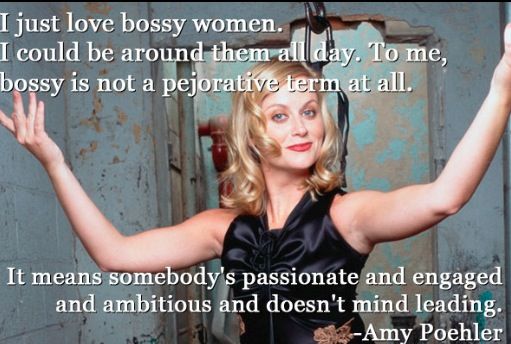
amy poehler

“Good for her! Not for me.”

The above phrase first appears about a fifth of the way through Ms. Poehler’s excellent book. If you’re familiar with her “Smart Girls at the Party” project, it should come as no surprise that she offers up some pretty sweet life advice. I’m almost 35, and I don’t think I’ve seen that sentiment summed up so perfectly. I’m considering having it tattooed on my ass.

Not literally. Well, not actively, anyway. Maybe someday. But for now it is tattoed across my mind.

This book is not exactly what I expected. I was assuming it would be closer to what Tina Fey gave us with Bossypants. I know that comparing one pretty white rich comedian to another pretty white rich comedian isn’t exactly groundbreaking, but these days when I see Ms. Fey I think about Ms. Poehler and vice versa. I picture Amy/Hillary and Tina/Sarah standing at the podium during the Saturday Night Live cold open. I’ve always felt that I know a bit more about Ms. Fey (not that we really know anything about strangers, even after they’ve written a memoir) than Ms. Poehler, although I recall reading in Bossypants the story about Amy very bluntly telling Jimmy Fallon that she didn’t care if he liked something she did or not. That’s awesome.

After reading this book, I feel like I understand Ms. Poehler a bit more. She’s an interesting woman, and a complex one who can be very sarcastic, very blunt, and very sincere in the same paragraph. The sincerity threw me a bit, but I really appreciated it in this book. Unlike Neil Patrick Harris’s book (which I reviewed a couple of weeks ago), this one feels like an exploration. I’m not fooling myself into thinking it’s not a carefully curated version of herself that she’s choosing to share, but she is at least a talented enough writer to make the reader BELIEVE that she’s sharing something real with us.

And what she shares is a mixture of pride, shame, humor, and insight. She tells a story that does not paint her in a flattering light, and while I could take the cynical route and imagine that she did it to absolve herself, I don’t actually think she did. I think she wanted to point out how she screws up, and how sometimes she doesn’t make things right, or spends way too long before she tries to make things right. She talks about hard work, about her marriage ending, and about her childhood. The book jumps around, and at times it isn’t totally cohesive, but it felt real. I imagine that Amy Poehler is someone who would use the phrase “my truth” without irony or judgment. I don’t think I would have believed that before reading this book. I think folks are expecting a laugh-riot peek behind the life of a comedic genius, and while we get that peek into her life, it isn’t all (or even mostly) laughs. It’s funny, for sure, but it’s more than that. I haven’t enjoyed this type of book this much in a while. I plan to read it again, because I think there’s more for me to get out of it.

Friday

31

October 2014

0

COMMENTS

Food: A Love Story

Written by , Posted in Reviews

Three Stars

food a love story

I reviewed the audiobook version of Mr. Gaffigan’s Dad is Fat for Cannonball Read 5. He’s back with a new book, which I only discovered because of its prominent display at the bookstore, and the cover. The cover is clever – a cake topper version of Mr. Gaffigan next to a cake topper version of a hot dog, on top of a fancy wedding cake.

The book behind the cover is a nice, light, entertaining read. It’s a bit of a mishmash, with everything connected to Mr. Gaffigan’s love of food. But not in a ‘foodie’ way. Nope, this is about his love of all food, not just artisanal cheese from locally sourced cows. Sure, he devotes a fair amount of space to fancy steak, but a lot of it is about things like McDonalds, hot dogs, and pizza. It’s a hodgepodge that seems even more disconnected than your average collection of essays, and yet it still works. It’s something I appreciate, especially as I am someone who loves food as well.

In the beginning he talks through his view of the food that each region of the U.S. is known for, from coffee in the Pacific Northwest to crab in Maryland. As an aside, he is not a fan of the seafood the east coast loves – he refers to lobster and crab as sea bugs. I can relate. As a comedian who travels for a living, he is in the somewhat rare position of being able to share a pretty well-informed opinion about the different food available in cities across the U.S., large and small. Not many of us can say we’ve eaten in dozens of towns across the fifty states.

The book took a while to get going for me, but once it did, I found myself giggling and cackling, annoying my husband as I insisted on reading passage after passage out loud to him. The book is fun, and a nice read for when everything else has been just a little too much. October was a mostly shitty month in many ways, and an exhausting one at work, so this was what I needed. It isn’t perfect – the beginning does wander dangerously close to fat shaming – but for the most part it’s a nice palate cleanser between the heavier stuff.

Monday

20

October 2014

0

COMMENTS

Choose Your Own Autobiography

Written by , Posted in Reviews

Three Stars (two for the book and one for the premise)

rs_634x980-140520152707-BoFIxFTCQAAJ0jV

As we made our way to the gate before a two-hour flight home last night, we spotted this book. I knew it had come out recently, and realized that the format (ostensibly a ‘choose your own adventure’-style autobiography) would probably lend itself better to a physical book. I picked it up and read it continuously, from waiting in line to board the plane until we caught a shuttle to our car back home. I read it on the elliptical this morning, and finished up the last ten of the nearly 300 pages after dinner tonight.

Now, despite his start as Doogie Houser, M.D., I mostly associate Mr. Harris with Barney Stinson, his character on my favorite sitcom, How I Met Your Mother. As my husband can attest, I will re-watch the shit out of that show on Netflix Streaming, and when I’m felling sad I’ll seek out the blooper reels online for a guaranteed laugh. I had high hopes for this book, but I’m a bit disappointed. It’s not the best comedic memoir I’ve read, nor is it even one of my favorites. (And if you check out my CBR5 reviews, you’ll know that I read a LOT of comedic memoirs, so I do have a frame of reference).

The trick he chooses – writing the entire book in the second person, turning the reader (“you”) into “Neil Patrick Harris” – is a fun one. It does allow for some unexpected moments, although I must admit I didn’t actually choose any adventures; I just read the book straight through, and it worked just fine. Mr. Harris is a national treasure, so I feel a bit odd being critical of the book, but aside from the occasional clever bits, I don’t actually feel like I got much out of reading the book. I mean, I enjoyed learning about his early career, and his experiences dating, and the choices he’s made in life, but the second person convention sort of allows Mr. Harris to write his story as a removed observer, preventing any sort of real connection between the author and the reader.

The book is also obviously going to be filled with enough dropped names to sink a ship, and that makes sense. That’s been his crowd since he was sixteen. But there’s something a bit off-putting about a chapter going on and on about gosh golly gee how cool is it to hang out with Elton John in Greece? I don’t think Mr. Harris is insincere, or bragging, there’s just something a little strange about how it’s presented. I also have some issues with the device he uses of having some folks pen letters to him to include in the book, that basically just go on and on about how great he is. I’m assuming they are real letters; they aren’t gushing enough to be satirical, they’re just sort of, I don’t know, really self-indulgent. And obviously any memoir is going to be self-indulgent. I don’t know – I’m having trouble articulating because I really want to like this book, and I really still do like Mr. Harris, and putting one’s life story essentially up for critique is impressive as hell, but at the same time … this book just wasn’t for me. I’d give it two stars, but the originality bumps it up to three for me.

Thursday

16

October 2014

0

COMMENTS

#Newsfail

Written by , Posted in Feminism, Politics, Reviews

Five Stars* (see update below)

There’s an awesome podcast out there called Citizen Radio, and it is amazing. The hosts are a comic and journalist, respectively, who record at their home and talk about news that either doesn’t get covered or that gets covered in ridiculous ways. There is a ton of swearing, a lot of joking, some bizarre recurring characters (“Republican Baby,” for example), and a crap ton of actual, honest, news. Citizen Radio is independent media that seeks the truth without being worried about what sponsors are going to think. It’s funding wholly by members like me, but is available to everyone for free.

What does that have to do with this book? Well, this book is written by the hosts of Citizen Radio. It’s a progressive look at the ways in which the news fails: fails to tell us the truth, fails to cover the stories that matter, and fails to do what journalism should do. It’s an easy read (as in, it’s written conversationally; the topics themselves are not in any way light), and organized into general topics that are illustrated with examples of the ways the news has failed to cover the topics properly. The authors address class war, sexism, LGBT rights, gun control (or “massacre prevention,” as they wisely call it), drug policy and foreign policy. The chapters have fantastic titles like “We Know You Smoked Weed in College, Asshole: How the War on Drugs Is Destroying This Country.”

The book is great; when it ended I wished there were more for me to read. I wish they could have taken on even more topics – I feel like there’s enough failure of the media out there on such a wide range of topics that they could write at least one more book, if not two. They point out the problem with presenting “both sides” when there aren’t actually two reasonable sides. A good example of this is climate change. When the vast, vast majority of scientists find truth in something, it doesn’t make sense to have one climate change denier on to debate one scientist. That’s irresponsible. Of course, as Kilkenny and Kilstein point out, scientists (or experts on the issues) are rarely even invited to contribute to the discussions. Instead of the experts on an issue, or those directly impacted by an issue – say, reproductive health – being invited on, you get a panel of older white men. No white women, no women of color, just old white politicians talking about putting an Aspirin between a woman’s knees as effective birth control.

The book is filled with rough language, and includes a smattering of anecdotes from the authors’ lives. Much like their podcast, the book makes me laugh, makes me angry, and motivates me to take action. I read a more diverse array of topics now than I did before I found their podcast. I’ve always been what I’d describe as liberal; now I know that a better term to describe my beliefs is progressive. While some might pass this book off as preaching to the choir, the reality is that while much of what they say might be more radical than the average liberal’s thinking, they back it all up. They provide support for those beliefs that you might have been thinking, but haven’t seen supported when you watch CNN (or MSNBC, because really that station isn’t nearly as liberal as people think).

If you care about politics, journalism, the media, or any of the topics covered in this boo, I strongly urge you to pick it up. And next time you’re on iTunes, or Stitcher, please check out Citizen Radio.

*Feb 28, 2017: Yesterday some very concerning items came out about Mr. Kilstein. Multiple women have shared that he emotionally manipulated and abused them. That is horrifying to hear; Ms. Kilkenny (who split with Mr. Kilstein prior to these revelations) will be continuing Citizen Radio without him.

Saturday

11

October 2014

0

COMMENTS

The Circle

Written by , Posted in Reviews

Four Stars

stop-trying-to-make-google-plus-happen-meme

It took me two days to read this 500 page novel. I’ve read two of Mr. Eggers’s books before: Zeitoun and A Heartbreaking Work of Staggering Genius. I enjoyed the first one (as evidenced by my review of it this year), and I think I liked the second one, although it’s been awhile since I read it. But I have no doubt about this book. I thoroughly enjoyed it, more so than I think the other two Cannonballers who reviewed it this year.

The Circle is a company that feels the terrifying baby of Facebook and Google (or even just Google, if Google+ had actually worked out). It’s a technology company, with over 10,000 employees who are working in an environment similar to a giant tech start-up from the late 90s. There is work to be done, but it’s also supposed to be Fun! There are concerts and classes and discussion groups and a gym and parties. It reminded me of the first time a friend of mine showed me the new Bloomberg offices (the company, not the mayoral administration), and it had a kitchen full of free food. My first thought was about how convenient it all was; my second though was that it made it a lot easier to not leave work and return to the rest of one’s life.

That’s one part of the issue Mr. Eggers is trying to discuss in this book. Where should the line be between work and home? We hear buzzwords like ‘community’ thrown about at work all the time. It seems ideal to like where you work and the work you do, but should there be a line where your socializing at work end and your socializing at home begins? Is home your ‘real life,’ and is it better if that stays separate from work, or is it better if it all merges together, so long as you enjoy it?

That blurring of work and home life leads to the heart of the issues that Mr. Eggers discusses here. What should be the difference between private and public? Should anything be kept private? If so, why? If you keep something to yourself – whether that is knowledge, or a picture of a remote place, or an experience you had – are you being selfish by denying it to others who might not have a chance to experience or view it? Said differently – if you believe you have a right to something, am I obligated to give it to you? Does that change if the “I” in question is a private citizen, a private company, a non-profit, or the government? Because I casually mention on Facebook that I went on vacation, does it make sense to have that information catalogued and made accessible to anyone who is interested in, say, crowd sourcing a book for tourists who want to visit the places I visited?

I’d love to write a paper on the arguments The Circle (the company, not the book) makes. For example, at one point the leaders are discussing Julian Assange, and how the government was mad he made the information public, but that we all benefitted from it, and no one got hurt. But I think that a lot of people who would support Assange would balk at the idea that private citizens owe transparency to our fellow citizens in the same way. Yet that’s what The Circle is arguing. The Circle also tries to make this knowledge a social experience, tying all marketing together and giving that information away as well. I don’t recall who said it, but it reminds of the idea that “if the service is free, then what they’re really selling is you.” Social media today is already basically a way to sell marketing information under the guise of connecting with our friends. And for some of us, it’s great to know what a classmate who lives 5,000 miles away is doing without having to exchange multiple letters or emails. But it can also be a bit disconcerting to see the ads on the side of the Gmail window that are based on keywords from emails I’ve sent. That email is ‘free’ because I’m providing Google with loads of information.

Then there’s the fact that all of this social interaction can have a real impact on relationships. The neediness that can come out when someone sends a text but the recipient doesn’t reply. Or the popularity of pictures – and the feeling people can have if no one ‘likes’ their status, or comments on something they’ve said that they think is profound. People you’ve never met might think they know you, or that you owe them something, if you’ve interacted online. It’s disturbing.

The novel isn’t just about the company, though; it’s about Mae, a very young woman who gets hired thanks to her former college roommate. I think this is where I part ways with my fellow Cannonball reviewers. I absolutely believed her actions, mostly because she was so young and somewhat desperate. I also think that Mr. Eggers did a great job of making some of the people she disagrees with, well, jerks. At least, people Mae sees as jerks. If someone she respects a great deal makes the same arguments – or makes them in a different way – I can see her taking different actions. But I think she’s fragile, and chooses to believe the good.

But I also don’t think she just jumps right in from the get go. She has her separate space and hobbies, and seems more interested in doing well at the company than in buying into the company itself. In the beginning she wants to succeed and wants to not let her friend down; I didn’t get the sense that she was also really into The Circle in terms of what it represented. I think a character written differently would have gone the Katniss Everdeen route, and would have resulted in a different story altogether. I think Mae was kind of perfect for the parable Mr. Eggers is telling.

As much as I enjoyed reading it, this book did freak me out. And more than a little bit. So much of it was so close to where we are now that I can see how it could come to pass. That is fucking terrifying.


Thursday

9

October 2014

0

COMMENTS

The best punctuation book, period.

Written by , Posted in Reviews

Three stars

Do you know the difference between an em dash and an en dash? Or when you should spell out numbers and when you should write the numerals? Do you care? If you answers were no, no, and yes, then I have a book for you. It is part narrative and part reference book, and the type of thing that I want to have at the office for business writing and at home for things like Cannonball Read reviews and personal blog posts. It’s functional and easy to navigate, although it is a bit dry.

I can’t remember where I got this one – probably at the local bookstore that I need to avoid most days if I don’t want to drop $50 on books I never knew I needed or wanted. As I mentioned in an earlier review this summer, I write a lot. Most of what I do at work involves writing plans that other people need to understand; at home I write for fun and am currently working on my first book (that some day future Cannonballers might read and review – a girl can dream). I’m not an editor, so I probably didn’t need this book, but I do think it will improve my writing.

It’s a logically organized book, with sections on each punctuation symbol, from the comma all the way down to the aforementioned em dash. The chapters give overviews of the different functions and then breaks down usage by type of writing. So, in the colon chapter you’ll learn how to use a colon to introduce lists, as well as its function in writing out time or ratios. The different types of writing included are book, academic, scientific and news, with the suggestion that folks use news style for business writing and blogs. For pedants like me, it’s fascinating to see all the nuances of language, including disagreements about usage (that damn Oxford comma!) or decisions that seemingly don’t make sense.

Is this book going to change your life? No. But it’s interesting and useful, and I know I’ll be consulting it regularly.

Sunday

21

September 2014

0

COMMENTS

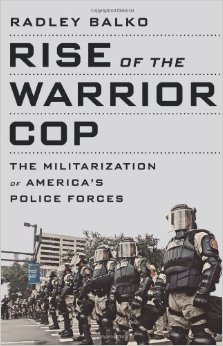
Rise of the Warrior Cop

Written by , Posted in Politics, Reviews

Five Stars

rise of the warrior cop

We have a problem with policing in this country. Hopefully this isn’t a surprise, although many people have only started to notice this since the killing of Michael Brown in Ferguson last month. People in many communities, for years, have been more fearful of the police than of the criminals in their communities; this is especially true for black people, who can be shot for having a BB gun, a toy sword, or nothing at all.

Mr. Balko has written a book that unfortunately is all too relevant these days. The book focuses on the problems with the militarization of the police and the culture that sees officers acting as though everyone is the enemy, and it specifically focuses on the drug war and SWAT teams. It has taken me over a month to read (I’ve started and finished two books and about 20 magazines in that time) because it is infuriating. It is well written and well-researched. It is ‘easy’ to read, in that the sentences and paragraphs flow logically, and the book itself is broken down by decade to clearly demonstrate how things have changed. But it is infuriating. I wrote a variation of ‘fuck’ or ‘ew’ on every other page, because each section made me angrier and angrier. Mr. Balko wrote a great, infuriating book, and I wish everyone would read it.

The drug war is ridiculous, but seeing it really spelled out in print, and reading how it is so tied into a culture that seeks bigger and deadlier toys to ‘enforce the law’ made me, and makes me, sick to my stomach. My blood pressure would rise, my pulse would race, and it would take a whole lot of self-control to not just fling the book at a window every couple of pages. Much of this comes from the illustrating stories that point out the times when SWAT teams utterly fuck up. The botched raids are not rare; they are examples of what happens when a group of people gets all the power but has none of the self-awareness to recognize that they are doing something wrong. Shooting dogs in the head, breaking down doors, holding people at gun point without ever announcing who they are. Can you IMAGINE being awoken at midnight by a bunch of people in dark clothes pointing guns and yelling at you? I assume I would pee myself and consider that I was about to be sexually assaulted and then murdered. There is rarely, if ever a need for this kind of use of force, and yet here we are, openly supporting it with federal grants, surplus Pentagon equipment and broken policies.

I live in Seattle, and was here during the WTO riots. Norm Stamper was police chief then, and he wrote a book saying that what the Seattle PD did during those protests – throwing tear gas into crowds, blocking people in – was right. But after his book tour he realized he was so very wrong, and now he realizes that his actions are partly responsible for the devolution of rights of civilians in the face of power-hunger cops. The way the police handled Occupy protests throughout the country was so disappointing; the way some handle the day-to-day operations with quasi-military force to recover a few ounces of marijuana or heroin from non-violent drug offenders should scare the crap out of you.

Are all cops bad? Obviously not. There are some amazing officers doing great work. That isn’t the point of this book. The point is that we’ve passed laws, set policy and created grants that make it easier for police to believe that the law doesn’t apply to them as they seek to enforce the law. That is unacceptable, and we need to speak out and demand some change. Now.

Sunday

14

September 2014

0

COMMENTS

Paris Street Style

Written by , Posted in Reviews

Three Stars

paris street style

Ah! Yes. This is the book I was looking for. Much more comprehensive than Kate Spade’s ‘Style,’ this 200-page guide features many photos but also a lot of suggestions. It has a point of view, a logical order, and something more than just some lists of clothes to check out. It is based on the premise that most people who have been to Paris accept: women there look amazing. Old, young, tiny, large. They have something figured out and they manage to look uniformly and yet eccentrically phenomenal in a way that I’ve not seen in other parts of the world (including the U.S.).

First, the drawbacks: nearly all the women pictured are, at most, a size 4-6. So yes, it’s much easier to look fantastic if you can buy your clothes anywhere and have the body type that designers have in their minds when they begin to illustrate their fall lines. The authors do not focus nearly enough on how to develop a style when one can only shop in a limited number of places due to size, or when one has extremely limited funds.

With those (admittedly large) caveats in mind, this book does offer some interesting advice about fashion, trends, and building a good wardrobe. Some of the suggestions are ones I have heard before – for example, that accessories are the key to creating many different looks – but others, while not necessarily new, stuck in my head more when delivered in this book. The best is the one about investing in a very few high quality pieces, and taking the time to make sure these items will last. I have a few of these – a trench coat that has seen ten rainy springs, a black skirt that is to me such a classic cut that I’m baffled that I can’t find it anywhere else and so have had it relined to make sure it lasts. But today when I went in search of a couple of items I found myself thinking back to this book and applying what I’ve learned to each bit of clothing to really sort out if buying it would be a good idea (hint: many more times than not, the answer was no).

This book also features several interviews with Parisian shop owners who discuss their view of the French style and what people should keep in mind when developing their own styles. Those parts are fun to read, and some offer great insight into fashion and style; others are not as useful. But once you’ve read the last bit of advice, the authors leave you a treat: a list of shops, cafes and spots the authors recommend checking out. It’s like a bonus tiny travel guide!

Saturday

13

September 2014

0

COMMENTS

Style

Written by , Posted in Reviews

Two Stars

style

I was drawn to this book because I usually like Kate Spade’s designs. The color combinations aren’t always my thing, and I wouldn’t wear everything she makes, but she definitely has a point of view. I figured this book might help me out as I try to sort through exactly what my own style is, beyond dresses with pockets. Aren’t dresses with pockets are the best? I don’t understand why more shops don’t sell them.

But back to the book. I’ve finished it and I’m still not entirely clear what Ms. Spade is going for with it. It’s too small to be a coffee table book, but the content is too sparse to be an actual guide to style. There are sections, sort of, but it’s mostly just a mixture of quotes from Ms. Spade and her husband Andy, some lists of things that fit whatever category she’s discussing, occasional collections of movies and books to check out, and some (admittedly lovely) illustrations. In fact, the illustrations are the best part, but there aren’t enough for this to be just a book of lovely fashion illustrations.

I wouldn’t go so far as to say I wish I could get my money back; the final section on clothing and jewelry care is really quite useful, and I can see myself referring back to it on occasion. There are also handy conversion charts to refer to if you find yourself travelling a lot and needing to buy clothes overseas. But beyond that, I don’t think this book has really done much to help me sort out how I want to approach personal style. I was looking for a different book, but that’s okay. I’ll find it, and hopefully it’ll have a secret page full of all the designers who make dresses with pockets.

Sunday

31

August 2014

1

COMMENTS

10 Books

Written by , Posted in Reviews

“Share a list of books that affected you in some way. Then tag 10 of your friends, including me; so I can see your answers.” I was tagged by Jen Siems.

1. Blindness by José Saramago. This was a gift from my college boyfriend, who I mistakenly thought had read it. Whoops. It was the first novel I remember really loving. It’s dark and has the most disturbing assault scene I’ve ever read. But I think it reminded me that there was good fiction out there. For many years it was the gift I gave when I stayed with friends.

2. Atonement by Ian McEwan. I think most people think of this as that Kira Knightly movie. The book is so good. It’s frustrating and drags emotions all over the place. And there is a moment – I think those who have read it know what I mean – that nearly destroyed me. I remember reading it sitting on the floor of my apartment in NYC and shaking and crying, realizing what was going on. I haven’t read it since.

3. Never Let Me Go by Kazuo Ishiguro. It’s about friendship, and love, and a sort of strange dystopian but not post-apocalyptic world. It’s not dramatic – it feels almost muted. But it is devastating in its own way. Huh. Apparently my kind of novel is the kind that slowly screws you up a little.

4. The Bible by Various. I know. Weird for an atheist, right? But by the time I was re-reading it in college, discussing it in bible study, I had the realization that I was not only not a Christian, but didn’t believe in god. Without reading it at that moment, with that group, I might not have realized that for years.

5. Brain Droppings by George Carlin. I was never lucky enough to see him perform live, but man, this book. It’s bizarre. There are jokes that are funny only in their absurdity. But I (and my sister) can turn to any page, read a line, and end up laughing out loud.

6. Let’s Pretend This Never Happened by Jenny Lawson. Known as the Bloggess, Ms. Lawson is weird and amazing. The book is funny and sad and relatable even if you didn’t grow up surrounded by taxidermied animals.

7. A Tale of Two Cities by Charles Dickens. This is the only piece of reading (book, article, poem, whatever) that was ever assigned to me in my twenty years of education that I did not finish.

8. Fast Food Nation by Eric Schlosser. This was one of the first books I recall reading that helped me to verbalize my progressive beliefs. It got me angry, and it profoundly affected how I view corporations.

9. The Fountainhead by Ayn Rand. Another former boyfriend recommended this one. Oh god. It is so bad. Just utter crap. It’s a pretty easy litmus test for whether I’m going to get along with someone if, when I mention this book, their response is a deep shudder or an audible groan.

10. BITCHfest by Various. It’s the first straight up feminist book I read. Once I finished, I found more. And more. And I haven’t stopped.