ASK Musings

No matter where you go, there you are.

Books Archive

Sunday

24

August 2014

0

COMMENTS

Americanah

Written by , Posted in Reviews

Five Stars

I first learned about Ms. Adichie from her Ted Talk.

After viewing that video I knew I needed to read her writing. I chose Americanah because I’d heard more about it than her other works, but based on how much I enjoyed this novel I know I’ll be looking the rest

The blurb on the back of the book, while technically correct, doesn’t adequately capture what the book is about. Americanah follows Ifemelu and her boyfriend Obinze through youth and into adulthood, but it is definitely Ifemelu’s book. The situations that Obinze faces are I suppose technically what the back blurb says, but overall I think it’s a better book than the one the blurb describes. The writing jumps around a lot – sometimes it is present day U.S., sometimes the Nigeria of Ifemelu’s youth, and sometimes it is the U.S. in between. But it isn’t confusing – each chapter quickly establishes the time and place, and it all works so well together to build a story.

Usually I write all through my books, but I was just too absorbed in this to make many notes. It’s nearly 600 pages long, but I read it over the course of a week while on vacation and found that when I would pick it up I’d read 100 pages in a stretch. The story itself is more interesting and complex than a simple love story – I can honestly say I did not know how it would end until I finished the book. But it’s also fantastic because of its social commentary. The main character Ifemelu starts a blog from the perspective of a Black African living in the U.S. and navigating race in a very different way than she was used to in Nigeria. The sample blog posts are interesting and insightful, as are some really great chapters about immigration and London. It’s a well-crafted piece of writing that I hope many people choose to read.

Thursday

14

August 2014

0

COMMENTS

Let’s Bring Back

Written by , Posted in Reviews

Three stars

lets bring back

This is a book with no plot. And I don’t mean that in an insulting way – it literally has no plot because it’s not that kind of book. I found it in this great store in downtown Seattle that is filled with lotions, soaps, snacks, classic children’s toys and gift books. It’s the kind of store that groups items not by type but by packaging color. I could spend hours in there; on our first trip there I left with three books (see my CBR6 review #31), including this one.

It’s basically a book of nostalgia. In fact, the subtitle is ‘An encyclopedia of forgotten-yet-delightful, chic, useful, curious and otherwise commendable things from times gone by.’ So yeah, a book of nostalgia.

I tend to like books like this, and for the most part this one was entertaining, but some choices the author made strike me as odd. For example, included in this 250-page volume are many deceased celebrities. I get what the author was going for – let’s bring back the glamour of this actor or the whimsy of this designer, but it’s a little weird to just see a name and description of a deceased person in a book called “Let’s Bring Back.” It struck me as indelicate.

The other big drawback is that a couple of things that the author wants to bring back have decidedly unpleasant connotations. On the first page the author suggest bringing back ‘all-white rooms,’ which on the surface sound kind of cool – furniture, walls, everything all the same color (in this case, white). But the example she provides is from a plantation in Louisiana. I’m not really ever going to be on board with ‘bringing back’ anything about plantations; I’m sure she could have found a different example. She also makes a snide comment about Monica Lewinsky at one point, which is unnecessary and mean-spirited.

Putting the tone-deafness of these items aside, there are some genuinely fun things in this book. A few were reminders for me, even triggering an audible ‘oh yeah, we should bring that back.’ Others were just entertaining – usually for things like hot mustard mousse and other food I can’t imagine seeing on a menu these days. But a mechanical desk? Or words like ‘swell’? Yeah, I can see the appeal.

Sunday

10

August 2014

0

COMMENTS

On Writing Well by William Zinsser

Written by , Posted in Reviews

How appropriate that this is my 500th post.

Five stars

on writing well

I love participating in Cannonball Read for a few reasons. I didn’t know AlabamaPink, but I followed her on Pajiba and am happy to support fundraising in her name. I love that CBR motivates me to pick up a book instead of a video game or magazine, and I know I wouldn’t have read nearly as many (mostly good) books in the last 18 months without it. But one benefit I didn’t fully understand until recently is that CBR gives me the chance to improve my non-fiction writing on a weekly basis. This latest read has been particularly useful with that goal.

My husband read ‘On Writing Well’ and thought I’d enjoy it. It bodes well for a book that aspires to be a guide to writing nonfiction that it is so easy to read. Mr. Zinsser wrote the first edition of this book in 1976, but has updated it many times, most recently about eight years ago. It is well-organized, fun to read, and most importantly filled with fantastic advice, as my notebook filled with quotes from it confirms.

A few of Mr. Zinsser’s suggestions are obvious, but that doesn’t mean most people actually follow them. One thing he pushes for repeatedly is to take a stand and remove the passive voice. Until graduate school many of my instructors required that I write in the passive voice; thankfully that changed but I still find myself having to work at using my voice in my writing, especially at work. I don’t think I’m alone in that, and it’s nice to get some advice on being even stronger with my word choice.

But there’s so much more in this book than Mr. Zinsser’s enthusiasm for active sentences. He provides great examples to support his point that we should be crafting sentences, paragraphs and pieces that readers want to read. We shouldn’t be looking for the longest synonym or the most clauses in a sentence; we should tell the story in a way that works for us. He offers great advice to get us there; a few of my favorites are:
• “What do your readers want to know next? Ask yourself that question after every sentence.”
• “Examine every word you put on paper. You’ll find a surprising number that don’t serve any purpose.”
• “Most adverbs and adjectives are unnecessary.”
• “Clarity, simplicity, brevity and humanity.”

Unfortunately, while Mr. Zinsser understands and reinforces the power of language, he seems to only allow that power in so far as he agrees with it. He mentions that he used to use ‘he’ as his generic pronoun, but feminists convinced him that such usage was sexist, and so he changed his style. He saw that not using a gender-neutral form whenever possible reinforced the idea that male is the default, and female the anomaly. But in other areas he suggests that being careful with language is just ‘political correctness’ and dismisses it. The specific example he uses – expressing his distaste for the term undocumented resident and preference for the term illegal alien – shows that he still chooses his words based on his political inclination. He sees the error in his ways on gender, but apparently not yet on nationality. That is disappointing.

Despite that one (important) area where Mr. Zinsser and I disagree, I know that much of what he wrote is solid advice. Hopefully as I incorporate his suggestions my writing – for Cannonball Read, for work, and for my own blog – will improve. Or, I should say, I will improve my writing.

Sunday

27

July 2014

0

COMMENTS

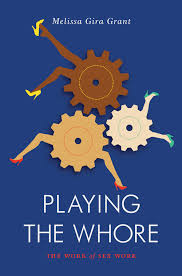
Playing the Whore: The Work of Sex Work by Melissa Gira Grant

Written by , Posted in Feminism, Politics, Reviews

Four Stars

“Sex work can indeed be empowering. But that is not the point. Money is the fucking point.”
– Melissa Gira Grant, Playing the Whore

playing the whore

Growing up I had three basic images of sex work (although I didn’t call it that then): the Julia Roberts / Pretty Woman version; the desperate, drug addicted woman; and the ‘sex slave’ in another country who was ‘rescued’ regularly on Dateline and 48 Hours. I didn’t spend time thinking about sex workers, but I did wonder why sex work was illegal in most places.

Recently I’ve become more interested in labor rights; specifically how society views certain types of labor as worthy (of money or legality) and others as deserving of criminalization or at least disdain. I live in Seattle, where the fight to raise the minimum wage to $15 an hour was met with such charming arguments from non-shift workers as ‘what did a McDonald’s worker do to deserve that? I barely make that!’ as though people in the fast food industry aren’t working just as hard as people sitting in air conditioned offices, able to take coffee and bathroom breaks whenever they want.

This interest led me to Ms. Grant’s book. She takes a perspective that is missing in coverage of sex work and workers – one that does not start by asking ‘should people do sex work’ but instead asks what can we do to improve the lives of the people who work in that industry. The book is well-written and educated me on the topic, but when asked to describe it in a few sentences I have a hard time. Each chapter feels like a separate essay in a broader collection, and initially I was not sure of the main purpose of the book, as it covers a broad area. It is not a linear history of sex work, nor is it an argument (primarily) for the decriminalization or legalization of sex work. It is more than that.

Going back through my notes and rereading the portions I highlighted does bring more clarity to me. That is a function not of Ms. Grant’s writing, but of my need to re-read the book to better take in all of the information she shares. Her purpose seems to be to point out all of the ways in which people who seek to help sex workers fail, and in doing so Ms. Grant draws the reader’s attention to the need for the reader to take actions in solidarity with these workers, and support those who can change the conditions of their lives for the better, not pull them out of sex work or make it more dangerous for them to perform the work they do.

Ms. Grant illustrates this in many ways, including critiquing the fight against online posting of sex worker ads and the large anti-sex work organizations that purport to rescue sex workers from horrible conditions. Ms. Grant points out that so many of the ‘rescued’ end up in worse situations, with less agency than they had when doing sex work, and concludes that this stems from the inability of so many to see these women and men as people doing a job and not as one-dimensional ‘whores.’

“The goal, these antiprostitute advocates say, of eradicating men’s desire for paid sex isn’t ‘antisex’ but to restore the personhood of prostitutes, that is, of people who are already people except to those who claim to want to fix them.”

That’s the point, really. Sex workers are people first, people who make their money in the sex work industry. The problems these workers face doesn’t stem from the morality of sex work – they originate with the rest of society, which is invested in making sex work dangerous. The question the reader is left with – that I am left with – is what am I going to do to benefit these workers?


Saturday

26

July 2014

0

COMMENTS

Whiskey Women by Fred Minnick

Written by , Posted in Reviews

Four Stars

Whiskey Women

I am whiskey drinker. I usually choose Jameson or Bushmills on the rocks, although I’m also a fan of the Four Roses Bourbon out of Lawrenceburg. Until my trip to Edinburgh last year I thought I loathed Scotch whisky; I couldn’t take the peaty, smoky smell. Upon being introduced to the Speyside single malt Scotch whiskies, however, I found another brown liquor to add to the rotation.

Given my love of whiskies, and knowing my feminist views, my husband found the perfect book to surprise me with earlier this month: Whiskey Women. I found it easy to read and full of the type of trivia I enjoy – facts that might come in handy during a pub quiz. But the book contains more than anecdotes that might help me cover my bar tab on a Tuesday night; it tells stories that I had never heard, and would wager most readers have not heard either. Aside from one discussion about Prohibition, everything in this book was new to me, providing a basic overview of a field that is wrongly assumed to be a men-only club.

Mr. Minnick starts this history with a primer on early distilling – think Egypt and the Middle Ages. But he quickly shifts his focus to the 1600s and beyond, usually breaking the stories down by region of the world. He discusses poitín makers in Ireland who cared for the community, widows in Scotland who kept family distilleries running, and U.S. women who subverted the 18th amendment by selling moonshine. Despite my assumption that this book would comprise mostly Irish and Scottish history, a large piece focuses on Prohibition, covering the role of women in its passage and its repeal, as well as the women who worked to survive when their livelihood was made illegal.

I noticed two themes appearing in every chapter through the repeal of prohibition –unsavory law enforcement tactics and clever women. Taxation and implementation played large roles in many of these stories, with revenue police who used reprehensible means to administer their versions of justice. This meant anything from arresting bootleggers to destroying all of the equipment being used in legal operations. I was not surprised to read this; power leads many people to do unsavory things, often under the protection of the law. But women repeatedly found ways to either subvert the law or work within it to continue making liquor available. Their stories are not just interesting; they are stories that anyone who appreciates quality liquor (or the right to access it) should know.

The book wraps up with a brief look at modern women distillers and whisk(e)y fans, including heads of tasting panels and creators of tasting shows that bring distillers and consumers together to provide an opportunity for these buffs to enjoy new and old favorites. This section is thin, squeezing many stories into a tight space. These stories also lack the romance found in earlier sections of the book, such as the Lady of Laphroaig, who kept her distillery running during the war.

It’s great to learn about the women who influenced a field that brings so many people enjoyment; I only have two critiques of the book. The first is that the book focuses on white women; given the pictures Mr. Mennick includes in the book, apparently only white women are ‘whiskey women.’ I do not believe this can be the case, but even if so I think the book would be better for some discussion about why women of color are not well represented in this field.

My second criticism is that while I do not think women should be compared to men, many of the statistics Mr. Mennick includes would be stronger if they were provided in context. Seven women filling a role means one thing if there are seven men doing it, and another thing if there are 700 men doing it – the former might show women were viewed as equals, while the latter might suggest that those seven women were trailblazers. Either way the context would be more interesting for me than the raw numbers.

Saturday

12

July 2014

0

COMMENTS

The Jane Austen Handbook: Proper Life Skills from Regency England

Written by , Posted in Reviews

Thee Stars

jane austen

So I’ve never read anything written by Jane Austen. I’m not sure how that happened, but it did. I hadn’t even seen one of the many films / series based on her books (other than Clueless) until about two years ago, when I watched the Pride and Prejudice series starring Jennifer Ehle and Colin Firth. I still haven’t read any of her work, but I now feel a bit more prepared to do so.

The Jane Austen Handbook is a 200-page book that reads as a guide to living in Regency England. It assumes the reader is actually living in that time period (as opposed to reading about a history of it), and assumed the reader is in the same class as most of the main characters in Ms. Austen’s novels. It’s a clever convention, and for the most part I enjoyed it. I think it does a decent job of explaining the period without judging it, although of course as usual the margins of my version are filled with “ack” and “hell no,” especially when discussing what unmarried women were allowed to do.

This was a pretty quick read, but I’m glad I picked it up for a couple of reasons. First, I do plan to start reading Ms. Austen’s novels when I’m traveling this summer (ah, the beauty of the e-reader – I was able to load all of her works onto it in a matter of seconds), so it’s nice to have a bit of an understanding of the time period in which her works reside. And second, when I do inevitably get confused by a term or something a character did, I can refer back to this book and have a better sense of what I’m reading.

Wednesday

9

July 2014

1

COMMENTS

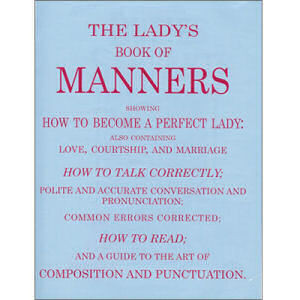
The Lady’s Book of Manners

Written by , Posted in Reviews

Three Stars

ladysbkmanners_xlrg

This book is not widely available online (although apparently you can get it from Amazon for a penny). It’s from a publisher in the UK that specializes in gift books; specifically ‘reprinting’ vintage books as a bit of a novelty. For example, this book claims to have come for a work originally published in London in the 1890s. Given my love of old etiquette books, I can at least vouch for the fact that many items in here are hilariously outdated, so they at least theoretically could have originated in a book from that time period.

I purchased this book when I came across it in a fantastic store filled with all manners of knick knacks, lotions and curios. I find them fascinating, and while the vast majority of the content is classist and sexist, some of it actually is intriguing. Some suggestions are actually not that bad – for example, spend four-five hours in the fresh air each day. Of course this assumes having four-five hours available for such leisure. But still. Can you imagine being able to do that? I have a 30-minute walk each way to work and I feel so lucky that I get than hour to myself, breathing (mostly) fresh air.

The book ranges from the extraordinarily detailed – “When tripping over the pavement, a lady should gracefully raise her dress a little above her ankle. With her right hand she should hold together the folds of her dress and draw them towards the right side.” – to the extremely general – “A lady is a lady at all times.” While some rules are patently outrageous (when referring to ‘servants’ “Never treat them as equals!”), some are quite lovely. For example, “Read such books as will enrich the mind, improve the heart, and add to the happiness and usefulness of your life.” Frankly, I think that’s kind of awesome.

If you happen across this book, and know someone who likes this sort of thing, this one won’t disappoint. But no need to seek it out if it’s not really your style.

Monday

7

July 2014

0

COMMENTS

Alaska By Cruise Ship

Written by , Posted in Adventures, Reviews

Two Stars

ABCS

I’m going on a cruise to Alaska this summer to celebrate my dad’s 70th birthday, and I’m pretty excited. I’ve never been north of Vancouver on the West Coast, so I thought I’d pick up a book to learn what I should check out when I’m in the various ports. I’ve been on a cruise before, so I generally know what to expect on that front – I just wanted some information on locations and maybe a little history.

This book is fine. I don’t think a lot of editorial effort went into it – there’s at least one pretty obvious error that shouldn’t have escaped anyone’s eye, really – but there’s a lot of information, and some history. In fact, there was probably more history than your average travel book, so I appreciate that. However, I’m a bit suspect about the accuracy. It’s not just the aforementioned typo; that can happen if you don’t have a great editor, or even if you do, mistakes still get made.

However, it’s not just typos. Because many Alaska cruises start and/or end in Seattle, there’s a nice section on my home city. Even though I live here, I still read that section, and it was full of errors that would have been avoided with some basic fact-checking (i.e. Googling). I know information can become out of date quickly in the travel guide world, but considering this edition of the book came out in March of this year, I expect it to be fairly accurate. Some things I take issue with might just be a matter of interpretation – the author claims the north cruise ship dock is 20 minutes from downtown, which, I guess, if traffic is moving at 5 miles per hour, that MIGHT be the case. But it’s literally four miles from the heart of downtown – I know because I used to go for runs from the middle of downtown up to there and back. But like I said, maybe she just wanted to cover her rear so people allow enough time. Okay.

But Ms. Vipond also talks about buses in the downtown Seattle corridor being free between 6 AM and 7 PM, but they got rid of the ride-free zone in September of 2012 – not exactly close to the deadline for this edition. And the IMAX Dome theatre she mentions closed well before that – I want to say in 2007? Even the name of our football stadium, which changed a couple of years ago (and got a lot of press this last year, what with the Seahawks winning the Super Bowl) is incorrect. She does point out a relatively new attraction – a Ferris wheel on the waterfront – so clearly she did some research. The point of me going into such detail is because knowing all of those errors in just five or six pages makes me really question whether any of the information in the rest of the book can still be considered accurate.

If you happen to be going on a cruise this summer and want some basic background on the ports of call, I don’t think there’s anything wrong with picking up this guide. I just can’t vouch for accuracy.

Friday

4

July 2014

0

COMMENTS

Mindfulness

Written by , Posted in Reviews

Three stars

mindfulness 1

Many people find themselves with over-scheduled social lives, or work situations filled with a seemingly endless stream of projects, meetings and deadlines. Perhaps these people are facing challenges at home, or school, or with health. The challenges might seem minor to others, or perhaps others observe and wonder how the person is still functioning given everything that’s happening in their lives. We hear it a lot from women who have children and also work outside of the home – there are demands everywhere, and these women can’t seem to get a break.

Without going into too much detail about why I found myself drawn to this book (during yet ANOTHER trip to Powell’s in Portland – that place should just take all of my money now), but I wanted something that would help me to be more present in my life, and kinder to myself. My husband meditates, and it really helps him when he’s feeling a bit off. Given that, this specific book appealed to me in many ways – it wasn’t horribly long (about 250 pages), it had a clear plan (it focuses on an eight-week meditation program), and it even came with a link to audio files to guide the meditations.

I was successful in keeping up with the program for about a week. I did read each chapter, and I really enjoyed the messages within them, but I don’t think this book was what I wanted. I sort of want to meditate, and I mostly enjoyed the meditations in this book, but I found the information within the chapters leading up to the meditations themselves to be much more useful. It was probably not the best book for me given what I was looking for, but I think it was well-written, supported with some research, and not overly flowery. Yes, it the authors discuss self-care, but if you have an aversion to anything that seems new age-y (although meditation is hardly that), you can still read this book and enjoy it. I’m sure I’ll end up referring back to it during challenging days, but it hasn’t turned me into a regular meditator.

Monday

16

June 2014

0

COMMENTS

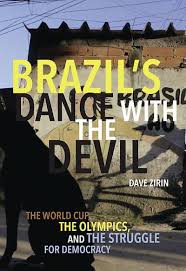
Brazil’s Dance with the Devil

Written by , Posted in Politics, Reviews

Three Stars

Zirin

I love soccer, and I’ve been looking forward to this World Cup since, well, since it ended in 2010. Back then I watched games at pubs in England and Germany between revisions to my thesis; this year I’ll do more listening via a streaming app since now I have a desk job. Like many people, I spent my youth loving the Olympics (and later, the World Cup) without really thinking about the impact the games have on the cities and countries that seek to host them.

The past few years, however, especially in the lead up to the seemingly extraordinarily corrupt Sochi games, have brought the issues of these large-scale sporting events to my mind. I mean, I’d heard about bribery in Salt Lake City, and I know that, on a smaller scale, new stadiums are often sold as an economic boon to a city but rarely if ever actually make up for the economic and social costs. When I saw that Dave Zirin, sports writer for The Nation, was writing a book about the lead-up to the World Cup and the Olympics in Brazil, I knew I had to check it out to try to educate myself.

This is a good book. It’s written in a way that kept me engaged, and I think part of that comes from Mr. Zirin’s talent as a magazine writer. While he’s written other books, I primarily associate him with shorter pieces, and this book feels like an extension of a short piece (in a good way). He condensed a lot of complicated history into a few pages, which obviously can’t tell the full story, but it gave enough background to set the current stage. He shared interviews with the residents at risk of being evicted by World Cup and Olympics construction, and helped shatter (for me anyway) the idea that favelas are primarily dangerous ‘slums’. He doesn’t gloss over the real problems that already existed in some of these areas, but he also shares why these communities feel so connected to their homes, and why what the government is looking to do to them is so troubling. I’ve known for a while that my education in this area is woefully lacking; I’m more than a little embarrassed that it took the World Cup coming to Brazil for me to seek out more information on it.

I did want more from this book, but it’s hard for me to put my finger on what that is. I’m so glad he wrote it, and I hope more people read it. I also hope that he does a follow-up book on what happened during the World Cup, what else is happening with the Olympics, and perhaps offers up some suggestions on how we can throw these giant events without them turning into corrupt endeavors that serve to make the rich richer.