ASK Musings

No matter where you go, there you are.

Books Archive

Saturday

15

February 2014

0

COMMENTS

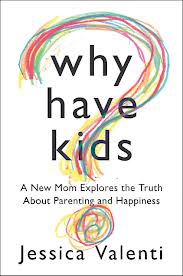
Why Have Kids?

Written by , Posted in Childfree, Feminism, Reviews

Five Stars
download

I reviewed another of Jessica Valenti’s books (“The Purity Myth”) for last year’s Cannonball Read, and she actually acknowledged my review on Twitter. That was a very happy day. I knew about this book but hadn’t read it; I discovered it on Audible on Friday ended up listening to it pretty much straight through.

Ms. Valenti is a feminist author and mother of her young daughter Layla. Layla was born SUPER early, spending her first weeks in the NICU. Ms. Valenti spends time talking about her feelings of helplessness when her daughter was in the hospital, and definitely shares many anecdotes, but her parenting experience isn’t the main focus of this book. Nor is the book an attempt to convince the reader they should or should not have kids. The book instead is focused on all the ways society has made it challenging to parent (and, specifically, to mother) children, while society also pushes the idea that of course all women should both want to be mothers.

I am not a mother. I am childfree by choice, choosing instead to live my life with my husband and whatever animals we have (currently two awesome cats). I covered this issue in my review of “I Can Barely Take Care of Myself” (good book!), so I won’t spend my review focused on that topic, although Ms. Valenti covers it adeptly. Instead I’m going to focus more on the political issues she raises. From breastfeeding (or not) to working outside the home (or not) to women being treated merely as vessels for children, Ms. Valenti provides strong, interesting and often disturbing facts that reiterate how generally shitty it can be to be a mother. The lack of acknowledgement of how hard it is, the hardline critics who believe there is only one right way to parent (I found her section on attachment parenting to be especially interesting), and the fact that women are sometimes hardest on each other all comes through in pretty vivid fashion.

She shares a story about giving her daughter a bottle during their first outing to a café (pretty big deal, considering she spend the first couple of months of life in the NICU), when a stranger literally said to her “Breast is best – if you’re having trouble I’d be happy to help you out.” The FUCK? Who thinks that is even a little okay? Her point being that what’s best for you might not be best for the mother over there, and that politically we need to fight for the ability to do what works best for our families. Mandated paid maternity and paternity leave, medical coverage of lactation counselling AND breast pumps, etc. What I like the most is that even when she’s presenting the different positions and possibilities (and sometimes expressing a strong preference for one option over another), she’s making strong arguments for the right to make these decisions ourselves, as families.

That’s not to say that she believes that “I choose my choice!” is always going to be the best. She talks about the anti-vaccine movement, and also about studies suggesting that it’s better for the whole family if the mother works outside the home (part time or full time). But her main focus is always on women not being so hard on ourselves, and on society giving mothers the benefit of the doubt, especially each other. Motherhood shouldn’t be a competition, and lately it seems to have evolved into that.

Ms. Valenti also acknowledges that certain mother stereotypes definitely play to the benefit of white, upper-middle-class women. For example, society (and conservatives especially) say women should stay home with the children, but if a single mom wants to provide that type of home for her children? She becomes a “welfare queen.” I would have liked more on the different mother experiences of women of color, though, and I think through the years (this book came out in 2012), she has recognized that she needs to work more on presenting those perspectives.

Finally, one of the more disturbing part of the book came somewhere in the middle, where she talks about how women are treated as worthless if they aren’t currently or planning to become mothers. One example is the now-common suggestion that women always act as if they are pre-pregnant (think about all the medication commercial voice-overs that say you shouldn’t use something if you are pregnant “or may become pregnant”). She shares the story of one woman who had zero plans to ever have children. She needed some medication, but her doctor gave her the less-effective version because it can cause side-effects in pregnancy. Umm, what? Nope. Treat ME as the human, not as a possible vessel for some hypothetical fetus. Please. It takes an even darker turn when you learn about woman arrested MID CHILDBIRTH because she was attempting a VBAC (vaginal birth after c-section). They literally cuffed her, dragged her to the hospital, and held a trial to force her into a c-section. Her fetus was appointed an attorney; she was not. Yeah, that happened. Like I said: dark.

Motherhood looks to me like a ton of hard work. I see my friends with kids and they are doing amazing things. And so far none of them seem to have just disappeared into their kids, replacing their own identities with ‘mother’ across the board. I have so much respect for what they do every day, and I wish that society could catch up and make it easier for all of them.

Saturday

15

February 2014

0

COMMENTS

Intuitive Eating

Written by , Posted in Reviews

Three Stars

I’ve been on lots of diets, and have made many attempts to change up my eating to try to lose (or keep off) weight. Over the past couple of years, I’ve been reading more nutrition books (like last year’s “Good Calories, Bad Calories”) as well as a lot of articles and blogs about Fat Acceptance and Healthy At Every Size. The later repeatedly points out both how society has created all kinds of fucked up issues with food, and how in the US and other cultures we’re conditioned to value appearance (i.e., thinness) over actual health (which really cannot be determined just by weighing someone).

51OmgdrsNeL

I heard about this book on one of those blogs, and while it’s definitely written in a manner that’s a bit more ‘chicken soup for the soul’ than I’d like, the message the authors (both professional dieticians who work with people with eating issues) are putting forth is interesting, empowering, and something I wish I’d been able to figure out on my own at some point.

The basic premise of the book is that, as the evidence points out, diets just don’t actually work. They don’t work for lots of different reasons, but in the end people blame themselves or their ‘willpower,’ and this leads to a cycle that, if you’ve been on more than a diet or two in your life, will seem pretty familiar. You decide to diet, you decide to cut out certain foods, you lose weight (or don’t), you eventually stop, and gain weight back, decide to diet, eat the forbidden food one last time, etc., forever. Now, of course there are people who diet, keep the weight off forever, and possibly enjoy saying things like “if I can do it, so can you!”, as though that’s somehow motivating as opposed to serving to make others just feel like they are weak or bad at life. This book is for the vast majority of us for whom diets won’t be the answer to being healthy.

So beyond pointing out the obvious, what does this book do? It seeks to help the readers to develop a health relationship with food, with the goal NOT of losing weight but of actually treating food as it should be treated. The authors want us to view food not just as fuel, but as pleasure as well (shocking, I know!). The authors want the readers to stop using food as a way to punish ourselves (carrots are good for you damn it, even if you hate them, EAT THEM) or to cover up our feelings. It’s a pretty radical approach for those of us who have struggled with food issues (although for those of you who never have, I’m willing to bet that it all seems extremely natural, which could be WHY you’ve never had food issues).

How does it purport to work? There are ten ‘principles,’ but the focus is not on perfection or failure; instead it wants you to focus on the process of slowly improving your relationship with food. As you go through this process, if you’ve had an unhealthy relationship so far, your weight should normalize, and part of the process is recognizing that a normal weight for you may not be the weight you’ve always dreamed of, and that’s OKAY. Again, kind of a radical thought, especially in a culture that spends so much time saying “if you work hard enough, you can do anything!” I can tell you right now, that unless I stopped eating for a year, removed some ribs and somehow shrunk the width of my pelvic bones, I’m never going to have they body of Gwyneth Paltrow. So why torture myself to get there?

The principles are: Reject the Diet Mentality, Honor Your Hunger, Make Peace with Food, Challenge the Food Police, Feel Your Fullness, Discover the Satisfaction Factor, Cope with Your Emotions Without Using Food, Respect Your Body, Exercise – Feel the Difference, Honor Your Health – Gentle Nutrition.

The book goes into much more detail, but the main points are that you should eat when you’re hungry, eat what you actually want to eat, stop when you’re full but enjoy your food, manage your emotions in other ways, and use exercise for health and movement, not for weight loss. Again, pretty straightforward, right? Except I’ve been working on this for just a week, and I’ve already started to recognize some things. I’ve really been tasting my food, and realizing that some things I eat because I’ve gotten used to them, not because I actually like them. I’m starting to actually eat when I’m hungry, and eat what I want, and I find that I’m eating more often, but usually eating less, and being MUCH happier with my food. Will I lose the 15 pounds I’ve gained since a stressful family event last summer? Maybe. Or maybe this is my normal weight. But I feel pretty confident that if I actually employ these suggestions I might actually be on the way to having that enviable healthy relationship with food some others already have.

Sunday

9

February 2014

0

COMMENTS

The Fault in Our Stars

Written by , Posted in Reviews

Four Stars

fault

Still on vacation, a friend mentioned this book and I was reminded that I wanted to read it. I’d heard about it a lot (although wasn’t clear on what it was exactly about), and much like the Hunger Games trilogy, I figure if I’m going to end up seeing the movie, maybe I should read the book. I started it at 10AM, and with the exceptions of stopping for lunch and a trip to the pioneer cemetery, I read non-stop until 6PM, when I finished it. It’s good. It’s not my favorite book, and it’s not without issues, but I think it’s a good book.

It’s a little easy to predict what’s going to happen in it (I thought), and some components are super fantastical to the point of absurd, but maybe that is how the world of wish-granting works? Either way, I appreciated the fact that the parents were treated as humans and, more importantly, these young adults were treated as humans. They have complex thoughts and feelings, are forced to be mature without necessarily wanting to be that mature, and have inner lives that aren’t just focused on their CANCER.

I’d be interested in the perspective from kids who have actually gone through the things outlined in this book – is it a realistic portrayal of some of their lives? If it isn’t, it still is an interesting story, with some moments that really resonate. I didn’t finish it thinking “I must change my life forever, and live for the people who can’t,” but I did finish it with the reminder that things are shitty and things are great but most of all, that things ARE and I need to continue experiencing these things even when I just want to curl up in a ball and sleep for days. And while I’m not the target for this book, it certainly is something I needed right about now.

Sunday

9

February 2014

0

COMMENTS

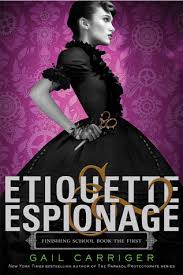
Etiquette and Espionage

Written by , Posted in Reviews

Three Stars

etiquette

So, I screwed up. Somehow I managed to read the second book in this series before reading the first book. On the one hand, I’m bummed as I know what happens after this book, but on the other hand I was happy to get some more background on the characters. However, having read them out of order, I’d probably say that there’s now no excuse for the super quick wrap-up of the plot in the second book. I thought it was because the author was taking her time introducing the characters; turns out that’s not the case.

This book is a fun, quick read. I’m on vacation right now and between naps and big meals I read this book in one day. I enjoyed the introduction to the character I came to like in the second book, and I liked getting some explanation about the other girls at this school, which is ostensibly a finishing school set in steampunk England, but is also an intelligencer training program.

One really odd component, though, was the introduction of the only character that the author felt it necessary to assign an ethnicity, making me think that the author suffers from the same color-blindness that so many authors have – her characters are white, and she assumes everyone will think they are white, so she only really needs to offer descriptions of the ‘others.’ I do not like that, and really wish more authors would create richer, more diverse worlds. If you’re writing fiction, especially fiction with an alternate view of the universe, there’s no need to default to the racial stereotypes and heirarchies that exist. Or, if you’re going to, spend time dissecting those hierarchies and how problematic they are. But describing the one Black character by saying he was covered in soot and then having the main character express shock that he was from Africa once she realized that his skin was also a darker tone? That’s weird and comes across as super ignorant. If the character making that observation were one we weren’t supposed to like, or who didn’t have any complex view of the universe, or if there were any more exploration of the racial structure of the society, maaaaaaaaybe it would work. But it really doesn’t work in this book, and kind of pulled me out of the book for a while as I tried to figure out why the author thought that was an appropriate.

I think having read both books I still would recommend the series with that caveat; I think I might explore her adult stories set in the same type of world and see if she builds a more complex and diverse world there.

Sunday

9

February 2014

0

COMMENTS

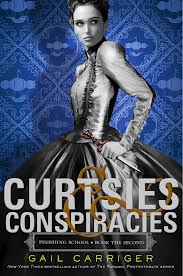
Cursies and Conspiracies

Written by , Posted in Reviews


Three Stars

curtsiesI’m currently in the middle of reading Book 4 of A Song of Ice and Fire, but once again I made the mistake of trying to read it right after finishing the previous book. It just doesn’t work – I need a break. So I asked my friend Jen, who is an author (and the maker of these amazing literature-themed perfumes) and an overall fun woman, for some recommendations. She suggested these YA novels by Gail Carriger.


I’ve heard of but never read any steampunk, but it’s possible that I’m going to become a big fan, assuming this book is a good representation of it. Set in a floating finishing / spy school, this book follows Sophronia as she tries to figure out what’s going on at the school, which is run by an oblivious head mistress and has both a vampire and a werewolf on staff. Is this what steampunk usually is? Because AWESOME.


The book is YA and a pretty quick read; 300 pages took me about two days to get through. At times I was a little taken out of the story because the names of the technology are absurd, and some of the character names sound a bit like ones I would have come up with when I was writing short stories in elementary school. But beyond that, I think the characters are interesting and the setting is pretty cool. The writing is fine, although the plot took a while to develop and then suddenly was done. However, the book is the first in a series, so I think a lot of it was about developing the characters and the background of the school to set the tone for the next book. Which I will be reading, possibly starting tonight.


[Note: This review was written before I started the ‘second’ book and realized that I’d read them out of order. Um, whoops.]

Saturday

11

January 2014

0

COMMENTS

A Storm of Swords

Written by , Posted in Reviews

Five stars.

In my quest to get caught up with the “A Song of Ice and Fire” series before season four of Game of Thrones starts (April 6 – mark your calendars!), I powered through book three in a little over a week. I’d enjoyed book one thoroughly, and liked book two, but book three? Holy direwolves, this book is amazing. For those of you who haven’t yet read the books, I’ll be sure to keep this review spoiler free.

200px-AStormOfSwords

I found I enjoyed this book so much not just because of the quick pace of events, but because what happened really helped develop the characters. I don’t think that it was just plot device after plot device; each bit that moved the plot forward also increased my understanding of the characters – their motivation, their personality, and how some of them may have been too easily thrust into the good and evil roles. To me, some things had been pretty clear through the first two books, but the knowledge gained throughout book three makes me really reevaluate a lot of it.

One area I really appreciated in this book was the writing of the female characters. Cersei isn’t just some plotting manipulator; she’s a mother who is trying to sort out how to deal with this child who is now her king. Sansa isn’t just a simple, sweet girl who is doing her duty; she’s growing up more and more, recognizing the complexities of the world she inhabits. Arya, who has been a favorite character of mine since the beginning (not exactly an original position, I know), grows as well, and I’m intrigued by what will happen next with her. And Daenyers – her maturity and cunning is staggering.

And the men are complex, too. They aren’t just warriors or lords; they have complicated feelings. I am annoyed that Mr. Martin didn’t decide to flip things around a bit in his world – making it a patriarchy seems a bit too easy – but working within the world he has created, I think he’s done a very good job of examining masculinity and femininity and how these people work with what they have to get where they want and what they want.

And to that end, I remain endlessly impressed with this world Mr. Martin has created. I thought I had forty pages left to read, but forgot about the list of houses and the family members he kindly includes at the end of each book. The characters, the histories of the houses and the kingdoms, the religions and customs – it’s amazing to think that this has all come from one man’s mind. I can’t wait to start the next book to see what comes next.

Thursday

2

January 2014

0

COMMENTS

Five Days at Memorial

Written by , Posted in Reviews

I’m doing it again! Off we go for Cannonball Read 6 …

9780307718969_custom-c5e860538756bdf498808fb3144c77d4a46dce7f-s6-c30

If you’ve read my previous reviews, you might recall that I work in emergency preparedness. This book was on my radar for 2014, and was lent to me by a coworker before I left work on New Year’s Eve. I spent most of my day off yesterday reading it, and finished it up walking to work and on my lunch break today. The book is nearly 500 pages long, so that should tell you about the quality of the writing. Five Days at Memorial is a fantastic book, and one that I would recommend to anyone interested in Hurricane Katrina, medical ethics, or just great investigative journalism.

The book is broken into two parts: a description of the eponymous situation, which took place during and immediately after Hurricane Katrina at a private hospital in New Orleans, and the investigation into the actions of some of the doctors (one in particular) and the nurses involved. It also raises two separate but related questions: what is appropriate for clinicians to do when faced with disastrous circumstances in a healthcare facility, and is what the doctor and nurses are alleged to have done at Memorial in line with that? Finally, another issue of interest that gets mentioned but is not the focus of the book is the responsibility of hospitals and the state have to be prepared for foreseeable disasters such as Hurricane Katrina.

The basic situation at Memorial was similar to one facing many hospitals in 2005 (and, as shown with NYU Langione during Hurricane Sandy, was still an issue in 2012): the generator and many necessary electrical switches of the major hospital were in the basement or ground floor of the building and thus susceptible to flooding. When the levees stopped functioning the days after Hurricane Katrina came and went, the flooding reached Memorial and resulted in a generator that ultimately petered out. That, coupled with the inability to quickly evacuate patients, meant that the clinicians, patients, and other family members at the hospital faced very unpleasant circumstance. By the time everyone was evacuated, many patients had died, including many who died in a three hour period on the last day.

The writing, the research, and the story Ms. Fink weaves together is gripping. It’s heartbreaking, and as someone who works in emergency management, it is one of my worst fears. The lack of planning, the lack of preparation, the lack of support from the parent company, it all is just devastating and infuriating. And yet … the hospital never ran out of food, or water. Clinicians were, for the most part, able to do amazing things in an utterly foul situation. But the big question around why did so many patients die on that last day, and whether Dr. Pou made the decision to help death along for those patients, is the focus. And while Dr. Pou makes public statements about doing ‘what she had to do,’ my take-away from this book is that while there certainly are times when this might be true, this specific instance, at this hospital, was not a situation where that statement needed to be made so far as euthanasia is concerned.

Dr. Pou seems sketchy, and seemed to make HER case be about a hypothetical situation that she was never really facing (and would not reasonably have thought she was facing), but that she spoke of as if she had indeed experienced it. Based on my reading of this book, what Dr. Pou chose to do to those patients is not an example of making decisions in a no-win situation. Not to spoil it (and stop here if you plan to read the book and are not familiar with the story), but on that last day, the helicopters were there, and those patients could have been evacuated. They weren’t definitely going to die, and Dr. Pou acted as though they were. That seems to be her defense. And while it’s a defense worth interrogating for real situations where the options are death in tons of pain in a day or death easily now, those weren’t the choices facing those patients that day.

As someone interested in medical ethics, I found the discussion of these issues to be well done. The topics of rationing medical care in an emergency, of deciding who should receive treatment first, and who should wait, are issues that need to be resolved. The clinical community is aware of this and is working on it. Hopefully books like this will make the issue more salient in the rest of the community as well.

Five stars.

Saturday

28

December 2013

0

COMMENTS

Cannonball Read 5: What exactly did I read again?

Written by , Posted in Reviews

I’ve not seen a post like this on the CBR webpage, so for now I’ll just post it to my own blog. I thought I’d take a minute to really look at what I read this year and see how I can change it up for next year’s challenge (for which I’ve already signed up – join me!

I originally signed up for the half cannonball, because in 2012 I think I read maybe 15 books, and 52 seemed a bit … much. But as I got into it I realized that with some long flights (thank you honeymoon!), some quick reads (thank you Bridget Jones!) and a healthy sprinkling of audio books (thank you Audible.com subscription!) it was actually going to be possible.

I usually read non-fiction, so this year I thought I’d try to get a few bits of fiction in there. I was pretty successful; 16 of my 52 books were of the fiction (if not high-brow literature) variety. Some were books I’d wanted to read (the aforementioned Bridget Jones trilogy), and others were books I discovered through media (The Handmaid’s Tale, Warm Bodies). But, true to form, the majority of books I picked were non-fiction. A huge chunk of those (14) were humorous memoirs or memoir-esque books, like Dan Savage’s American Savage, which was one of my favorites of the year. I also read seven science books, including one on forensic anthropology that was pretty riveting. Some etiquette books (three), a couple of fantasy novels (GAME OF THRONES), a couple of feminist books, and an interesting modern philosophy tome round out the bunch. And, I managed to read only books that I had never read before, which, near the end, was a bit of a challenge.

One thing I did after finishing up was go back to analyze the authors of these books. While so much of society seems to think that the straight white male point of view is ‘neutral’ and anything from another group is a niche, I’d like to make sure that I’m not just consuming books written by those folks.

On the gender front, I was pretty good – I read 28 books by women and 24 by men. Unfortunately, where race is concerned my authors were overwhelmingly white – like, 47 out of 52, which meant that only five books were written by people of color. That’s not acceptable. So my goal for 2014 is to aim for books written by men and women of color for the vast majority, unless a) it’s a book I already own or b) it is part of the A Song of Ice and Fire series, because I really want to get through books three and four before the next season starts. I also only read about three book by people who are openly not-heterosexual (either gay, lesbian or bi), and none by trans men or women, so I need to look into that more.

All in all, this was a really great first experience with the Cannonball Read. I’m excited to put together my reading list for 2014 and to get things started!

(to check out my reviews from 2013, mosey on over here.)

Saturday

30

November 2013

0

COMMENTS

Good Calories, Bad Calories

Written by , Posted in Politics, Reviews

Four Stars

Good_calories_bad_calories_book


CANNONBALL!

It seems appropriate that I finished this book over Thanksgiving weekend, given our national propensity towards eating a fair bit more than usual during this time. I’d seen this book on the shelves at the bookstore before, and ignored it because it seemed like another cheesy diet book. After a friend described it as a book that made her actively feel smarter, I picked it up.

Before I get into the book, I want to point out that people can be fat for many reasons (as the book will show), and that moreover it is absurd to suggest – as society so often does – that one has to lose weight or become skinny to have value (or to be healthy). Lots of people want to say that fat people are unhealthy because they are fat, but when it comes down to it you really can’t usually tell if someone is healthy simply by looking at them or if you know their height and weight. Moreover, I don’t think anyone owes it to anyone else to be healthy. I think everyone should have access to things that can help them be healthy, but I don’t think anyone owes ME their health. And yes, that includes fat people who some think cost the healthcare system more. First off, they don’t but secondly, if we’re going to start requiring fat people to lose weight because they might cost us more in health care, then there are a whole lot of other people (people who drive, people who ride in cars, people who smoke, people who ski and might break a leg, people who play professional football) who apparently need to change their behaviors because we think they might cost us more. Alright. On to the review.

The next time you’re around family discussing weight loss, obesity, or anything really related to diet and nutrition, and someone (usually smug, usually skinny) says “it’s a simple matter of physics: calories in has to equal calories out or you’ll gain or lose weight,” hand him a copy of this book, and tell him to not comment on such things until he’s read the whole thing. In addition to possibly contributing to his education, it’ll have the added benefit of shutting him up, because no one wants to hear from that douchey cousin anyway.

Mr. Taubes’ purpose with this book is to examine as much of the science behind weight gain / loss and the diseases that tend to be associated with it as possible. He’s not so much interested in proving or disproving any one hypothesis; he’s interested in seeing what is out there from the last 100+ years and trying to figure out if any of the conventional wisdom we hold regarding weight, nutrition and health stands up to scrutiny. It turns out much of it does not.

There is so much in this book that I can’t cover in this review (especially the discussion on why cholesterol tests may be measuring the wrong thing and ultimately not telling us what we think they are – I need to re-read that section to really understand it), but I wanted to pull out some interesting bits. While looking at some weight studies that have been done, Mr. Taubes pretty quickly dismisses the idea that people are fat because they ‘overeat’ (in fact he repeatedly uses many different studies to fight off this repellant ‘lack of willpower’ argument). The most interesting ones were the studies that had people eating the exact same diet and exerting the same amount of energy (usually these were prison inmates and thus easily tracked) and showing that across the board, some people gained weight, some stayed the same, and some may have lost weight. And among those gaining weight, some would gain two pounds, some would gain 10 or 15. Yes, those are just a few studies, but it does hold up when you think about the people you might know who seem to eat as much as or more than you and yet never gain any significant weight, while you might eat 1,500 calories a day, work out for 30 minutes six times a week, and struggle to fit into a size 16 pants. The question then becomes WHY does this happen?

Another interesting discussion revolved around exercise, and how it may have many health benefits, but that weight loss is not likely among those benefits. I’d read articles about this before; the thinking is that yes, you work out and burn some calories, but the attendant rise in hunger will usually cancel out any weight loss based solely on activity. Let’s say you work out on the elliptical for 30 minutes more than usual and burn and extra 250 calories; just off of the hunger that a workout can produce you might consume that extra 250 with a single Cliff bar on the walk home from the gym. The author is not saying that exercise doesn’t have health benefits; only that those benefits don’t necessarily include weight loss.

It’s so interesting that many of the studies, if properly interpreted, provide very different conclusions than the ones the authors of them – and the policy wonks who reference them – concluded. That then leads to a whole lot of confirmation bias – people looking for support for answers they already have decided are correct and only conducting studies or referencing studies that support the answers they want. So you get one study that claims that fat is bad (but doesn’t actually properly measure that); common sense says well, people who are fat have a lot of fat, so duh, eat less fat to have less fat, and the wheels are set in motion. But what Taubes’ meta-research shows is that it is not fat that makes people fat and keeps people from a lower weight, but simple sugars and carbohydrates.

That’s right – the data (annoyingly) seems to overwhelmingly support the ideas that those obnoxious Atkins / South Beach / no carb diet books promote. Sort of, although not necessarily for the reasons those book site. Taubes’ understanding of the research out there suggests that what matters is not necessarily the amount of energy we consume (via food) but the type we consume that impacts the energy that is available to us, and the consumption of carbohydrates (think flour and potatoes, not the kind found in veggies and fruits) hinders the ability to make use of the energy we already have stored in our body, while also adding to those stores and increasing our fat. The book goes into a lot of detail and is very dense, so it’s hard to synthesize it down to this review (he’s apparently followed this book up with a book targeted more at the average reader, not science readers). But I am going to say that the argument he makes was really convincing to me. There’s so much more to say, but this review is already silly long, so if you’re interested (or screaming NO YOU’RE WRONG while reading this), then pick up the book.

As I said, this is NOT a diet book; however, the epilogue does offer his thoughts on what he thinks his meta-research has shown and what that means for people who want to maintain certain weight levels and stave off some diseases (the section on sugar and diseases is enough for me to seriously contemplate giving up added sugar completely), but he points out that there is so much more research that should be done and IS NOT being done because society assumes it already gets it. It’s sort of like the drunk who drops her keys and then only looks for them under where the streetlight is shining; it’s the easiest place to look, but that doesn’t mean the keys are there, and she’s likely going to miss them if the light is only shining on a small bit of street. We seem so focused on the ‘conventional wisdom’ (and so few of us have really read the studies) but that wisdom seems to have really not worked for so many people, so perhaps it’s time to focus more on what we haven’t yet tested.

Saturday

23

November 2013

0

COMMENTS

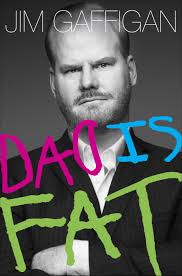
Dad is Fat

Written by , Posted in Reviews

Three stars

dad is fat

I was looking for another light comedic memoir to listen to on Audible, and this was perfect. It’s light but not fluffy, sweet but not saccharine, clean but not simple or boring. Yes, it is, as he says, ‘family friendly,’ but that doesn’t mean that it’s for you to listen to with your kids.

There are just a couple of problems with the book; it feels a little short, and it isn’t as linear as I would like. I do recognize that it’s a comedy book, and not a straight-up memoir, but the last chapter especially felt like it belonged somewhere else.

The stories Mr. Gaffigan tells are entertaining. The book revolves around his life as a father, but it opens with a story about travelling to the Grand Canyon while still childless, with a couple who had a newborn. It’s a great start, because it relates Gaffigan to the childless without making him sound patronizing when he later tells his stories involving parenthood. He recognizes the differences in the pre (or no) child life and the parent life.

From there he moves on to talking about the different ways that having children has affected his life. He has five kids in a two-bedroom NYC apartment, so he clearly has a lot to say on the matter. There are some great one-liners – like his description of a place that isn’t kid friendly: “I always think man, this place must be awesome, let’s get a sitter.” He also takes on sexism and pregnancy, pointing out the absurdity of people acting surprised or bummed when extremely attractive women get pregnant. Like, why wouldn’t they want to have kids?

I am not having children, so believe me when I say that non-parents and parents alike can enjoy this book. There is some excellent social commentary in there, such as when he delves into why people feel the need to comment on the number of children people have. I’m not an asshole, but it’s still a good reminder of what not to say to people when they tell you they’re having a kid.

I highly recommend the audio version, because you get to enjoy Gaffigan’s stellar delivery.