ASK Musings

No matter where you go, there you are.

CBR17 Archive

Saturday

13

September 2025

0

COMMENTS

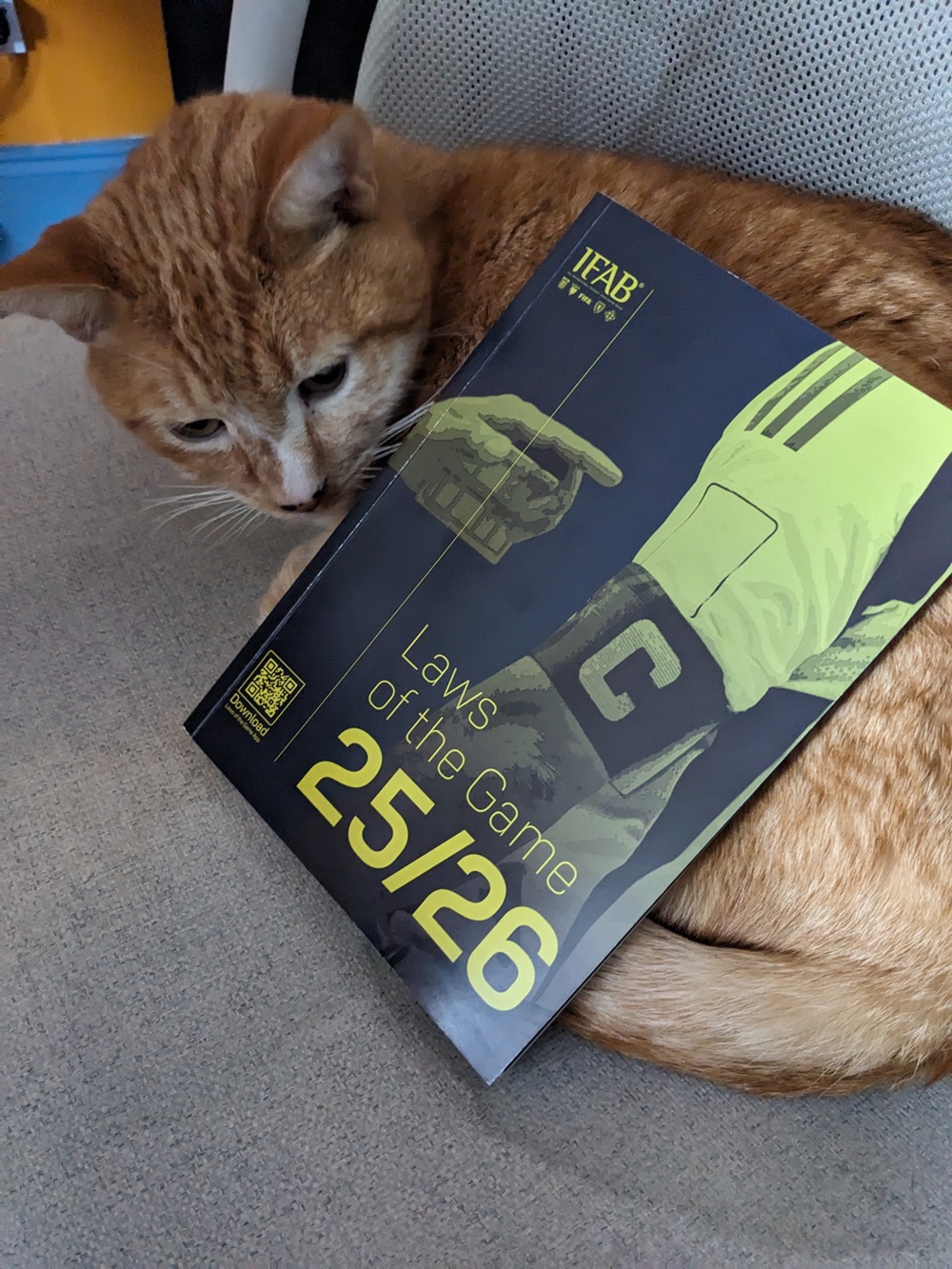
Laws of the Game 25 26 by IFAB

Written by , Posted in Reviews

Three Stars

Best for:
Anyone interested in becoming a football (soccer – but I’ll be calling it football for the rest of the review) referee; anyone who enjoys watching football but isn’t actually clear on what the rules are; anyone who thinks its super easy to be a referee.

In a nutshell:
The official laws of the game of football, along with descriptions of rule changes, and practical advice for referees.

Worth quoting:
“The best positions is one from which the referee can make the correct decision.”

Why I chose it:
I am a new football referee (eight matches in as of today), and I wanted the tactile book of laws to consult, highlight, and go back to.

Review:
Watching Ted Lasso, the character Keeley makes mention at some point that she doesn’t really pay attention to what’s going on during the match, but knows to shout ‘referee’ in exasperation / anger when something doesn’t go her team’s way. I think anyone who watches football on TV or in person (including myself) has exclaimed at a perceived bad call.

I played football off and on for over 30 years, with my final season in goal ending in June of this year. Prior to that, I took and passed the referee course, because I knew I wanted to stay involved in football but couldn’t keep throwing my body on the ground week after week (I was a goal keeper). And let me tell you – being a referee is fucking HARD.

This book outlines the 17 laws (rules) of the most popular sport in the world. From the size of the pitch, to the ball, to the players, to offside and everything in between, these 100 pages describe what should be the same no matter where and when someone plays a game. In reality, as we all know, each referee uses their own experience and judgment to determine calls. Just today, for example, I refereed 14 year old girls. There was definitely some pushing, but fouling? Eh. At one point I awarded a penalty to a team. The defenders lost it. At the end, the keeper told me I needed to go back to school to learn about penalties. And don’t get me started on trying to call offside without having assistant referees (shockingly, I do not have eyes in the back of my head).

While observers will think its super obvious what is a foul and what is not, or what is offside and what is not, the laws as discussed in this book are both crystal clear and dependent on the circumstances of the match. Is that a foul just because the person jostling for the ball is stronger than their opponent and so is using more force? Is someone actually being careless, or reckless (and thus needs to be cautioned, a.k.a. shown a yellow card)? And when a player loses it and cusses on the pitch, when should they be cautioned for dissent and when should I let it go because they are just expressing some frustration?

The laws cover the standard items, but also a lot of weird situations that possibly could come up. Like, there is an explanation for what to do if someone someone taking a corner kick manages to touch the ball a second time before anyone else … with their hand … in the opposite end of the pitch. Has this ever happened? It must have.

I appreciate that the book also includes explanations for changes to laws from the previous year, as well as tips on positioning and common sense, plus a glossary. Obviously I’m not going to whip it out during a match, but I’ll be reviewing it every week before matches.
Tuesday

9

September 2025

0

COMMENTS

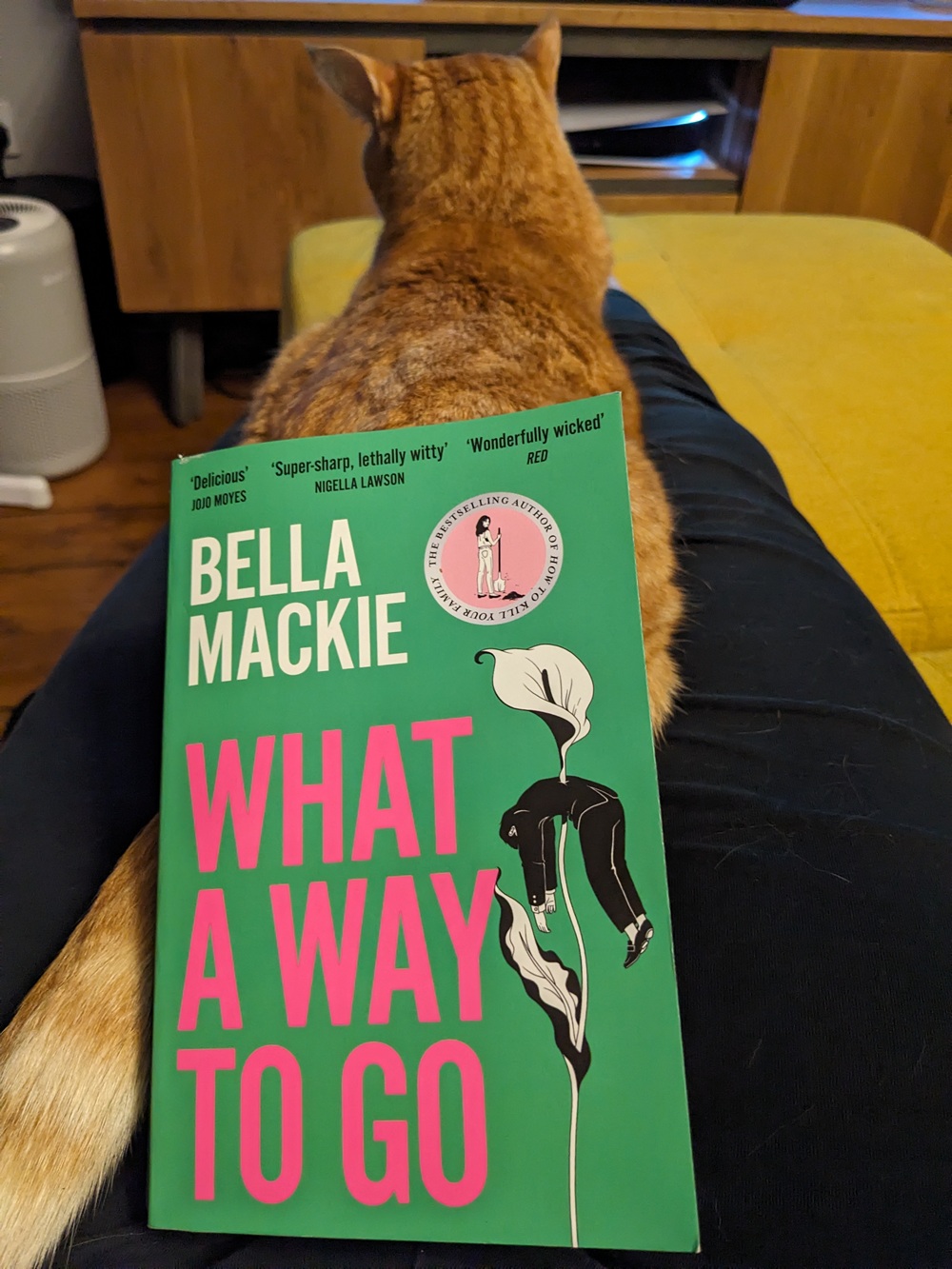
What a Way to Go by Bella Mackie

Written by , Posted in Reviews

Four Stars

Best for:
People who don’t mind reading about horrible people, and who like a bit of schadenfreude.

In a nutshell:
Anthony – a very rich finance dude – dies at his 60th birthday gala. Was he murdered? Did he take his own life? Is something else going on?

Worth quoting:
“He’d always thought I was an idiot. It’s a mistake men often make, thinking their wives are stupid when they’re actually just full of rage.”

“Who are these people who walk through the world with such little interest in what’s really going on?”

Why I chose it:
I enjoyed her previous book “How to Kill Your Family.”

Review:
MINOR SPOILERS AHEAD

Really no one in this book is super-likeable. Even the character we are probably meant to relate to most – ‘the sleuth’ trying to solve the possible murder of Anthony – is somewhat annoying and kinda unremarkable. But I still enjoyed it once I realized I wasn’t actually rooting for anyone. To use a sports analogy: you know when both the teams playing each other are teams you don’t like and you’re like ugh, why can’t they both lose? Well, that’s sort of how this book goes – everyone loses!

The minor spoiler here is that while Anthony dies at the start of the book, we still get his perspective because he goes to purgatory to try to remember how he died. In this version of reality, people who die go to a holding center where they need to recall their death before they move on to whatever comes next. And while there, they can actually watch their family members. Wild, eh? So while we only get point of view chapters from three characters, we still can see what others are doing if they are family members.

Anthony’s wife Olivia is another vile character. Anthony and Olivia actually quite deserve each other – they’re both genuinely horrible people who delight in the misery of those who don’t have their wealth or status, playing games with peoples lives. Gross, right? They feel like caricatures but for some reason, for me at least, it totally works. Anthony and Olivia also have four kids, ranging in age from 17-28, and there are various partners and other side characters we follow along as well to try to sort out why Anthony died.

I know the world is an absolute dumpster fire right now, and sometimes to offset that I look for a book that really explores how complex the world is, and how people can be so good. But sometimes I also just want to lean into it and hate on the super wealthy. This book scratches that itch,

Monday

25

August 2025

0

COMMENTS

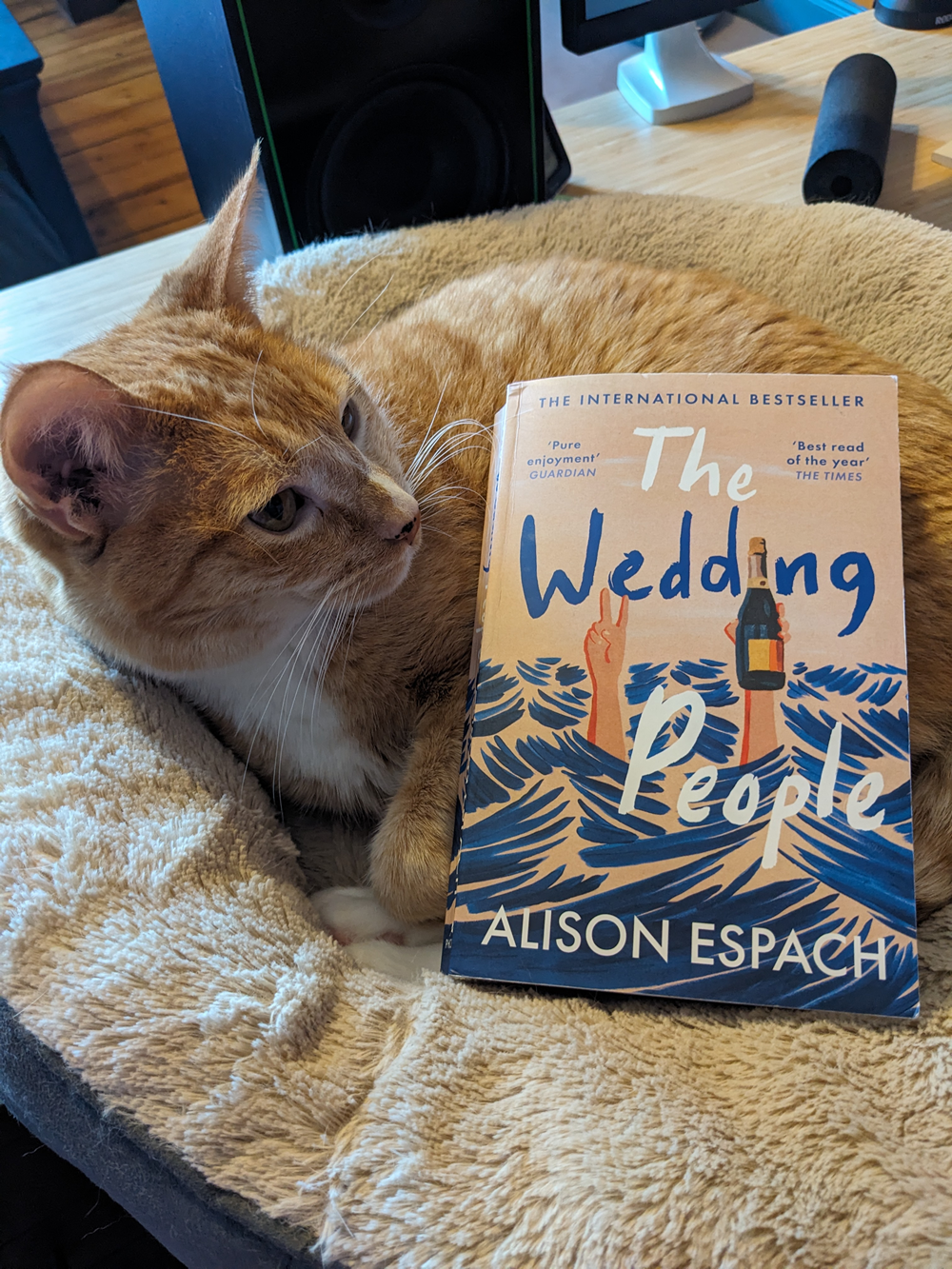
The Wedding People by Alison Espach

Written by , Posted in Reviews

Four Stars

Best for:
People who want an easy read that isn’t a quick read.

In a nutshell:
CN: Suicidal ideation

Phoebe and her husband divorced just after the pandemic. She has come to a hotel to die by suicide, When she arrives, it turns out she’s the only person there who isn’t part of a wedding.

Worth quoting:
“What is one thing I can do right now instead?”

“Everybody in my life is always telling me I can be anyone I want, but then whenever I do one thing they don’t like, they act like I’ve ruined myself,”

Why I chose it:
I was intrigued by the description.

Review:
I cannot relate to Phoebe. I am not divorced, I haven’t had suicidal ideation, I didn’t have the same upbringing, I don’t want children, and I’ve never struggled with infertility. And yet, I felt a great connection to Phoebe, and I think that speaks to the character author Espach created.

The set-up: Phoebe is a professor who decides, after her cat dies, to take his pain meds, fly to a fancy hotel she once wanted to stay at, and die by suicide. When she arrives – with only her phone and the clothes on her back – she finds she’s the only person at the hotel not involved in the wedding of Lila and Gary.

When Lila asks why she’s there, Phoebe is honest, and Lila (who is spending literally a million dollars on her wedding week) is obviously disturbed. At first, Lila seems like a bit of a spoiled brat, but, like some of the other characters we meet throughout the week, there’s more going on.

Phoebe decides to stay alive, and over the course of the week finds what I think many of us know – it can be a lot easier to be open and honest with strangers. And sometimes, its strangers who can help us figure out things we haven’t realized about ourselves.

There’s a few things going on in this book – it’s not just about Phoebe’s self-realizations. It’s also about the assumptions we make of others, the facades we put up to please people, and the things we choose to ignore.

I’m going to be thinking about this book for awhile.

Friday

8

August 2025

0

COMMENTS

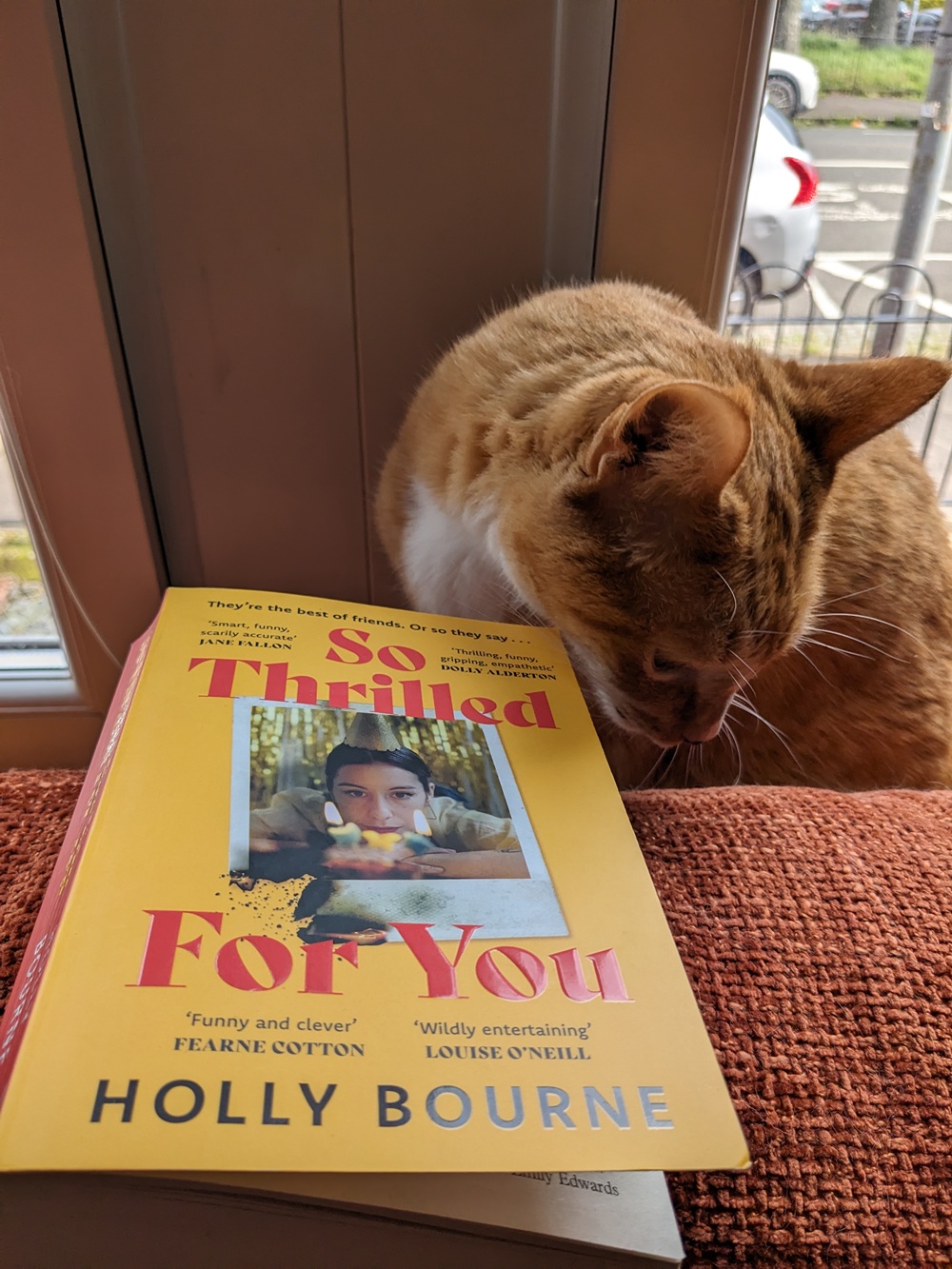
So Thrilled For You by Holly Bourne

Written by , Posted in Feminism, Reviews

4.5 Stars

Best for:
Any woman with friends. Any woman who has had kids. Any woman who has friends who have had kids. But a content note that there is a lot of discussion around birth trauma and also post-natal depression.

In a nutshell:
The ‘Little Women’ are four friends who met at university. One (Lauren) has an infant child, one (Nicki) is eight months pregnant, one (Charlotte) has been dealing with infertility for years, and one (Steffi) is childfree by choice. They gather for Nicki’s baby shower, and it apparently ends in literal flames.

Worth quoting:
“I’ve seen enough of my friends go from happy to mess to know they’re not alone, but you can’t really say, ‘if it helps any, everyone I know who’s had a baby seems to have ruined their lives?’”

“My body ripples with irritation that’s laced with guilt, which is pretty much how I always feel around my mother.”

“The path does not seem worth it to me. I can see, now, why mothers judge me so harshly. It has to be worth it, in their heads, because their sacrifice has been so huge and it’s so never-ending.”

Why I chose it:
Saw it in a bookstore and it looked like something I’d enjoy, especially as the token childfree person whose friends are nearly all parents now.

Review:
Another book I basically inhaled. I started it before bed on a Wednesday, then read it on my lunch break on Thursday and finished in after dinner that same night. So good.

The book is set up a bit like Liane Moriarty’s “Big Little Lies” in that we start at the end, where we learn that a gender reveal firework has burned down a house and scorched land. In turn, at the start of different sections of the book, we get snippets of interviews of the four main characters to hear what happened. The majority of the book takes place on the day of Nicki’s baby shower, which Charlotte is throwing, with occasional flashbacks to help us understand where some of the tension in the friend group comes from.

Lauren is suffering as a mother. She’s exhausted, she doesn’t feel supported by her husband, and her child will. Not. Sleep. Nicki is very pregnant and very uncomfortable, and isn’t super keen on the baby shower but going along with it. Charlotte has thrown her soul into throwing the shower, possibly as a way to distract from her own fertility issues. Steffi has just launched her own tiny book agency and is representing an author who is about to make it big. The shower is a bit inconvenient for her as she’d rather be working, but she shows up anyway.

Most of the characters are so well developed, but I knew pretty early on that the author was a mother, because the one character (Steffi) who does not have and does not want children is the least developed. She does get some inner thoughts that resonate – the fact that when it’s something like a wedding or baby shower everyone shows up, but when it’s something like an amazing work accomplishment no one really cares as much even if that’s what is as important to her. Her friends do think she’s a bit selfish, and not capable of caring, which is what childfree folks hear literally all the time.

And I did appreciate the author had at least one of the people who want kids comment snarkily about how no one cares that Steffi is childfree, so she should shut up about it. Which, as someone who is not having kids I can assure you is not the case. We hear endlessly about parents, and hear from mothers that our concerns about the support we get in life is irrelevant. It’s shitty, because despite the declining birth rate and the utter lack of support for mothers, society still doesn’t seem to know what to do with us. I was saying to a friend that I would have loved this book even more if perhaps Bourne had collaborated with someone who is childfree to further develop Steffi’s character.

With all that said, I still really loved this book, and am recommending it to others I know because I do think it captures much of what my friends with children have shared with me about their experiences over the years

Wednesday

6

August 2025

0

COMMENTS

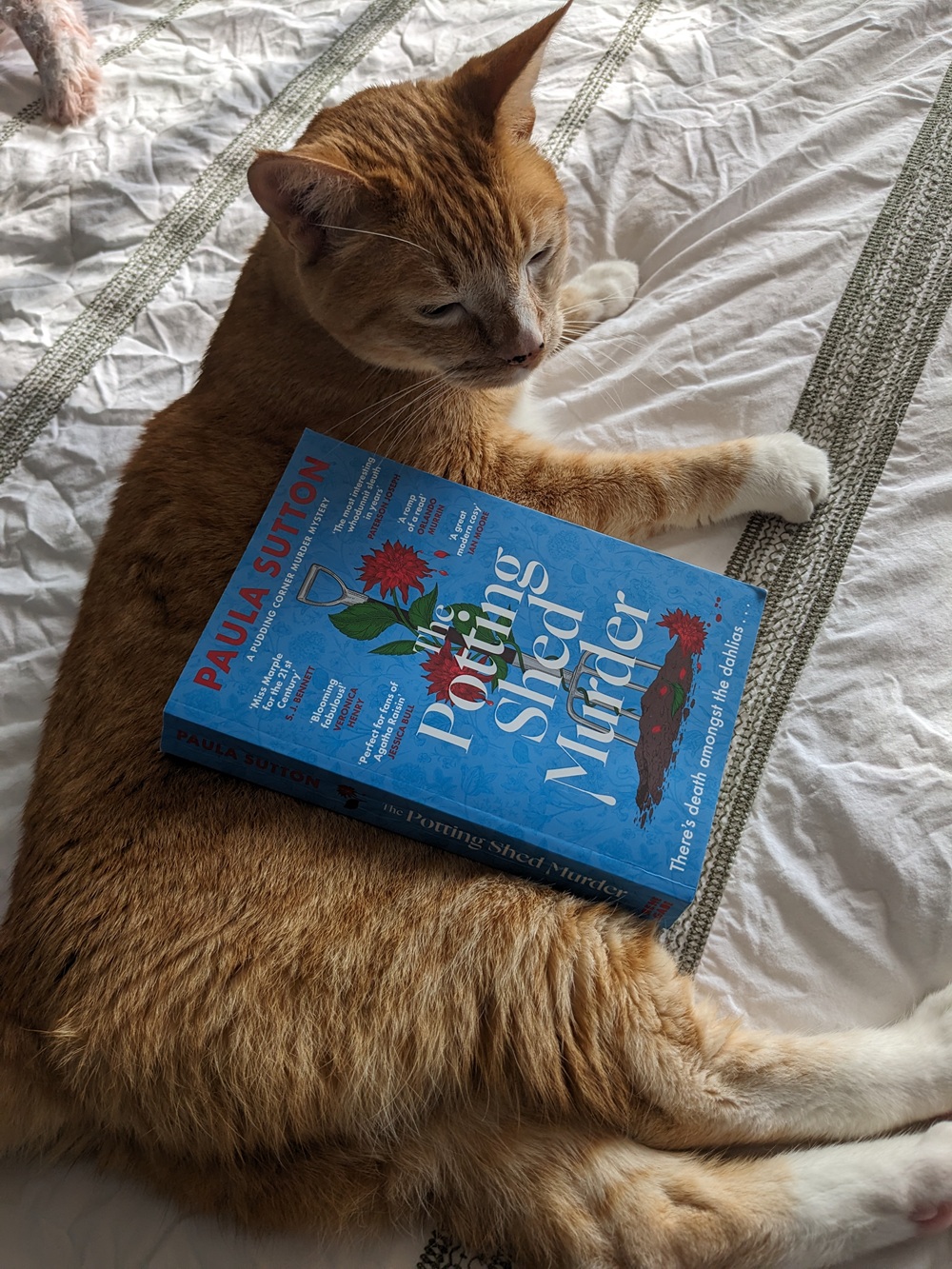
The Potting Shed Murder by Paula Sutton

Written by , Posted in Reviews

3.5 Stars

Best for:
Fans of cozy mysteries with an eccentric cast of characters.

In a nutshell:
Daphne has moved from south London to a tiny village in Norfolk with her husband and three young children, in the hopes of having a slower, simpler life. Then, the headmaster of the local school dies unexpectedly. Was he murdered? And if he was – who did it?

Worth quoting:
“The thought of sullying these beautiful and tranquil surrounding with the same stresses and drama of London was quite frankly a wholly depressing idea.”

Why I chose it:
Book club subscription – had the choice of two based solely on description, and this one sounded interesting.

Review:
The book starts with an explanation of the cast of characters, which for some reason put me off, but in the end I think was a fine addition. The book is told from the perspective of Daphne, the mother of three young children who moved with her husband from south London to this quaint village. She feels like she is a bit of an outsider, both because so many people in the town grew up there, an also because she’s one of the very few Black people in town. She is committed to becoming part of the community, becoming active in the childrens’ school and starting her own vintage furniture shop. She is welcomed by most, including her kindly but chatty next nor neighbor, Dr. Oates.

When the headmaster of the school is found dead at his allotment, Daphne finds herself a somewhat reluctant investigator. In the first place, she had seen the headmaster in a somewhat heated discussion with local outcast Minerva while helping Minerva out with her son’s birthday party. She’d also overheard the headmaster fighting with (well, being yelled at by) Marianne, a woman who wanted and was refused a letter of recommendation for her son. And she sees the headmaster bickering with his wife Augusta. Others in town become possible suspects as well, including two sisters who run the local convenience store and trade in gossip as well.

There are a lot of characters that are somewhat developed, and some side story lines that are interesting. I see that this is the start of a series of books, so I think that works better than if this were just a standalone novel. There is a lot of history and back story that is only revealed in the final third of the book, so making any guesses as to what is going on is a bit futile. But that also makes sense, because Daphne is an outsider and wouldn’t have access to all the information that the rest of the villagers have. The writing itself is vivid – I could picture these women, and their homes, and the town. And the – for lack of a better word – vibe of the place is obvious. I have been to this town.

I appreciate that the book, while being ostensibly a sort of light summer mystery, also looks at some deeper issues. Daphne discusses her concerns about moving her biracial children up to a town where almost no one looks like them (and away from a place with much more diversity). And the book itself also explores and plays with the concept that life is simpler in villages and small towns. And while on some level that’s true, in that the complexities of navigating, say, a city with 8 million people are absent, the people themselves are still people with their own complexities and drama. Just because there’s only one grocery store in town doesn’t mean that everyone’s lives are filled with sunshine and roses all the time. The idyllic concept of the simpler life doesn’t necessarily hold true, and it’s nice when books address that.

There was need for a bit better editing, but overall I enjoyed this book. It took me a little bit to get into, but I’m glad I did because in the end I red the last 200 pages in basically one sitting. And as I said, it is part of a series, and I’ve already got plans to get the second one.

Monday

21

July 2025

0

COMMENTS

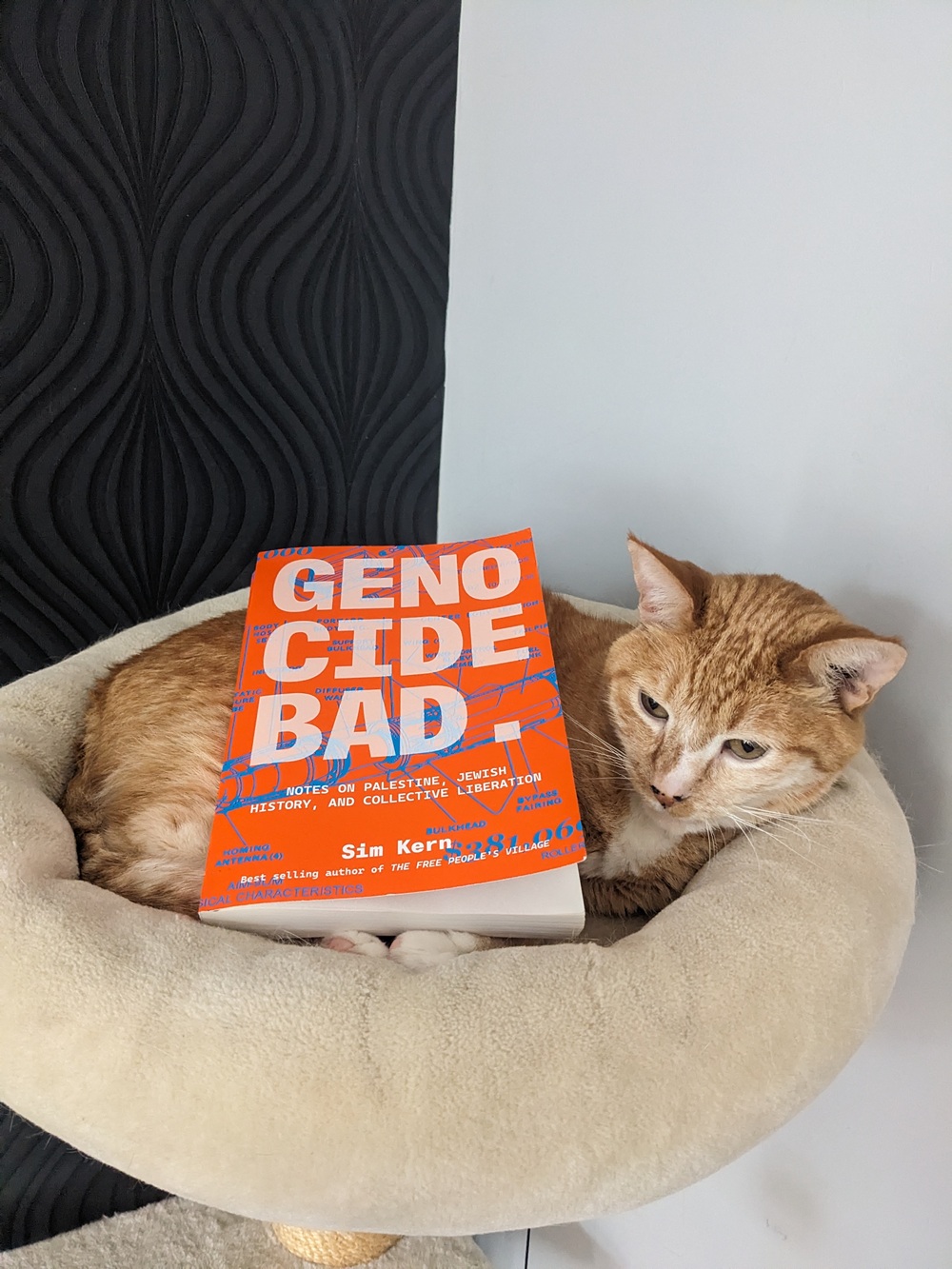
Genocide Bad by Sim Kern

Written by , Posted in Reviews

Four Stars

Best for:
Those interested in how to respond to some of the accusations that come when one is fully supportive of a free Palestine and opposed to the occupation and genocide.

In a nutshell:
Sim Kern (they/them) is a Jewish author interested in debunking some of the common talking points people use to justify what Israel is doing in Palestine.

Worth quoting:
“When the oppressed call for ‘liberation,’ colonizers hear ‘genocide,’ because that’s all they know — they can only conceive of violent, oppressive relations between enslaver and enslaved. But decolonization is not genocide.”

“If Palestine can get free, then anyone, anywhere can get free, And a certain class of people are willing to bun down the world rather than let that happen.”

Why I chose it:
Even though so many of us have seen the horrors of the past two years and have spoken out, there are some arguments that often come up that can be challenging to respond to, especially when emotions are running high. I was interested in a book that could address some of these issues, backed up by research and an understanding of the history of Palestine and Israel.

Review:
As I type this review, I’ve just received the following BBC breaking news alert: “UK and 25 nations condemn Gaza aid killings as Israel launches new ground offensive.”

I’m kind of shocked they bothered to say anything, as so many western countries have done fuck all to help Palestinians in Gaza over the many decades that they have been displaced, or even in the last two years, depending on how one chooses to view things.

This book is a very easy read (in as much as a book about the history and genocide in a region can be ‘easy’), Author Sim Kern is an organizer with Jewish Voice for Peace who has done loads of reading on the topic of Palestine. I recognize that many Zionist Jewish individuals disregard anything said by the Jewish individuals in JVP as being unrepresentative of Jewish people as a whole, with some going so far as to say JVP support terrorism. The latter is frankly a ridiculous claim, but everyone is allowed their own opinion (though not their own facts).

Kern addresses right up front the fact that we should be centering Palestinian voices in these discussions, and provides many suggested readings. Interestingly, the book is published by a Palestinian-owned imprint run by a Palestinian woman, who reached out to Kern to suggest they write this book as a natural follow-on to the work Kern has been doing for the past few years to educate folks on Palestine on social media.

The book is broken into three parts – an introduction (‘How I Became a Reluctant Influencer for a Free Palestine”), a wrap-up (“Towards Collective Liberation – What Does ‘Free Palestine’ Even Mean?), and the heart of the book, called Answering Hasbara. The topics Kern takes on include ones that I think many folks who have opposed the occupation and ongoing genocide in Palestine but who are not scholars of the area have struggled with.

The chapter I was most interested in addresses the idea that criticizing Israel is antisemitic. It is obvious to me that there are quite a few people who are indeed antisemitic who have taken advantage of this moment to express those antisemitic views. However, I strongly disagree with the idea that opposition to the Israeli government and the Israeli occupation of Palestine is inherently antisemitic.

It also does a great job of framing the occupation, displacement, and genocide of Palestinian people in a much larger historical picture, exploring how it is connected to bigger questions about colonizing, capitalism, and oppression. I found the final section to be especially inspiring, because it looks beyond where we are into what actually could be possible. I often find myself thinking ‘This? This is what society has decided is what we should be doing with our lives?’ when I look at military action, and governmental actions that harm the most vulnerable among us. It doesn’t have to be that way.

As I am not an expert in this area, I am sure that there is information in the book that is simplified, or perhaps missing details others would have included. Kern includes a link to a site where they said they will be posting any errata or changing information that is no longer accurate, which I appreciate. And this won’t be the last book I read on the topic, though I do think it is a decent starting point.

I think it’s important to read more, and especially more Palestinian voices. Kern in fact ends with three letters from families who have given birth since the latest violence. They are heartbreaking. And they are such a good reminder that yes we can have endless debates, discussions, and book clubs, but in the end, there are real people being burned alive, starved, and forcibly displaced, and all with US and UK taxpayer money. It’s horrifying to see in real time,, and we as humanity owe it to Palestinians – and victims of the other genocides taking place right now across the world – to listen to their voices and actually do something to help them.

Saturday

19

July 2025

0

COMMENTS

The Night Guest by Hildur Knútsdóttir

Written by , Posted in Reviews

Four Stars

Best for:
Those who like a pretty horrific psychological tale.

CONTENT NOTE: There are cats that start out alive but are not alive at the end of the book.

In a nutshell:
Iðunn is exhausted but doesn’t know why, and doctors aren’t helping. But we eventually know what is going on … sort of.

Worth quoting:
N/A

Why I chose it:
I somehow ended up following author Knútsdóttir on BlueSky. No idea when that came about. But I’d been wanting to read this since she announced it, and saw it available on Libro.FM as an audio book.

Review:
That was a wild ride. This horror novella is fascinating, but fair warning up front: the ending is ambiguous at best. There is a subredding thread discussing it with little agreement. So just be warned.

Iðunn is our narrator. She’s exhausted even though she’s sleeping through the night, and tired of medical professionals dismissing her. At one point she has a giant bruise, and so seeks out a second opinion, but still gets nowhere. A colleague at work suggests Iðunn isn’t getting enough exercise and thus not energized, and suggests a pedometer, she Iðunn purchases a fitbit-style watch. She takes it off at night, but one night forgets to and wakes up to find it has something like 40,000 steps on it.

While she’s been asleep.

The novella unfolds as Iðunn tries to figure out what she is doing in her sleep. She’s mostly off work, but we do get a glimpse of office dynamics as she tries to avoid her former romantic interest, who she left but still works at the company. We also learn of her parents, who don’t seem to really know her (the mother keeps buying meat for when Iðunn comes over for dinner, despite her being a vegetarian).

We do eventually learn what she is doing in those lost hours. And it’s not great.

As I said, the ending is a bit up in the air, but I enjoyed the writing and thinking about how people might handle facing the knowledge that they are living an entire life they aren’t aware of. We’d all seek help, right? Immediately? Or would we be afraid of what would happen to us if people knew?

I’m a bit annoyed at the ending, but I’m still glad I read this book, as I think Knútsdóttir is trying to leave open a few different interpretations that all could be equally interesting. I hope to read more from her in the future.

Wednesday

16

July 2025

0

COMMENTS

Snafu by Ed Helms

Written by , Posted in Reviews

Three Stars

Best for:
Folks looking for a bit of institutional schadenfreude.

In a nutshell:
Ed Helms narrates his book about a variety of events since the 1950s where things went wrong. They are often military in nature, though not always.

Worth quoting:
N/A

Why I chose it:
I had no idea Helms had a podcast, but I heard him guest on another podcast I enjoy (Behind the Bastards) and he mentioned this book, which sounded fun. It was … fine.

Review:
This is a very mild book that I can’t really review well one way or the other. It felt like the equivalent of a magazine read on a two-hour flight: served a purpose, sort of entertained me, probably wasn’t entirely as advertised, and will likely not stay with me in any real way.

Some of the stories Helms shares are fascinating, but I think my biggest issue is that many (even most) of them are not snafus – they aren’t fuck-ups, they’re just bad ideas. For example, one story is about the idea to set of a nuclear bomb on the moon. That’s not a whoopsie or an oops or a snafu – that’s just a really back fucking idea. Same with the story of using a cat with a microphone implant as a spy. Or the CIA spies who were also swingers. Bad ideas. Not snafus.

Some of the actual snafus are fascinating though – like the accidentally bomb drop that stemmed from the snafu of having the safety back-up disconnected during take-off. Or the one that I think is an actual excellent example of this – the Mars probe team using English units with metric calculations. That’s an epic fuck-up. I wish more of the stories were like this one, not one that talks about mistakenly investing in beenie babies.

I’d also have really enjoyed (for the ones that are actually snafus) some talk about how those issues could have been avoided / what lessons were learned and changes made so they wouldn’t happen again. But I guess that’s not funny content (or at least not inherently funny, so writers would have to work a bit to figure out how to share it).

There was clearly a lot of research put in as there are loads of different stories shared. I think for me they just are a bit all over the place. But I don’t feel like I wasted time reading it, so that’s good.

Sunday

22

June 2025

0

COMMENTS

I Hope This Finds You Well by Natalie Sue

Written by , Posted in Reviews

Best for:
Anyone who enjoys complicated narrators. Anyone who has worked in an office setting.

In a nutshell:
Jolene is an office worker who gets caught doing something unprofessional. As part of her improvement plan, she’s accidentally given access to everyone’s emails and chats.

Worth quoting:
“There’s no way this reality was the intended human experience.”

“Nobody is immune to thinking they might be wasting their only life on a place that can toss you out without a second thought.”

Why I chose it:
Rare Birds book club choice.

Review:
As soon as I read the synopsis of this book I knew I was going to enjoy it, so I waited until I had a free afternoon. I started this book after lunch and literally did not stop reading it until I finished it. I can’t recall the last time I did that, but this book was such an interesting and easy read. The writing is fantastic – I laughed out loud multiple times, and found the different characters to be quite well developed. There were a few plot twists that might be slightly far fetched but nothing too beyond belief.

Jolene is working an absolutely fine, average office job in a Walmart-type corporate office. She’s miserable, still not working through some rough times from her youth. So she does something ridiculous: she writes snarky comments at the bottom of her emails, and then changes the font color to white so they can’t see it. Except one time, in an email to her main coworker ‘rival,’ she forgets.

HR is involved, and while some security changes are made to here computer as part of her … not punishment, but you know what I mean … she somehow ends up with super admin rights, and every email and chat message is BCCd to her.

Jolene learns what her coworkers really think of her, from the interpersonal thoughts to undermining her work, while also going through training with an interesting new HR guy, Cliff. With her job on the line, she decides to make use of this new information, to both improve her lot in the company while also possibly undermining others around her.

I think the main point this book makes, and makes well, is that we don’t know what anyone else is really going through. And it’s not to make excuses for poor behavior – and people in this book do face consequences for their actions – it’s to ask that we think before we act. That a lot of people are hurting, and that while work matters in some respect, it certainly isn’t the whole or even the main part of a person’s life. And we can’t excuse our own errors in judgment because we are going through things, but we can be kind to ourselves and seek to do and be better every day.

That quote up there is something I think a lot, especially these days, with so much going on in the world – “There’s no way this reality was the intended human experience.” Petty games, cruelty, fighting with each other, underpayment, no time for joy. And office work is a picnic compared to other forms of labor. It’s so frustrating to think about what life could be, but also inspiring to think about what life still can be when we care for the people around us.

Thursday

12

June 2025

0

COMMENTS

Raw Dog by Jamie Loftus

Written by , Posted in Reviews

Three Stars

Best for:
People interested in the history of hot dogs in the US, told through a sort of travelogue / memoir hybrid.

In a nutshell:
Author Loftus travels the US to taste all manner of hot dogs, while sharing the stories and history of those who sell them.

Worth quoting:
N/A

Why I chose it:
I adore Loftus’s podcast ‘Sixteenth Minute.’

Review:
I wish I liked this book more than I did. I only became aware of Loftus’s work this year, when her podcast ‘Sixteenth Minute’ was released. The podcast explores what happens to people who have become famous who didn’t really intend to (the title is a reference to 15 minutes of fame, and the theme song is a banger). I admire the way Loftus goes deep into topics others might write off as too fluffy, and she manages to find how something one might have scrolled past on TikTok represents a section of our culture today.

This book definitely shows some of her fantastic reporting – the way she talks about different hot dog institutions, exploring how they are part of their community, is where the book really shines for me.

The parts that don’t really work for me honestly I should have known better. The book is called Raw Dog, which as we all know has another meaning, but I genuinely thought it was just a sort of clever way to get attention for the book. But there is a surprising amount of sex discussion in this book, and I think it feels just so shoehorned in. I know way too much about young Loftus’s sexual history, and I really didn’t want or need to.

I absolutely appreciate that this book is, as many such books are, part memoir. There’s not really a better way of telling these sort of anthropological explorations of pop culture than via travelogue or memoir. I’ve seen it done well loads of times, and just a straight recitation of hot dog history would be an absolute snooze fest. And this book is not! And I’m sure loads of people will enjoy and appreciate the spin Loftus puts on the topic, but I genuinely don’t need to know that much about her sexual past, and I don’t think it works in this book. While writing this review, I thought about whether there was something here about internalized misogyny, where maybe I’m subconsciously judging a woman for being open about her sexuality, but no. I’ve reviewed books where men do this and it skeeves me out then, too.

And I don’t want to mislead potential readers – it isn’t on, like, every page. But I’d bet every chapter has at least one reference, and I just don’t think it was needed, and I don’t think it added anything to the book. It actively took me out of it repeatedly, so much so that it took me a month to read this audiobook, when usually I go through them in about a week.

But still, check out her podcast. It’s fantastic.