ASK Musings

No matter where you go, there you are.

Monthly Archive: April 2014

Thursday

10

April 2014

0

COMMENTS

What I’m Reading – April 10, 2014

Written by , Posted in What I'm Reading

With the sun shining in the Pacific Northwest things look good – until you read things on the internet. Oi.

– “But my hope does not override my realism” ‘You Owe It to Other Women’: Why You Don’t Owe it to Anyone Else to Report Your Rape (h/t @ChiefElk)

– Go Germany! Out of hours working banned by German labour ministry (h/t @stavvers)

– Equal pay – why the hell is that controversial? Obama To Sign Executive Orders On Equal Pay (h/t @AIsForOrg)

– “Contrasting thoughtless lady emotions with hardened male objectivity: It’s not just a trick your ex-boyfriend used to win arguments.” Michael Hayden Accuses Dianne Feinstein of Being Too “Emotional” to Judge CIA Interrogation Programs (h/t @RepresentPledge)

– PLEASE make sure you are vaccinated: Measles At A Rock Concert Goes Viral In A Bad Way (via @NPRNews)

– Oh, NCAA. The UConn Huskies Win ‘NCAA Hunger Games Bingo’ (via @EdgeOfSports)

– Yet another reason Rick Perry is the worst: Rick Perry Dodges Measures to Address the Prison Sexual Assault Crisis (via @MollyKnefel)

Monday

7

April 2014

0

COMMENTS

The Immortal Life of Henrietta Lacks by Rebecca Skloot

Written by , Posted in Reviews

Five Stars

Others have reviewed this for Cannonball Read already, so here are the basics in case you missed it: Henrietta Lacks was a black woman who died at Johns Hopkins, where she had been admitted due to complications from cervical cancer. She had radium treatment at one point, and when she received the treatment, a biopsy of her tumor was taken at the request of a researcher. From there, the cells were cultured and became some of the first that would grow, and keep on growing, in a lab, making them perfect for testing all sorts of things, including the polio vaccine that helped eradicate the disease from the U.S. The problem is that she never knew about this (nor did she consent), and her family didn’t find out until about 25 years later. While researchers and biomedical companies were making history (and money), Henrietta’s descendants were mostly poor, without much secondary education or even basic health insurance.
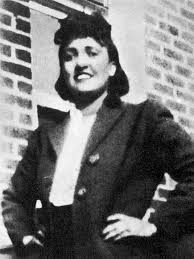
Lacks

The author, Rebecca Skloot, is a white woman who first learned about the “HeLa” cells in high school. She wanted to know more about the woman behind the cells, and spent over a decade writing this book – she tracked down medical records, met with researchers, and eventually was able to spend lots of time with Henrietta’s children and grandchildren, helping them to learn more about the mother they didn’t ever get a chance to know.

This book is fascinating in many ways. The first is just the sheer quality of Ms. Skloot’s storytelling. She weaves the present and the past together seamlessly, finding clever and logical ways to intertwine the research, the history, and the science so that the book flows really well.

It is also a great book for those of us interested in biomedical ethics. Once we part with something that was once connected to us, does it stop belonging to us? Do we have any right to demand that our tissues not be used in ways that we might find objectionable? What about genetic mapping – if my DNA is found to be really helpful in some sort of research, am I obliged to be okay with that research? Are my (hypothetical) kids obliged to be okay with research that is traceable to their genetic code? And can we ever really consent when the alternative to saying “sure, use my cancer cells” may be that they don’t remove the cells? These issues are mentioned throughout the book, but get a more thorough review during the afterward, where one particularly douchey Harvard researcher seems to think that research matters above all else. Which, who knows, maybe he’s right, but he doesn’t make any legitimate  argument about it.

Finally, the book is fascinating in the most important way a non-fiction book like this can be – it tells us about a real, flawed family that has been devastated not just by the loss of their matriarch decades ago, but by the realization that her cells live on in ways they never imagined and didn’t entirely understand in the beginning. It’s a glaring statement about the priorities in this country when a person can ‘donate’ cells that very seriously changed the medical world forever, but her family can’t afford health care for themselves. There’s so much here about racism, classism, and elitism that I could write a thesis on it. But instead I’ll just leave you with the strong recommendation that you pick up this book.

Thursday

3

April 2014

0

COMMENTS

What I’m Reading – April 3, 2014

Written by , Posted in What I'm Reading

I’ve spent the week in Atlanta, where it is sunny and hot. Seattle, what can you offer me by way of weather?

– Whoa. Pneumonic not bubonic? That’s news: Black death skeletons reveal pitiful life of 14th-century Londoners (h/t @andreagrimes)

– This writer started out on one of my favorite sites. It’s cool to see what she’s writing on now: Why It Matters When Asian Women Leave TV Shows (via @jowrotethis)

– What in the ever loving fuck: One Percenter Convicted Of Raping Child Dodges Jail Because He ‘Will Not Fare Well’ (h/t @schemaly)

– One of the writers left at the Nation who I enjoy reading (that was a poorly constructed statement): The Function of Black Rage (via @mychalsmith)

– Sweet! Anita Sarkeesian got an award at GDC: The 2014 Game Developers Choice Ambassador Award (via @femfreq)

– Oh Hobby Lobby. You continue to suck: Principles! (via @Shakestweetz)

– Fascinating: Truth in Ads (h/t @RepresentPledge)

Tuesday

1

April 2014

0

COMMENTS

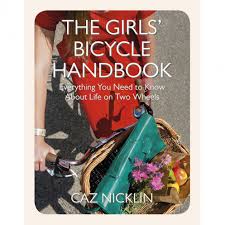
The Girls’ Bicycle Handbook by Caz Nicklin

Written by , Posted in Reviews

Four Stars

Bicycle

While visiting my sister this past weekend, we spent 90 minutes waiting for a table for a late lunch (that we never got – long story). The restaurant is part of a giant building that also has a coffee shop, an Anthropologie-esque objects area (perfumes and such), as well as a funky book store, where I found this gem. I’ve been contemplating buying a bicycle and, despite the name (ugh, “girls”), was interested enough in the content and the visual presentation to pick it up. I’m quite happy I did.

The book is by a bicycle blogger and business owner who lives in London. While the publisher did translate the spellings to American English, some of the suggested measurements were clearly straight converted from metric – unless the author casually says things like “pick a point 62-98 feet in the distance.” Doubtful. But other than that, the advice is sound. From detailed descriptions of different types of bikes to fit your expected use (as opposed to just walking in and saying “I want to ride … a bike,” which was kind of my plan), to the different types of accessories you might need to be safe, the Ms. Nicklin lays out great suggestions.

The book is peppered with profiles of other female bicyclists who either do interesting things (like cycle around the world) or have their own cycle businesses that specialize in items for female cyclists. Yes, the gendered idea struck me as a bit odd at first, and many of her suggestions are relevant to men, but she does take on things like dresses and fabrics to ride in, or how to avoid helmet hair after the commute to work. But it isn’t just about looking cute on a cycle; it’s about the steps to take to feel free and safe enough to really use this mode of transportation. There’s a chapter on bike security, safe riding and rules of the road, and a really detailed section on cycle maintenance. The author wants women to understand the cycles, and know how to make needed repairs and such on our own when possible. It’s pretty cool.

I’m starting to save up, and am going to look at taking a one-day class through REI. And when I’ve got some money saved, I’ll definitely be taking this book with me as I set out on my way.