
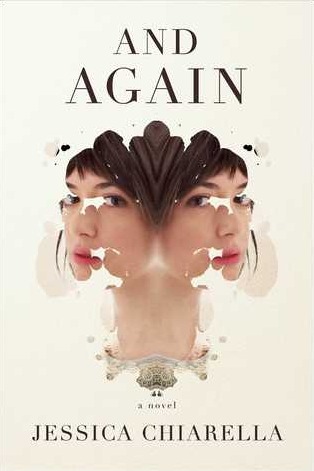
And Again by Jessica Chiarella
Written by Ashley Kelmore, Posted in Reviews
 Rating:
4 Stars
In a nutshell:
As part of a new medical trial, four individuals with life limiting illnesses are able to have their memories transferred into their own clones.
Best for:
Those who (like me, I’m realizing) enjoy vague sci-fi ‘what if’ books. Those interested in exploring not so much the ethics of such a procedure, but the implications for individuals.
Quote that made me think:
N/A (audio book listened while running, so didn’t stop to write anything down)
Why I chose it:
I can’t recall how it got there, but it’s been on my to read pile for a bit now. Finally decided to crack on with it.
Review:
Four individuals, each with their own point of view chapters. There’s David, a Republican congressman; Hannah, a young artist with stage four lung cancer, Linda, a mom of two who has been locked in (able only to blink) for eight years, and Connie, a former actress with a medically resistant strain of AIDS.
As part of a medical trial (and with participants chosen by lottery), these four have their lives saved. While their memories are placed into their new body (a clone of themselves, aged up quickly to match their current ages), they all quickly find that this doesn’t mean they are back to their ‘old selves.’ At the same time, for those who were desperate for a fresh start, they find it isn’t as simple as they thought it might be. It’s more like a New Year’s Resolution – the intent is there, but they have so much history, it’s so easy to go back into old habits.
I appreciate that the author didn’t make any of the characters out to be saints. Unfortunately there are some I’d argue unnecessary commonalities to try to make the characters more ‘complex,’ which could have been achieved via other methods (minor spoiler – cheating factors in way more than I think it should). And while we don’t get point of view chapters from any of the partners, friends, or family of the four individuals, we get a sense of how hard this is for them, too. Having a loved one close to death, for some being supportive as they are dying, and then having them back healthy, but changed. Do you just keep going forward as though they’d never been sick? Do you change? Has the relationship.
And while it isn’t the main focus of the book, some of the characters do at times consider whether they ‘deserved’ to have their lives saved. Should there be a specific moral threshold to determine who gets to live longer, if supplies are limited? Should someone be denied access if they are an asshole? How about a criminal? How about immoral? And by whose standards are we judging immorality? Also … should we be cloning people even if the original recipe human is stripped of their mind and would have died anyway?
Would I recommend it to its target audience:
Yes
