ASK Musings

No matter where you go, there you are.

Author Archive

Tuesday

17

January 2023

0

COMMENTS

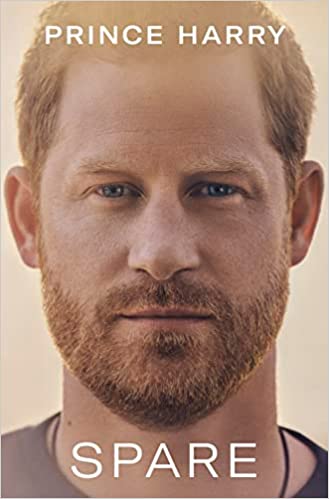
Spare by Prince Harry

Written by , Posted in Reviews

Four Stars

Best for:
Those interested in a very different perspective on not just the British royal family overall, but how life in it has impacted Prince Harry and his family.

In a nutshell:
Member of the British Royal family, second child to Princess Diana and Prince Charles (hence ‘spare’,) provide insight into his childhood, young adulthood, and adulthood, focusing often on the machinations of the British press (and his family’s complicity).

Worth quoting:
I mean, there’s a lot here, but everyone’s focused on him talking about his frost-nipped todger.

Why I chose it:
I live in the UK but am from the US. I think people are disgusting when it comes to Meghan Markle. I also watched their Netflix documentary and found them to be sweet people who clearly care deeply for each other.

What it left me feeling:
Annoyance (at the press)

Review:
Look, lets be clear: Prince Harry is not anti-monarchy. This book is not here to bring down his father, or The Crown, or anything like that. He barely even acknowledges the colonialism that underpins all things British and led to him having the role he had until he was kicked out (though he does acknowledge it, along with the financial costs and potential benefits to taxpayers). And obviously, in general, he has a privilege and has led a life that very, very few people could ever have. If one only has energy to hear one story about someone to gain a sense of life on earth, this is not it.

But there’s something else here. I’ve seen plenty of headlines of news articles and reviews saying ‘poor little rich boy,’ telling him he needs therapy, not a memoir, but kudos to the ghostwriter, because Prince Harry sounds like someone who has done a lot of work to process a lot of trauma and a lot of just … weird life experiences that make it challenging to live in the ‘real world,’ especially when all of the financial and security support that made his life function has been pulled away. I don’t always agree with what he has done (and neither does he), and I can’t take all of this as gospel truth, but it definitely paints a vivid picture.

The book is broken up into small chapters across three parts – childhood, military and beyond, and Meghan. The childhood section obviously talks about his mother’s death and the anger he felt over the press’s role in that (which they still vehemently deny, but come on). But it also talks about how stories about him as a teen ended up covered in the press. The example that stuck out to me was how he broke his thumb playing rugby, and the papers covered it like he was deeply, seriously injured and was staying in hospital. The take-away I have is that most of what they print is utter bullshit, but even when there is a hint of truth, the media elaborate and make up something much more sensational.

Prince Harry talks about times when he was wrong, like the choice to wear the Nazi costume, or when he referred to a friend using an ethnic slur. I tend to believe he was uneducated and ignorant about the impact, but the sense I get – and obviously its his version, so grain of salt – is that he is someone who learns from his mistakes. He seems to genuinely want to be better, and is constantly trying to get there. He’s obviously got areas where he probably will always be unreachable (abolition of the monarchy, for example), but I believe there is some thought there.

The second part focuses heavily on his experience in the military. I saw some headlines from ‘military experts’ saying that he shouldn’t have spoken the way he did, but I think he provided both a glimpse into war, and also an idea of what war can be like for members of the military. It wasn’t glamorized in my view, though I don’t think there was enough discussion of the harms to the civilians. I do think he recognizes the harm it causes those who fight, and he has suffered from PTSD from it, and seeks to help others (via the Invictus Games).

Part three is probably what most people are interested in – his courtship of and marriage to Meghan Markle. There’s not a ton of new things there if you watched the Netflix documentary, in terms of their interpersonal relationship.

But the theme through all of this, as I note at the top, is the British press. Writing articles about any children, regardless of who their parents are, seems pretty gross, frankly. And his family’s unwillingness to refute anything having to do with him (though they will refute things having to do with his brother and sister-in-law, and his father) does make it look like he was set up to be the fall guy and / or distraction for the rest of the family. His father comes out looking much better than I expected; Prince William and Princess Kate, however, do not. Part of the issues between them and Meghan are, I believe, cultural (US vs UK), but it’s really gross how instead of William and Kate viewing it as tomato / tomahto, they seem to view it as wrong vs right. Like, it’s not crass, or vulgar, or too familiar, to hug one’s sister-in-law. And also, one should respect boundaries. If by default, one person hugs, it’s okay to say hey, I don’t hug. But it’s not okay to say AND ANYONE WHO HUGS EVER IS A PIECE OF TRASH. And that’s how I think the family treated any conflict or disagreement with Meghan’s world view.

Prince Harry talks a lot of about the British press stoking the racism and hatred of Meghan, and that’s just … undeniable. It’s literally true. I mean, in December a man who I will not name (though I did file a complaint against, along with 20,000 other people) wrote an unforgivable piece that was actually published in the Scum where he talked about how he hated Meghan ‘at a cellular level’ and he was excited for her to get the Cercei treatment (but actually spelling it out). What has she done wrong? She was an actress, she’s and activist, and she married a guy. Like, everyone needs to calm down. Its just … it’s fucking weird.

Anyway, I found the book to be insightful, and I think it’s worth a read if you’re curious.

Recommend to a Friend / Keep / Donate it / Toss it:
Recommend to a Friend

Saturday

14

January 2023

0

COMMENTS

Why We Can’t Sleep by Ada Calhoun

Written by , Posted in Reviews

Three Stars

Best for:
Women at the start of their midlife.

In a nutshell:
Author Calhoun explores the unique challenges that Gen X women are facing as they enter and continue through midlife.

Worth quoting:
“But Gen Xers entered life with ‘having it all’ not as a bright new option but as a mandatory social condition.”

“The last think we need at this stage of life is self-help…What we need at this stage isn’t more advice, but solace.”

Why I chose it:
Well, by most accounts I am Gen X. I’m in my 40s. And things are getting fucking hard.

How it left me feeling:
Seen

Review:
Without getting into too much detail, my visit to see my parents over New Year was stressful in a new way. They are in their 70s, and with that comes some of the expected challenges. I live about 6,000 miles from them, and my sibling lives about 3,000 miles from them, so that’s something else added into the mix. During a quick outing one day, my partner and I popped into a bookstore and this book damn near jumped off the shelves into my hand.

Calhoun looks at so many different aspects of what life is like for middle-aged Gen Xers, and I appreciate that she’s clear that it isn’t all bad. There is a lot that we have going well for us, but there are a lot of issues that she argues are unique to our generation – that won’t impact Millenials the same way, for example. A lot of the focus is on how the expectations have not matched reality, and she argues that Millenials don’t have the same types of expectations, which on the one hand, bummer, but on the other hand, allows them to age with a more realistic outlook on what is reasonable to expect out of life.

The book could feel defeatist in the hands of a less talented author, but the way Calhoun shares the stories of those she has interviewed, and mixes it with her research into what middle-aged women are experiencing, makes it feel more hopeful (in a realistic way). She shares some of her own stories too, but the focus is on other women and how they’re navigating the discrepancy between what they thought their life would be (and what society has told them it SHOULD be), and what it actually is. She doesn’t provide a bunch of tips or solutions, save the big one, which is to adjust one’s expectations. That sounds like a total bummer reading it in just this tiny review, but in the context of the book? It felt pretty great to read.

The only area that rubbed me the wrong way was the choice she made to heavily quote from a male ‘expert’ when talking about divorce. That guy had some … interesting takes. I’m still baffled as to why it was included.

Calhoun interviewed over 200 women across demographics to inform this book, though she shares that it is primarily focused on middle-class women because, “Very poor women in this country bear additional burdens that are beyond the scope of a book this size. Very rich women have plenty of reality TV shows about them already.” So the reader knows that, like, obviously the women this book is aimed at will have different challenges than people who have very little money. I appreciate that the book doesn’t try to be all things to all women, and I also appreciate that within the economic boundaries she set, the author spoke to women of different races, sexualities, and career fields, along with women who are partnered, single, have children, and don’t.

Recommend to a Friend / Keep / Donate it / Toss it:
Keep and recommend to friends by age.

Saturday

7

January 2023

0

COMMENTS

Writers & Lovers by Lily King

Written by , Posted in Reviews

Four Stars

Best for:
Those who enjoy a well done love triangle that doesn’t consume the main character.

In a nutshell:
In the late 90s, writer Casey is working in a restaurant, trying to finish a novel six years in the making, and processing the recent sudden death of her mother.

Worth quoting:
“I think of all the people playing roles, getting further and further away from themselves, from what moves them, what stirs them all up inside.”

“You don’t realize how much effort you’ve put into covering things up until you try to dig them out.”

Why I chose it:
This was a gift from my partner.

How it left me feeling:
Satisfied.

Review:
What a lovely book.

Casey is in her early 30s, works at a fancy restaurant in Boston, and lives in a small room adjacent to a house. Her mother has recently died suddenly, she’s in serious student loan debt, and she’s trying to finish her first novel – one she’s been working on for six years. She’s also dealing with a recent heartbreak.

Which, of course, means that a couple of very different suitors come into her life. Both are writers, one is fairly older, a widower, and has two young children; the other is closer to her age, and teaches high school. Things move on from there.

This book spends a lot of time on her feelings for men, but not as much as one might expect from the title. The book is really about Casey and how she is handling all the things going on in her life. There is a lot of discussion and demonstration of grief over losing a parent, and the stress of trying to make it in one’s chosen profession. Not to mention, a lot of discussion of the challenges of student debt and the anxiety that creates.

As I said, this book is set before mobile phones, and that factors in – there are a lot of missed calls and messages left, which would be a bit more challenges to play out if this took place in the 2020s.

There were some parts that I wasn’t a huge fan of, but they are specific to some things going on in my personal life, as opposed to an issue with the writing or plot itself, so I don’t feel the need to speak to them in this review.

Recommend to a Friend / Keep / Donate it / Toss it:
Recommend and Donate it.

Tuesday

3

January 2023

0

COMMENTS

Out of the Corner by Jennifer Grey

Written by , Posted in Reviews

Three Stars

Best for:
Fans of the actress.

In a nutshell:
Actress Jennifer Grey – best known for her role as Baby in Dirty Dancing – shares stories from her life, from childhood until now.

Worth quoting:
N/A

Why I chose it:
Someone was raving about it.

How it left me feeling:
Ambivalent.

Review:
How does one handle having a major success in their field and then ultimately not being able to reproduce it? What is it like when people who don’t know you are commenting on how you look, and making assumptions about you? And when telling one’s own story, how much of what other people have shared or confided can be shared in something as public as a memoir?

I think most of us know Jennifer Grey from her iconic role in Dirty Dancing, though some might recognize her as the recast Mindy character on Friends, who ended up marrying Rachel’s ex Barry, or as Ferris Bueller’s long-suffering sister Jeannie. In real life, she is the daughter of Broadway royalty, and also dated many of the hottest actors in the 80s, including Matthew Broderick and Johnny Depp.

One thing many people might recognize is that she had a nose job. She talks about this extensively at the start of her book, and provides context and background that I think most people just didn’t know, and judged her on. I found that to be interesting, because so much is fraught when it comes to talking about appearance, especially when it seems like someone has made changes to their appearance to meet certain white western beauty standards. But also … its her own face? Even if she had wanted the nose she ended up with (spoiler alert: she didn’t), why is that really any of our business?

Something that stood out to me most though was more of a meta observation about the nature of memoirs. It is someone telling their own story, as they remember it, with sometimes years or decades of time passing from when an incident occurred and when they are sharing their reflections. It’s their story, of course, and they get to own it, but I do think about how fair is it to people who may have passed in and out of their lives — possibly playing a major part, possibly just sharing one small but what they considered intimate moment — that their lives are shared as well?

For example, Matthew Broderick does not come off particularly well in this book, but the stories are about a relationship they had 30+ years ago. Is her recollection accurate? And even if it is, is there any space to consider how he might have changed in those 30 years? Do people, when reading these books, allow for that type of growth, or will they think Broderick of the 1980s is the same as Broderick of the 2020s? Does that matter? Should it?

I’ve read loads of memoirs (13 last year alone) but this was one of the times where those questions really stood out to me.

I didn’t know much about Grey before reading this book, and I don’t think I have much of a changed opinion of her. She’s been through some things, had some absurd adventures, and seems to really know herself as she enters her 60s. So that’s cool. She also talks extensively about motherhood, and stopping working as an actress to raise her daughter as an older first-time parent, and people with children might relate heavily to that. While I’m not sure I’d recommend this, I think people who are fans will find it interesting.

Recommend to a Friend / Keep / Donate it / Toss it:
Donate it

Tuesday

3

January 2023

0

COMMENTS

My 2022 Year In Books

Written by , Posted in Reviews

A quick wrap-up as we go into 2023 –

My four five-star books for 2022 are:

Feminist City
This Book Will Make You Kinder
Project Hail Mary
The World Record Book of Racist Stories

I read 56 books this year, and rated 55 of them. Of those, three were only two stars for me, 20 were three stars, 28 were four stars, and four were five stars.

Where I could determine the demographics, I read the following:

  • 37 books by women and 18 books by men
  • 42 books by white authors (yikes), 6 by Asian authors, 4 by Black authors, and 1 by a Latinx author
  • I read books by authors from a dozen countries, the most being from the USA (21) and the UK (18)

I read 12 fiction and 44 non-fiction books. The most common genre for me by far was memoir, having read 13 of those this year, followed closely by 12 sociology books. I listened to quite a few audiobooks while running, mostly the memoirs.

My goal for 2023 is to double cannonball again (read 104 books) and tackle some of the dozens of books in my to-be-read pile.

Sunday

25

December 2022

0

COMMENTS

Why Has Nobody Told Me This Before? By Dr Julie Smith

Written by , Posted in Reviews

Three Stars

Best for:
People looking for some tools to help them handle challenges of life.

In a nutshell:
Therapist Dr Smith (who is apparently also very popular on social media) offers tips, exercises, and tools to address some of the issues many people face.

Worth quoting:
“We can live a happy and fulfilling life and still experience the full range of emotions that comes along with being human.”

“One of my favourite ways to turn my attention to a compassionate thought process is to ask myself, if I was coaching a friend through this, what would I say and how would I say it?”

Why I chose it:
I’ve picked it up in a few different bookstores but heard others talking about it as well so decided to check it out.

Review:
This is not a bad book, and my rating of three stars is probably closer to 3.5. I think I’ve read enough books like this one that I shouldn’t be surprised when there isn’t a ton of new (to me) information. That said, the information is presented in a way that my brain loved – distinct sections with an introductory overview, then chapters talking through ways to address the different issues.

The book covers low mood, motivation, emotional pain, grief, self-doubt, fear, stress, and living a meaningful life. I keep a little notebook of things I’ve read that I find helpful, and I definitely found some useful things in this book, things I’m trying out to sort through anxiety and stress. And for those who maybe cannot afford therapy or are skeptical of it, I could see making use of the tools in this book as a good middle ground, at least initially.

While reading the book, I got the sense that Dr Smith might have issue with medication – I know that psychologists and psychiatrists can have some strong opinions about other’s professional approach. I did find a quote from her online that says “I am not against medication in general….However, I believe strongly that medication should not be the only tool available.” Which, I agree, and so it feels a bit strawman to me – like, who is saying medication is or should be the only tool available? So, anyway, something to think about when reading this book.

Recommend to a Friend / Keep / Donate it / Toss it:
Donate it

Wednesday

14

December 2022

0

COMMENTS

Nonviolent Communication by Marshall B. Rosenberg, PhD

Written by , Posted in Reviews

Four Stars

Best for:
People looking for a better, more empathetic, more effective way to communicate.

In a nutshell:
Rosenberg offers guidance for ways to be more effective in communicating and finding common ground.

Worth quoting:
“Most of the time when we use [the word should] with ourselves, we resist learning, because should implies that there is no choice.”

“…emotional liberation entails more than simply asserting our own needs.”

Why I chose it:
My partner read it and wanted me to take a look a well.

Review:
With this book, Rosenberg provides what I find to be a helpful communications structure for more empathetic and constructive engagement. I think it is at times way too stiff, and a bit naive, but I also can see a lot of value in it.

The main component of NVC (nonviolent communication) is a four-part process of communicating:
1 – Observe (but do not judge)
2 – Associate feelings with the observation (and actual feelings, not ‘I feel that you are being a jerk’)
3 – Identify what needs we have that are associated with those feelings
4 – Request what we want from the other person.

The book spends a chapter on each of those components, then looks at how to receive that type of communication, how to communicate that way with ourselves, and also how to provide more effective affirmations. I took quite a few notes, and I can definitely see how this all could work in real life.

Rosenberg shares many sample conversations and examples of its success in seemingly fraught situations (including discussions between Israelis and Palestinians), but some of the language feels like something out of a text book, not like how people really talk. Especially his approach of asking people to repeatedly reflect back what they have heard. I know that’s an ‘active listening’ approach as well, but I could see attempts to guess at what is beneath the language getting a bit annoying.

I do have some issues with the approach. For example, the discussion around anger. He sees anger as useful, but only insofar as identifying what needs of ours are not being met. Which is fine, but he doesn’t go further into what to do if we identify the need, the need is reasonable, and the person who can meet that need refuses. Think racism, misogyny, transphobia, etc. I get that there might be a point where communication just isn’t going to meet the need, but Rosenberg doesn’t seem to acknowledge that possibility.

He also sees no value in applying moralistic judgments (which he separates from value judgments, which for him are fine), and asks us to reframe such judgments into the person not acting in harmony with our needs. Again, I kind of get it – if the goal is to get the needs met, why not try what might work – but also, I do have moralistic judgments about some folks and their actions, and I think that’s reasonable because there are some actions that society should not accept or accommodate.

And as empathy is such a big part of this, he’s essentially asking the oppressed to empathize with their oppressors to the end of getting needs met, and I’m not sure that’s reasonable to ask of oppressed people. He is clear that ‘the process is designed for those of us who would like others to change and respond, but only if they choose to do so willingly and compassionately.’ Which, for some actions, I’d argue that change needs to happen regardless of whether the actor is doing it willingly.

That’s a lot of caveats, I realize, but I do overall like this approach and am looking at incorporating it into the ways I communicate with others (including my partner).

Recommend to a Friend / Keep / Donate it / Toss it:
Keep

Sunday

11

December 2022

0

COMMENTS

Chatter by Patrick Radden Keefe

Written by , Posted in Reviews

Three Stars

Best for:
People interested in an historical perspective on data interception and ‘national security.’

In a nutshell:
Keefe explores the US systems of eavesdropping on allies and enemies alike.

Worth quoting:
“In times of panic, we overreact, we over-legislate. We get it wrong.”

Why I chose it:
I thought I’d read all of Keefe’s books then this popped up. I have thoroughly enjoyed his last two full-length investigations, so figured why not read this?

Review:
Reading a book about national security and intelligence that was released in 2005 is interesting, in that things like smart phones weren’t around, and so much has changed in terms of the data so many of us are willing to share. So this book is almost alike a time capsule, and while reading I mostly caught myself thinking ‘whoa, this is interesting – but what’s happening now?’

Keefe looks at ECHELON, the surveillance program that the UK, US, Canada, New Zealand and Australia all participate in, looking at the information their friends (and foes) share. It’s both super secret but also not really secret at all?

At times it was a bit hard to follow exactly what was being discussed, and how it related to everything else, but overall it was interesting, as it was written in light of the fact that 9-11 happened but all the fancy spying didn’t prevent it. A couple of main themes are that you can capture all the data you want, but you really do need humans to review it and make sense of it, and there aren’t nearly enough humans working in the field to do that; and is it worth giving up so much privacy if it doesn’t even lead to better security?

I would love an update to this book, looking at what’s been happening for the past 15+ years since the book was published, but overall for someone like me with very limited subject knowledge, it was a pretty good read.

Recommend to a Friend / Keep / Donate it / Toss it:
Not likely to recommend, and it’s an audio book so can’t do the rest!

Sunday

11

December 2022

0

COMMENTS

Who Is Wellness For? By Fariha Róisín

Written by , Posted in Reviews

Did Not Rate

Best for:
I’m not quite sure.

In a nutshell:
Author Róisín explores multiple ideas of wellness against the backdrop of Western cultural appropriation.

Worth quoting:
“How can we be individually well if we aren’t well collectively?”

Why I chose it:
The title intrigued me.

Review:
CN for the book: child sexual abuse, physical abuse of a child, emotional abuse, disordered eating.

I’ve not rated this book because I don’t feel comfortable doing so. It reminds me of a very important, very intelligent, very heartfelt independent film that just didn’t work for me. I don’t think I can rate it in a way that feels true to the author’s intention, nor true to how I felt about the book without those being in pretty stark opposition. On another type of book I’d probably rate it and move on, but this one is so personal and intimate that I think it requires an extra bit of care.

Róisín breaks the book into four sections: Mind, Body, Self-Care, and Justice. I did not finish the book as by the time I had gotten through Mind and Body, I knew that this book wasn’t for me. I don’t disagree or take issue with her statements; she’s clearly well-researched the topics she covers, and has a breadth of knowledge far beyond my own. But there was a point where reading this book became less of a challenge (a good thing!) and more of a chore (not such a good thing) for me. And I think part of that is because of the style of the book – it is much more … poetic? Than I was expecting. I’m not in a brain space for having to work that hard for a book.

And to some degree perhaps that’s a cop-out. Like giving up 3/4 of the way through training for a marathon. But also … training for a marathon is a choice? Reading is something I choose, and I love learning about things and places and people and ideas, but for me, this book wasn’t what I was necessarily expecting, nor did I find it making me think about the topic in unexpected ways. And that’s not me saying there wasn’t anything in there for me to learn, or that was new to me – there was LOADS – but it just didn’t work. For me.

That said, my goodness I can absolutely see this being a book that some people will absolutely love, read multiple times, dog-ear, write in, revisit. It has that feel, and I think that content. Just not for me. So I can’t recommend it, but also I can’t not recommend it.

Recommend to a Friend / Keep / Donate it / Toss it:
Donate it


Saturday

3

December 2022

1

COMMENTS

The Power of Rude by Rebecca Reid

Written by , Posted in Reviews

Three Stars

Best for:
Women who are tired of being polite to their own detriment.

In a nutshell:
Author Reid offers tips on how to be ‘rude’ in different life situations as a means to stop putting everyone else’s needs above our own.

Worth Quoting:
“My desire not to be rude made me the absolute worst version of myself.”

“…all of this advice comes with a great honking caveat, and that is to keep yourself safe.”

“However, there is a tendency for women to use ‘sorry’ as a catch-all, often when what they really mean is ‘thank you.’ If you can swap out those sorries you can assert yourself as a more competent person.”

Why I chose it:
It looked pretty interesting. Also, I’ve read books and kindness and niceness this year, so it seemed kind of funny to read one about being rude.

Review:
Reid’s main theory is that most women have been socialized to be polite since we were young (the whole ‘he’s mean because he likes you and you should be flattered’ thing that happens in primary school), and we tend to be judged as ‘rude’ for doing things that should not be considered rude. And that this unwillingness to be rude means we are putting ourselves second when we don’t need to.

By rude, Reid means ‘good’ rude, not ‘bad’ rude. Bad rude would be yelling at the waiter when your food comes out wrong; good rude would be kindly telling the waiter about the error and asking for the correct dish; what many of us do is just pick at the food we didn’t order, pay, and leave.

Obviously, it’s more nuanced than Reid saying we should all be jerks. Instead, it’s more about asserting ourselves in situations where normally we might just grin and bear it. Many are things that we might consider quite small and minor, but her theory is that all those little things add up over time. A really basic example is when we get a haircut we don’t like. Instead of just smiling and thanking the hairdresser and then going home and crying, we should say (kindly, and without being an ass) that it hasn’t turned out as requested and then see what can be done to set things right.

I did see myself in many of the suggestions. I’ve definitely put the comfort of others ahead of myself for no good reason. And that’s the key – this book isn’t about putting one’s self first above all else. She’s saying that our focus shouldn’t be on trying to spare feelings when someone else is wrong and there is a (safe) way to work to make it right. It’s okay to point out a problem or issue and seek to rectify it – the key is to not be ‘bad’ rude about it.

She also operates in the real world, so in the section on dating, for example, she repeatedly points out that while we SHOULD be able to say ‘I’m not interested’ to a man instead of pretending we have a boyfriend to get him to go away, society isn’t there yet, as that can still be a physically dangerous situation for a woman to find herself in.

I also appreciate that Reid caveats what she says by acknowledging that women of color will have a tougher go in situations than a white woman like her, and that they often carry an even greater burden of being judged rude when they are merely being assertive.

Recommend to a Friend / Keep / Donate it / Toss it:
Donate it