ASK Musings

No matter where you go, there you are.

Books Archive

Wednesday

11

June 2014

0

COMMENTS

The Pluto Files

Written by , Posted in Reviews

Neil deGrasse Tyson is national treasure. Hopefully you all are aware of this, either because you’ve known for years, or because you caught the fantastic Cosmos this year. About three years ago I was lucky enough to see him speak at the local university, where he told vivid stories that helped me understand the scale of things in the universe and on earth, including one story that aided me in fully grasping how much money Bill Gates really has. Mr. Tyson is coming back to Seattle this fall and the shows are already sold out, which makes me so, so sad. But at least I have his books, and honestly that’s saying a lot, because the books are awesome. “The Pluto Files” tells the story of Pluto and the drama surrounding its reclassification.

Neil Tyson

Now, I love science, but my last formal education in the field was over 15 years ago. Sometimes I fear I won’t be able to follow science books, but Mr. Tyson has this lovely way of explaining things that makes them understandable but somehow doesn’t make me feel like he’s talking down to me. He’s clearly a brilliant scientist, but I think he’s brilliant writer as well.

The book provides a history of Pluto’s discovery, and is full of fun facts, like why moons of planets usually follow the convention of characters from the myths of the gods the planets were named for, but one’s moons are named for characters from Shakespeare. I love these trivia nuggets (I find they come in handy during pub quizzes), and they are dropped throughout in a manner that keeps what could have been dry material interesting and even light.

Part of the story around the reclassification ties in with the opening of the Hayden Planetarium in NYC, and Mr. Tyson describes in some detail all the thought that was put into building this lovely facility. Understanding the nature of science and the fact that some things change, he shares how they addressed the more concrete versus the more likely to change elements of the exhibit. It’s an interesting story because the planetarium staff had to make a call on how to address Pluto while the discussion about classification was going on.

Because of Mr. Tyson’s opinion on the topic, as well as his association with the Hayden Planetarium, he has been subjected to many letters – often with an angry tone, and often from whole classes of children – decrying the decision to remove Pluto from the list of planets, and he shares them with us. He clearly has a sense of humor about all of it while avoiding being condescending to people who don’t have the level of knowledge he has.

If you like science, pick this book up. Shoot, if you just like a good story, pick it up. It’s a pretty quick read, and it’s highly entertaining.
Monday

26

May 2014

0

COMMENTS

The Great Influenza by John M. Barry

Written by , Posted in Reviews

Three stars

influenza

I work in public health emergency preparedness, so this book about the 1918-1919 influenza pandemic has been on my to-read list for a while. People rave about it; even though it’s about 450 pages of small print, I was ready to dive into it because I already have an interest in this sort of thing, I have some background in working on preparing for a pandemic, and I’ve found that histories of diseases and other medical issues (“The Immortal Life of Henrietta Lacks,” “The Ghost Map,” about cholera in London) can be really fascinating reads.

Unfortunately I can’t sing the praises of this book in the same way my colleagues (and apparently every major newspaper) have.

The book is clearly impeccably researched. The author spent seven years on it, and admits in the acknowledgments that he set out to write a very different book initially. He also lets the reader know that there actually isn’t a lot written in terms of first-hand accounts of experiencing the pandemic. There is a lot of information on the work done by scientists, and the work done by the military and government at the higher levels, but he isn’t able to really get into the areas that I am most interested in: how cities dealt with the pandemic.

Basically, I feel like the author wrote three books and attempted to weave them all together. Others say he was very successful in doing this; I think he was not. First, there’s the story of the scientists trying to figure out what was causing the influenza (a virus? A bacteria?). This story includes providing 80 pages of history of medicine. That is … fine, and I suppose sort of sets the stage? But not really. It felt like it could have been pared down to 15 or 20 pages and still more than gotten the point across that by the time this pandemic hit in 1918, medicine was still really in the dark ages.

The second story is about the war and the military’s treatment of the pandemic. If the information in here is accurate, well, DAMN. Wilson was not a great president when it comes to caring for civilians. He apparently didn’t really even acknowledge the pandemic and the devastation it was causing throughout the country, and pushed for some decisions that clearly cost lives unnecessarily – namely continuing to allow such close quarters at military bases. This part of the book was getting more at what I thought I would be reading about, but even this was oddly fleshed out. It didn’t fit very well, and kept popping up.

And this gets me to the issues of organization. In “The Immortal Life of Henrietta Lacks,” the author jumps back and forth along a timeline. At the start of each chapter, that timeline is there, and she provides a consistent visual to let the reader know where we are going to be in this chapter – allows us to prepare ourselves to process what we’re going to read. I appreciate that some people prefer to be along for the ride – and I’ve enjoyed that when reading novels. But I found it utterly distracting in this book. Half the time I wasn’t sure where or when the chapter was taking place. The fall wave of the 1918 pandemic was not that long – it passed through cities in a matter of weeks – but other than the occasional date thrown out in the middle of a chapter, I didn’t really know how each component fit in with the whole.

Finally, there was the third, and very small, book, and sadly that was the book I thought I was reading. It was almost entirely contained in chapters 17, 18 and 19. Those chapters talk about what the city of Philadelphia did – or more accurately did not do – to inform and protect the public. That is the story I am most interested in, and those chapters were well-written. There just wasn’t enough of it.

I can’t say that I would recommend this book. Again, it appears to be very well-researched, and probably interesting to those who really want a history of the medical side. But not so great if you’re interested in learning about how individuals and cities prepared for and responded to the pandemic.

Friday

23

May 2014

0

COMMENTS

I Don’t Know What You Know Me From

Written by , Posted in Reviews

2 Stars

Greer

I’ve been in the middle of a few books for the past month – the fifth book in A Song of Ice and Fire (it is over 1,000 pages and I’m only 100 pages in), The Great Influenza (only halfway through), and a new YA steampunk book. But I just couldn’t get into any of them. So I decided to find a quick, fun read to kick-start my summer reading and this one did the trick.

Now, I actually do know what I know Judy Greer from. She’s the voice of one of the best characters on Archer (Cheryl / Cherlene), she was the frenemy in 13 Going on 30, and of course Mr. Bluth’s assistance in Arrested Development. Oooh! And she was in 27 Dresses. Actually she’s been in over 40 movies, so you’ve probably seen her in something. But I can definitely see how she might be the most obvious actress version of the “Hey, It’s THAT Guy!” feature.

The book itself is fine. It’s a very quick read, it’s mostly entertaining, and it offers a little insight into this actress, although not much insight into being an actress in general. I think the title gives the impression that the book will be more of an entertainment behind-the-scenes, when in reality it is more of a thin memoir of a woman who happens to be an actress. The stories are mostly interesting, but I do think that the book feels a little … well a little like something a brand new writer would write. Most of the chapters read like they started with an anecdote she wanted to tell, but wasn’t quite able to fill in enough details to really build it out. But it was fun, I enjoyed it, and I don’t feel like it was a wasted couple of hours.

Wednesday

30

April 2014

0

COMMENTS

Quiet: The Power of Introverts in a World that Can’t Stop Talking by Susan Cain

Written by , Posted in Reviews

Three Stars

quiet

Both a good friend and my mother-in-law recommended this book to me in the course of two days, so I figured I should pick it up. It’s only $2.99 on Amazon for Kindle right now, so if you’re interested I say seize the moment and order it.

I am an introvert with some outgoing tendencies. I’d almost always rather stay in at night than go out for the sake of going out, but I do love being active during the day (a long walk alone or with my husband, exploring a new neighborhood, is kind of my version of heaven). I love to read, love to analyze things, and just generally enjoy thinking through issues to come up with solutions to problems. I don’t have a problem with public speaking (I give presentations often at conferences), but I loathe ‘networking’ and have a hard time making small talk with people I don’t know.

Being an introvert in the U.S. can be a challenge, and this book focuses on the ways U.S. society holds extroverted personality types up as the ideal, and how that isn’t necessarily beneficial to individuals OR to society. Working in teams, being a confident public speaker, and feeling good networking or marketing one’s self are all seen as end goals that introverts need to overcome, as opposed to what they really are: ways of doing things that work for some people but not for all.

When reading this book I was reminded of when the new CEO of Yahoo cut all telecommuting options off. When I read comments on some of these articles (I know, I know, but stick with me here) I was sort of amazed at how many people took the position that if you feel more comfortable working at home and not in a big open plan office with the “team,” then you weren’t the kind of person who deserved to work in the tech industry. The implication was that success comes to those who thrive in that type of environment; everyone else was either worthless or needed to ‘overcome’ their preferences for solitary work to get ahead. I think that’s bullshit, and this book provides support for my assessment.

It is not my favorite book; I found that it wasn’t organized in a way that necessarily best presented her arguments, and the last chapter on raising introverted children seemed important but also sort of tacked on. But Ms. Cain makes some good points about the benefits of allowing people to work within what feels comfortable to them; it’s not about allowing everyone to stay safely within their comfort zones, but instead about recognizing that there are different comfort zones, and forcing a minority of one type of person out of theirs to accommodate the majority of another type isn’t the way to get the best out of people. I will definitely return to it for reference when I am faced with those arguing that my introversion is some sort of flaw to be overcome as opposed to a strength.

Saturday

19

April 2014

0

COMMENTS

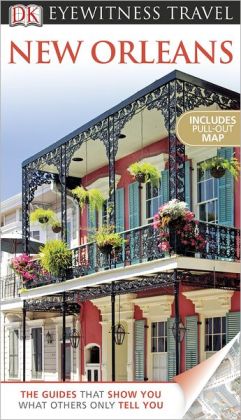
DK Eyewitness Travel Guide to New Orleans by Marilyn Wood

Written by , Posted in Adventures, Reviews

Three Stars

DK New Orleans

First off, I fully recognize that this review would probably be best saved for AFTER I visit the city for which I purchased it. However, that trip is over five months away, so I don’t know if I’d really remember much at that point. If anything in the book has led me wildly astray, however, I’ll come back and update my review.

In my experience of the travel book world, there are a few big players, which I usually envision this way: Rick Steves (a.k.a. what your parents use); Fodor’s and Frommer’s (the sort of generic middle of the road); Lonely Planet (for the SLIGHTLY less mainstream traveler), and Eyewitness (for the person who likes shiny things and detailed maps). I know there are others; these are just the ones I have found to be the ones usually in stock at a bookstore. In looking at my husband’s and my travel bookshelf, we have 10 Lonely Planet guides and three Eyewitness Travel.

(more…)

Friday

18

April 2014

0

COMMENTS

Great by Sara Benincasa

Written by , Posted in Reviews

Four Stars

Great

I first learned about Ms. Benincasa in 2008, when her Sarah Palin videos were making the rounds online. I can’t recall what happened to bring her to my attention a couple of years later, but I started listening to her “Sex and Other Human Activities” podcast (R.I.P.). Thankfully that led me to “Radio Dispatch” and my now-favorite daily news/cat stories/activism show “Citizen Radio”. In 2012, her first book, Agorafabulous!, was the first book I purchased for my first e-reader. So what I’m saying is, I enjoy her work. We don’t always agree politically (I think she’s a bit more ‘just chill, it’s a joke’ than I am about things), but her tweets make me laugh, and her memoir was a really great, humorous look into her experience with depression.

She hinted that she was working on a Young Adult version of The Great Gatsby over a year ago; a bit after that she said she was setting it in modern times, with younger characters and a gender switch for a couple of the main characters. I had to look this up online, but Nick has become Naomi and Jay is now Jacinta. In case it isn’t obvious, I should probably admit here that while I’m sure I’ve read The Great Gatsby, I … don’t remember it. Really at all. At this point I think every mental image I can conjure up about that book is more likely to be from a preview of Baz Luhrman’s movie. I know. So keep that in mind when I say that I LOVED THIS BOOK.

Seriously. I really enjoyed it, to the point where I put off a whole bunch of chores to make sure I finished it today. There were bits that I could tell were direct references to the original work (the green light is a computer charger port light, the billboard is now one advertising plastic surgery), but it still felt original, if that makes sense. The book is tightly written, easy to read, fun, sweet, and clever. The setting works really well, and while some references may become outdated (Facebook plays a bit of a role), I don’t know how one could write a book about teenagers set in modern times and just pretend that social media doesn’t exist. She also handles the fact that these young adults do have parents without necessarily making it all about those relationships. It’d be odd if 17-year-olds just existed in the Hamptons with no reference to the adults raising them. There’s clearly some ‘yeah, right’ feel about some of the actions of these kids, but it’s much more believable than, say, Gossip Girl.

I’m glad I bought the electronic version, because I’m pretty sure it’ll become my go-to relaxation read.

Thursday

17

April 2014

0

COMMENTS

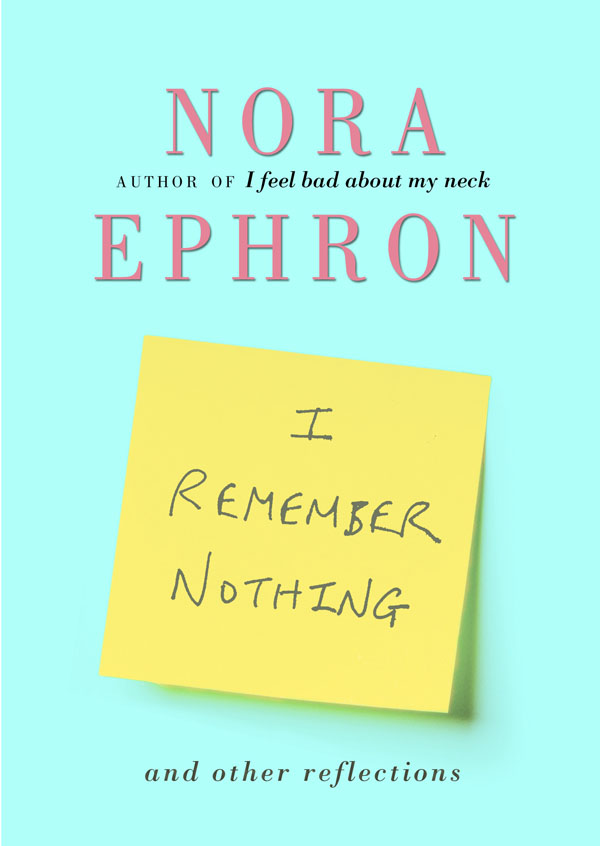
I Remember Nothing by Nora Ephron

Written by , Posted in Reviews

Two Stars

This is my second Nora Ephron essay collection (again an audio version read by the author). Unfortunately I didn’t not enjoy it as much as her previous effort (I Feel Bad About My Neck), mostly because the essays tended to be shorter, a bit more random, and honestly not as well-written. I recall it starting out fairly strongly, and I was definitely into it for a bit. But in the end, I think my favorite part was how short it was.

i-remember-nothing-norah-ephron

My biggest problem really was in the storytelling, which, now that I see that written out, might kind of the biggest problem one can have with book. My feeling about Nora Ephron in the past has been that she has a great skill in telling ordinary stories in an entertaining and interesting way. Honestly, the only story that has stuck with me since finishing this book a few hours ago is an amusing retelling of how she got pushed out of making Christmas desserts after many years of doing it for the giant family and friend gathering.

In fact, I had to check out other reviews to be reminded that another essay, about her entrance into the world of journalism, was and interesting read (or listen). I don’t know – sometimes books stick with you. Sometimes they don’t. If you ask me two weeks if I’ve read this book, I might not be able to answer that with any sense of certainty. Which, given the book’s title, is mildly amusing

Tuesday

15

April 2014

0

COMMENTS

Sister Citizen by Melissa Harris-Perry

Written by , Posted in Feminism, Politics, Reviews

Four Stars

sistercitizen

Melissa Harris-Perry hosts a show on MSNBC on the weekends. She’s known for having actual people on the show to discuss news stories that impact them – she doesn’t invite six old white men on to discuss whether birth control should be covered under the Affordable Care Act. If she’s talking about an issue, she seeks to invite people on who KNOW about the topic, and who, if possible, are affected by the topic.

So it makes sense that she would want to write a book about how Black women are (mis)recognized in the United States, using focus groups, real-world examples, and references in literature and popular culture. Sister Citizen is a deep look into how Black women have faced the intersection of race and gender living in the United States. Using the concept of trying to stand up straight in a ‘crooked room,’ she talks through many of the different ways Black women are pigeon-holed into stereotypes, negative images, or ideas that support the White concept of what Black women should be. US society perpetuates negative and destructive images of Black woman, and Dr. Harris-Perry’s book delves into the origins and how Black women deal with this.

As expected by a professor she makes well-researched, strong arguments about the ways in which these stereotypes impact how Black women are viewed by others and how they view themselves. It’s challenging to write more about this because, well, she’s already written it well, and I don’t think there’s much that I could presume to add. All I can really do is recommend it highly.

Sunday

13

April 2014

0

COMMENTS

Some Recommendations

Written by , Posted in Reviews

I’ve had a couple of people ask me (now that I’ve started mainlining books in the same way I do cupcakes) for some recommendations on what to read.

You mean, you haven’t been religiously following me on here and taking copious notes? FOR SHAME!

But seriously, yeah, I don’t even remember some of the books that I thought were awesome. But I went back to some of my reviews from the past couple of years to pull together a few books I think folks should read.

Novels

Usually, at least in the past, I haven’t been huge on novels or literature. Once I got out of high school (I didn’t take any literature courses in college), I picked books where I thought I would learn something. Which sort of implies I didn’t think I could learn anything from literature, which, yikes. But not because of deficiencies of the genre; because I didn’t trust that I could really find the deeper meanings in things without a readers guide or a teacher to direct me to it. Solid reasoning, right? Anyway, I’ve started to move past that a bit, so here are my favorites:

Blindness by Jose Saramago – This was an anniversary present from my college boyfriend (who I found out years later hadn’t actually read it). It quickly became my favorite novel, and possibly retains that title, although I haven’t re-read it in a couple of years. It takes awhile to get used to the writing style (lots of seemingly-endless paragraphs), but it is good. The premise: a contagious epidemic of white blindness starts to spread throughout society.

Atonement by Ian McEwan – You might have heard of this one, assuming you had access to any form of media when Kiera Knightly starred in the movie adaptation. The book is fantastic. Told from a young woman’s perspective as she grows up during WWII, facing the consequences of a lie she told when she was younger. It is brutal, it will knock you on your ass, and it is good.

Les Miserables by Victor Hugo – It might sound silly, but go with the unabridged version. Yes, all 1,500 pages of it. Yes, you might find yourself humming songs as you read it. Yes, you will realize that Javert deserved so much more than Russel Crowe.

My Sister’s Keeper by Jodi Picoult – Get the audio version. I mentioned this in my review earlier this year, but as a reminder – the book is written from different character perspectives, with chapters dedicated to the point of view of that one character. The audio version has different actors for each of those characters, which means you can really feel the shift. The issues this book raises are numerous and complex, and I’m still chewing it over. Just please, for the love of all that is good in this world, DO NOT WATCH THE MOVIE. Cripes is it a giant turd.

Non-Fiction

Many of the non-fiction books I’ve read I’ve picked because they might teach me something clever – think Mary Roach, or even the A.J. Jacobs-style of “I’ll do this for a year” trivia tomes. But many of my favorite reads are from feminist authors as well. This year I’m working on branching out beyond Mainstream White Feminism, because it’s rife with problems.

However, I still think Jessica Valenti nails a lot of the problems facing women today, and so I recommend three of her books: Full Frontal FeminismThe Purity Myth and (to a lesser degree) Why Have Kids? The first two should be recommended reading for all young women (and their parents); the latter is good for parents, would-be parents and never-going-to-be parents alike.

If you’re a lover of science and are tired of hearing the same horrible conversations about things like not vaccinating children, I think you’ll like Ben Goldacre’s Bad Science. And if you want to jump further into the issues of science and ethics, The Immortal Life of Henrietta Lacks by Rebecca Skloot is a great one to pick up.

Memoir-ish

Finally, if you’re at all like me, you sometimes want a little humor with your reading. Although not a memoir, a favorite go-to nightstand book (for when I only want to read for a few minutes but need to start winding down my mind) is Brain Droppings by George Carlin. It’s bizarre, and I’ve read it probably dozens of times over the past decade, but even now, when I pick it up and open it to any random page, I know I’ll at least chuckle, if not burst out laughing.

As for proper humor / political / other types of memoirs, there’s only really one must read, and that’ Let’s Pretend This Never Happened by Jenny Lawson, a.k.a the Bloggess. It’s absurd. It’s sweet. It’s relatable (I mean, I’ve never had my arm up a cow’s vagina, but the lesson there is universal). And it’s fucking FUNNY.

I also recently really enjoyed Dan Savage’s American Savage. This too was an audio book selection, which my husband and I listened to while driving around Ireland on our honeymoon. I’ve disagreed with Mr. Savage on things in the past, and continue to disagree with him on things now, but most of what’s in this book is, to me, pure gold.

I could recommend more, and if you’re interested in one of the many genres I haven’t captured on here (I’m finally delving into fantasy and steam punk a bit), drop me a line, as according to Good Reads I’ve read and rated a couple hundred books. At the very least, if you’re thinking of dropping $20 and a a dozen hours of your time on a book I’ve read, I can let you know whether I thought it was a good choice or not.

Saturday

12

April 2014

0

COMMENTS

Blankets by Craig Thompson

Written by , Posted in Reviews

Two Stars

Blankets_cover

My husband kindly takes many of book recommendations, but pointed out last night that I don’t often take his. So today I sat down and plowed through Blankets, my first foray into graphic novels. It definitely did not turn me off of the genre, but this one wasn’t exactly my cup of tea. And in my husband’s defense, he read it a few years ago and only really remembered that there was a brotherly relationship in the book. I don’t necessarily think he would have recommended it to me if he’d remembered the rest.

The novel is about a young man who doesn’t really feel he belongs in his world. Which is usually of great interest to me, but in this case much of it was about his faith; specifically his place in a very Christian family and community. I am no longer a Christian, and have very little interest in reading Bible quotes, so having a book that was SO entwined with that imagery was a bit disappointing. I get why it was there – it was absolutely vital to the story – it just wasn’t a story I had much interest in reading in this telling.

The drawings are lovely, and the story flows pretty well. However, there are definitely areas that are hinted at but not fully fleshed out, so I was left kind of wondering what had happened. And some of the character drawings had me a little confused as to who was who. But overall I can see the appeal of the genre, and am certainly not opposed to reading other graphic novels.