ASK Musings

No matter where you go, there you are.

Books Archive

Sunday

19

May 2013

0

COMMENTS

Paleofantasy

Written by , Posted in Reviews

“A simpler life with more exercise, fewer processed foods, and closer contact with our children may well be good for us. But we shouldn’t seek to live that way because we think it emulates our ancestors.” – Marlene Zuk, Paleofantasy

There are a lot of different diets out there, some couched as providing quick weight loss, others purporting to be full-on lifestyles. We’re likely all familiar with South Beach and Atkins, as well as some of the old-school fixes (cabbage soup, cayenne lemonade ‘cleanse’). But one that’s gotten a lot of coverage lately is the Paleo or caveman lifestyle. The basic foundation of these recent movements is that we haven’t evolved for this life (eating dairy, sitting at a desk, consuming refined grains), so we need to adjust our diet to get back to the time when we were best matched to our environment: the Paleolithic era.

I try to reserve judgment of people if they are not hurting others. If what you choose to do works – either because of placebo effect or otherwise – then yay for you! I’m not, however, a fan of people promoting certain actions for reasons that can’t be supported with facts. If I tell you that a car will go forward when you step on the gas pedal, I’m correct; if I tell you it goes forward if you step on the gas pedal because of magical fairy dust in the trunk, I’m wrong. Even if the outcome – you trusting me that pushing on the pedal will make the car go – will be the same, the supporting evidence matters to me.

Paleofantasy

That’s why I found this book to be SO fascinating. Dr. Zuk is interested in exploring the claims many people seem to be making about what evolution can tell us about how we should be living our lives. It was a bit of a challenging read, but certainly manaegable if you have a basic understanding of biology. She’s great at explaining things, although there were definitely areas that I had to re-read twice.

The purpose of the book is to explore in detail the oft-cited claims that we haven’t evolved for this life we’re living. She spends time building her case by talking about evolution of other species – including a really fascinating discussion of how quickly some crickets evolved to stop chirping because the chirps attracted some deadly flies – before addressing some of the main claims those who promote a Paleo lifestyle make. She tackles the dairy argument by providing evidence of how many of us HAVE evolved to process dairy (and why!). She looks at the caveman exercise model by pointing out that while the need for activity itself is supported, the idea that it needs to mimic chasing a mammoth is unsupported. She even takes aim at the “agriculture changed everything for the worse” argument. It’s fascinating and different from what seems to be pushed on a regular basis by many people who are promoting a specific agenda.

She also examines non-diet evolutionary biology issues, some of which she sees having support (attachment parents will like that part of the book) and some she does not (people who think women evolved to be monogamous and men did not may want to skip chapter seven). Those sections are especially interesting because those arguments – especially the ones around men and women evolving to be better suited to performing certain tasks – find their ways into daily life. Even political arguments from some conservatives (who ironically often don’t believe in evolution) are often based in this misunderstanding of how we have evolved.

My biggest take-away from reading this book is that there is not ‘perfect’ time that we’re best suited for, and evolution can happen much quicker (relatively speaking) than some Paleo proponents suggest. Dr. Zuk is NOT suggesting that, for example, eating fewer processed foods, or eliminating dairy, is bad; she’s just saying that the evidence for why it might be good to eat more whole foods or be more active is not necessarily found in how we lived 15,000 years ago.

I’d recommend this book to anyone who is interested in science, evidence, reason, and biology.
Thursday

25

April 2013

0

COMMENTS

Girl Walks Into a Bar

Written by , Posted in Feminism, Reviews

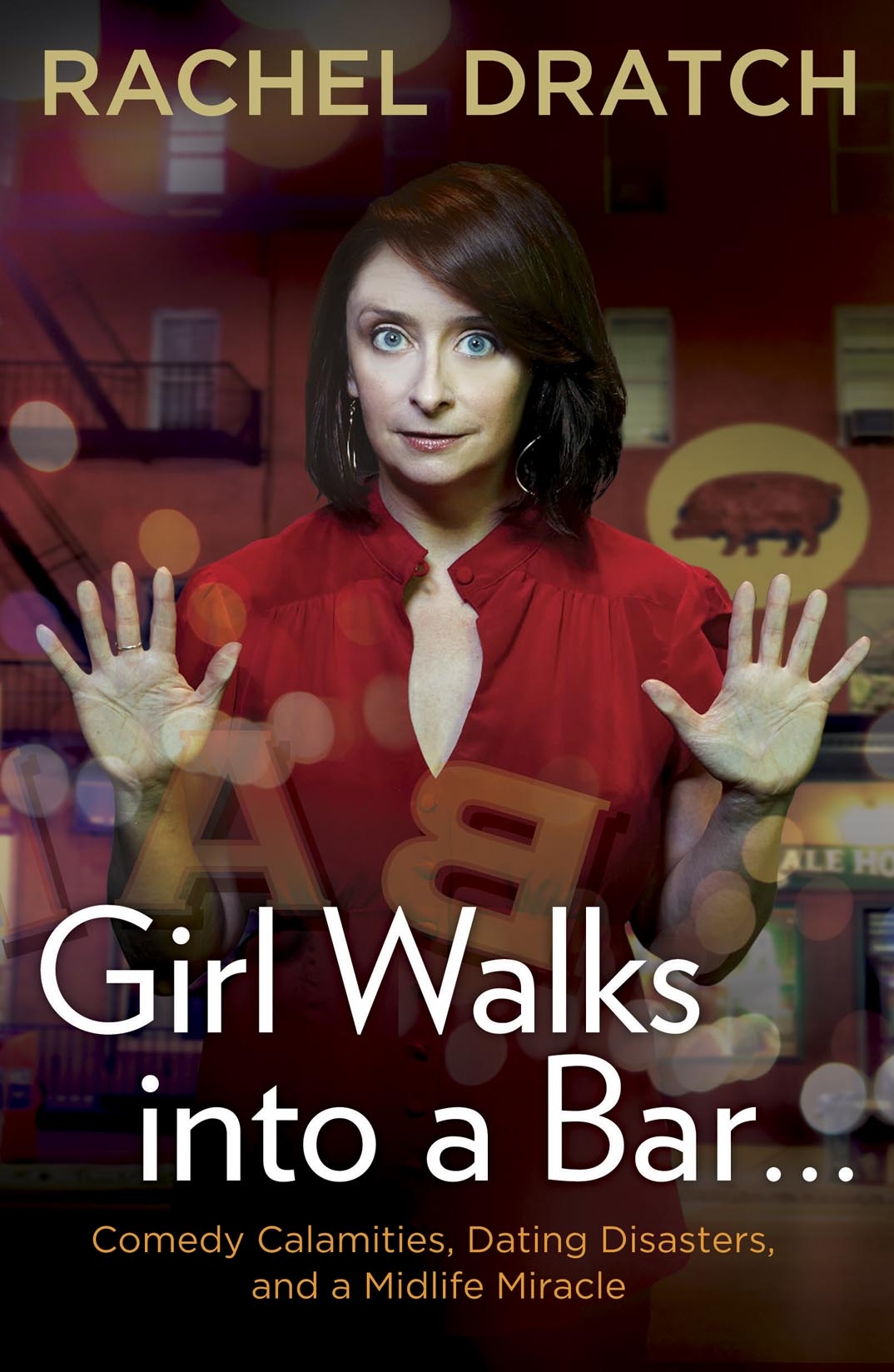
Girl Walks Into a Bar

I see two fellow Cannonballers have reviewed this book so far; their reviews actually reminded me that I wanted to pick up this book. Once again I chose the audio book route (at the end of the year I should put together a post comparing all the female-written and -read memoirs I’ve listened to this year) and am really happy I did.

As the other reviewers have pointed out, the focus of the book isn’t so much a behind-the-scenes SNL expose; yes that gets coverage as it is part of her life but it’s only part of her story. It’s interesting, it’s well-told, and it provides some insight into that world, but it was only about seven years of her life, so it makes sense to not spend the entire book on that time period.

Ms. Dratch strikes me as pretty laid back, cool lady. She’s funny, entertaining, and can write really well. She also strikes me as one of the most self-aware humans on the planet. Pretty close to the beginning of the book, she starts talking about the 30 rock ‘incident.’ I could hear the exhaustion in her voice, and I don’t blame her. I cannot imagine how frustrating and annoying (not to mention hurtful at times) it must be to be responsible for some hilarious roles and yet have her still most talked about role be ‘getting fired’ from 30 rock.

And to be clear – she’s really not hung up on it. She talks about it because we’re interested in it. But because the implication, the suggestion in hushed (and not so hushed) tones in the celebrity media, is that she lost out because she is not as attractive as Jane Krakowski, it’s repeatedly mentioned when Ms. Dratch’s name comes up. Can you imagine that something that was a bummer for you (losing a job because of a decision to have a different type of character in that position) becomes some giant (celebrity) news story about how you aren’t pretty enough? Ugh. She’s gracious in telling the story, and while others might be skeptical, I believe that she’s made her peace with it and really wishes the rest of us would just move on.

Some of the best parts of this memoir are her discussions about the types of work she is now offered and about her relationship with her son’s father John. Seriously, the entire final third of the book, while not really talking much at all about SNL or 30 Rock, is some of the best writing and the most interesting. I had dinner plans Monday night and was pretty annoyed that my friend showed up just as Ms. Dratch narrated that she’d just checked the pregnancy test and there were two stripes. I knew what was going to happen next (I mean, I knew she had a kid so assumed this was the start of that story), but the writing and the delivery of the words was so compelling I really did not want to turn it off.

I’d definitely recommend this book to others. It’s not particularly long (5 1/2 hours on audio; most of the books I’ve listened to have been between 6 and 8 hours) but it’s interesting, clever and sweet.

Sunday

21

April 2013

0

COMMENTS

I Can Barely Take Care of Myself

Written by , Posted in Feminism, Reviews

Full disclosure: when I first heard about this book I got annoyed for two reasons. The first was jealousy – “Oh man why did she get to write this book? I so could have written this book. Damn it.” The second was annoyance at the title – saying “I Can Barely Take Care of Myself” seems to play right into the stereotypes so many of those with children have about us childfree folks. I can take care of myself just fine and I STILL don’t want children. But as the author so kindly reminded me herself on twitter when I made such a comment, you really shouldn’t judge a book by its title.

I Can Barely Take Care of Myself

Well, I’m no longer annoyed by the fact that she wrote this book before I could – because is it GOOD. Ms. Kirkman (a writer for Chelsea Lately) did a much better job with this material than I could have done. The book feels honest, self-aware and not obnoxious. Of course I’m probably her target audience (happily committed to the childfree life [link to my post on it here]) and I’m not sure what the Eileens of the world (Chapter 11 – man I’ve met many of them) will think of it. But screw that – who cares? It’s nice to read a book that doesn’t assume that every woman in her 30s without kids is just waiting to get pregnant.

I’m still annoyed at the title a bit to be honest, just because even though she spends a lot of time explaining why she really wouldn’t be the best parent, and even though this is (cringe) her truth, it’s still sort of frustrating that such an awesome book’s first impression is “No, you’re totally right, people who don’t want children are a little broken and just recognize that we aren’t as good at life as you parents are.” But that won’t keep me from recommending the content to all my friends (the ones with kids and the ones without).

The book gives us some of Ms. Kirkman’s background, although it doesn’t feel like a full-on memoir. I bought the book on Thursday and read about 40 pages. I wasn’t able to pick it up again until today (Sunday), and I basically read through the last 160 pages in one sitting. While the early chapters were interesting, she really gets into the meat of the different ways childfree folks find themselves in uncomfortable situations. So many people say (sometimes in the comments of articles Ms. Kirkman herself has written) ‘why do you non-reproducers feel the need to talk about your choice?’ We really, really don’t. But because (some, many, a lot of) people won’t accept no for an answer, we’re repeatedly ‘defending’ a position that is really only our (and our partner’s, if relevant) business. Sometimes it’s easier to just preemptively strike.

I don’t want to take away from the joy of any potential readers by spoiling too many of the great insights Ms. Kirkman shares, but here’s one of my favorites. She spends the better part of one chapter talking through this idea that having a child somehow makes someone selfless (the opposite of us selfish childfree folks) and this whole “I really didn’t know the meaning of life until I had a child” concept. I can’t do it justice here but she basically points out that all of these parents making those claims are essentially suggesting that they had no moral compass until they reproduced, which – huh. Interesting thing to admit. She also points out that many childfree folks are contributing to society in a selfless and meaningful way, such as contributing to charity and doing all sorts of things that people with young children may not have the time to do.

She also takes on such fun responses to “I’m not having children” as “But you’d be such a good mother!” and “It’s all worth it!” while addressing how amazingly insulting it is for some people to just assume they know someone better than they know themselves (the “you just think you don’t want kids” condescension). The liberties people take when they hear ‘no’ in response to ‘are you having children’ is mind-boggling, and Ms. Kirkman does a pretty great job in the Eileen chapter of pointing out how horrible and violated it can make us childfree folks feel. We actually DON’T owe anyone an explanation, and yet somehow we always end up having to defend our choices to people at cocktail parties and weddings even if we really would rather be talking about literally anything else. We also really don’t like being forced to essentially lie to try to make small talk easier for the person with the child who cannot understand

She does veer a little into a sort of ‘huh’ realm with what I think might be an ill-advised analogy in the last chapter but I do get what she’s aiming for. And it doesn’t take away from the rest of this well-written book. If you’re interested in hearing her perspective before committing to buying the book, check her out on the April 18 episode of Citizen Radio – it’s what convinced me that I really needed to read this book.

One last quote I’ll be keeping in my back pocket in case I find myself facing boorish folks at a cocktail party thinking I just rolled out of bed at noon: “I get up at seven on weekends because I love my free time. Not every childfree person sleeps late and parties all the time. I am still a grown-up.” Preach it.

Thursday

11

April 2013

0

COMMENTS

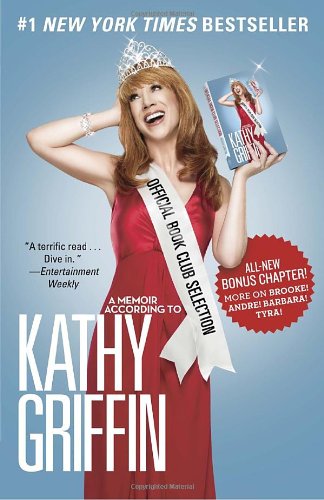
Official Book Club Selection

Written by , Posted in Reviews

I’ve had to stop running for awhile, so I finished up this audio book while cleaning my apartment last weekend (ah, the miracle of those noise-canceling ear buds).

I’m a fan of Kathy Griffin. I think she has a different way of making people laugh, is shameless in a way that doesn’t make me cringe as much as, say, your average episode of “The Office,” and (despite some of her jokes) seems like a genuinely nice and caring person. I picked this audio book because I figured hearing her tell these stories would probably be more entertaining than reading them.

I was right.

Official book club selection

She is such a natural storyteller that I didn’t really ever feel like she was READING to me. I’m wondering how much was faithful to the written book and how much was changed for the audio version; she’d stutter, get lost mid-thought and switch gears (in a non-annoying way) and just generally sounded like someone I know sharing a story, not an author or comedian reading from their memoir. That was nice.

If you aren’t familiar with her work, Kathy Griffin started out as a comedian and actress, doing bit parts (including a memorable appearance on Seinfeld) until she was cast as the sidekick in ‘Suddenly Susan’, the Brooke Shield sitcom. Griffin is very up front about her understanding of her skills – she’s not a traditional comedian (she doesn’t excel at 10-minute stand-up spots relying on the set-up and punch line), and she was never going to be the ingénue in a blockbuster film. What she can do is be a funny sidekick, and tell some killer stories. If you’ve ever seen her live (I did, back in NYC), hopefully you know that she’s this high-energy person who can spend 20 minutes telling a story that is funny the whole way through but doesn’t rely necessarily on one big HA moment. I like that kind of comedy, but I realize it isn’t for everyone.

This memoir is really a memoir, not just a collection of some essays that tell her story. It really differs from other comedian memoirs (like “Is Everyone Hanging Out Without Me?”) in that it has some pretty dark moments. It’s a bit like “Bedwetter” in that aspect. For example, Griffin talks about one of her brothers, who she suspected of being a child molester.

You read that right. A child molester. And she deals with that in like the second chapter, so you know that this isn’t just going to be about some hard-scrabble times at The Comedy Store.

But there are those stories, too. Griffin’s exploration of how she found her place in the comedy world by setting up comedy nights with her friends that focused on storytelling and not repeating material is really interesting, as is her struggle with parlaying her success on “Suddenly Susan” into her own series (“My Life on the D List”). She talks about being repeatedly banned from talk shows, the Dakota Fanning awards show ‘incident’, and the suicide of a colleague. It’s not all laugh-out-loud funny but it’s all really interesting.

She also talks about her marriage, and what lead to it ending. It’s a fascinating section of the book that really had me riveted and annoyed when I had to turn it off because I’d gotten to work.

This is a good book. I probably won’t listen to it again, but if it’s possible to lend audio books then I’ll definitely be offering it up to friends.

Wednesday

27

March 2013

0

COMMENTS

The Long Goodbye

Written by , Posted in Reviews

the-long-goodbye-cover-art1_custom-s6-c30

I have to say I feel so weird reviewing such an honest and open book. I feel like if I criticize anything, or don’t have the reactions most people have, that I’m judging the author’s feelings instead of her writing or storytelling. But I’m just going to try to set that aside.

I can’t tell if I didn’t like this book because I listened to the audio version or because it just wasn’t a great book. Possibly it was a combination of both, but I’m feeling a little generous and so will blame most of it on the audio version.

As previously mentioned, I have a job some find odd. Because of that work I have spent some time trying to better understand grief. When I’m writing plans for how to best help people experience an unexpected loss, I want to know as much as I can to avoid increasing their pain. I’ve repeatedly heard and seen that there is no ‘right’ way to grieve, and that while nothing that is said is going to make the person feel as they did before their loss, there are certainly things people can say that actively do not help.  When I heard about this book, I thought it would be interesting to get an individual’s perspective on their own grief, especially an individual who is an eloquent writer.

O’Rourke’s mother died after a battle with cancer, and clearly it has affected the author greatly. None of my friends have lost a parent while I’ve known them (a few have lost parents prior to me meeting them), so I’ve not witnessed the grief of a loss of a parent at such a young age first hand (the author was younger than I am now when her mother died, and her mother was in her mid-50s when she died).

O’Rourke did a lot of interesting research to support the book. It is part personal memoir, and part exploration of other explorations of grief, if that makes sense.  She details her experience with her mother’s illness, the changes in her mother’s life, and in her own life, while dealing with the reality of a terminal illness. It was refreshing to hear a perspective that involved not just the direct experience with the dying by the attempts to manage one’s personal life. The author experiences different intimate relationships during her mother’s illness and immediately following it, and she describes them in a way that helps provide some insight into her daily life that isn’t just how she is relating to her father and siblings.

One part that I did really find to be well-done was her tackling of the ‘stages of grief’ idea that is so prevalent in our society. It seems most people don’t know (I only learned this last year) that the stages of grief are actually meant to address the stages people who are dying go through. Not those dealing with the loss of another person, but those dealing with their impending death.

I really do think that I would have found the book more moving and interesting if I had read it and not listened to it. While it was appropriate, the author’s complete monotone voice throughout six hours of reading made it hard to delineate between the happy, the sad, the informative and the funny. She sounded like a bored senior in high school reading a book report. If I had been reading I could have applied the same imagination I apply to other books when I read them, I and I think that would have been preferable.

Thus far I’ve listened to three other books, and all were (mostly) light, comedic books. This one required a bit more brain power and thoughtful processing of the words, and I wasn’t as able to do that when I was on a run or walking home from work. I’ve learned my lesson and will be sticking to the light stuff for my audio books.

Thursday

21

March 2013

0

COMMENTS

Let’s Pretend This Never Happened

Written by , Posted in Reviews

This book is great, y’all.

lets-pretend-cover

Sorry. I’ve been known to say ‘y’all’ on occasion (who knows why – I grew up on the west coast), and after listening to Ms. Lawson read her hilarious, sweet and bizarre memoir, I’ve incorporated it into my vocabulary once again. I can’t help it.

You might be familiar with Jenny Lawson but not know it. She is better known as The Bloggess, and she is a brilliant writer. She’s open, a fantastic storyteller, and able to make me laugh out loud, tear up, cringe, and feel nostalgic for my own (pretty different from her) childhood. Often in the same chapter.

Lawson grew up poor in West Texas. Like, bread sack shoes poor. Her father was a taxidermist and would do things like stick his hand up a dead squirrel and treat it like a puppet, or bring baby bobcats into the home to hang out. While the subtitle of the book says the memoir is “mostly” true, the reality is that most any chapter struck me as both completely ridiculous and totally plausible. Do I believe that she once had her arm up a cow’s vagina during animal husbandry class? Yes. Do I believe that they had raccoons as pets for a while? Yes.

The stories follow Lawson from childhood through adulthood, into married life. She is a mother, although only a couple of her stories deal directly with her in that role, and one of them is a doozy. In that chapter she talks in great detail about her miscarriages and attempts at having a child. I cannot imagine how devastating that was, but Lawson has such a tremendous way with words that I felt like I was hearing a friend describe it. It had me tearing up and wanting to give her and her husband a big hug.

One thing I really appreciated about this book is that there is a sensitivity that runs throughout it. The stories are mostly hilarious and guffaw-inducing, but there’s a rawness and reality behind them. It is vulnerability and self-reflection and strength all wrapped up together.

A couple of things to keep in mind before you run out to buy the paperback version (on the NY Times bestseller list now! First: There is a ton of cursing in this book. I don’t subscribe to the idea that cursing is offensive or lazy writing. I think the concept of someone saying ‘heck’ when their personality and feelings want them to say ‘fuck’ is ridiculous, unless you’re in church or possibly at work. If the author is thinking ‘fuck’, she should write it down. Clearly, Lawson is often thinking ‘fuck.’ And it works. It makes sense, it isn’t shocking, and it’s a hell of a lot less jarring than someone reacting to something utterly absurd with ‘dagnabbit’ instead of ‘holy shit.’

Second: PLEASE buy the audio version of this book. Lawson has a fantastic voice and amazing comic timing. Her delivery of the stories makes them all the funnier. The audio book also has the bonus chapter that is found in the paperback version, plus a good 10 minutes at the very end which is just her in the sound booth, offering up some fantastic ideas. And saying ‘vagina’ a lot.

This book is staying on my phone for multiple re-listenings, and it is going to get five stars, because it is awesome.

Saturday

9

March 2013

0

COMMENTS

Gone Girl

Written by , Posted in Reviews

Okay, everyone’s read this right? No? Briefest of synopses: woman goes missing, leaving behind cleaned-up blood and a possibly-staged crime scene, and husband is the suspect. The first chunk of the book is told alternatingly from his perspective and then from her diary entries. The rest … I’ll leave for you to discover.

So here’s my take. It’s really good. I read it in about three days, and screwed up my sleep by staying up about two hours later than I should have because I go so into it. I was really able to picture this couple, both in happier times and during the years leading up to the woman’s disappearance. The author did a really great job in creating different voices, making the characters stand out. It wasn’t quite like two different authors wrote it, but it was enough to make me believe these two different people and their perspectives.

Complaints? Hmmm. There are some super unsatisfying moments where I wish things went a different direction, but I think that’s good for a book. If I go along assuming X will happen because that’s what I want to happen, that doesn’t make for a very interesting read. Pleasant and mindless, sure, but not interesting. And I like interesting.

I borrowed this from the library and might re-read it again in a year. I have a feeling that, like The Sixth Sense, it will be kind of fun to go back and reread parts knowing how it ends.

gone_girl_original

Saturday

9

March 2013

0

COMMENTS

The Bedwetter

Written by , Posted in Reviews

This is the second audiobook I’ve ‘read’ for the Cannonball Read. Sticking with my idea of listening to female comic memoirs read by the authors, I picked The Bedwetter. I chose it with a bit of trepidation, as while I’ve found myself laughing at some of Sarah Silverman’s work, I recalled that she’s said some things that left a bad taste in my mouth. In general I think people are pretty torn on Sarah Silverman. They either find her funny or find her annoying / inappropriate. After listening to this memoir I’m definitely more of a fan of her work.

bedwetter

The book has a very sincere tone to it without being annoying. She sounds like herself, but not like a character version of herself, if that makes sense. Whether it was an act or not, I imagined that this is what she’d sound like talking to her friends. She shares some stories that would clearly be mortifying for a child or teenager, making her quite relatable, and sheds some light onto both the world of making a sitcom-style show and working at Saturday Night Live as a writer.

I think my favorite parts were where she discussed jokes she’s told that were not well received. Probably the best-known instance of this was when she was on Conan O’Brien and made a joke that used a racial slur for Asian people. Many people I know would probably stop listening there, but I was in the middle of a run and so didn’t really have a choice. And by that point I’d also felt like I’d invested enough in the book to want to hear her discussion of it. You know what? It was a very interesting, well-thought out discussion. Yes, she is a comic who make jokes about poo, but she’s also a thoughtful person interested in social commentary.

The audio book is about six hours in length, so just long enough for me to listen to it over about a week’s worth of runs. I’m glad I purchased it instead of borrowing it from the library because it’s the kind of book I could see myself listening to again in the future.

Tuesday

5

March 2013

0

COMMENTS

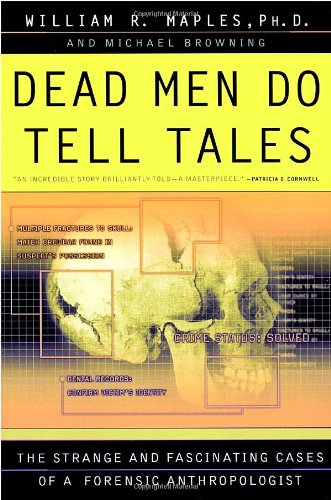
Dead Men Do Tell Tales

Written by , Posted in Reviews

I earn my living, in part, by planning for what to do when a whole lot of people die all at once. Yes, that is actually a real job, and hopefully one that exists in your city or state. There are a lot of people around the country who do what I do, and earlier this year I attended a conference of such folks. I chose to read this book during that conference; it seemed fitting.

Dead men

Dead Men Do Tell Tales is a fascinating, detailed book by Dr. William Maples, an amazingly accomplished forensic anthropologist. You may be familiar with that field if you watch “Bones,” although as is usually the case, what you see on screen doesn’t closely match reality. A forensic anthropologist is trained in examining human remains to learn more about the decedent. They can tell if bones belonged to a woman or man, approximate age, and explain wounds. It’s very detail-oriented work, at times taking months or years when the identity is unknown (not the 45 minutes plus commercials Emily Deschanel might suggest).

In his book from the 90s, Dr. Maples takes the reader through many different cases he’s participated in over the years. Some involve people you’ve never heard of, and some are so famous it would be understandable if you didn’t quite believe what you were reading. Dr. Maples was, no joke, part of the small team that confirmed the identity of the bones of the murdered last Tsars of Russia. He put to rest the idea that President Taylor was killed by arsenic poisoning. He also helped convict murderers whose crimes were devastating but whose names you and I might not recognize.

As evidenced by my line of work, I find this to be an extremely interesting topic. I’ve read Mary Roach’s Stiff, as well as a couple of other books about the lives of medical examiners. If nothing else is on TV, I’ll likely leave it tuned to Dr. G. Medical Examiner or some other disease-related show on TLC or Discovery. I say all of that in service of the recognition that this type of writing is just not for everyone.

It is EXTREMELY graphic. Not to shock, but to explain. How else can he express to you how he was able to identify a murder weapon than to explain how he matched it to the wounds to the victim’s bones? Without the detail, it would be a very short book, with each chapter consisting of “so I did my work and concluded X.” His way of writing is so much better – it makes sense, and gives the reader a real insight into how forensic anthropology works.

If you enjoy history, or true crime stories, or science, and are not easily sickened by detailed descriptions of human remains, I think you’ll really enjoy this book. The only reason I gave it four stars is because at times the non-forensic writing (the set-up to the crime, or background) is a bit too flowery for my tastes. I appreciate creative turns of phrase, and I don’t doubt that the authors really do write this way, but at times it felt a little like one of them just got a new thesaurus. Additionally, while it suits the structure of the book, each chapter feels like its own independent essay; he re-explains some things as though the reader hadn’t just learned about them 50 pages prior.

But those are minimal complaints. It’s a great book.

Thursday

21

February 2013

0

COMMENTS

The Cranes Dance

Written by , Posted in Reviews

This is a great book. Fantastic story, excellent character development, and vivid writing that didn’t feel forced. It’s what I want a book to be, frankly.

cranes-dance_320

Kate Crane is a professional dancer with an NYC ballet company. Her younger sister has just had to leave the company temporarily, and Kate is dealing with her feelings about this. The book touches on some pretty universal themes, including mental illness, loneliness, and the desire for perfection. But it does it all set against the background of this elite world. It could have gone the ‘oh, poor little gifted princess’ route so easily, but Meg Howrey instead provides us with a very real, stripped down look at the decidedly unglamorous world of professional dance.

You don’t need to know anything about ballet to enjoy this book, but you probably should have some respect for and interest in it. The narrator Kate speaks directly to the reader, telling us the story, jumping around a bit from anecdotes to the here and now. She talks about growing up with her sister, being apart from her, the challenges of making it in this profession. She also takes us through a couple of ballets, describing how they should be danced, what they are trying to show, really bringing us along to the point where we can almost hear the music.

And while it is a book about a ballet dancer, it isn’t about close-up shots of dancers’ destroyed feet, or stereotypes of disorder-eating prima donnas (I’m looking at you, Center Stage). It’s about a young woman who may be peaking and heading down in her career. It’s about family relationships and dealing with mental health. It’s about friendships, what we choose to reveal about ourselves to our families and to others. How we all try to make it through, and what ‘make it through’ even means.

That sounds little deep, but it’s not an especially heavy book. There are certainly mature themes, and some fairly vivid language. Even though I’m not gifted in my field, nor am I a (current or former) dancer, and am about a decade older than the narrator, I related to her experiences.

I waver between giving this four and five stars but settle at four because the ending, while not entirely tacked on, did sort of come out of nowhere for me. If I were to read it again it might fit better with the overall theme, but because of that I’ll go with four stars and hope you’ll still add it to your list.