ASK Musings

No matter where you go, there you are.

CBR9 Archive

Saturday

18

March 2017

0

COMMENTS

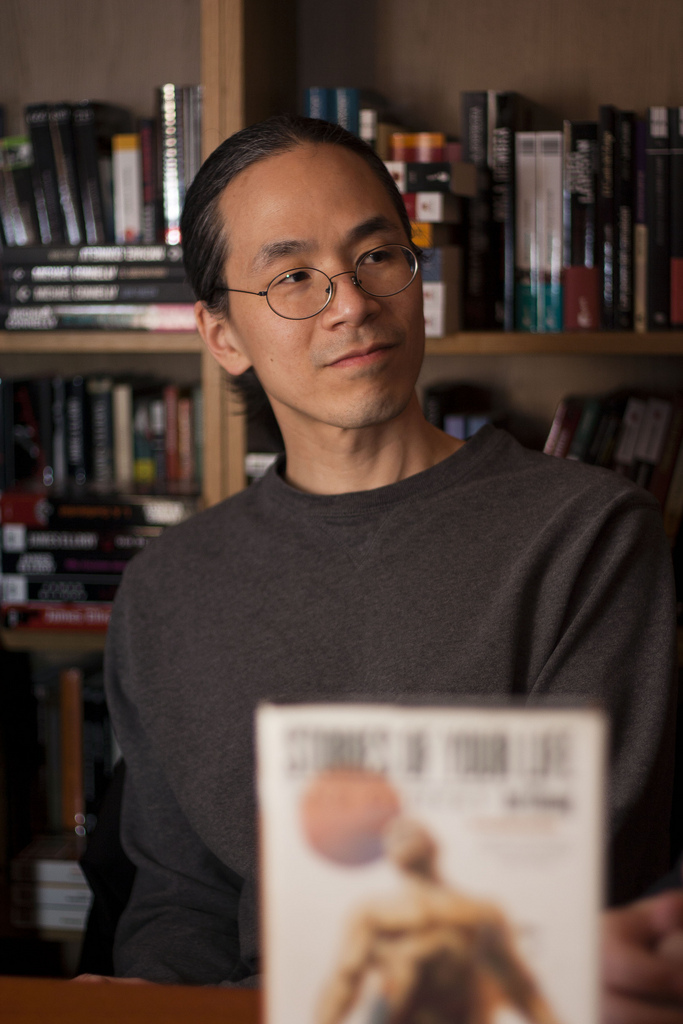
Stories of Your Life and Others by Ted Chiang

Written by , Posted in Reviews

Four Stars

Best for: Those who enjoyed Arrival; people who aren’t totally sure that they are into science fiction but want to see.

In a nutshell: Eight short stories connected only by the fact that they are science fiction.

Line that sticks with me: “What he insists on is that they not love God under a misapprehension, that if they wish to love God, they be prepared to do so no matter what His intentions. God is not just, God is not kind, God is not merciful, and understanding that is essential to true devotion.” (pg 234)

Why I chose it: I saw (and loved) Arrival, and immediately added this collection to my list.

Review: I don’t usually pick science fiction books. Fiction in generally isn’t usually in my rotation, so adding a layer of complexity by narrowing it from generic literature to a specific genre means there are a lot of great books out there that I’ve not even considered reading. I tried reading a famous author’s most popular work earlier this year and couldn’t get past all the new words. I didn’t find the concept difficult to understand in the context of the stories; I just don’t enjoy having to learn new vocabulary created by the author.

This book, however, I found to be mostly accessible to someone who isn’t traditionally a science fiction reader. In fact, the first story, “Tower of Babylon,” is based on a story in the Bible. I read it in one sitting, and found myself reading almost all of the other short stories in one sitting as well.

My least favorite essay was easily “Seventy-Two Letters,” but even that one I mostly enjoyed. Again, it suffered from having a lot of new vocabulary to learn, but there were a couple of twists that I did not expect. That one also didn’t end in a way that I found satisfying.

I enjoyed the essay Arrival was based on, called “Story of Your Life;” I think the storytelling was elegant. It’s slightly different from the movie, and I understand why it was adjusted for the screenplay. But because I’ve seen the movie, I couldn’t help but read it all picturing Amy Adams and Jeremy Renner.

The essay I enjoyed the most was probably “Hell is the Absence of God.” The premise of this one fascinated me: there is no question of whether the is a heaven, or hell, or god; the question is only will individuals be devoted to god. People literally see flashes into hell (and can see if their loved ones are there at times), and angels come to earth on a regular basis.

I can’t say whether these short stories are demonstrative of most science fiction as a whole, but I can say that I thoroughly enjoyed them, and so would at the very least recommend this to anyone else who is interested in seeing if they like science fiction but aren’t sure of a good starting point.
Thursday

16

March 2017

0

COMMENTS

The Unspeakable and Other Subjects of Discussion by Meghan Daum

Written by , Posted in Reviews

Four Stars

Best for: Those interested in some fairly dark but also interesting personal essays.

In a nutshell: Columnist Meghan Daum writes multiple essays on fairly mundane topics, but with a more unexpected voice.

Line that sticks with me: “I am convinced that excellence comes not from overcoming limitations but from embracing them. At least that’s what I’d say if I were delivering a TED Talk. I’d never say such a douchy thing in private conversation.” (p192)

Why I chose it: My sister recommended it. So far, she’s never steered me wrong.

Review: I’ve previously reviewed a book associated with Ms. Daum; she edited “Selfish, Shallow and Self-Absorbed,” which, if I recall, I mostly liked but found the selections frustratingly focused on a particular type of childfree person. This book contains Ms. Daum’s own essays, covering topics from her mother’s death (which kicks off the book, so you should know what you’re getting into right off the bat) to the love of a dog, to career and life choices.

The topic areas are mostly relatable, but her take on them is unique in many ways. Her thoughts on her mother’s death, for example, are authentic in their honesty. She doesn’t go on and on about their special relationship, or talk about all the things she’s going to miss about her mother; she uses the essay as opportunity to talk about how complicated their relationship is.

My least favorite essay – and what I found unpleasant enough to drop this from five stars down to four – is called “Honorary D**e.” I’ve censored the slur here not because she did, but because as someone who doesn’t identify as a lesbian I don’t think it’s appropriate for me to say. But Ms. Daum doesn’t hold the same opinion, and I find this entire essay extremely tone deaf. She also uses some other words in the book that I feel she might not use if she were to write this today (such as a slur for transgender people), but who knows.

Some of the essays end anti-climatically, with sort of trite, let’s-wrap-it-up-ness, but others end with a perfect gut punch or laugh. And the essays themselves more than make up for the occasional poor ending.

My favorite essay is probably “On Not Being a Foodie,” which the quote above comes from. But I found myself relating to many of the essays, even with their ‘unspeakable’ nature.

Tuesday

14

March 2017

0

COMMENTS

Women, Race and Class by Angela Y. Davis

Written by , Posted in Reviews

Five Stars

Best for: Readers interested in learning more about the history of the women’s movement from a race and class perspective (it’s right there in the title).

In a nutshell: Brilliant academic and activist Angela Y. Davis provides a thorough history of the women’s movement, with a focus on the contributions of Black women and men and a deep analysis of the ways that white women in particular failed to support the needs of their Black sisters.

Line that sticks with me: “Yet there were those who understood that the abolition of slavery had not abolished the economic oppression of Black people, who therefore had a special and urgent need for political power.” (p73)

Why I chose it: Angela Davis is amazing. Also, I wanted to learn more about the history of the women’s movement outside the white lens.

Review: This book. I need to read this book again. Maybe twice a year. There is so much within it to unpack, to think about.

Ms. Davis starts with slavery and the entire concept of womanhood, looking at how the Black experience of womanhood in the U.S. differed from the experience of the white woman. She continues on through abolition and suffrage, focusing a large portion of her time on the 1850s-1930s. Each chapter feels like it could have been the start of a seminar on the topic; I assume there are (or at least could be) entire graduate-level courses constructed around examining each of these essays.

I didn’t really learn much about the U.S. suffragettes in school, so when I saw this article (http://the-toast.net/2014/04/21/suffragettes-sucked-white-supremacy-womens-rights/) a few years ago, I remember thinking ‘oh fuck.’ You may have seen a few of the more recent articles – like during the election – pointing this same thing out. But Ms. Davis gives so much more context to this, providing a detailed history, full of great original source material from speeches and other documents. It is frustrating and fascinating and infuriating, all at the same time.

She also focuses chapters near the end on the racial implications of rape (“Rape, Racism and the Myth of the Black Rapist”) and on how racism factored into and colors how Black women view birth control and reproductive right. Holy shit, people. These chapters are SO GOOD. Rage inducing, but critical to understanding this nation’s race relations history.

Not that I’m in any position to disagree with Ms. Davis on anything, but I did have a bit of a problem with the final chapter, on housework. Once you read it, you might understand when I say that I don’t disagree with her, but I think that she missed a big part of the picture. In that chapter, she takes issue with the fight for women to earn wages doing housework. She raises valid points, but in this area, I think fails to take into consideration what could bridge the gap between the current (bad) situation and the ideal situation.

But that’s one minor issue – and one I might change my mind about once I think on it more. The whole book is just fantastic. Go get it.

Monday

6

March 2017

0

COMMENTS

Talking as Fast as I Can by Lauren Graham

Written by , Posted in Reviews

Three Stars

Best for: Fans of Lauren Graham, fans of Gilmore Girls. If you’re just a fan of her work on Parenthood, there’s only one chapter in here for you.

In a nutshell: A loosely chronological collection of essays by Lauren Graham, discussing how she got into acting, her time on Gilmore Girls, and her time filming the recent series of films for Netflix.

Line that sticks with me: “What was it I’d encountered that day, and those other times? Why would anyone assume I’d need help with, or take credit for, something that wasn’t my work? Was it … sexism?”

Why I chose it: I really enjoy the characters of Lorelai Gilmore and Sarah Braverman, and I’m a sucker for a memoir written by a woman.

Review: I read this book in an afternoon plus one 30-minute session on the elliptical. It’s well-written, amusing, and offers some very sweet insight into Ms. Graham’s experiences as an actress. She even (for the first time) sits and watches all seasons of Gilmore Girls to give us readers her insights.

This book was fine. It’s definitely not bad, so I’m not sure why I’m leaning towards three stars instead of four. Maybe I was hoping for more? I’m not sure why – Ms. Graham seems extremely guarded (which is totally her right), and this book fits with that. I don’t think I learned anything surprising about her from her, although I made a few inferences of my own from what was included – or not.

The stories she tells are fun (thought rarely laugh-out-loud funny, which isn’t necessarily a bad thing) and kind and generous to her colleagues. I did thoroughly enjoy the Gilmore Girls-specific chapters, but did wish there was more about her time on Parenthood.

As an aside, there was one section, however, that might just change my life as far as my writing is concerned. In one chapter, she shares advice she received from a fellow writer, called “the kitchen timer.” It’s obvious as hell once one reads it, but I’m using it right now and honestly, it’s really helpful.

Sunday

5

March 2017

0

COMMENTS

Hell is a Very Small Place: Voices from Solitary Confinement by Jean Casella, James Ridgeway, and Sarah Shourd

Written by , Posted in Reviews

Four Stars

Best for: People interested in learning more about the real cost of solitary confinement.

In a nutshell: A collection of essays about solitary confinement, with the vast majority being authored by those who have actually experienced it.

Line that sticks with me: “I could see grass through the window at the end of the hall. When they found out I could see it, they put a plate over it. We are way worse than other countries.”

Why I chose it: This was a recommendation from my husband.

Review: Each essay written by one of those who has been placed in “SHU” (Secure Housing Units, a.k.a. solitary confinement) is heartbreaking and infuriating in its own way. Solitary confinement has always sounded horrible; these stories confirm it. From the absurd reasons guards – and judges – find to lock people away for 23 hours a day in a tiny cell, to the long-term detriment this causes after just fifteen days, it is all bad.

All of it.

And it’s mortifying that in the U.S., we put more people in these tortuous cells than anywhere else on earth. People are denied human contact. They must jump through absurd hoops just to get access to the occasional book. And some have been in solitary for thirty years.

Can you imagine?

I don’t buy into the idea that people who have committed crimes deserve to be tortured. Yet it seems that so much of the U.S. prison system is focused on revenge fantasies instead of finding ways to rehabilitate people.

The only reason this book isn’t getting five stars is because I didn’t find the final section to be as compelling. It’s a few essays about the psychological and legal concerns about solitary confinement. It felt a bit unnecessary, but I do understand why it was included. It just took away from my experience.

Monday

13

February 2017

0

COMMENTS

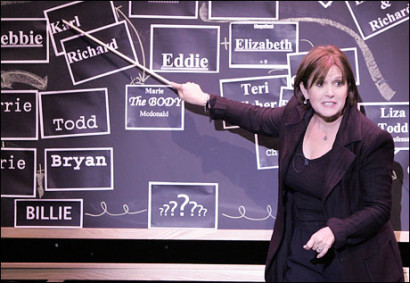
Wishful Drinking by Carrie Fisher

Written by , Posted in Reviews

Four Stars

Best for: Humans of earth. Seriously, this woman was a national treasure.

In a nutshell: Celebrity shares memories of her youth, her mental illness, and her substance abuse.

Line that sticks with me: “But no matter what the dictionary says, in my opinion, a problem derails your life and an inconvenience is not being able to get a nice seat on the un-derailed train. Given that, I’ve had three and half problems. A dead guy in my bed, substance abuse, and manic-depression.”

Why I chose it: I’m working my way through Ms. Fisher’s catalogue this year.

Review: Ah. So good.

I think at this point most of us are familiar with how witty and honest Ms. Fisher is. In this, the first of her three non-fiction works, she tells entertaining stories that also manage to be insightful and blunt without feeling preachy. Yes, she uses sarcasm, which isn’t for everyone, but I enjoy it when it’s deployed with this level of skill.

I recently watched the HBO documentary about Ms. Fisher and her mother Debbie Reynolds, so some of these stories were familiar. But it didn’t matter, because the stories were still great. Ms. Fisher has an ability to share what are objectively challenging moments with a self-awareness I aspire to.

I will definitely be re-reading this when I need both a laugh and a reminder that

Friday

3

February 2017

0

COMMENTS

Postcards from the Edge by Carrie Fisher

Written by , Posted in Reviews

Four Stars

Best for: Someone looking for a quick, wit-filled read.

In a nutshell: Film actress Suzanne enters rehab, leaves rehab, attempts to figure out her next move.

Line that sticks with me: “I just want you to feel something, in between all this talking and thinking that you do. I want you to lead a life instead of following one around.”

Why I chose it: After Ms. Fisher died in December, I realized I’d never read any of her writing. I ordered all her books and decided to start at the beginning.

Review: This book isn’t exactly what I thought it would be, as my familiarity comes from the movie. I’ve not seen it, but I had the impression that the book would focus on the relationship between the main character and her mother. That’s not the case.

But the book it actually is was fun to read. It’s broken up into a few sections, starting with a back-and-forth of two characters, one of whom is consuming a whole lot of drugs. Ms. Fisher can write from different perspectives and make each feel equally real. I almost wish the rest of the book played out in the same way, but I understand why she made a different choice.

The main character is interesting and self-aware. Ms. Fisher somehow makes a woman with addiction issues who is also a famous and successful-enough actress that she doesn’t have to stress about working relatable. The description of drug use in the beginning was intense, and given Ms. Fisher’s life experience I’m guessing it’s accurate.

One thing that I enjoyed in this book is that as I’m writing this review, I can’t come up with more of a plot summary than the little nutshell I provided above. It feels unfinished, but it still left me satisfied. I didn’t think was possible in a book, but here we are.

Saturday

28

January 2017

0

COMMENTS

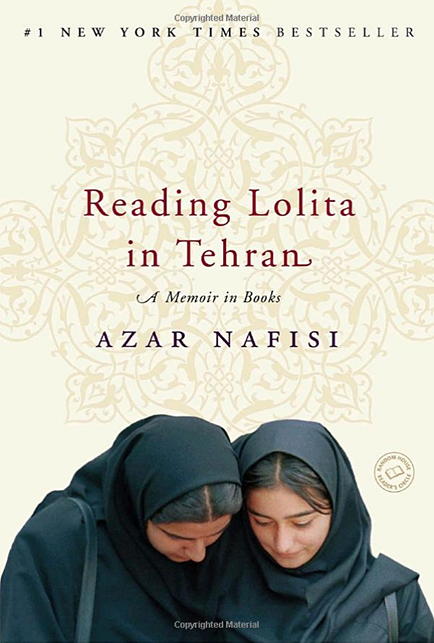
Reading Lolita in Tehran: A Memoir in Books by Azar Nafisi

Written by , Posted in Feminism, Politics, Reviews

Four Stars

Best for: People interested in one story of life under authoritarian governments.

In a nutshell: A professor uses literature as the framework for her memoir of life teaching in Iran.

Line that sticks with me: “Lack of empathy was to my mind the central sin of the regime, from which all the others flowed.”

Why I chose it: I flew the weekend after the election, and saw this in the airport. I figured perhaps it would be good to study up on life under leadership that doesn’t view everyone equally.

Review: I’d heard about this book many times before, and thought it was all about a group of young girls who got together to read literature that they couldn’t access in other venues. That’s not entirely accurate. Instead it is the memoir of a professor that includes, in some parts, a group of women in their 20s getting together with the professor to discuss literature.

The book is organized into four parts, each using an author as the background to the events. It does not go chronologically; it jumps around a bit, which I found somewhat challenging, although I think it ultimately works well.

The book spends a lot of time exploring what it means to both receive an education and try to educate others with the implementing many strict rules. Dr. Nafisi spends a fair bit of time, for example, looking at what it would mean to follow the requirement to wear the veil, as she would not choose to wear one if it were not mandated. Is that a fight that it is worth undertaking if it means she would not be able to share her lectures with her students?

I think one of the more shocking things for me was how almost casually the author discusses how many people – including some of her own students – are thrown in jail for years for seemingly minor issues. And then they are released and it’s … it’s a big deal but also not surprising. It’s terrifying, and I have to say that given the utterly despicable things the 45th president has done in just the last eight days, I don’t think it’s too ridiculous to think it could happen here, too.

Before reading this book, I knew very little about Iran in the 80s and 90s. And obviously reading one book does not mean I know much more than I did before. But through the lovely writing of Dr. Nafisi, I feel like I understand some of the different perspectives of those living under the regime.

Wednesday

25

January 2017

0

COMMENTS

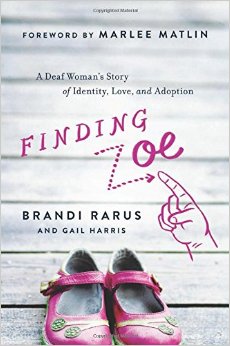
Finding Zoe by Brandi Rarus

Written by , Posted in Reviews

Two Stars

Best for: People interested in learning a bit more about Deaf culture in the U.S. and who also have a strong stomach for not great writing and questionable storytelling.

In a nutshell: Deaf mother with three hearing sons desperately wants a daughter; Deaf husband not totally on board; teenager gets pregnant and surrenders daughter for adoption. True story.

Line that sticks with me: “He felt that part of the magic and mystery of giving birth to a child is parenting that particular child. However, he believed that the one benefit of adopting a child was being able to decide whether that child was right for his family.”

Why I chose it: A colleague selected this for our equity and social justice book club, as she was interested in learning about Deaf culture and about adoption.

Review: First, I should explain that the line that sticks with me is because I found that opinion really challenging and ultimately a bit offensive.

Author Brandi Rarus went deaf when she was six, and was raised in a hearing family. This story is mostly her story, and it is educational but ultimately frustrated me. The biographical parts of Ms. Rarus’s story are interesting, as she can effectively describe the different factions in Deaf culture, the challenges Deaf children can face in education and in determining where they fit and who they are in the hearing world. She also was involved in many important moments in Deaf history in the U.S., including the Deaf President Now protests at Gallaudet and the passage of the ADA. Additionally, she was Miss Deaf America.

I appreciate the honesty Ms. Rarus shares throughout the book but MAN does she put a lot of pressure on the imaginary daughter who eventually materializes in Zoe. She is essentially desperate for a daughter to add to her family of three boys, and while I’ll never understand that desire (I don’t have kids), I get that people have it. The frustrating part for me is the assumptions and the language she uses to describe her future child – basically she sounds like she wants a doll and a best girlfriend. It looks like it turned out okay but what if Zoe turned out to hate shopping or pretty clothes, and got along better with her father than mother?

Additionally, even though I just lauded the honesty, there is something about how all of the players involved in Zoe’s adoption are described that feels false. Like everyone got final review, so nothing is true. And there are so many players – the birth mother, the birth father, the first adoptive family, the foster family, and everyone’s extended family. It can be hard to keep up. There’s also a very confusing situation with the birth father and birth mother and the courts that makes zero sense to me – basically the birth father wants to keep Zoe, but the birth mother wants to place her up for adoption, so she sues to terminate the birth father’s rights so she can have full rights and then surrender the daughter. I just found it odd that courts would terminate parental rights without any cause just so the child could then be adopted. I’m sure there’s a legal reason, but the book doesn’t explain it.

There is a fair bit of religion in here, which is not my thing but was fine and obviously fits as it is part of their story. However, there were some glowing comments about what appears to be a crisis pregnancy center (yikes) and some disparaging and questionable comments about Planned Parenthood and abortion, so that was unpleasant to read.

And finally, I found the discussion the first adoptive family have when they find out that Zoe might have hearing and other developmental challenges to be deeply distressing. First, the idea that there is only ‘one’ good thing about adoption seems very narrow-minded. And the man who made the comment I shared above sounded a bit more like this adoptive father thinks of adopting a child is like picking out a puppy. I get the idea that when adopting, the child should be placed in the home that will be best for her, but more I think this particular father just wanted a more “perfect” child.

Tuesday

17

January 2017

0

COMMENTS

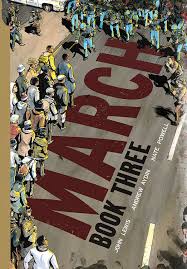
March: Book Three by John Lewis, Andrew Aydin and Nate Powell

Written by , Posted in Politics, Reviews

Five Stars

Best for: Anyone who thinks we don’t still need the voting rights act.

In a nutshell: This is the final – and longest – of three graphic novels about the life of John Lewis. It covers the mid-60s, culminating in the march from Selma to Montgomery and the passing of the voting rights act.

Line that sticks with me: “In Mississippi that summer we suffered more than 1000 arrests, 80 beatings, 35 shootings, 35 church burnings, and 30 bombings.”

Why I chose it: Because the first two books were great and I wanted to learn more.

Review: This final book covers a lot of ground, starting with a church bombing that killed four little girls, through voter registration drives that were accompanied by murders, and a peaceful march that ended up dubbed Bloody Sunday thanks to the vicious actions of the police.

It’s a rough read, but a critical one. I learned so much in the 250 pages, including more detail on some events that I had vaguely heard about previously. For example, I knew that the 1964 Democratic National Convention was contentious, but I didn’t know any of the details. It was so impressive to read about the very deliberate attempts to get the voices of the Mississippi Freedom Democratic Party heard.

Reading about the people who stood in line all day, not allowed to leave to drink water or use the bathroom, only to not be allowed to register to vote – or to be ‘allowed’ but then face ridiculously complicated literacy tests – was infuriating. Then to read about the passing of the voting rights act, and the triumph it was, only to be reminded about how the Supreme Court gutted it recently, leading to voter suppression during this most recent election. It’s like 20 steps forward, 19 steps back (forty years later).

Friday is going to happen, and some people will refer to the PEOTUS as President. Anyone who finds that deplorable but isn’t as well-educated on the past as they should be (like me) would be well advised to read this series to recognize what the fight for rights can look like.