ASK Musings

No matter where you go, there you are.

Monthly Archive: October 2026

Thursday

22

October 2026

0

COMMENTS

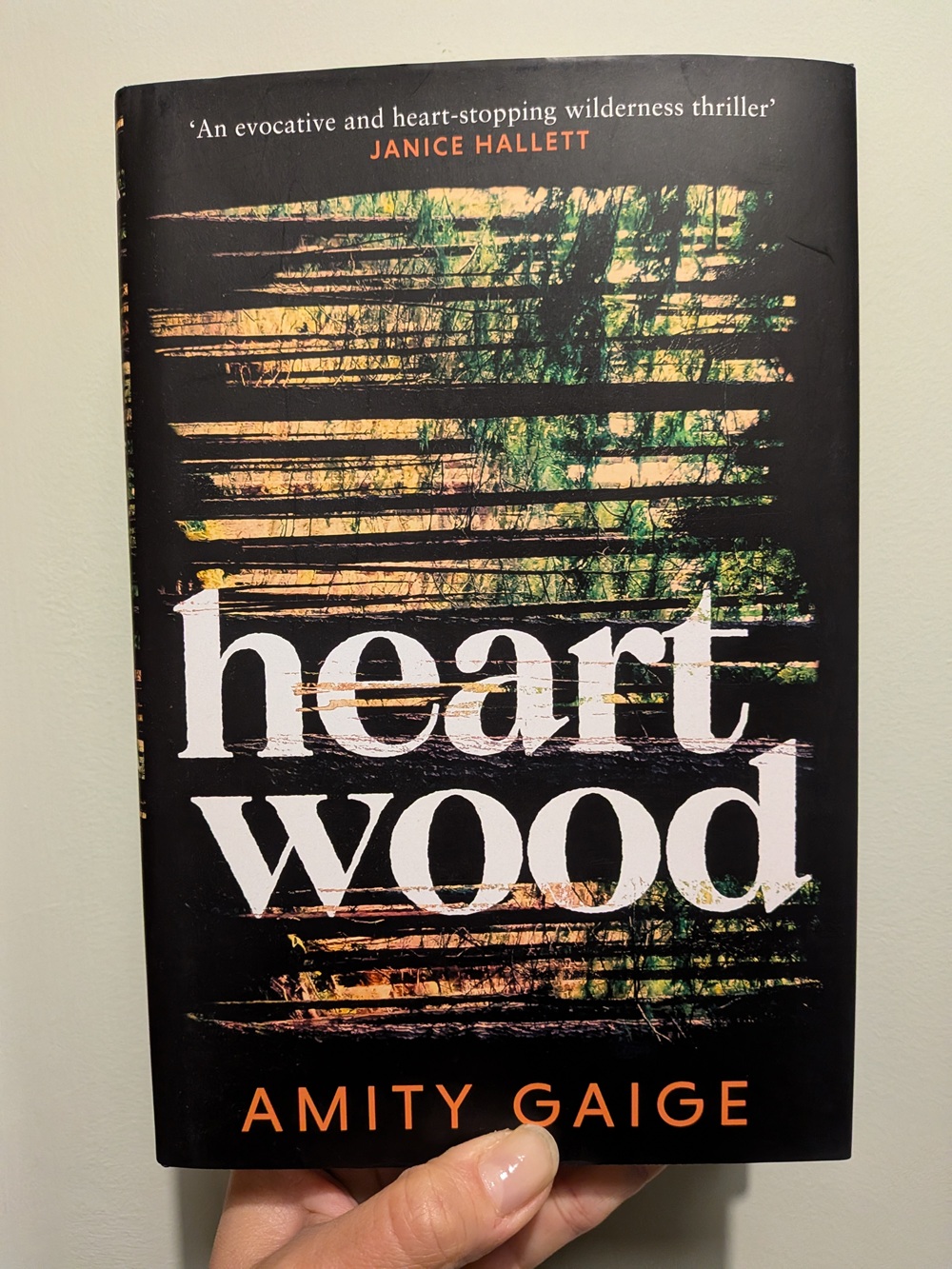
Heartwood by Amity Gaige

Written by , Posted in Reviews

Rating:
3 Stars

In a nutshell:
Valerie goes missing while hiking the Appalachian Trail. The story of her search is told through her eyes, the eyes of the lead searcher Lt Bev, and an older woman Lena, who lives in a nursing home somewhat far away.

Best for:
Folks tired of stories focused on the relationships between fathers and sons and wishing more were about mothers and daughters. Those who enjoy mystery but also nature writing.

Quote that made me think:
“He was, like many people, tyrannized by his changing moods. By an absence of a coherent personality.”

Why I chose it:
My partner gifted it to me for my birthday earlier this year. I read the description but had forgotten until I picked it up this week to read. It seemed appropriate for the season – mystery, set in the forest…

Review:
There is a lot about this book to like. The writing is great. The characters are mostly well-developed. The main characters are all women dealing with their own ideas of strength, solitude, and growth. Love that. The descriptions of the forests are gorgeous, and the discussion of the grief of not knowing, of searching for someone who is missing, is eloquent.

But a critical, interweaving part of the story, is mother daughter relationships, and I just … am not interested. They are all complex and complicated and interesting, but in the end, the author seems to be saying that ‘eh, everyone does the best they can, just love your mom.’ There’s also some mocking of estrangement and cutting ties with neglectful mothers, which feels straight out of Boomer Facebook. I think I’m just not buying that view of the world, or relationships that mothers and daughters have, that everyone’s doing their best and that alone should be sufficient for everyone to just get along fine. And while I get that this is a thread throughout this book, it didn’t need to be. The author could have picked a different through-line, or even a more complex version of this one, and I think it would have worked. I would have enjoyed that book much more than this one. But that’s not the author wanted to write, and the one she did leaves me a little sad for what could have been.

(Also, despite the review at the top of the cover, I wouldn’t call this heart-stopping. I at times forgot there even was a mystery.)

Would I recommend it to its target audience:
If you think all mother-daughter relationships are awesome, then go for it.

Tuesday

20

October 2026

0

COMMENTS

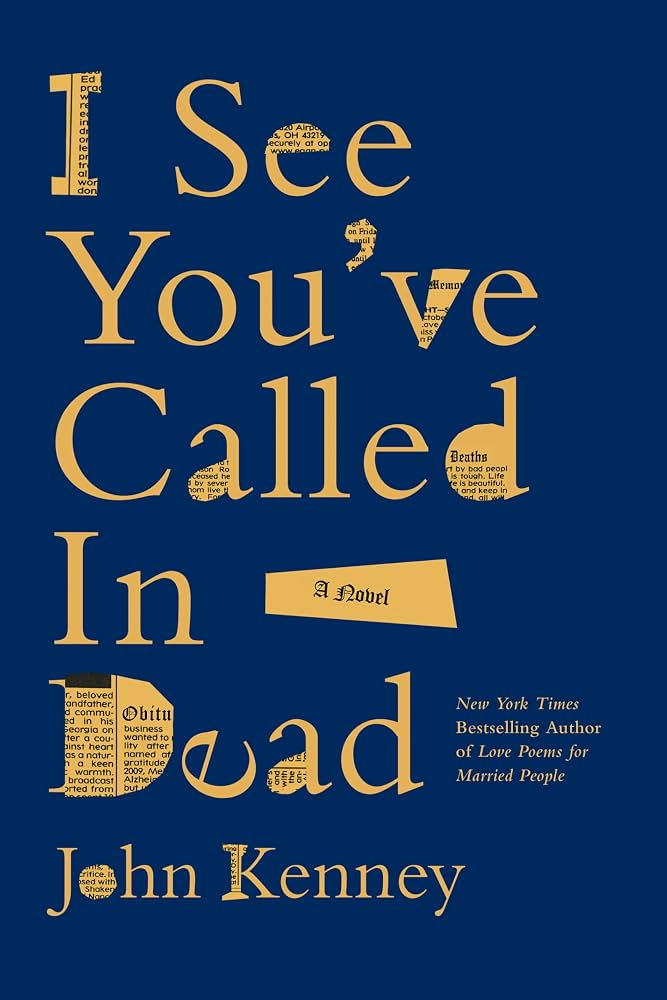
I See You’ve Called in Dead by John Kinney

Written by , Posted in Reviews

Rating:
3.5 stars

In a nutshell:
Obituary writer Bud accidentally publishes his own obituary, and subsequently ‘loses’ his job, while trying to figure out what his life means.

Best for:
Those who want a bit of humor with their existential dread. Those looking for a quick but interesting read.

Quote that made me think:
“The thing is, though, when you listen too carefully, too closely, day after day, to that pain, to that keening, it can take a toll. Because to really listen is to feel it, isn’t it?”

“What would you write if you had to write your obituary? Today, right now. What comes to mind? What memories, days, moments? What people and experiences? I realize, at first glance, that the idea of writing one’s own obituary while still alive may sound morbid. It’s not, though. I promise you. It’s a needed reminder of who you are, of what truly matters. Because it’s your life and there’s still time to write it. Before I have to.”

Why I chose it:
It was recommended on the audio book app I use (Libro.FM – great alternative to Audible).

Review:
Bud is a 44 year old man who lives in Brooklyn, in the apartment above his friend Tim’s home. He works for an AP-type news agency, writing obituaries. He’s not the best at it, but he’s fine. One day he gets an email from his ex wife, and ends up writing his own obituary, a bit as a lark. But events transpire that lead to him accidentally publishing the obituary.

The book isn’t about the world thinking Bud is dead – everyone realizes immediately that it’s an error, or weird joke, or something of that nature. His work suspends him pending an investigation, so Bud is faced with living in a bit of a limbo, more so than he already was. At his ex wife’s mom’s funeral, he meets Clara, a woman who goes to funerals of people she doesn’t know. Tim and Bud start attending a few of these, and Bud begins to explore what his life means to him now.

This book could have been trite – Bud could have had a giant change, everything getting resolved perfectly, with lots of deep, meaningful quotes. But that’s not how it works. Bud is funny. He’s sarcastic and self deprecating and makes absurd decisions sometimes. At the end of the book, he’s gone on a journey, but he hasn’t changed everything about who he is. Everything hasn’t worked itself out, but some things do get better. I appreciate that, because it feels like the way things work for real people outside of books,

Part of why this book interested me is that this summer my sister and I wrote my dad’s obituary. It was a process – I wrote a version, she wrote a version, she merged it together, then my mother tried to veto half of it. It was also healing, writing out some of the best things we could remember about my dad, including the things he loved to do. And it lives on as not a biography or a summary of his life, but a bit of a highlight reel, a cliff’s notes version of his 81 years.

The main reason this is 3.5 and not 4 stars is a ridiculous bit where an HR colleague was being quite kind and thoughtful with respect to pronounces and disability. Bud – and another character, Howard – mocks the man. The reader is supposed to relate and think negatively about how unnecessarily ‘woke’ society has become. The thing is, the scene takes up maybe three pages of the book? We already know that Bud is not 100% awesome, so it’s not like the scene was necessary at all, so it makes me think the author feels this way himself and wanted to fit that little dig in. It was, to my mind, wildly out of place and actually out of character for Bud. Weird choice.

Would I recommend it to its target audience:
Yes

Sunday

18

October 2026

0

COMMENTS

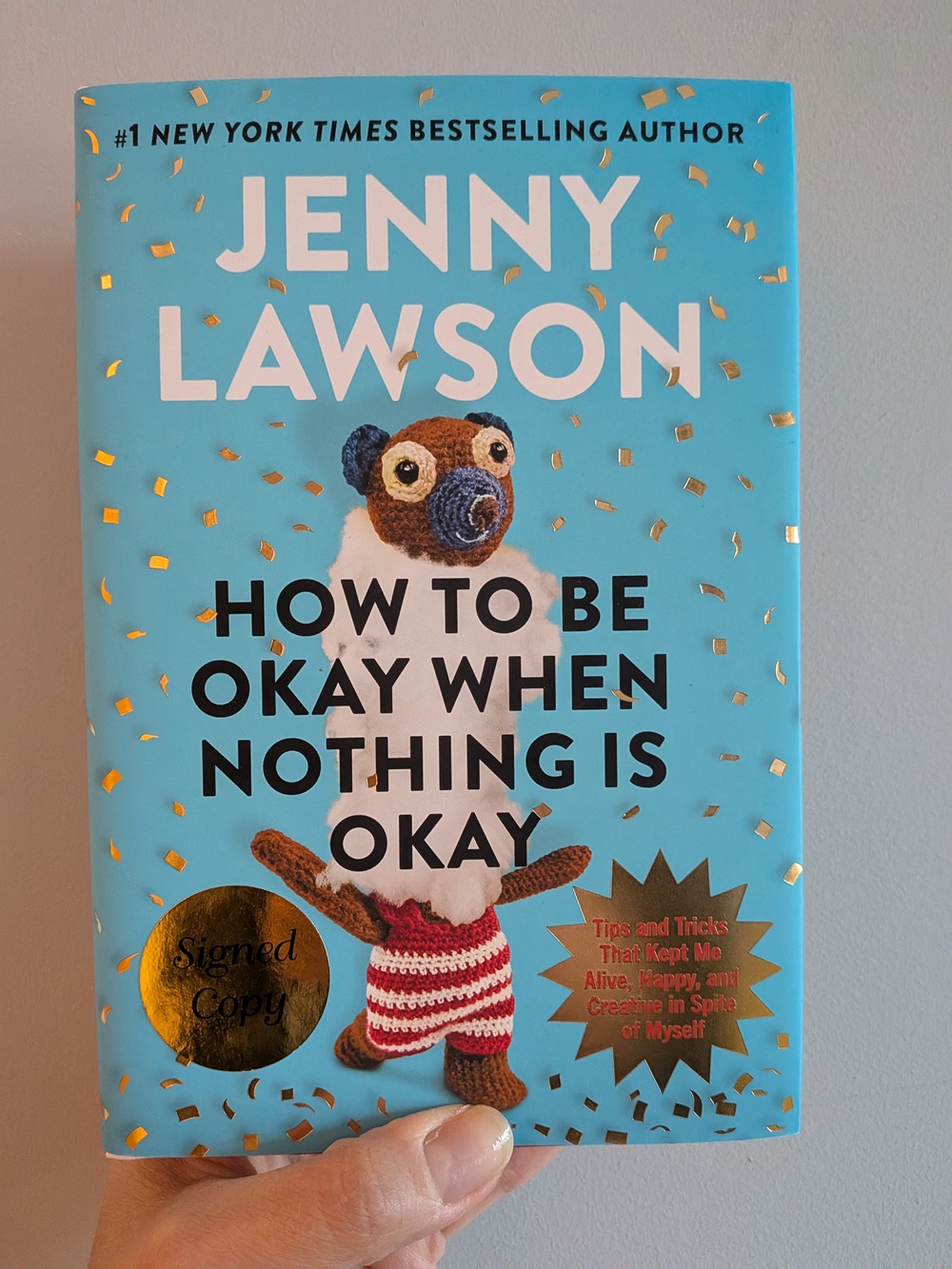
How to be Okay When Nothing is Okay by Jenny Lawson

Written by , Posted in Reviews

Rating:
4.5 Stars

In a nutshell:
Author Lawson (also known as The Bloggess) shares quotes, words of encouragement, and ideas for helping folks get through whatever they’re trying to get through.

Best for:
Fans of Lawson. Fans of whimsy, sincerity, humor, weirdness, joy, and honesty. People who are looking for some ‘self-help’ that feels more like a close friend being kind to you.

Quote that made me think:
“You’re not failing if it’s just not for you.”

“They say the grass is greener on the other side of the fence, but really, the grasss grows where you choose to water it.”

“If I fix a problem but it continues to pop up even after getting fixed, then I need to reevaluate what the actual problem is.”

“Almost noting in nature blooms all the year round … why would you expect yourself to?”

Why I chose it:
I thoroughly enjoy Lawson’s writing. I had no idea she had a new book out, so when I saw this in my favorite bookstore when I was vising the US this summer, it was an immediate, obvious purchase.

Review:
I had some oral surgery this week and so have stitches in my mouth. It’s challenging to laugh more than an understated chuckle, so this was probably not the best time to pick this book to read. Still glad I did though. I was nearly in tears a couple of times from laughing so hard, and this isn’t really even a ‘humor’ book. Lawson is just an expert at telling a story that is both wildly unhinged and totally relatable, even when she’s just sharing what helps her gain focus as someone with ADHD.

The book’s title might suggest it’s about dealing with things like grief, or the general state of awfulness in the world. But its focus is smaller (and bigger) than that – it’s about how us, the reader, can work through whatever different challenges we are facing. Maybe it’s getting back into a hobby (she’s a creative person, so naturally a lot of what she shares relates to motivation for things like writing, but it can help with anything), or maybe it’s finding a way to do the dishes in the midst of a serious depressive episode.

Each section contains a handful of little chapters – some four pages long, some only part of a page – that follow a them. Lawson has a way with words, and the section include titles such as ‘Let’s Be Brave,’ ‘Let’s Make it Easier and Give Ourselves a Fucking Break,’ and my personal favorite, ‘Let’s kick Sadness Right in the Dick.’ The book can be read straight through (as I did), or the reader can pick an area where they are currently struggling and look for some tips, tricks, and words of support.

This book felt like a hug. It felt like something I’ll go back to when I need it. I’m happy it’s out in the world, and I hope lots of people read it and find it to be helpful for them.

Would I recommend it to its target audience:
Absolutely.

Friday

16

October 2026

0

COMMENTS

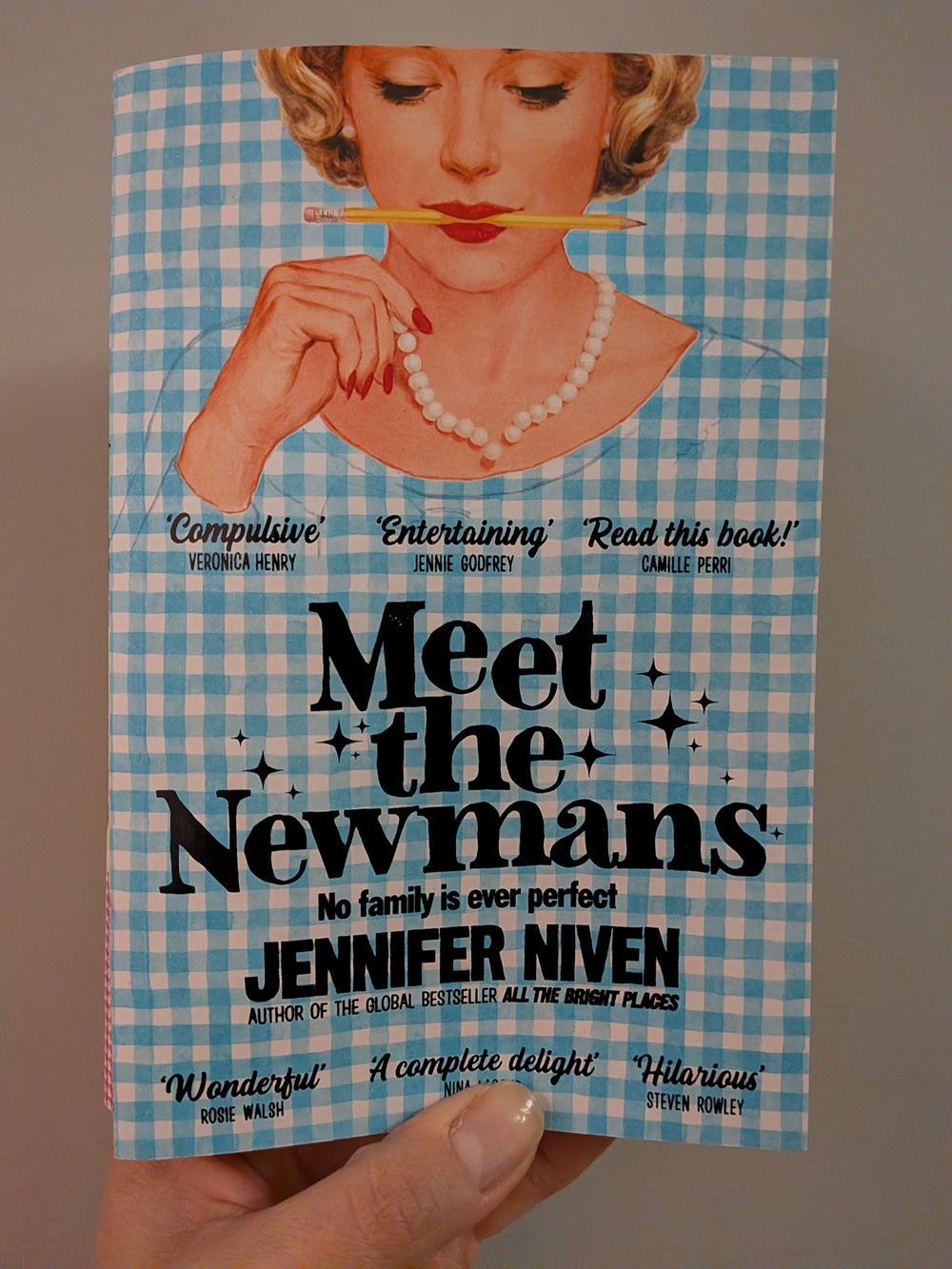
Meet the Newmans by Jennifer Niven

Written by , Posted in Reviews

Rating:
3.5 Stars

In a nutshell:
The Newmans are a real-life family who have their own scripted television show (think Ozzie and Harriet). When the head of the household and writer / director of their show gets into a car accident before the season finale, the family starts figuring out what life might be like without him.

Best for:
Those who enjoy good writing and the tracking of multiple characters across one interwoven storyline.

Quote that made me think:
“I have to spend so much time with myself. I want to be good company.”

Why I chose it:
Part of a book club.

Review:
I read this book in two chunks – the first hundred pages and then the last three hundred. It sucked me in and I wanted to see how it would resolve. It was a decent read, though not my favorite.

Dinah and Del have two mostly adult children – Guy and Shep. Dinah and Del were both actors and singers in Hollywood in the 40s and 50s, and have been the stars of their own scripted Leave It To Beaver / Ozzie & Harriet style sitcom for the past dozen years. But it’s now 1964, and things are changing, including the tastes of TV viewers. The season finale is coming, and it might end up being the series finale.

Then Del is in a serious car accident, and Dinah, Guy and Shep all have to navigate what life might mean if Del doesn’t survive, against the backdrop of a time that is holding them all back in different ways (Shep probably the least, but that’s fine – not everyone needs to be having a life changing epiphany in a book). Dinah meets writer Juliet, who is putting a profile together on her. The butt heads across generations, but eventually end up working together on a project to make sure the final episode of the show is memorable.

Because the book is set in the 1960s, there is a lot discussed about the US is changing, with The Feminine Mystique as the through line. There is some discussion of racism and the civil rights movement, and the Lavender Scare / gay rights is a large part of the book as well. But the focus is (white) feminism. It’s nothing groundbreaking, but I think that’s fine. Much like a lot of people found something deep for them inside the Barbie film monologue, I think some readers will find something similar in this. Its basic feminism, but basics exist for a reason.

I’d probably not choose this book again, but I don’t feel like I wasted my time reading it. And also, as depressing as it is, the absolute basics of women’s rights are sadly back in question in so many cities, states, and nations. So what SHOULD be acknowledged as the absolute bare minimum of what women deserve is once again apparently on the table. So I guess it isn’t as basic as I thought. Sigh.

Would I recommend it to its target audience:
Sure. The writing is good, the characters well-developed, and not every book about feminism needs to be a PhD level seminar.

Thursday

15

October 2026

0

COMMENTS

Human Rites by Juno Dawson

Written by , Posted in Reviews

Rating:
3 Stars

In a nutshell:
In this conclusion to the HMRC trilogy, the witches of the UK coven come together to fight a few different forms of the devil.

Best for:
Fans of the series. Fans of books about modern witches. People who don’t mind a bit of time travel as clean-up to resolve plot lines.

Quote that made me think:
N/A

Why I chose it:
I’d read and somewhat enjoyed the previous two books.

Review:
There is a lot of good in this book. Namely, the ability of the author to develop multiple characters so distinctly that I feel as though I know them and understand their motivation. There are many main and point of view characters – I count five – but there are also even more periphery characters who fit in well and make sense in this world.

The story starts where the last one ended, and resolves some of the cliffhangers straight away. It also resolves pretty much every storyline, so I appreciate that as well. And I love that the focus is on women throughout – there are a couple of men in the books, but the story is about the women and their relationships and friendships, set against this fantastical backdrop.

With that said, I think this book might be what convinces me that this genre is not for me. I like the idea of stories about witches and magic, but I have some expectations about how things should work in books. Yes, I accept this world the author has built, and the magic within, but some of the choices she made didn’t work for me. Specifically, the entire battle that takes up most of the last bit of the book relies heavily on time travel, and I just don’t find that to be interesting or successful in this case. I’m still not even clear how it actually worked within the book, as I couldn’t quite follow exactly what was going on. I am sure that people more well acquainted with the genre would say it was done cleverly and successfully, so perhaps I just … didn’t get it.

Would I recommend it to its target audience:
Sure – I just don’t think I am the target audience.

Sunday

11

October 2026

0

COMMENTS

Wintering by Kathering May

Written by , Posted in Reviews

Rating:
2.5 Stars

In a nutshell:
Author May explores the changing of the seasons and the different ways we weather the literal and metaphorical winters of our lives, as told sort of in memoir form.

Best for:
I’m not entirely sure. Perhaps those experiencing challenges right now? This book is a bit all over the place.

Quote that made me think:
“The needle breaks the fabric in order to repair it. You can’t have one without the other.”

“Have we really got so far into the realm of electric light and central heating that the thythm of the year is irrelevant to us, and we no longer even want to notice the point at which the nights start getting shorter again?”

Why I chose it:
I picked it up a year ago but didn’t get to it – it looked interesting. Then life took over and other books jumped to the top of the pile. It caught my eye again at the start of Autumn, but took me about three weeks to read.

Review:
I should say up front that I think I get what the author was trying to do, and why she took this approach. It’s just not very successful for me.

The book feels a bit like an autobiography in search of a topic. I don’t think that’s how it started, but its more about the author than the overall concept of winter. In the epilogue (or perhaps the afterward?) she says she started out with the idea of interviewing a lot of people about winter, and traveling to many places that experience different aspects of winter. But she mostly did not do that, though she does call upon a trip she took to see the northern lights in Norway one January a few years ago.

The book is broken up into months – October through to March – and she explores some interesting ideas of literal winter (staying in, tacking stock, preparing for the next year) and metaphorical – illness, career challenges, life challenges. They don’t quite work together, but I do get what she was trying to do. Some chapters seemed bizarre and irrelevant – the one about wolves just seemed like it was filling space. Others stuck with me, and made me think about how I view not just winter, but where I am in any moment. The idea of life as not just linear but also cyclical. And it made me interested in thinking more about how to live in the moments as they are, not pining for spring in the winter, or autumn in the summer. So that’s good at least.

Would I recommend it to its target audience:
Maybe? I don’t think I can say I would recommend it, but I don’t think it should be avoided if one is interested in reading it.

Saturday

3

October 2026

0

COMMENTS

The Impossible Job by William Ralston

Written by , Posted in Reviews

Rating:
4 Stars

In a nutshell:
Author Ralston explores the world of football (soccer in the US) refereeing told via interviews with some of the top professionals in the game.

Best for:
Anyone who claims to be a football fan. Anyone who has yelled ‘REFEREE?!’ at their TV (or at a live match). Referees.

Quote that made me think:
“A refereeing error can influence the result, but so does a payer misplacing passes, the manager making the wrong substitution, or a club owner signing the wrong striker.”

“When you’re a coach or a payer, you can have a bad match or even a bad season, but referees cannot.”

Why I chose it:
In my free time, I am a referee in Scotland, generally refereeing grassroots girls matches and the occasional club academy game.

Review:
After nearly 35 years of playing football off and on, a little over a year ago I decided to become a referee in Scotland, and the set-up here is pretty amazing. We have termly trainings where they go over video to discuss calls. There are weekly fitness trainings spread across the geography of the city, where referees of all levels – including the ones refereeing the Scottish Premier League – train together. There’s a dedicated WhatsApp group for women referees, and we get our own trainings. Which might strike folks as odd – why would referees need their own community? Don’t you just show up, piss off players, and go home with some extra money?

This book explains why. Using the clever convention of matching each chapter to one of the 17 Laws of the Game, Ralston explores what it is like to be an elite referee, including how isolating it can be. Obviously very few people will ever reach that level, but the stories in this book are relevant not just to the grassroots referees like me, but to anyone who enjoys sport. There are loads of interesting stories, both infuriating and inspiring – from grassroots referees jumped in parking lots to referees realizing their dream of managing a World Cup final.

Through interviews with professional referees (mostly men, but a couple of women too), Ralston explores the challenges of being a referee. Aside from the obviously physical ones — I I am essentially doing a HIIT workout every Saturday — there are the mental challenges. I remember my very first match, and how exhausted I was not from the running but from paying attention. Where I referee, we don’t have assistant referees, so every single call comes only from what I see. There’s no mentally turning off ever, and it requires so much energy. Look away for just a moment, and a I might miss a cheap foul, or not be able to tell whether the striker going for the ball was offside.

And consider doing all that with people shouting at you. Imagine if you worked on spreadsheets, and when you went to enter a formula in a cell, someone screamed ‘that’s fucking wrong, you idiot’ from a hundred feet away. Or each time you sent an email, one of the recipients stood up and yelled ‘that’s not fair’ from their cubicle, Referees are at work, but players, coaches, and spectators all think it’s totally appropriate to just hurl abuse at them. Now, when I was a player I shouted in frustration, but I never abused or shouted AT a referee, and it is WILD to me how even some of the managers of the clubs I referee for think nothing of shouting inappropriate dissent onto the pitch. Just today, I experienced some abuse directed to me after the match based on my country of origin. (That young lady got herself a card for her troubles.) For higher level referees, multiply that by a few thousand, as well as a few hundred thousand more watching at home, sending abuse via social media and the airwaves.

One area Ralston spends some time on is how white professional refereeing in Europe is. It’s shocking how few referees are people of color and it’s even less at the professional level, and that is partly because of the pipeline — if you don’t have referees of color at the lowest levels, they aren’t there to be in the top flights. And there’s also some evidence that such referees aren’t promoted at the rates they should be, and don’t receive the support they should. Ralston also briefly mentions the lack of women referees, but he doesn’t focus on that. I’m not surprised.

Ralston also examines the limitations of the Laws of the Game. As I said above, there are 17, but some of them have to do with things like the size of the pitch or the equipment players and referees must have. While most of those do reference what to do if there is an infringement, only a couple of the laws talk about specific ‘fouls’ – and the designations that mean the difference between just a standard free kick and someone getting sent off the pitch. So much is up for interpretation, and the best referees know how to apply the laws while keeping with the spirit of the game and what the game expects. It’s such a challenging balance, and most folks who enjoy football don’t seem to really get that.

This is a very long review mostly because I really enjoyed the book. I got some ideas out of it, some tips, some perspectives that will help me improve my game. But I think the best thing this book does is help the reader have empathy for referees, and for the difficulty of the job. It is literally thankless, yet it is necessary for the sport so many across the world love.

Would I recommend it to its target audience:
Absolutely