
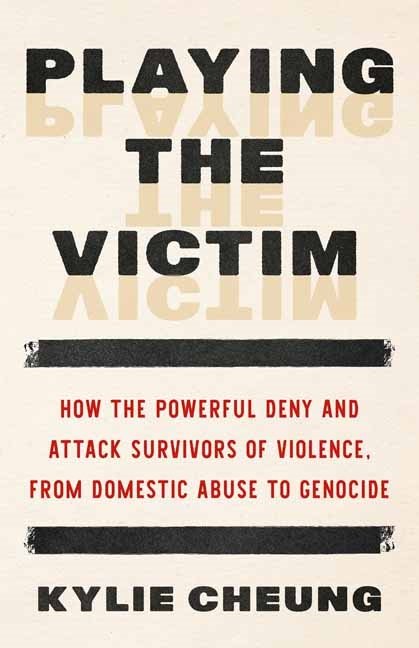
Playing the Victim by Kylie Cheung
Written by Ashley Kelmore, Posted in Uncategorized
 Rating:
3 Stars
In a nutshell:
Author Cheung writes half a book full of very compelling arguments opposing Israel’s genocide in Palestine, then tacks on some stuff about health care, abortion, and police violence in the USA.
Best for:
There are like three or four books in here so I’m not sure who it is for.
Quote that made me think:
“Whose lives matter under capitalism and imperialism, and whose are expendable?”
Why I chose it:
I thought from the subheading that it would cover a range of topics. It kinds of did, but in a very messy way.
Review:
I was talking to my partner about this as I was nearly finished with this book: I wish it were more acceptable to write shorter non-fiction books. I know in the past few years, especially at smaller and more radical presses, we are seeing almost booklet-length books going to print. 100 pages diving deeply into one topic. I love it! And I think this book would have benefited from that. Because clearly Cheung wanted to write about the war Israel and its allies has been waging on Palestine for decades, especially focusing on the misinformation campaigns around who is committing the atrocities here, and who is allowed to fight back. There is some amazing, detailed reporting here that aligns with the title of the book – who gets to be the victim? But the problem is, fully half (maybe even 60% – I read the audio book so it’s a bit harder to tell) of the book is about Israel. And then it isn’t anymore.
The back half of the book talks a bit more about power as outlined in the subtitle of the book – Cheung delves into police and state power, about the murder of the health care CEO in the USA, about abortion laws, about men as ‘victims’ when they rape women. About treating trans people as the danger when we all know it’s cis men (including the pedophiles so obsessed with the genitalia of kids who want to play soccer). And while the book starts off talking about Depp v Heard, the author doesn’t really talk much at all about the implications of that and what it represents in society.
Which brings me back to my opinion that this book needs an editor, and this should have been two books. One should have been an exploration of all her investigation and research related to the IOF and war crimes and just the general horrible way Palestinians have been and continue to be treated. The other book should have included a much shorter chapter about Palestine because it does relate to the theme, but then the other chapters could have been expanded upon, and Cheung could have made some deeper connections and included more exploration of topics like Depp v Heard. I wonder if she pitched a different book, but the publishers thought the market was a bit saturated, so asked her to add in other things? Because I am genuinely baffled by how uneven the book is. And that is a bummer, because there is so much good information in here.
Would I recommend it to its target audience:
I think so. There’s some REALLY good stuff in here, but it’s basically two different but related books
