ASK Musings

No matter where you go, there you are.

Books Archive

Saturday

25

April 2015

0

COMMENTS

The Whole 30 by Melissa Hartwig and Dallas Hartwig

Written by , Posted in Reviews

Four Stars

Wait, didn’t I just review this book?

Nope.

So just this week, the “It Starts with Food” authors released a slightly more and slightly less comprehensive guide to their elimination diet program. In this section they have less detail than their previous book, but they make for it with a fairly intensive FAQ section. And then, the best part …

Cookbook! I am not a cook. I’m a baker, which really just means that I like sweets so much I want an excuse to eat them in their uncooked and cooked forms. But with dinner, I’m usually limited to making pasta and steaming vegetables. And meat? Yeah. I’ve never really been good at cooking anything beyond this one pork tenderloin recipe and this one chicken enchilada recipe (and even the latter involved a crap ton of checking the internet for how to boil chicken breasts).

So, in addition to sorting out some of my less than health food choices, I’m going to be learning how to cook over the next month, with the help of this lovely, simple cookbook. Seriously, while some recipes do require prep or overnight marinating, none of them caused me to balk or laugh as I turned the page. I think that’s the sign of a good cookbook (for me, anyway) – dishes that appeal to me that won’t cause me to give up halfway through or that won’t mean dinner starts at 10 P.M. because it took so long to prepare.
Saturday

25

April 2015

0

COMMENTS

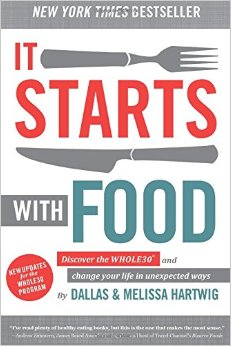
It Starts with Food by Melissa Hartwig and Dallas Hartwig

Written by , Posted in Reviews

Four StarsStarts with Food


Okay, so (as discussed on my review of Dr. Perlmutter’s book), I’m trying to sort out the food that is going to make me healthy. I know it isn’t sugar (I type, having finished some delicious chocolate ice cream), although man, if I could thrive on pasta and chocolate cake, I’d be a happy, happy lady. But we all know that isn’t the case. I’ve got a good friend who has followed this elimination diet and had some pretty fantastic outcomes. I picked up the book and am going to try it.

What is ‘it’ exactly? Well, it sounds a little like paleo, although it isn’t. Not exactly. The authors are very up front that they don’t particularly care about what our ancestors ate; they are interested in what science and our experiences tell us is health for us to eat. We know that generally speaking, veggies are healthy for us. Twinkies are not. But … what about the rest?

The Hartwigs spend a few chapters explaining why certain food groups may present some challenges for us and not be contributing to good health. They are interested in things that have a negative impact on us psychologically (think the foods you crave and eat because you are emotionally – or chemically – dependent on them), hormone imbalance, digestive tract issues, and inflammation. Most of what they say I’ve seen in other books (reputable and not reputable), although, as we discussed on one of my previous reviews, they are very skeptical about our need for any grains (not refined, and not whole). They aren’t arguing that these things are necessarily BAD for you, but that they might be bad for some, and there are much healthier options anyway, so no need to eat them.

But again, their approach is to cut out all of the foods that evidence suggests might be problematic for some of the population for 30 days, and then reintroduce them and see how you feel. So, starting on April 26, and finishing on May 26, I’m going to not eat any form of the following:
– Added sugars or sweeteners (including stuff like stevia, honey, etc.)
– Alcohol (even in cooking)
– Grains (refined or whole)
– Legumes (I KNOW – I’m already tearing up at the idea of parting with my morning PB and apple)
– Dairy (with the one exception: clarified butter)

So … what will I be eating?

Vegetables. Lots. Fruits. Some. Healthy fats. Meat. Seafood. Eggs. For 30 days I’ll see if I can get some of the (not serious, but annoying) health issues I have cleared up through some diet changes. And then, I’ll figure out if I’m someone who really shouldn’t eat dairy, or if I’m one of the lucky ones who can process delicious, delicious cheese.

Monday

20

April 2015

0

COMMENTS

Between You & Me by Mary Norris

Written by , Posted in Reviews

punctuationFour Stars

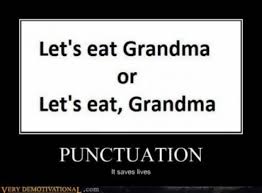
My husband knows me well. I came back from a trip a week ago, and this book was waiting for me. I hadn’t heard of it, but if I had, I would have bought it myself. Ms. Norris works at The New Yorker, where since the mid-1970s she has copy-edited (copy edited? Shit. I should know this by now) many articles and features. Part how-to (and how-not-to), part history, this book gives the reader some insight into the challenges we face when trying to come up with the best ways to communicate in written English.

I’m still not sure how best to categorize this book. I’m sure it will be compared to Eats, Shoots and Leaves, but its tone isn’t nearly as scolding. I don’t get the sense that Ms. Norris is judging those of us who make improper use of punctuation; instead I think she is genuinely interested in helping people better understand punctuation so that they can communicate better.

The book provides some insight into work at The New Yorker, including some quirks of its style guide. For example, magazine staff makes use of the diaphoresis, that double-dot bit you see over words such as naïve, in words like cooperate. Staff members also use a double consonant when adding a suffix (travelling instead of traveling, for example). Fascinating. And really appealing to someone like me. This book isn’t for everyone, however. I think there are some folks (I’m thinking of Mary Roach) who can take a topic and make it interesting to literally everyone. I think that to enjoy this book, you need to have at least some passing interest in language. But it can be the slightest of interests. If you ever wonder whether to put a comma in a sentence, for example, you probably have sufficient interest to find this book enjoyable.

One chapter that initially gave me a slight bit of pause was the one on gender. She tackles the idea of gender in nouns in other languages, as well as the attempts to create gendered nouns (e.g. dominatrix) in English. She also talks about the frustrating fact that there is no agreed-upon third person generic; you have to say him or her, there is no singular ‘they’ that is gender neutral. She also dives into the topic of using the appropriate pronouns for someone, as she has experience with this directly: her sister was assigned the gender of male at birth, and later shared with the family that she was in fact a woman. Ms. Norris talks about the early challenges she had with using the correct pronoun. Other than a word choice that I wouldn’t make (she refers to her sister as transsexual instead of transgender; although perhaps that’s the word her sister requested she use), the section is thoughtful and I think really drives home the importance of using the correct pronouns.

I was hovering between a three-star and four-star rating when I turned to find this chapter title: “F*ck This Sh*t.” Come on. That’s unexpected. The book isn’t laugh-out-loud funny, but you can tell that Ms. Norris has a sense of humor and is quite self-aware.


Friday

17

April 2015

0

COMMENTS

The Knowledge by Lewis Dartnell

Written by , Posted in Reviews

Three Stars

The Knowledge

This is kind of the perfect book to read following Station Eleven; the goal is to put the basics of everything we need to know to start bringing civilization back after the apocalypse in one place. My husband had already bought this book (thinking we’d both enjoy it), which was kind of perfect, because by the end of Station Eleven I had some questions about how long it really would take for technology and other things we’re used to having to start being available. Luxuries like electricity, and running water.

Some individual chapters are very interesting – especially the ones on medicine and on calculating time and location. For those who have a natural curiosity about how the world works, this book is perfect. Material that could be extremely dry in the hands of a less talented writer is … not as dry in Dr. Dartnell’s. He describes everything from making soap to how internal combustion engines work, as well as where we should focus our energy in the beginning (agriculture). As someone who spends more time than most thinking about the disasters that can befall us, this was a dose of reality that I mostly enjoyed.

But this book is really mostly helpful as something to sort of skim now, and then have on your shelf if, say, a pandemic sweeps through and cuts down the population. It’s really cool that someone put so much time and effort into researching this and putting enough detail to at least get started in one place. However, it’s still more of a manual than a book, so it’s probably not for everyone.

Wednesday

15

April 2015

0

COMMENTS

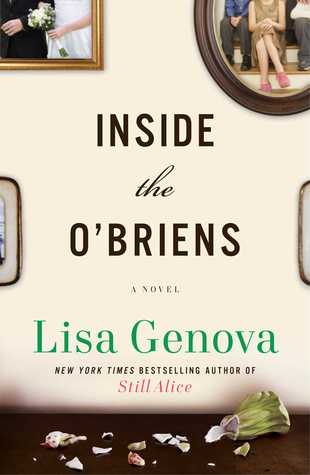
Inside the O’Briens by Lisa Genova

Written by , Posted in Reviews

Four Stars

InsideObriens

I read and reviewed Still Alice late last year, so a few days back Goodreads notified me that Ms. Genova had a new novel coming out this month. Inside the O’Briens tells the story of the O’Brien family and how they deal with the patriarch’s diagnosis with Huntington’s Disease. The book is primarily told from patriarch Joe’s perspective, a forty-something police officer in the Charlestown neighborhood of Boston. He starts to develop symptoms and gets tested, not realizing that his mother had died of the same disease when he was young.

The rest of the book focuses not just on how Joe’s symptoms develop and the fact that he and his family have to deal with the fact that his life expectancy is only 10-20 more years, but also focuses on how his four children deal with deciding whether to get tested. It has some similarity to that plot point in Still Alice, but is handled in a slightly different way. Katie, the other point of view character in the book, is his youngest daughter, and the one whose journey we follow. She is very young (21) and a yoga instructor, trying to deal with everything that comes with deciding to know if in 15-25 years she’s going to start showing signs of Huntington’s Disease.

It is a very compelling book. I once again stayed up too late reading it, and even when I left my Kindle and another book I was reading at home (THE HORROR) I read it on my phone on my lunch break (praise the Kindle app). I’m not giving it five stars because, despite the hefty subject matter, it feels oddly light. It didn’t affect me nearly as much as Still Alice, and it left me thinking there could just be … more. Yeah, I’m not going to go down as a great wordsmith based on this review, but hopefully you know what I mean. It’s good, but for me, not as good as her previous work.

Monday

13

April 2015

0

COMMENTS

The Year of Magical Thinking by Joan Didion

Written by , Posted in Reviews

Three Stars

Magical

I’ve wanted to read this for a while. I haven’t read any of Ms. Didion’s other works, but this felt compelling. My sister had a copy at her house, which I was visiting this past week, so I borrowed it, reading it in a couple of days and finishing it on a particularly turbulent flight home. As I read the pages of her working through attempts to make sense of the fact that her husband was dead, I recognized a bit of dark humor in the thought that if this plane doesn’t make it home, the last thing I will have read will have been about death.

It’s an interesting book. It felt like a personal journal, and to a degree it is. It’s a very intellectual journal, filled with quotes from literature I haven’t read, allusions to culture that I can’t relate to. It somehow manages to be a meditation on grief without being particularly sad, and I mean that in a positive way. The book isn’t filled with pages where the reader must hold back tears (at least, a reader who hasn’t experienced that kind of loss – widows, widowers and parents who have lost children might disagree), it is instead filled with a bit of that stream-of-consciousness that you might expect from someone trying to figure out exactly what has happened, and what they might have done to precipitate it.

I don’t know if it’s a book for someone who has recently lost someone; it might be helpful to recognize things they themselves are experiencing. But I do think it’s something that we all can benefit from reading, filled with some information to be filed away to help start to understand when people we care about lose people they care about.

Monday

13

April 2015

0

COMMENTS

Wild by Cheryl Strayed

Written by , Posted in Reviews

Four Stars

books.cheryl-strayed-wild-book.widea_

I hadn’t heard of this book before Reese Witherspoon chose to produce a film version of it (which I’ve not yet seen, but plan to). The premise (is that the word you use when someone is writing about things that actually happened?) is that Ms. Strayed, a few years after the loss of her mother to cancer, the end of her own marriage, and some drug use, decided to hike the Pacific Coast Trail. I grew up spending at least a month a year in the High Sierras and now live minutes from the Cascades, but I’d never heard of the PCT until this book.

I feel a bit like the film blurbs gave a bit of an overly dramatic framing of Ms. Strayed’s story. It’s clearly dramatic, but, for example, while she definitely did drugs (heroin, specifically), I had the impression that she’d essentially been a junkie, which destroyed her marriage at the same time as her mother’s death. Not exactly. Not really even close. It’s more complicated than that, a slower burn.

Ms. Strayed is a fantastic story-teller. She manages to mix in stories of her youth and her more recent past with her trials on the hike. I appreciate her sense of adventure as well as her honesty about how even with all her planning she still didn’t plan nearly enough, that the trail is rough and can be brutal. She also makes it very clear that you really need to get your shoes sorted out ahead of time.

I pretty much devoured this book. I started it before catching a flight to a work event, and was annoyed that I had to put it down and do some actual work. I stayed up way too late the first night reading it, and way too late the next night finishing it. It was inspiring. Not in an ‘I’m-going-to-hike-the-PCT’ way (although…) but in a ‘people-are-fucking-resilient’ way.

Sunday

29

March 2015

0

COMMENTS

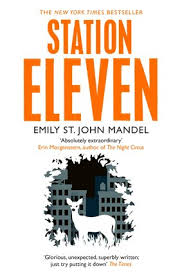
Station Eleven by Emily St. John Mandel

Written by , Posted in Reviews

Four Stars

Station eleven

Usually I’m at least a year behind on these things (I read the Hunger Games trilogy maybe two months before the movies came out; I read Gone Girl about six months prior). When I saw this in a book shop while on vacation I mentioned to my husband that I thought it had been reviewed a bunch this year, and was the subject of a book club, but that I knew nothing about it. I feel lucky to have come into it without any realy background information, because I didn’t know what to expect.

I loved this book. I’m currently in Paris, and have a really nasty cold, so we’ve been alternating between exploring the city and then coming back to the hotel to rest. During those hours when I did’t feel well enough to wander, I read this book. It was captivating, it was interesting, and it is a book I’d recommend. As someone who works on emergency management planning, the basics of the pandemic (although we didn’t get tons of details ) were really interesting to me. I’ve got another book to read soon – “The Knowledge: How to Rebuild our World from Scratch” – but I wonder how long it really would take for certain things – for example, electricity – to return to this world.

It’s not my favorite book ever (or even of this CBR), but it’s so very good. What I think is interesting is that, for me, I didn’t get absorbed into the world. I was always aware of the fact that I was reading a book, and even though the descriptions Ms. St. John Mandel are vivid, I am left feeling as though I both can and cannot picture any of the main characters. That might not make sense to anyone not inside my head, but usually when I read what I consider well-written literature, it feels like a film is playing in my mind. I didn’t ever get that from this book, or I should say, I only got it on occasion. It’s unclear whether that is me or the book, but it’s what keeps it from a five star rating.

As for the book club discussion, I think who people think is the main character is an interesting one. For me, I didn’t think there was really any question that Kirsten was the main character. I thought that was obvious, so it’s really interesting to read other folks who think that clearly Clark, or any of the other characters, was the main character. I do love that and think it speaks to the author’s ability to create a world that speaks to readers in different ways.

Sunday

29

March 2015

0

COMMENTS

The Examined Life by Stephen Grosz

Written by , Posted in Reviews

Two stars. I suppose.

I read this 200-page book in a day, after finding it while browsing at a book store in London. It looked interesting; it was stories by a psychoanalyst, talking about cases and what we can learn from these patients.

The stories are sometimes interesting, but mostly kind of boring. I’m not familiar enough with psychoanalysis to full get what they do (do they just keep asking questions until their patient comes up with answers?), but I’m not a big fan of how this one writes. The stories are told, and then … they end. Abruptly. With no discussion about what they really mean for the patient, or even why the author felt the need to include them in a book. That makes sense to a degree, I suppose, but honestly I can read stories about anyone anywhere and try analyze them; I was expecting more from this book.

I get the sense that the author is trying to be poignant at times, trying to get us to really understand ourselves and learn from these patients. He even ‘helpfully’ categorizes these stories into broad topics. But really, I didn’t get much out of this book beyond a couple of interesting stories, a couple of really boring stories, and a bunch of meh stories.

Apparently this was a best seller in the U.K. Reviews called it brilliant and compelling. I’m really not sure that it is anything close to either, unless by ‘brilliant’ they meant ‘good way for the author to make a bunch of money off of other peoples’ lives.’

Sunday

29

March 2015

0

COMMENTS

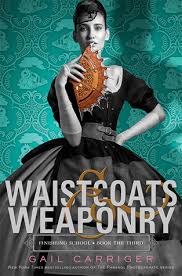
Waistcoats and Weaponry by Gail Carriger

Written by , Posted in Reviews

Three Stars

waistcoats

Sophronia and her friends are getting ready to head back to her hometown for her brother’s engagement masquerade ball (ah, yes. the traditional engagement masquerade – the husband and I really missed out). Their good friend, who is part of a werewolf pack (although not a werewolf herself), is distraught and leaves their dirigible school when she gets bad news. From there, things get even odder.

Steampunk is a fairly new genre for me, but I get its appeal, and I enjoy these somewhat quick reads. Things can’t be solved with a quick text message or crowdsourced post on social media – people have to really work to puzzle things out. It’s refreshing. Plus, it’s fun to picture these worlds where everyone is dressed really nicely and worries about manners. I wouldn’t want to actually live in that time (apparently some members of the conservative party in Ms. Carriger’s universe are just as racist as some of the politicians in our universe), or in a world with vampires and werewolves, but it can be fun to visit.

Slight side note – can people who are creating new world consider creating ones where being gay isn’t a thing that people find ‘shocking?’ Or find to be a bad thing? There’s so much creativity in this book that it’s disappointing that sexuality – and conservative views of it – seem to have been transplanted directly from our universe to theirs.

Regardless, if you like steampunk and YA, I think you’ll probably enjoy this book.