ASK Musings

No matter where you go, there you are.

Books Archive

Thursday

21

February 2013

0

COMMENTS

I Know I Am But What Are You?

Written by , Posted in Reviews

This book was a bit of an experiment for me. I enjoy memoirs and essays from female authors (Ali in Wonderland, Bossypants, Is Everyone Hanging Out Without Me?), and have read them imagining them narrated by the authors themselves, hearing Tina Fey in my mind. I run for exercise, so I figured I’d take on the audiobook option as part of this Cannonball Read and find some fun memoirs to get me through my workouts.

Bee-Keeping-9780743599887

My first purchase (via audible.com) was Samantha Bee’s cleverly titled I Know I Am, But What Are You? In it she chronicles her life, sharing some interesting stories, some funny stories, and some tragically funny stories.

Born to teenage parents, she spent time living with her mother, her dad and stepmom, and her grandmother. As a child she was an introvert, an animal lover, and obsessed with Jesus. Not so much in a religion sort of way, but in an ‘I’m going to wash his feet and marry him” sort of way. That story was easily my favorite of the book, although her treatise on gift-giving and -receiving is a close second.

She definitely has some interesting stories to tell, but I only found myself laughing out loud a couple of times. I’m not sure if that was even her goal. But I think I would have preferred to read this as opposed to listen to her reading of it. She reads it pretty much exactly as she narrates her segments on “The Daily Show,” and while that works in four-minute Republican take-downs, it can sometimes be a bit much in book form.

I’d say this would probably be best as a library book or a sale book loaded onto your e-reader for reading on a flight or on vacation.

Sunday

17

February 2013

0

COMMENTS

What Money Can’t Buy

Written by , Posted in Reviews

20130320_Whatmoneycantbuy

Alright, back to the non-fiction books I love. Michael Sandel is a modern philosopher who is interested in issues of justice. In fact, his book “Justice” is a fantastic read for people who are interested in philosophy but cringe at the idea of popping open Hume or Kant on a cold winter’s day.

This book looks at whether there are any moral reasons to not allow the market to ‘take care of things.’ Some of his areas of focus are likely ones that you have considered previously (possibly over a beer with friends). Should people be able to sell their kidneys? Did that student really get into Harvard because of his talent, or because his mom could buy the entire campus twice over? Is that fair? Does it matter if it is or isn’t?

Sandel argues from a premise that some might not accept: that “making markets more efficient is no virtue in itself.” Instead, he’s interested in why people might cringe at the commodification of certain components of our lives. Why, if markets are so great and supposedly will sort out the distribution of goods and services in the most efficient way possible, do some markets make us so uncomfortable?

Each example in the book addresses one of two arguments – the argument from fairness and the argument from corruption. In the first case, we might consider where a certain market is fair if the person participating may not REALLY have much of a choice. Again, think about the kidney example. Sure we all own our bodies, but the concern with allowing a market in kidneys is that only the poor would end up selling them, essentially turning them into spare parts for wealthy people, and leaving people who cannot afford kidneys at the whim of donors. The second argument looks at whether the nature of certain things might be corrupted simply by market involvement. Advertising in schools is a prime example of that.

The book is broken down into five parts – an introduction to the issues he plans to address (and a background on markets and examples of market transactions that might raise an eyebrow), a section on incentives (and how they don’t always work the way you’d think), markets replacing moral discussion, the insurance market (which features my favorite portion of the book, where he examines third-party life insurance purchasing), and the right to name different public and private spaces (think Citibank Field in NYC). The concepts are not difficult to grasp and are well-written and interesting.

While I do have a philosophy background, I want to emphasize that one is not necessary AT ALL to enjoy this book. If you’re interested in markets and a discussion about why they might not always be the best way to distribute goods, this is a really great read for you. In fact, I suggest getting your favorite discussion partner (perhaps someone who doesn’t always agree with you) to read the book at the same time so you can have a lively chat about it all.

Saturday

16

February 2013

0

COMMENTS

The Good House

Written by , Posted in Reviews

2013-01-14-good_house

This is an interesting novel, just released last month. It’s one I would recommend for those looking for a book with a little bit of mystery, a lot of character study (can we really judge ourselves accurately?) and some vivid scenery. Suggested to me by the same person who offered up ‘Defending Jacob,’ it tells the story from the perspective of Hilda Good, a divorced real estate agent in her late 50s/early 60s who still lives in the Massachusetts seaside town where she grew up. She has a bit of a drinking problem (the size of which is debated throughout the book) and not a lot of friends.

The book follows Hildy over the course of a very eventful year as she befriends a new town resident, becomes privy to some secrets perhaps she should not, and rediscovers (in various different ways) friends from her youth. Hildy is the type of character who is flawed and you see it. She isn’t hateful, or horrible; she’s just not perfect. I don’t have any experience with alcoholic parents, so I can’t say whether the depiction of her and her family would ring true to someone who does, but it did not seem cartoonish to me. Instead, the writing portrays a woman who thinks she knows her limits but may be quite close to pushing them further than she can handle.

The pacing of the book felt a little off, but I do wonder if part of that is due to reading it on an e-reader. I know it sounds odd, but even though there’s a little percentage complete box at the bottom of the screen, I have a much harder time putting that into perspective as compared to when I’m holding a physical book in my hand. My brain has spent over 30 years expecting books to flow in a certain manner relative to the amount remaining; with an e-reader those cues are gone. It did at times feel like a lot of ‘nothing’ was happening, but I never had to struggle to pick it up, finishing it in about three days, and am still able to picture the town, the houses, and all of the characters quite vividly.

I’d say this is a great little read for a weekend spent somewhere chilly. Add it to your mid-October reading list, warm up some cider and let yourself spend some time in New England.

Thursday

14

February 2013

0

COMMENTS

Defending Jacob

Written by , Posted in Reviews

In my quest to read more fiction as part of this Cannonball Read, I’ve been soliciting recommendations. Some (Gone Girl) seem to roll off of everyone’s tongues. Others, like this one, I’d never heard of and am bummed I didn’t read sooner. It was one of those books that taunted me when it was sitting in my purse during the work day. I read it on the walk to work and the walk home. I chose to read it over watching mindless TV after a long day at work (a rare occurrence for me), and even balanced it on the shelves so I could keep reading it while I brushed my teeth at night. I was engrossed. I have one or two little issues, although even as I write them I realize that they do work pretty well within the book.

jacob

Defending Jacob is another first-person narrative, this time told using a flashback device that actually works and really weaves together a tight and interesting book. The narrator is Adam Barber, an assistant DA who prosecutes homicides among other crimes. The flashback device used is Adam testifying at a grand jury hearing set a year or so after the main events of the book. It isn’t discussed in every chapter, but helps frame some parts of the discussion, introducing new components of the story. The homicide in this book is an eighth grade boy found dead in a park on weekday morning. Adam has a son, Jacob, in the same class and after a few days it becomes apparent that Jacob is the main suspect.

The book examines many different components of the issue of facing the possibility that one’s child killed another. It’s not a plea to sympathize with the parents of accused murderers; it’s an exploration of what it must be like, both to see one’s son facing such charges and wondering (or perhaps not wondering) somewhere deep inside if he did it. Does a good parent even entertain the notion? MUST a good parent entertain the notion? What is owed to the child? To society? To one’s spouse? Is the priority the child, and to hell with the marriage? Can a marriage survive that? And what happens to the family, regardless of the guilt of the accused, during and after the trial?

These themes are explored in pretty fantastic detail. While Adam gives us the perspective, because he tells the story as a retrospective, he’s able to lend clarity to what at the time may have seemed muddy or incomprehensible. He and his wife handle their son’s situation very differently, and while the author gets very close to some stereotypes of the dad vs. mom roles, he also builds them out as based more in the character of the individuals. Meaning, yes, the mother seems more emotive than the father, but the father is also a DA. Frankly, I think it would have been an even better, more interesting book if the mother were the DA and the father were a former teacher. Play around a little bit with the gendered expectations.

There are some surprises in the book, but none that come totally out of left field. It’s not predictable but it makes sense, which I think is such a great quality, and hard to come by. I like authors to avoid Deus ex Machina – it’s lazy and frustrating. But come on – we also want a little surprise in our books, right? Landay does it really well.

What most impressed me about the book is that it took a premise – the murder of a 14-year-old-boy – and kept that premise right in the middle while not making it the focus of the book. I wouldn’t describe it as a crime novel, or a thriller, but a book about a family in a very, very difficult situation.

Pick it up. It’s a good read and worth your time.

Saturday

9

February 2013

0

COMMENTS

Cinderella’s Secrety Diary

Written by , Posted in Reviews

In the past I’ve read reviews of books and thought ‘damn, that was harsh.’ And while I maintain that some critics come across as snotty jerks, after reading this book I’m starting to understand that, if forced to read many of similar quality throughout my career, I might start to lose a little bit of my tact despite my best efforts.

cinderellas-secret-diary-book1

As others have mentioned, Cannonball Readers were offered this book (and its sequel – which I will not be reading, because I try to avoid making the same mistake twice) for free with the understanding that we would read quickly and report back.

This is not a horrible book. In fact, I can imagine where the inspiration came – other fairy tales are starting to have origin stories (or perhaps always did, but are experiencing a resurgence now). And the idea of following the ‘happily ever after’ is really interesting. It just wasn’t well done in this instance – there is simultaneously too much and not enough going on in the storytelling, the devise used doesn’t really seem to work for this story, and the characters are, in my opinion, almost universally unlikable (including Cinderella).

I have a few issues with this book so I’ll work through them here. First off, the author is clearly not short on ideas; unfortunately there is a whole lot of telling and very little showing. Part of that likely comes from the challenge of a first person narrative in diary form, but my experience reading Silver Linings Playbook showed me that it’s possible to create a rich, complex and interesting character who is telling the story without filling it with lines like “I know you are a good person.” Cinderella may be a good person, but having her best friend say it doesn’t do much for me – I prefer a book show it to me. Or perhaps show me she ISN’T a good person, and that her friends don’t understand her. Something.

Other times statements were made that suggested something had taken place – the most glaring example was the line “All my training had prepared me for this moment.” Huh? Granted, I did find myself bored at times, but I read the whole book, and that line stood out like a sore thumb. Cinderella had been training? I know she was off with her mentor ‘getting ready’ and ‘preparing’ but what did that mean? What was the training? How was she ‘preparing’? What was she doing? It’d be much more interesting to see her in that moment if I had an understanding of what she was calling upon to get through it.

I also have to disagree with another reviewer who thought the writing was good. I don’t think it was horrible, but it wasn’t good. As the book is set in Europe during Napoleon’s time, the author tries to make the language formal and a bit flowerier. I don’t have a lot of experience with modern-day re-tellings of fairy tales but I really, really hope that they don’t all suffer from this forced language. It took me nearly half of the book to get past the feeling that every single paragraph was written in a struggle with an author’s guide to 19th century writing.

I did appreciate the author’s attempt to give the book a bit of a feminist spin, but I think he missed the mark. Nearly all the ‘good’ women in the book are witches, and every single man she encounters either directly causes her pain or is indifferent to her. If the author was going for ‘girl power’ and the idea of saving yourself, he seems to have gone a bit too far. I love that she doesn’t need a man, but does every man need to be totally unlikable?

I still want to find a book like this that I would enjoy reading – I don’t spend nearly enough time reading fiction and I know I’m missing out. I just wish that I hadn’t spent the last six days with this one.

Wednesday

30

January 2013

0

COMMENTS

The Purity Myth

Written by , Posted in Feminism, Reviews

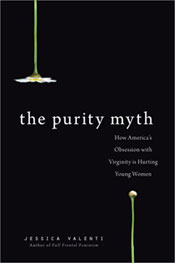
cover-purity-myth11

This is a nearly impossible review to write, as this book is amazing, infuriating, and endlessly quotable. I like to write in my books (I know, the horror), underlining passages, commenting on paragraphs, dropping the occasional “the FUCK” in the margins, and fiendishly circling page numbers so I know which ones REALLY need to be remembered. In the case of this book, nearly every page has at least one passage underlined. And I was being conservative with my pen.

Jessica Valenti is a feminist who has spent much of her life spreading the (shockingly controversial) idea that women deserve social, political and economic equality. This doesn’t just mean that she supports the basics like, say, equal pay for equal work; it means she explores the real issues that affect women on a regular basis. She examines the systemic issues, the roots of discriminatory treatment, and makes connections that initially seem obtuse but, given her thorough research and excellent ability to connect the dots, become clear and obvious to anyone willing to think critically.

I read her book Full Frontal Feminism this fall, and plan to read Why Have Kids at some point this year. But this book has caused my blood pressure to rise so much that I think I need a palate cleanser to clear my mind of the absurdity of the anti-feminist movement.

As the subtitle of The Purity Myth suggests, Valenti’s book explores “how America’s obsession with virginity is hurting young women.” The overall thesis can be summed up pretty well with this quote:

“For the record: I think virginity is fine, just as I think having sex is fine. I don’t really care what women do sexually, and neither should you. In fact, that’s the point. I believe that a young woman’s decision to have sex, or not, shouldn’t impact how she’s seen as a moral actor.”

There is so much good in this book that I clearly won’t be able to do it justice. But I’m going to try to point out some of the things that make it so great. Valenti doesn’t (as some of her more ignorant critics claim) propose women go out and have a lot of sex. She doesn’t propose that women not have sex, either. Instead, she chooses to frame the discussion around why women are judged based on *not* having sex, while men are judged on other things. As she puts it in the first paragraph: “It’s time to teach our daughters that their ability to be good people depends on their being good people, not on whether or not they’re sexually active.”

Anyone who has attended high school in America can probably almost immediately bring to mind the image of a classmate who was a ‘slut,’ and, as such, not a ‘good’ person. I find it embarrassing to think back to how sexual activity was used as a proxy for determining the (negative) value of an entire human. It wasn’t always the case; not having had sex (at least at my high school) didn’t peg someone as good or bad, but there were definitely some people who were talked about.

Valenti focuses on all the different ways this idea of purity hurts women of all ages. Many of you are probably familiar with the Madonna / Whore dichotomy (possibly thanks to a scene from Sex and the City featuring Charlotte talking to Trey about her sexual needs); Valenti looks at the way it is reinforced on a regular basis through all sorts of different venues, and how that hurts all women. And if you think about it, it makes perfect sense: if my value is tied up in whether or not I still have an intact hymen, that implicitly means that nothing else I do matters. If all that I am good for is staying ‘pure’ for my future husband then there’s no need for me to access any other opportunities, like, say, a solid education or a career.

The first chapter in the book – and the one that disturbed the heck out of me – focuses on Purity Balls and virginity worship. These FEDERALLY FUNDED displays of paternal ownership reek of creepy incestuous relationships, but operate under the guise of helping young women to ‘save’ themselves, with their fathers promising to protect their virtue. Again, as though a girl’s virtue can be found between her legs and not in her brain.

From here, Valenti discusses many more related topics in fascinating and disgusting detail, including: the dangers of abstinence-only education; the racial and economic implications of the fact that some women are already seen as ‘spoiled’ by virtue of the way they look or the community in which they live; the misinformation spread by anti-feminist organizations; the way that purity is sexualized, contributing directly to the objectification of young women; and myriad other interconnected topics. From an exploration of how society has decided only certain women can be raped, to how this traditional understanding of purity leaves out many people from the get go (where do lesbians fit in, for example?), Valenti hits each topic directly, using straightforward language backed up by solid research and a whole lot of facts.

Some of the best writing is in the area of sexual assault. I dare you to read chapter five without either throwing the book at a wall or at least going to the liquor cabinet for a stiff drink because it is BLEAK.

But it is so important. I plan to gift this book (along with Full Frontal Feminism) to my nieces and nephews when they are old enough, because the information is important, and it isn’t just up to women to change these bizarre notions of a woman’s worth. While some readers may have tuned out at my first mention of feminism, consider picking it up – whether you are a woman or a man, this book will open your eyes and hopefully motivate you to action.

Thursday

24

January 2013

0

COMMENTS

Silver Linings Playbook

Written by , Posted in Reviews

silver_linings_playbook_cover_book

I tend to gravitate towards non-fiction books. Reading literature in school involved so much analysis; I got to a point after my last literature class where I felt I didn’t know how to read fiction on my own, without a guide or a discussion around it to try to find the ‘deeper’ meaning. What’s the point of picking up a classic if I’m going to miss all of the nuance?

On occasion, however, a work of fiction sounds interesting and I’m willing to give it a whirl. Generally speaking I’ve been lucky with my picks – and “Silver Linings Playbook” continues that lucky streak. If you’ve not yet read it, and can get past the idea of picturing the dude from “The Hangover” and Katniss Everdeen in the main roles, I think you’ll find you’re in for a quick but satisfying read.  I read it in three days and found I was disappointed not in the ending, but in the fact that it was done. This is a book that had me thinking about it when I wasn’t reading it, and wanting to get back to it when I was doing other things.

We meet the protagonist Pat briefly in a psychiatric facility. His perspective is the one we experience throughout the novel; it’s a first person narrative that usually works. Pat consistently refers to the facility as the ‘bad place,’ which is one of the turns of phrase author Matthew Quick uses to lead us to think that there’s something a little off about Pat. That phrase, along with Pat insisting on referring to his separation from his wife as ‘apart time,’ were really the only things about the book that consistently bothered me. I think I get what Quick was going for, but the phrases really just pulled me out of the story. Thankfully, I was able to get past that and enjoy the writing, but I do wish Quick had found another way to demonstrate the developmental pause the character seems to have taken.

Pat has been sprung from the mental health facility by his mother, who has arranged for Pat to live back home with her and her inattentive, Eagles football-obsessed husband. Pat is focused on staying in amazing physical shape and acting kindly so that he can win back his wife Nikki. Clearly we get the sense that something is wrong with his assumption that he has any chance getting back with Nikki; he even repeatedly admits to himself that he treated her poorly. However, it’s clear that there’s more to that story, and over the course of the novel we find out, for the most part, what’s really going on.

To try to help bring Pat back into the outside world, Pat’ friend Robbie reintroduces him to Tiffany, who is working through her own mental health issues. She’s a young widow who rarely speaks but, when she does, chooses the fewest words necessary to get her point across. She’s blunt, a little socially awkward, and possibly interested in Pat. Pat wants nothing to do with her but, due to some clever work on her part, is pulled into a mutually beneficial relationship.

Given their respective circumstances, it could have been so easy for the author to lead us to pity them. And perhaps some readers will feel that emotion as they get to know their stories. For me, I felt more empathy and a little bit of hope as the novel progressed. Quick does a great job of showing honest emotions without begging the reader to cry or just feel so darned sorry for them. The characters are flawed, but from my perspective they are flawed in realistic ways. They could be our friends, and that helps make the connection to their plights more real.

Finally, the book has a resolution that is incomplete, although not frustratingly so. I’m warning you now: not every storyline is wrapped up at the end. The author doesn’t end it all with a knock on a door followed by a fade to black what-will-happen-next scene (I’m looking at you, ‘Sideways,’), but he doesn’t give us an epilogue or address every relationship that has formed or broken throughout the story. I enjoy that – I don’t need a totally messy ending, but I do like one in which it is expected that the characters will still go on and have struggles to face and issues to resolve.

I’m only on book five, but so far this year this is my favorite. If I can keep finding novels like this one, I just might have to put some of the non-fiction books on my reading list on hold.

Wednesday

23

January 2013

0

COMMENTS

Champagne: A Global History

Written by , Posted in Reviews

champagne

If a wine menu has a glass of sparkling anything on it, that’s probably what I will order. It doesn’t matter to me if it’s dinner in a nice restaurant or brunch at a diner showing the Seahawks’ game. I like sparkly wine to the exclusion of nearly all still varieties.

I’m sure that’s what my sister had in mind when my birthday rolled around this year, as she gifted me this cute book on the history of Champagne, part of the Edible Series of books. Written in a very straightforward manner, it traces the history of the fizzy delight from its origins in the region of France that gives it its name through some of the more familiar stories (Dom Perignon was a real guy!), following it during the ups and downs of popularity and availability.

Champagne has a pretty interesting history – traceable, like many other libations, to monks with access to crops and the desire to turn them into something interesting. You may be familiar with some of the stories that dot its past, like the traditional cup or ‘coupe’ based on the shape of French noblewoman’s breast, but I’m willing to bet that some of it will be new to you.

And it isn’t just the inclusion of this trivia that make this a cute, quick read and something I’d recommend as a gift. The history seems very well-researched, and the discussion of the political implications of the trade, while not deep or groundbreaking, does remind the reader that labor issues and the creation of limited supply has a broader impact than just which bottle to choose on New Year’s Eve. The grape growers are often not the champagne houses, and the power lies with the big names, not the French farmer. I’m sure there are more in-depth books on Champagne and its association with extravagance and luxury, but this is a good start.

As a bonus, the book doesn’t just focus on Champagne – it spends time on other sparkling wines that are produced around the world, and the tension between the French beverage and the other sparkling choices is a bit fascinating.

This book is a quick read and fun break from some of the more intense non-fiction and literature out there. Bottom line: if you have someone in your life who enjoys bubbly, trivia, and would enjoy learning more about Champagne than a simple Wikipedia article has to offer, check it out.

Sunday

13

January 2013

0

COMMENTS

Paris, I love You, But You’re Bringing Me Down

Written by , Posted in Reviews

I want to live abroad someday. I’ve done it before, spending a year in London in 2009-2010. It was interesting, although I had a different perspective than Mr. Baldwin when he wrote Paris, I Love You, But You’re Bringing Me Down. I was in school, wasn’t worried about my visa, and had housing booked before I arrived.

paris

Mr. Baldwin, on the other hand, had to navigate a lot of the new world of being an ex-pat on his own, with minimal assistance from his entertaining (and somewhat broadly written) coworkers. In this memoir of the realities of living in the City of Light, the author shares a seemingly endless (and at times seemingly pointless) stream of somewhat-connected, usually clever, anecdotes about the life he and his wife built when he was working at an advertising agency in Paris. The characters, while ostensibly based on real people, seem straight out of central casting (I have a very vivid picture of who could play the loud, friendly, somewhat useless landlord in the film version).

I can appreciate the idea of a book that doesn’t sugar coat the realities of life abroad. Some days you’re spending an entire afternoon looking at great works of art, eating divine sweets from the most adorable patisserie; the next you’re crying because you don’t know where to go to buy printer paper. Mr. Baldwin does an excellent job of painting a vivid picture that is not highly romanticized (a difficult task, since we’re talking about PARIS), but the book left me wanting more. There was a thread, loosely tying the numerous anecdotes together: he’s writing a novel while his wife is also pursuing her own creative work. But it felt disjointed, as though the author kept a journal, realized he has a few good comments to make and tried to turn it into a book.

That’s not to say it wasn’t enjoyable to read; I definitely found myself laughing out loud a few times. And he clearly has a gift for language, which makes me think that I’d really enjoy his novel You Lost Me There, the writing of which he also chronicles during his Paris stay. I just felt that this particular book wasn’t fully formed when it went to the publisher.

If you have aspirations to live abroad, it can’t hurt to check this book out. It’s good to have a little reality with the dreams of spending lazy weekends on the banks of the Seine, reading Sartre and contemplating the future of democracy while drinking actual champagne. It’s also not bad for a little light reading even if you aren’t interested in trading in your house for a visa any time soon.

Friday

11

January 2013

0

COMMENTS

The Feminine Mystique

Written by , Posted in Feminism, Reviews

FemMystique

I am a feminist. I don’t think that’s a groundbreaking title to claim, although if you listen to some of my more famous peers (Katy Perry, I’m looking at you), it’s a dirty word. But whether you claim the title loudly and proudly, or claim everything the title represents but annoyingly shun the term itself, it’s good to understand its roots.

Enter The Feminine Mystique, written by Betty Friedan, founder of the National Organization for Women. Dense but accessible, the book focuses on the malaise that struck (straight, affluent, white – we’ll get to that in a minute) women in the 50s and 60s. Ms. Friedan put a name to “the problem that has no name,” exploring why women who seemingly have it all – or at least everything society thinks they should want to have – are unfulfilled, depressed, and even suicidal. She backs up her discussion with facts, referencing studies ranging from Kinsey’s research to polls from Mademoiselle magazine. She pretty neatly takes down the ridiculousness of Freudian theory as applied to women in the United States, and points to evidence that supports the idea that women who access higher education (whether before marriage or during) and pursue careers find themselves happier (and with better sex lives, natch) than their counterparts.

Much of the book is filled with important information and suggestions for how to achieve equality.  While it took me awhile to get into it, I found that by breaking it down into chapters I was able to really process what I was reading. It was frustrating to read lines that could have been written today, describing how people view the ‘role of women’ in the home, that the most important thing that women can do is bear and raise children. As a childfree woman myself, I’m also well aware of the weird dichotomy that exists in the United States today: this worship of the idea of motherhood, but the disdain for mothers (e.g. no mandated paid maternity leave, shock at seeing a nipple in public to feed an infant, the judgment women cast upon each other over life choices).

BUT. And this is a big but, and one that I only discovered by reading the book – Ms. Friedan was apparently homophobic. It’s distressing to learn that she views that “Male homosexuals … are Peter Pans, forever childlike” who have a “fear of adult responsibility.” Say what now? While one can raise all the arguments they want about a book being ‘of its time’ (published in 1966), the fact remains that even in her later years of activism Ms. Friedan was at times guilty of expressing disdain for gay men and lesbians.

The other GIANT issue with this book is that, while focusing on what I would argue was (and to a degree still is) a real issue for women, she presented her arguments as though they applied to all women. I don’t think every book needs to examine all sides of every issue, but she certainly spent no time on the intersectionality of gender with race and class, and she also spent no time (at least that I saw, and I read it pretty closely) focused on why this is the group that needs the attention.

Still, I’d say this is a book to read for everyone who wants to understand better the history of feminism and be reminded not so much of ‘how far we’ve come’ but really of how far we haven’t come.